

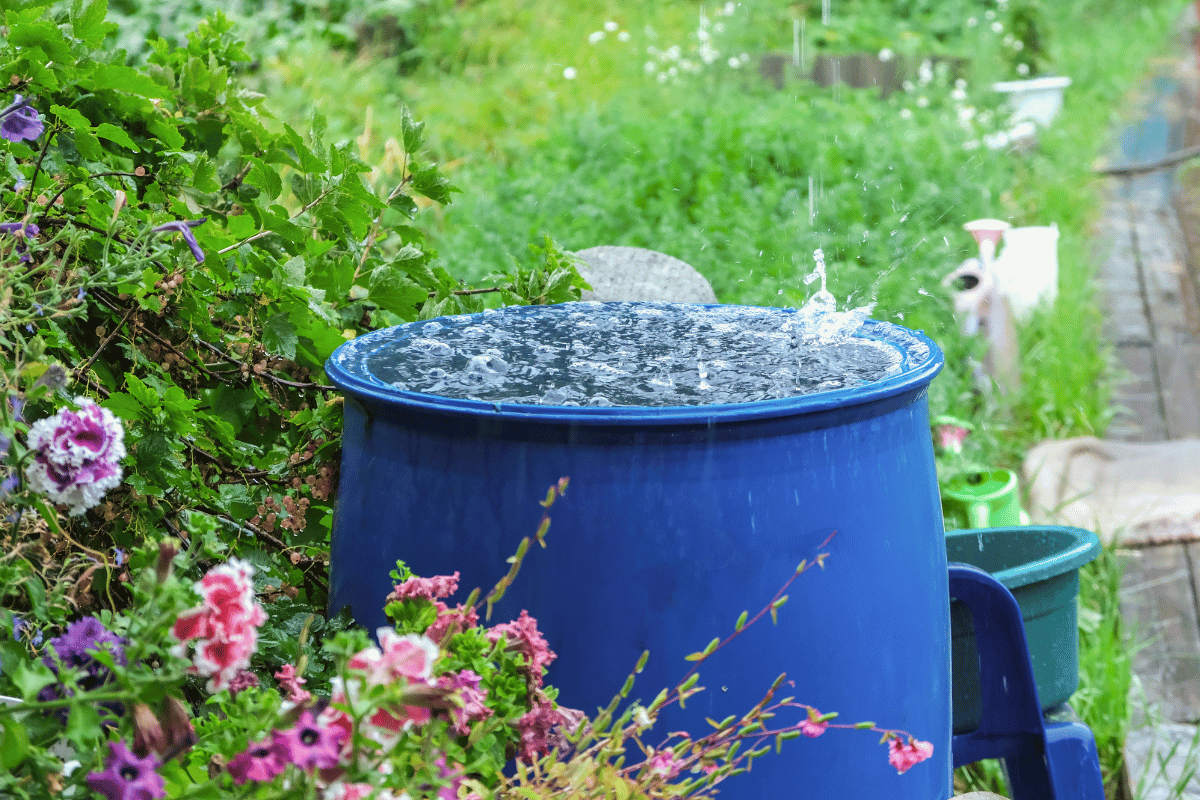
Faced with global warming and drought episodes, here's how to collect and use rainwater for your domestic needs.
Repeated droughts: How can water be saved with a flexible tank?
Longer summers, recurring heatwaves, drier winters: drought episodes are now affecting all regions and are imposing new habits at home, in the garden, and in the fields. With a correctly sized flexible tank, you can make substantial savings and contribute to the environment. Here's how to do it.
1. Collect and Store Rainwater
While severe droughts are becoming more and more frequent, they alternate with intensely rainy periods. Climate change is not a figment of the imagination. Everyone, professionals and individuals alike, when we have the opportunity, we can change our habits and best preserve natural treasures, such as water.
How Can We Collect Rainwater?
It all starts with a good gutter system. The goal is to capture most of the rainwater by maximizing the areas that receive rain: the roof of the house, but also sheds, garages, and greenhouses. On each of these, a gutter network directs the water to the collector.
Agricultural research has shown that rainwater harvesting involves collecting runoff water from a structure or other water-resistant surface and storing it for later use. The system doesn't need to be complex. It can be as simple as collecting rain in a rain barrel, but it can also be scaled up to harvest rainwater into large cisterns.
To avoid blockages and pollution, the installation of rainwater traps and filters allows the collection of water free of debris and leaves that could clog or even paralyze the system.
For farmers implementing larger-scale systems, the runoff coefficient (the ratio of water that runs off a surface to the amount of water that falls on that surface) is crucial for calculating potential water harvest. Research in sub-Saharan African farming contexts has demonstrated that understanding this coefficient is essential for determining whether to implement a harvesting project.
Choosing the right water storage system
Rain Barrel
- Advantages: Low cost, easy to install.
- Disadvantages: Limited capacity (around 200 liters), unsuitable for long droughts.
Rigid Tank
- Advantages: Durable (plastic, metal, or concrete), high storage capacity.
- Disadvantages: Requires earthworks and sometimes permits; expensive and labor-intensive to install.
Flexible Tank
- Advantages: Made of flexible and durable PVC material, it is lightweight and can be installed on various surfaces, even if they are not perfectly flat. Quick and easy to install, it offers storage capacities suitable for all configurations and can even be stored when not in use. This is the best solution for people who want to use rainwater significantly and flexibly.
- Disadvantages: Requires sufficient outdoor space since it is installed directly on the ground.
Agricultural experiences from various regions show that proper infrastructure is essential. In Kenya, for example, communities have successfully implemented rainwater harvesting systems that, when properly designed, can extend planting seasons to at least ten months of the year. The practice has proven crucial for sustainable water management in drought-prone areas.
2. Optimizing garden and vegetable garden watering
Using rainwater to water gardens and vegetable patches is the most obvious and easiest way to implement it. It is possible to optimize this practice with a few precautions:
Implementing drip irrigation systems
For all crops that allow it, switching to drip irrigation fed by a flexible tank is a real advantage. Research from Wikifarmer demonstrates that drip irrigation can save 30-90% more water compared to conventional irrigation methods, depending on the crop, soil, and climate conditions. This system delivers water directly to the root zone, saving up to 60% of water use while reducing nutrient leaching and soil erosion.
Key benefits of drip irrigation include:
- Water is applied directly to plants, reducing wastage from evaporation and runoff
- Targets only specific spots where water is needed, increasing efficiency
- Can be used for fertigation (applying fertilizers through the irrigation system)
- Reduces plant stress and disease transmission
- Highly effective water use efficiency with application rates of 2-25 liters per hour
Simply connect the drip network to the outlet of the flexible tank via a pump and use a timer to water at night or early in the morning. Innovative drip irrigation systems are being developed for cereal crops grown in large areas, which could revolutionize cereal crop production and reduce water wastage.
Use mulching for water conservation
This practice, made from bark, hemp, or straw, helps retain plant moisture and reduces watering by 20 to 40%. Research from Wikifarmer shows that mulching can reduce water loss by decreasing evaporation from the soil surface, making crops more drought-resistant.
Benefits of organic mulching include:
- Improves soil water retention by decreasing evaporation from the soil surface
- Provides habitat for beneficial insects that control crop pests
- Releases nutrients into the soil as organic matter breaks down
- Protects roots from extreme temperatures
- Reduces soil erosion and nutrient leaching
In Nigeria, agricultural organizations like IITA have documented that organic mulching methods reduce water loss and improve soil health. Simply cover the soil where flowers, vegetables, and fruits are growing with mulch (2 to 3 cm thick).
Drought-resistant plant selection
Don't hesitate to modify your garden layout by introducing water-efficient plants. Mediterranean species and resilient ground covers that limit watering are excellent choices.
Recommended drought-tolerant plants from Mediterranean climates include:
Trees and Shrubs:
- Olive trees (Olea europaea): Dwarf varieties like 'Little Ollie' are perfect for containers and require minimal watering once established
- Oleander (Nerium oleander): Extremely hardy, tolerates heat, drought, and poor soil
- Yucca species: Striking architectural plants with sword-like leaves, highly drought-tolerant
Herbs (perfect for balcony gardens):
- Rosemary: Allow soil to dry completely between waterings, water deeply every 3-4 days
- Sage (Salvia officinalis): Silver-gray foliage naturally adapted to hot, dry conditions
- Lavender: One of the most drought-tolerant herbs, can withstand extended periods without water
- Oregano: Develops more intense flavor when slightly stressed by heat and drought
Succulents:
- Agave species: Bold, sculptural elements with minimal water needs
These xerophytic plants (drought-adapted species) are specifically selected for their ability to thrive with minimal irrigation while maintaining aesthetic appeal.
System maintenance
Check for leaks: An abnormal residual flow (pump that restarts frequently, gauge that drops without use) is a leak to track down (connection, faucet, drip line).
Properly maintain the entire recovery chain: Clean gutters and filters 2 to 4 times a year, rinse the first filter after a major storm, regularly flush the flexible tank if organic deposits accumulate, and keep the tank in the shade (or under cover) to limit overheating and algae growth.
Install energy-saving accessories: Aerators on faucets and shower heads that reduce flow and consumption.
Agricultural research supports regular maintenance practices. In olive cultivation, for example, installing drip irrigation systems with soil moisture sensors helps optimize water usage, reduce waste, and ensures efficient water management.
Choose the right water collector
Before installing a flexible tank, it is essential to carefully assess the required volume. The risk of overflow or, conversely, oversizing the tank can cause problems.
Sizing your system
Define the tank's functions: What do you intend to use it for, and for what purposes? How many cubic meters per year do you estimate you will need?
Evaluate the recovery capacity of your installations: Roof surfaces, gutter system, and regional rainfall. From this data it is possible to obtain an estimate of the number of cubic meters of rainwater that can be recovered.
Research from Kenya demonstrates a practical approach: two cubic meters of basin for each resident are enough for the system to work without overflow. The recommended sizing formula is: (Length × Width × Depth) = 2m × 1m × number of residents. For example, a family of five would need dimensions of 2m × 1m × 5m = 10 m³.
Choose the flexible tank best suited to your needs and your equipment.
Water harvestingp otential calculation
The water harvesting potential is the portion of rainwater that can be effectively harvested relative to the total amount of rainwater received over a period. Key factors include:
- Rainfall quantity and frequency: Low and irregular rainfall necessitates larger storage facilities
- Catchment area characteristics: These determine the runoff coefficient
- Regional climate patterns: Understanding local precipitation helps optimize system design
Advanced Water Conservation Techniques
Innovative Irrigation Methods
Research has shown that capillary wick irrigation systems offer excellent water efficiency for smallholder applications. This system uses wettable fabric to transport water from a reservoir directly to plant roots via capillary action, minimizing water waste and providing consistent moisture.
Components include:
- Reservoir for water storage
- Growing media (soil or inert materials)
- Wicks made from canvas, blanket, or cotton materials
- Direct water delivery to root zones
Smart irrigation controllers
Modern technology offers smart irrigation controllers that can save up to 50% of water used for irrigation compared to conventional systems. These systems use:
- Soil moisture sensors
- Weather data integration
- Automated scheduling based on plant needs
- Real-time adjustments for optimal efficiency
Soil conservation practices
Conservation tillage practices can improve water infiltration capacity and alleviate surface water runoff. These techniques:
- Increase soil water storage during drought conditions
- Enhance soil's ability to retain moisture, increasing overall water use efficiency
- Reduce bulk density and increase soil porosity
- Improve stability of soil aggregates
Conclusion
Faced with the increasing scarcity of water resources, moderation is not a renunciation: it's an informed strategy. A flexible tank, robust, and easy-to-use will allow you to achieve immediate and lasting water savings.
The integration of traditional rainwater harvesting with modern agricultural techniques - including drip irrigation systems that can achieve 30-90% higher yields, mulching practices that reduce watering needs by 20-40%, and drought-resistant plant varieties adapted to local climates - creates a comprehensive approach to water conservation.
Agricultural research consistently demonstrates that well-managed water conservation systems not only save water but also often improve crop productivity and soil health. From simple rain barrels to sophisticated capillary wick systems, the key is selecting the appropriate technology for your specific needs and local conditions.
Need help choosing and installing your rainwater harvesting system? SERENA can advise you from A to Z, from sizing to commissioning.