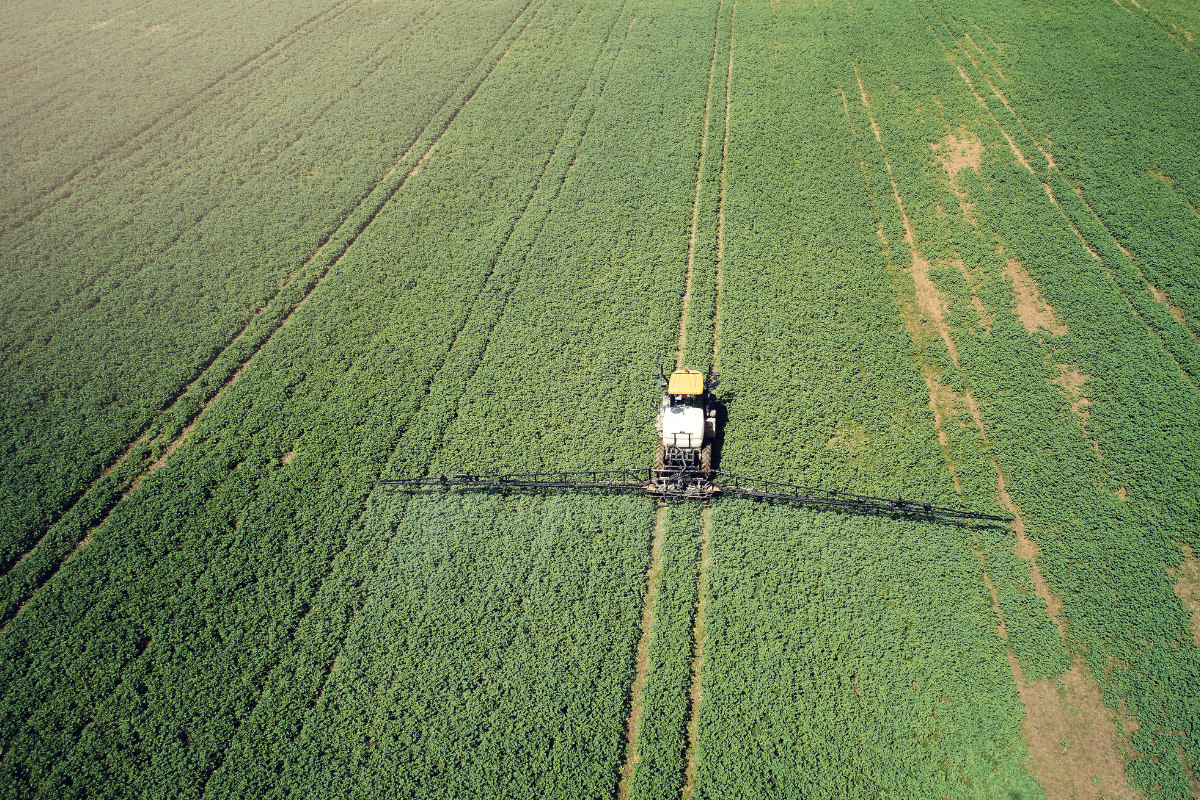
Herbicides, or weedkillers, are a class of pesticides widely used to manage undesired plants in agriculture, landscaping, forestry, gardening, and industry. They function by targeting specific biochemical pathways or physiological processes in plants, leading to injury or death.
Selective vs. Non-Selective Herbicides
Selective herbicides enter the plant via the xylem or phloem and disrupt metabolic or biosynthetic pathways. Their design ensures target weeds are killed while crops remain unharmed.
Non-selective herbicides, such as glyphosate and paraquat, are used when complete vegetation clearance is required, often pre-planting or in industrial settings.
The ability of herbicides to target weeds but spare crops is known as herbicide selectivity.
Mechanisms of Herbicide Selectivity
1. Physiological Selectivity
Differential Penetration
Morphological traits like waxy leaf surfaces, pubescence, and cuticle thickness affect herbicide absorption. For instance, cotton plants trap triazines in lysigenous glands, reducing their concentration at target sites.
Differential Translocation
Herbicides move through the apoplastic (xylem) or symplastic (phloem) pathways. Differences in transpiration rates, ionization, and source–sink relationships influence distribution, as seen in flurodifen-resistant groundnut and susceptible cucumber. The selectivity was happpened due to the limited translocation of flurodifen from roots to the groundnut’s leaves before it could enter the chloroplast.
Compartmentalization/Sequestration
Herbicides may be inactivated by binding plant molecules or stored in inactive cellular regions, such as vacuoles, limiting damage. Some instances, herbicides are compartmentalized after absorption and are immobilized in roots or tissues of tolerant plant species where damage is minimized. In several cases, weeds have shown selectivity to glyphosate through altered target sites and vacuole sequestration
Altered Binding Sites
A single gene mutation can alter a target protein, preventing herbicide binding without affecting enzyme function. The first discovered altered target site was in photosystem PSII inhibiting herbicides, which compete with plastoquinone for binding on the D1 protein and thereby inhibit PSII electron transport.
Differential Metabolism
Many plants detoxify herbicides via enzymatic modifications. For example, cytochrome P450 monooxygenases add oxygen atoms to hydrophobic molecules, increasing solubility and reducing toxicity. Moreover, 2,4-dichlorophenoxybutyric acid (2,4-DB) is converted to 2,4-dichlorophenoxyacetic acid (2,4-D) by redroot pigweed.
Safeners
Chemicals that protect crops by inducing detoxification enzymes without reducing herbicide effectiveness against weeds.
- Glutathione S-transferases (GSTs) – enzymes that detoxify certain herbicides by conjugating them with glutathione.
- Cytochrome P450 monooxygenases – detoxify herbicides through oxidation before they can reach the target site.
- Glycosyltransferases – inactivate herbicides by attaching sugar molecules, reducing toxicity.
2. Physical Selectivity
Position Selectivity
Crop seeds are planted deeper (5–10 cm) than weed seeds (0–3 cm), avoiding damage from pre-emergence herbicides. For large-seeded crops, e.g., Zea mays and Phaselous vulgaris, are not affected by pre-emergence (PRE) herbicides e.g., metolachlor.
Herbicide Selectivity
Shields, hooded sprayers, and rope-wick applicators enable precise herbicide delivery to weed while protecting crops. For example, by using a spray hood/ shield glyphosate, paraquat or diquat can be made selective in wider row-spaced crops whereas the spray is directed to weeds by using herbicide cones or rope-wick applicator.
Chronological Selectivity
Application timing relative to crop growth stage determines selectivity. For example, pendimethalin is selective to maize, cotton and soybean crops when applied pre-emergence but not post-emergence. Similarly, metribuzin (Sencor) is a selective herbicide for potatoes when applied as pre-emergence and not as post-emergence.
Morphological Selectivity
Grasses, with basal growing points, are less affected by foliar herbicides compared to broadleaf plants with exposed apical meristems.
Other Factors Affecting Selectivity
Soil Properties
Clay and organic matter content influence herbicide retention and availability.
Climatic Conditions
Temperature, humidity, and light intensity affect herbicide penetration and translocation. For example, phenoxy acetic acids formatted esters are fat soluble, when temperatures are high, leaf cuticles become more fluid and more readily penetrated by fat-soluble compounds, thus, low selectivity. High temperatures and low humidity are detrimental and plants growing in these environments usually have thick cuticles, which are less penetrable cuticles.
Leaf Orientation
Upright leaves shed spray droplets, reducing absorption, while horizontal leaves retain them longer.
Plant Growth Stage
Younger plants are generally more susceptible due to exposed meristems and thinner cuticles.
Herbicide Metabolism in Plants
Detoxification involves four phases:
- Phase I – Conversion: Oxidation, reduction, hydrolysis, oxygenation; or hydroxylation, often mediated by cytochrome P450 enzymes. Which is membrane-bound haem proteins that catalyze oxy-reduction reactions of endogenous and xenobiotic substrates
- Phase II – Conjugation: Herbicide metabolites are bound to sugars, amino acids, with the tripeptide Glutathione, increasing the solubility in water, while reducing phytotoxicity.
- Phase III – Transport: Conjugates are moved into vacuoles via ABC (ATP binding cassete) transporters. Secondary conjugations might also occur, giving origin to non-phytotoxic compounds.
- Phase IV – Deposition: Final metabolites are compartmentalized in vacuoles, may be incorporated into cell wall components (pectin, lignin, polyssacharides, and protein fractions), forming inert residues.
Phytotoxicity and Yield Losses
Phytotoxicity arises when a herbicide overcomes plant defense mechanisms, causing structural damage (chlorosis, necrosis, wilting) or physiological damage (growth reduction). Even in tolerant species, herbicide metabolism and tissue repair consume energy, potentially lowering yield. Some crops, however, can compensate for damage through regrowth or tillering.