Photoperiod refers to the length of time that a plant is exposed to light in a day. It is a key factor for selecting suitable vegetable and fruit varieties and for identifying the best planting window for each crop. Photoperiod influences vegetative growth, flower bud initiation, flowering, bulb formation, and leaf senescence in plants.
Types of crops based on photoperiod response
Plants fall into three groups based on how day length triggers flowering. Understanding these categories helps farmers select varieties that sync with their region's seasons.
Short-day plants
Short-day plants (SDPs) flower when the day length is shorter than a critical threshold, or when the night length exceeds a specific duration. Their flowering is triggered by extended darkness, which is why they are sometimes called "long-night plants."
The mechanism behind this response involves the phytochrome system. During the day, plants produce the inactive form Pr (phytochrome red), which red light converts into the active form Pfr (phytochrome far-red). During the night, Pfr slowly reverts to Pr. Short-day plants require a long, uninterrupted dark period to ensure that enough Pfr is converted back to Pr. A long night allows Pfr levels to drop below a critical threshold, triggering flowering. If the night is interrupted by a flash of light, it converts Pr back into Pfr, which inhibits flowering.
Examples include chrysanthemums (Chrysanthemum morifolium), poinsettias (Euphorbia pulcherrima), strawberries, rice (Oryza sativa), sorghum (Sorghum bicolor), and millet.
Long-day plants
Long-day plants (LDPs) flower when the day length is longer than a critical threshold, or when the night length is shorter than a specific duration. Their flowering is triggered by a brief period of darkness, so they are sometimes called "short-night plants."
During a short night, the phytochrome Pfr does not have enough time to revert to Pr. The resulting high level of Pfr accumulation promotes flowering.
Examples include spinach (Spinacia oleracea), lettuce (Lactuca sativa), radish (Raphanus sativus), and barley (Hordeum vulgare).
Day-neutral plants
Day-neutral plants (DNPs) do not exhibit a flowering response to photoperiod. Their flowering is primarily influenced by other factors like maturity, temperature, and moisture.
Examples include tomatoes (Solanum lycopersicum), corn (Zea mays), cucumbers (Cucumis sativus), and sunflowers (Helianthus annuus).
Why variety selection matters
Choosing the right photoperiod-sensitive variety optimizes flowering, shortens crop cycles, boosts yields, and improves adaptation to local climates. Mismatches can reduce yields by shortening growth phases or exposing plants to drought and pest pressure at critical stages.
Flowering control. Photoperiod sensitivity dictates when a variety starts and finishes flowering, with wide differences across crops. Chickpea shows distinct classes (insensitive, intermediate, and highly sensitive) that directly link sensitivity to flowering time. In sorghum, tropical types can stretch cycles from 90 to over 190 days, where even a 15-day sowing delay can add months to the cycle under long-day conditions.
Yield impacts. A photoperiod mismatch shortens key phases like stem elongation in wheat, reducing grain set and yield potential. Photoperiod-insensitive chickpea flowers with fewer thermal units, helping the crop avoid stress in short seasons. Soybean maturity groups align to critical day lengths (for example, MG0000, the earliest-maturing genotypes, at approximately 16.4 hours, while later groups perform at 12 hours or less) for latitude-specific performance.
Regional adaptation. Local sorghum landraces adjust their cycle to sowing dates and rainfall patterns, improving fit in variable climates. Cowpea thrives under short days (optima of 8-11 hours), while sorghum flowers earlier in long-day rainy seasons versus short-day post-rainy ones. Breeders classify germplasm by photoperiod response for targeted regional cultivar development.
Breeding strategies. Major genes (such as sorghum's dominant allele for photoperiod sensitivity) enable straightforward introgression of sensitivity or insensitivity. Staggered sowing or controlled-environment trials allow for rapid phenotyping. Combining photoperiod traits with characteristics like dwarfing helps develop high-yield, season-adapted varieties suited to local needs.
Farmer guide for variety selection
Check local day length. Identify the average day length in your region using online tools such as timeanddate.com. Near the equator, day length remains close to 12 hours year-round, while higher latitudes experience larger seasonal variations.
Know your crop's response. Consult seed catalogs, agricultural extension services, or research publications to determine whether a crop variety is short-day, long-day, or day-neutral.
Match variety to season. Plant short-day crops during shortening days (fall), and long-day crops during lengthening days (spring).
Test on a small scale first. Trialing different planting dates or varieties on a small plot helps determine which combinations perform best under local conditions before committing to a full field.
Combine factors. Pair photoperiod requirements with temperature and moisture needs for the best results. Day length alone does not determine success; it must align with the full environmental context.
Photoperiod and onion bulb formation
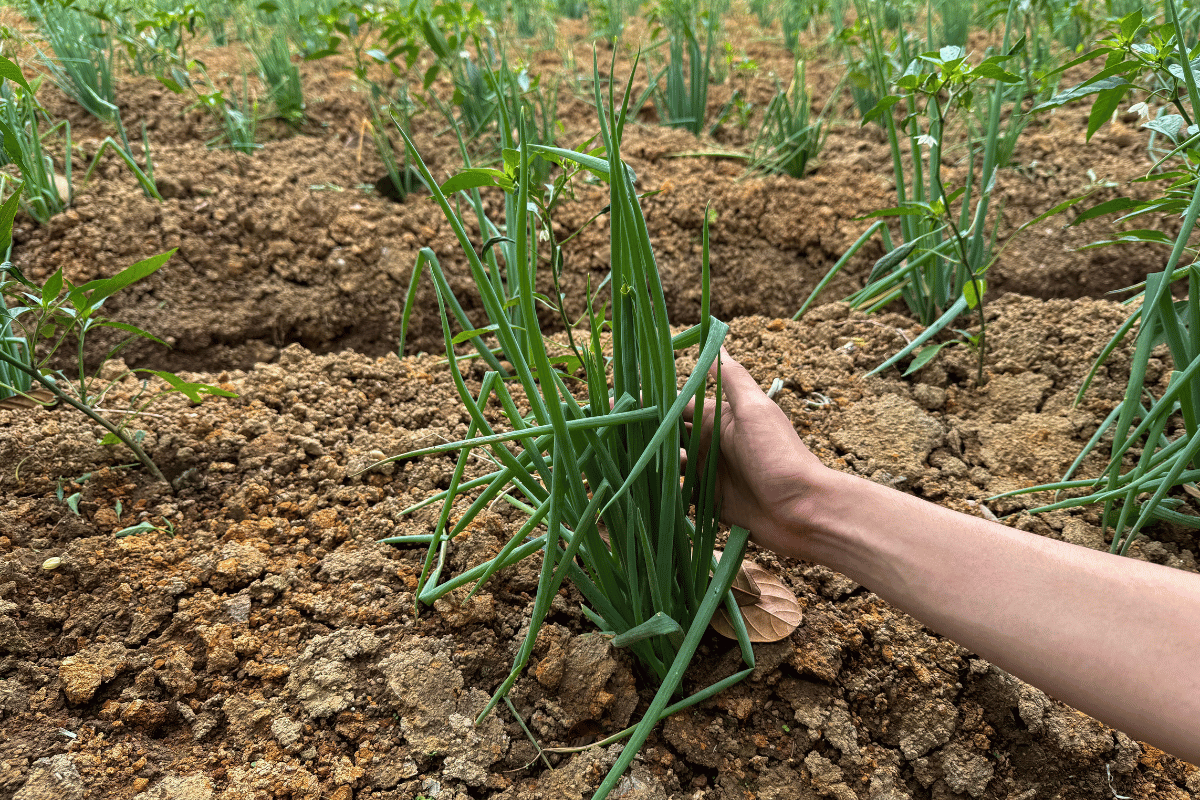
In onions, bulb formation is strongly controlled by day length. Different onion varieties require different photoperiods to initiate bulbing. Tropical onions need more than 11 hours to begin bulbing, and the process accelerates with longer days.
|
Day length type |
Daylight required |
Ideal regions (latitude) |
Planting window |
Example varieties |
|
Short-day |
10-12 hours |
Southern US, Gulf Coast (25-35°N) |
Late fall to early winter |
Bermuda, Red Burgundy |
|
Intermediate-day |
12-14 hours |
Central US, transition zones (32-42°N) |
Late winter to early spring |
Candy |
|
Long-day |
14-16 hours |
Northern US, Canada (37-47°N) |
Early spring |
Copra, Red Zeppelin, Walla Walla |
Photoperiod has a pronounced effect on the flowering of millet, particularly in West Africa, where traditional varieties are sensitive to day-length changes. For local pearl millet varieties, the critical photoperiod (Pc) ranges from 13.00 to 13.35 hours.
In West Africa, where favorable conditions for millet production typically extend from May to November, most of the crop's development occurs under decreasing day length. This adaptation allows millet to avoid drought during grain filling, escape high-humidity periods that favor pests and diseases, and maintain stable flowering times even with different planting dates.
Photoperiod and sorghum variety selection
Choosing the right sorghum variety and sowing date is critical for farmers in semi-arid environments, particularly in West Africa, where crop production depends heavily on seasonal rainfall. In rainfed farming systems, success hinges on matching crop varieties and planting schedules with local environmental conditions.
One of the most important adaptations of sorghum to climate variability is photoperiodism, where flowering is regulated by day length. Photoperiod sensitivity allows sorghum plants to synchronize flowering with the end of the rainy season, ensuring that grain filling occurs under favorable moisture conditions. This adaptation helps crops avoid stresses such as drought or excessive humidity during critical growth stages.
Farmers must combine cultivar selection and sowing dates to ensure flowering occurs during the final 20 days of the rainy season. Proper timing ensures optimal grain filling and reduces risks associated with untimely flowering. If flowering occurs too early or too late, crops may experience terminal drought (reducing grain filling and yield), grain mold (caused by prolonged humid conditions), or bird damage (if grain maturity occurs out of sync with surrounding vegetation).
In many areas of West Africa, farmers prefer early sowing at the beginning of the rainy season. Early planting reduces nitrogen losses caused by leaching and denitrification and helps suppress weed growth by allowing sorghum to establish earlier.
Sorghum varieties differ significantly in their photoperiod response. Photoperiod-insensitive varieties have a relatively fixed crop duration and must be planted within a narrow sowing window to ensure proper flowering and maturity. Photoperiod-sensitive varieties adjust their flowering time according to day length, providing greater flexibility in sowing dates, especially in regions with longer rainy seasons.
Modern, high-yielding sorghum cultivars are often photoperiod-insensitive, making them suitable for areas with short rainy seasons, particularly in northern regions. However, in areas with longer and more humid rainy seasons, photoperiod-sensitive traditional varieties are often better adapted because they synchronize flowering more effectively with seasonal conditions.
Research evaluating different sorghum genotypes has shown that variety performance depends strongly on local climate conditions. A photoperiod-insensitive early-maturing hybrid performed well in the dry region of Nara, Mali but was less suitable for more humid locations such as Bamako and Sikasso. In contrast, a traditional photoperiod-sensitive cultivar showed better adaptation in these humid environments because it could adjust its flowering time and provide greater flexibility in planting dates.
Understanding the photoperiod response of sorghum varieties helps farmers select cultivars that match their local rainfall patterns and growing seasons, improving yield stability and reducing climate-related production risks.
Key takeaways
Understanding photoperiod responses helps farmers select crop varieties that match their local climate and growing season. By choosing appropriate varieties and adjusting planting dates, farmers can improve crop adaptation, reduce climate risks, and achieve more stable yields across a wide range of environments.
References
- High Mowing Organic Seeds. Photoperiodism. Blog article on photoperiod basics.
- Kouressy, M. et al. (2008). Adaptation of Malian Sorghums to Variable Climatic Conditions. World Journal of Agricultural Sciences.
- van Oort, P. A. J. et al. (2014). Can variety selection based on photoperiod sensitivity help to improve food security?. NJAS Wageningen Journal of Life Sciences.
- Dixondale Farms. Onion Day Lengths. Guide to short-day, intermediate, and long-day onion varieties.
- Soltani, A. & Sinclair, T.R. (2012). Flowering Response of Diverse Chickpea Accessions to Photoperiod. ResearchGate.
- Roberts, E.H. et al. (2016). Photoperiod and Temperature Interactions in Sorghum. Frontiers in Plant Science.
- Craufurd, P.Q. et al. (2021). Photoperiod Sensitivity and Crop Adaptation. Frontiers in Plant Science.
- Haussmann, B.I.G. et al. Sorghum and Pearl Millet Improvement in West Africa. WUR Library.