Satellite imagery has emerged as a transformative tool for modern agriculture, offering farmers and agronomists unprecedented views of their fields from space. As precision agriculture continues to evolve, understanding both the capabilities and constraints of satellite technology becomes essential for anyone seeking to optimize farm operations through data-driven decision-making.
What is satellite imagery in agriculture?
Satellite imagery captures Earth's surface images from space for remote sensing applications. This technology provides a non-destructive way to monitor farms, offering broad views that are impossible to achieve from ground level. For agricultural purposes, satellites equipped with specialized sensors collect data across multiple spectral bands, revealing information about crop health, soil conditions, and field variability that would otherwise remain invisible.
Key characteristics of satellite imagery
Spatial resolution defines how much detail satellites can capture. While typically lower than ground-level imagery, satellite resolution has improved dramatically in recent years. Commercial satellites now achieve resolutions of up to 34 cm per pixel, capable of detecting individual trees. However, publicly available satellite data commonly ranges from 10 m (Sentinel-2) to 1 km (MODIS) resolution, which works well for field-level monitoring but may miss finer details.
Spectral resolution represents one of satellite imagery's greatest strengths. Modern agricultural satellites provide significantly better spectral resolution than traditional cameras, capturing data across multiple bands in the visible, near-infrared, and red-edge regions. Sentinel-2 offers more than 10 spectral bands, while hyperspectral sensors can provide over 100 channels. This detailed spectral information enables precise analysis of vegetation properties, supporting applications from crop monitoring to disease detection.
Reflectance measurement sets satellite sensors apart from consumer-grade cameras. These sensors are calibrated to convert sensor brightness into reflectance, which represents a physical property of the imaged surface. This calibration allows for quantitative analysis of Earth's surface conditions, largely independent of illumination and sensor effects, making data comparable across different times and locations.
Data volume generated by satellite programs represents both an opportunity and a challenge. Programs like Sentinel, Landsat, and MODIS collect and manage enormous archives of historical worldwide imagery. Sentinel alone added 7.34 petabytes of imagery to its archive in 2021. This vast data volume drives research in remote sensing technologies and deep learning applications, though it also demands significant computing resources for analysis.
Common satellite data sources
MODIS imagery has been available since 2000, offering resolutions between 250-1000 m. The system includes model-based maps for land surface temperatures, evapotranspiration, and Leaf Area Index (LAI), making it valuable for regional-scale agricultural monitoring and climate studies.
Landsat imagery became publicly available in 2008 with a typical spatial resolution of 30 m. This long-running program provides crucial historical data for understanding agricultural trends and changes over time.
Sentinel imagery from the European Space Agency's Sentinel program has become a preferred choice in modern agricultural research. The program provides optical imagery at 10-60 m resolution through Sentinel-2 and synthetic aperture radar (SAR) imagery at 5-40 m resolution through Sentinel-1. Since 2014, these satellites have delivered consistent, high-quality data. Combining Sentinel-1 SAR data with Sentinel-2 optical imagery can significantly improve performance by leveraging complementary information.
Why satellite imagery matters for modern farming
Broad coverage and temporal frequency advantages
Low-resolution satellite images offer extensive geographical coverage combined with high temporal revisit frequency. This combination makes them a practical choice for monitoring at both national and regional scales, often with low costs per unit area. Systems like NOAA AVHRR can scan the entire Earth's surface daily, providing a synoptic view that high-resolution sensors cannot match. This broad perspective proves invaluable for regional agricultural planning and policy decisions.
Supporting crop monitoring and early warning systems
Satellite imagery provides fundamental information about crop type, conditions, and yield across scales ranging from local fields to entire continents. These systems form essential components of early warning and drought monitoring programs at the regional level, helping detect variations in vegetation performance before problems become severe.
Crop monitoring systems using satellite data have been operational since the late 1970s in the United States (LACIE) and the 1980s in the European Union (MARS project). These long-standing programs continue today, demonstrating the reliability and value of satellite-based agricultural monitoring.
Historical data for long-term analysis
The availability of long time series of satellite imagery proves critical for many yield prediction methods. Historical archives enable researchers and farmers to identify patterns, track changes in agricultural practices, and understand how fields respond to different management approaches over multiple seasons and years.
Quantitative yield prediction capabilities
Satellite imagery supports quantitative crop yield predictions through both regression models and sophisticated crop growth models. Vegetation indices derived from satellite data, particularly the Normalized Difference Vegetation Index (NDVI), correlate closely with leaf area index (LAI) and photosynthetic activity. These relationships make vegetation indices indirect yet valuable measures of primary productivity and crop yield potential.
Practical applications in farm management
Land use and crop classification
Land Use and Land Cover (LULC) classification is among the most common applications of satellite imagery in agriculture. This process involves classifying each pixel or detecting specific regions, such as crop fields. Governments widely use crop segmentation to map crop distribution and support agricultural planning, helping inform policy decisions and resource allocation.
Real-time crop monitoring and damage detection
Efficient crop monitoring includes tracking crop status, guiding timely management actions, and detecting damage from disease, pests, or extreme weather events. Satellite data helps identify affected areas and assess damage extent, enabling farmers to respond quickly and reduce production losses. This capability becomes particularly valuable during critical growth stages when timely intervention makes the greatest difference.
Technologies supporting integrated pest management increasingly rely on satellite data to identify areas requiring attention, reducing the need for blanket pesticide applications and supporting more targeted, environmentally conscious farming practices.
Yield estimation and input management
Satellite data enables estimation of crop yields and assessment of fertilizer requirements well before harvest. The technology also proves valuable for monitoring water-related aspects such as evapotranspiration and crop water status, which are vital for irrigation planning. Sentinel-2 images have been successfully used to map grain yield variability at 10-20 m resolution, providing farmers with detailed information for zone management and variable rate applications.
Monitoring crop physiology and growth
Multispectral satellite sensors capture information in visible, near-infrared, and red-edge bands, which link directly to important plant characteristics including biomass, canopy vigor, and chlorophyll content. Canopy cover and Leaf Area Index (LAI) serve as commonly derived indicators of plant growth status. Chlorophyll content, monitored using green and red-edge bands, provides a reliable proxy for plant nitrogen status, helping farmers optimize fertilizer applications.
Soil health assessment
Beyond crop monitoring, satellite imagery contributes to evaluating soil health, including soil moisture, nutrients, and salinity. This information proves useful for understanding hydrologic processes and climatic conditions that affect agricultural productivity. Monitoring soil conditions through satellite data helps farmers make informed decisions about soil amendments and conservation practices.
Environmental sustainability applications
Satellite imagery supports climate change mitigation and sustainable food production by enabling more efficient use of agricultural inputs. Precision agriculture approaches enabled by satellite data aim to optimize input application according to actual crop needs, reducing negative environmental impacts while maintaining or improving yields. This alignment with sustainable farming practices helps agriculture address both productivity and environmental stewardship goals.
Understanding the limitations of satellite technology
Mixed pixel challenges in small fields
Low-resolution satellite imagery often produces pixel sizes larger than individual agricultural fields. This creates a fundamental challenge: each pixel may contain signals from multiple land cover types, significantly complicating interpretation. This "mixed pixel problem" limits the ability to derive crop-specific information unless a pixel is dominated by a single crop type. In regions with small, fragmented fields, common in many developing countries, this limitation becomes particularly problematic.
Data quality and consistency issues
Satellite sensors experience degradation over time, making it difficult to maintain a perfectly consistent long-term image series. Differences between sensors and calibration methods affect the comparability of derived products such as NDVI across different satellite missions or time periods. Cloud contamination remains a major challenge for optical imagery, even when advanced compositing techniques are applied. While synthetic aperture radar (SAR) can penetrate clouds, it remains underutilized in many agricultural applications.
Ground data requirements
Quantitative yield prediction methods, particularly those using regression models, require calibration with accurate reference information, typically agricultural statistics like crop yield. However, such ground-truth data is often limited or unreliable, especially in many parts of the world, making calibration difficult or impossible.
These statistics are usually measured at the field level and require intensive surveying to extend to larger administrative areas. The accuracy of aggregated data is hard to verify, and any analysis heavily depends on the quality of ground truth data. Without reliable ground measurements, even the most sophisticated satellite analysis cannot achieve its full potential.
Scaling difficulties across regions
Many satellite-based yield models are calibrated for specific regions and environmental conditions. Extending these models to other regions or scales remains challenging, particularly where agricultural patterns are highly fragmented or environmental conditions differ significantly from the calibration site. This limitation means that successful applications in one region may not transfer directly to others without substantial recalibration efforts.
Precision agriculture constraints
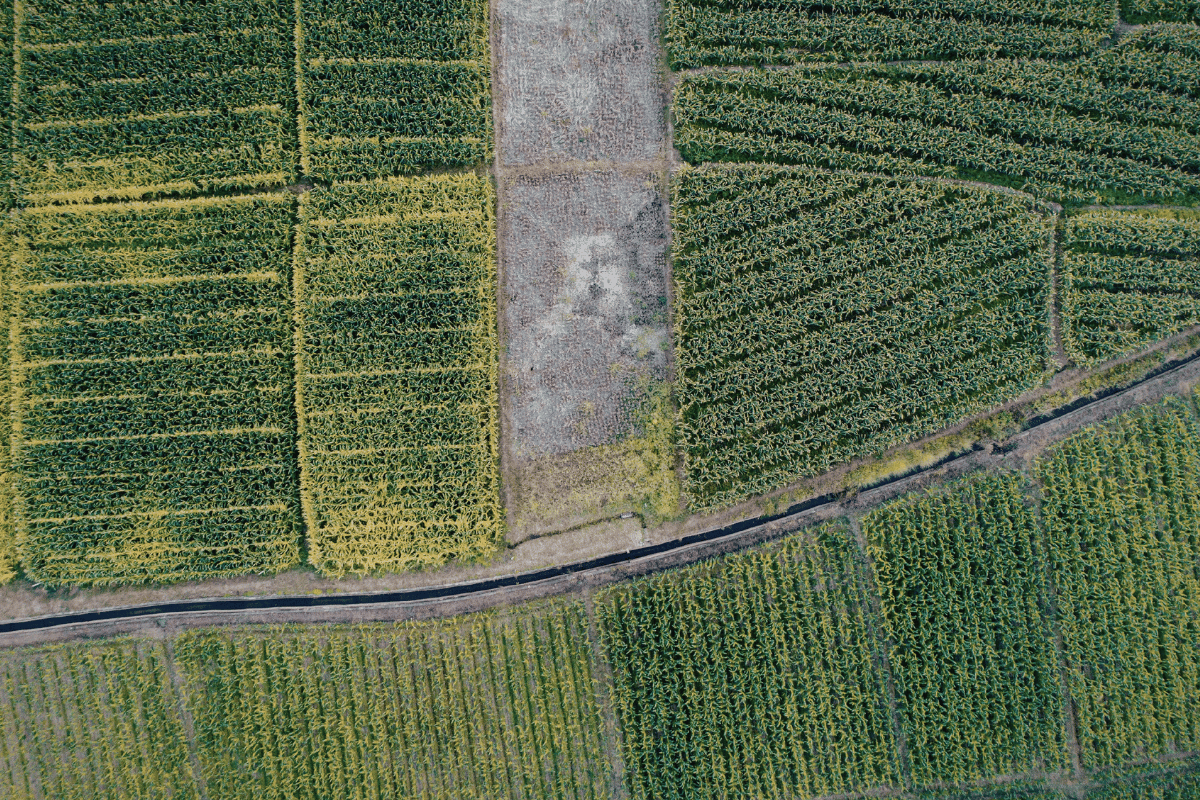
Heterogeneous agricultural landscapes, especially those with small and fragmented fields common in low-income countries, prove difficult to monitor using satellite imagery. The complexity of cropping systems and diverse management practices limits the retrieval of field-level variability needed for precision agriculture applications.
While high-resolution imagery performs better than lower-resolution data such as Sentinel-2, challenges remain due to polycultures (multiple crops in the same field) and diverse management practices. Current publicly available satellite data often cannot capture the within-field variability accurately enough for detailed precision agriculture applications.
Technical barriers and accessibility concerns
Spatial resolution limitations
Different satellite systems serve different purposes, but many struggle to provide the detail needed for precision farming. MODIS and ICESat-2 LiDAR offer only 1 km resolution, suitable for broad ecosystem monitoring but not for field-level applications. Sentinel-2's 10-20 m resolution works in standardized agricultural settings but misses important within-field variability. Thermal bands from Sentinel-3 (1 km resolution) and Landsat 9 (100 m resolution) prove too coarse for precise water status assessment or irrigation management decisions.
Cost factors for high-resolution data
High-resolution options like WorldView-3 or PlanetScope provide the detail farmers need but come with substantial costs and restrictive licensing. These commercial satellites remain behind paywalls, limiting access for individual farmers and small operations. Copyright restrictions also hinder scientific reproducibility, as researchers cannot freely share the data used in their studies.
Data processing requirements
Handling massive data volumes presents significant challenges. Processing daily satellite images over large regions strains computing resources for both researchers and farmers. Complex transformations, such as those required for ICESat-2 LiDAR data, add further technical barriers that many potential users cannot overcome without specialized expertise and infrastructure.
Quality and availability challenges
Labeled datasets remain scarce for many agricultural applications beyond basic crop classification, including soil health monitoring, plant physiology assessment, and crop damage detection. This scarcity impedes the development and training of deep learning models that could unlock new capabilities.
Many studies rely on sparse, costly high-resolution commercial imagery or error-prone free sources like the Cropland Data Layer, which carries a 5-15% error rate. Small field survey datasets (typically fewer than 100 ground truth points) limit the ability to develop models that generalize well across diverse agricultural conditions.
Technical challenges compound these issues. Satellite pixels cover mixed surface types at lower resolutions, complicating interpretation. Temporal mismatches between ground data collection and satellite passes introduce additional inaccuracies. The lack of standardized data formats and processing pipelines further slows progress in agricultural remote sensing applications.
Conclusion
Satellite imagery represents a powerful tool for agricultural monitoring and management, offering capabilities that were unimaginable just a few decades ago. From field-scale crop monitoring to continental-scale early warning systems, satellites provide farmers, researchers, and policymakers with crucial information for decision-making.
However, understanding the technology's limitations remains equally important. Mixed pixel problems, data quality challenges, cost barriers, and processing requirements all constrain what satellite imagery can achieve for agriculture. The most effective agricultural monitoring systems typically combine satellite data with complementary technologies such as drones, ground sensors, and traditional field observations.
As satellite technology continues to advance, with improving spatial resolution, more frequent revisits, and better processing tools, many current limitations will diminish. Yet the fundamental trade-offs between coverage, resolution, cost, and accessibility will persist. Success in agricultural remote sensing depends not on viewing satellite imagery as a universal solution, but on understanding how to integrate it strategically within broader farm management systems that leverage both technological capabilities and traditional agricultural knowledge.
References
Using Low Resolution Satellite Imagery for Yield Prediction and Yield Anomaly Detection. ResearchGate.
Satellite Imagery in Precision Agriculture.
A Systematic Review of the Use of Deep Learning in Satellite Imagery for Agriculture. ResearchGate.
Evaluation of Satellite Imagery to Increase Crop Yield in Irrigated Agriculture. ResearchGate.
Remote Sensing Basics. ResearchGate.