Growers across north-west Europe planted 11% fewer ware potatoes this year, cutting the area from 604,100 hectares to about 536,900 on purpose, to pull the market out of a season in which spot prices had sat between EUR 0 and EUR 2 per 100 kilograms for weeks at a time. The North-Western European Potato Growers organisation, which had spent more than a year asking for exactly this, called the decision responsible when it confirmed the figures on 30 June.
Then the weather took a second cut. France recorded its hottest July on record and its third driest, following five separate heat episodes since June. The French growers' union UNPT now expects national production to fall 23%, or nearly 2 million tonnes, on an average yield of 37.4 tonnes per hectare against 43.5 last year, the lowest in more than 30 years. The reduction growers imposed to restore balance has been compounded by one they did not choose.
The area cut was a deliberate market decision
The 2025/26 marketing season was one of the worst the sector has seen. Oversupply drove free-buy prices to levels NEPG described as unseen in decades, and contract offers for the new season failed to cover production costs. Belgium's ware area fell 16.6%, the Netherlands' 15.1% and France's 9.7%, with Germany estimated to have followed. Belgian plantings dropped to about 90,364 hectares, the lowest in five years, with Flanders alone down around 23%. Dutch ware potato area shrank from roughly 82,700 hectares to 70,200.
NEPG noted that growers made the cut despite the absence of significantly more profitable alternatives among cereals, vegetables, rapeseed or flax. That detail matters for reading what follows. Land was pulled out of potatoes to protect the price of the potatoes that remained, with no better-paying crop to move it into, on the assumption that a normal season would follow.
Five heatwaves during tuber formation
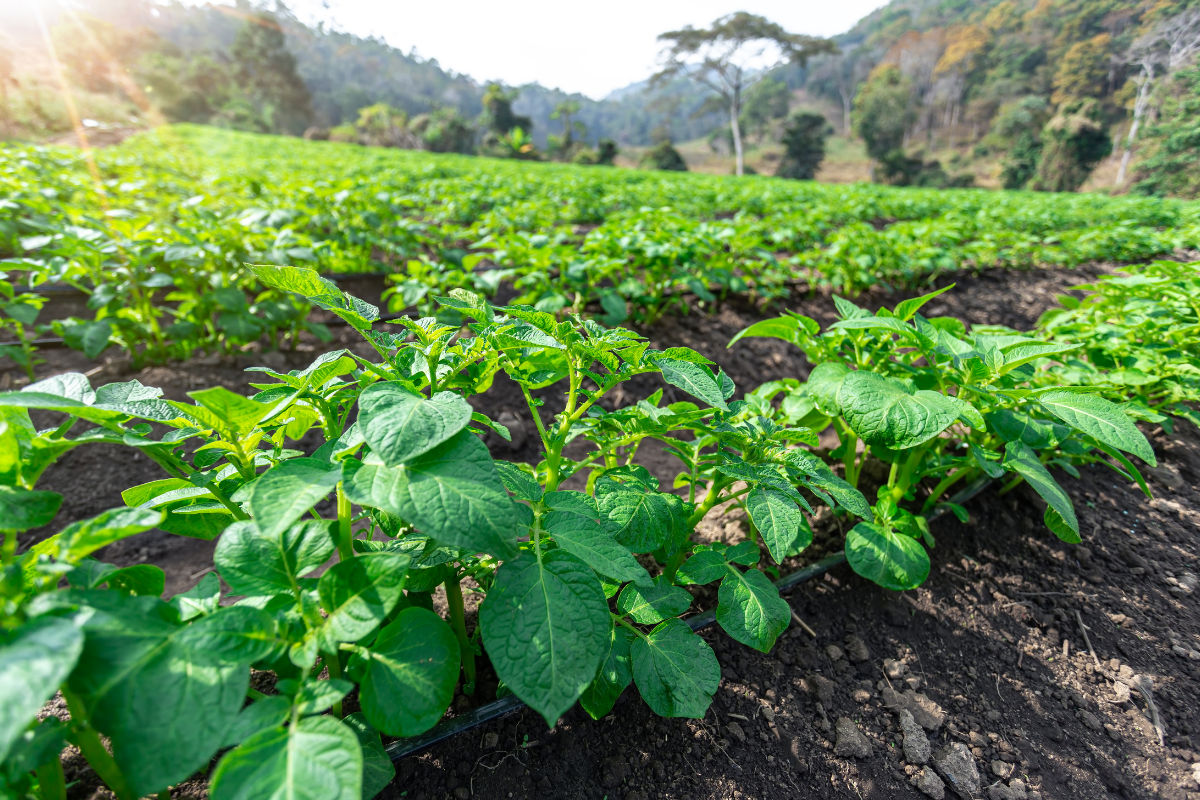
The season that followed was not normal. Potatoes form and bulk their tubers through July and August, and the process is sensitive to soil temperature in a way that few other arable crops are. Sustained heat above 30°C slows or stops tuber initiation, and drought during bulking limits the size the tubers reach. This summer delivered both across the entire north-west European potato belt at once.
Field samples taken by the French industry body CNIPT showed yields running more than 6 tonnes per hectare below the multi-year average and more than 8 tonnes below 2025 at the same date. UNPT's final projection lands close to that, at 37.4 tonnes against a five-year average of 43.1. The European Commission's Joint Research Centre put EU potato yields at 34.6 tonnes per hectare in its August bulletin, 6% below the five-year average, the deterioration measured in the same forecasts that cut every summer crop in Europe.
Quality is the second problem
Volume is one half of the difficulty. UNPT warns that the 2026 crop will be more heterogeneous than usual, with smaller tubers, variation in dry matter content and a raised risk of physiological disorders, the internal defects that heat stress causes as tubers grow unevenly. For a crop that feeds a processing industry built on uniform tuber length, size, dry matter and fry colour, that variability translates directly into rejected loads and downgraded prices.
The French union has asked buyers and processors to adapt their specifications to the reality of the season. Belgium, whose potato production is tied closely to the frozen fry industry, faces the same question. A processor holding to standard specifications in a year like this one will find less raw material that meets them, and the growers who cut area to restore their margins will find those margins eroded from the other side.
What it means for the market
Two reductions applied to the same crop produce a supply change larger than either alone. A smaller area at a lower yield is a substantially smaller harvest, arriving after a year in which the market had been oversupplied and stocks were high. The sector's own logic in June was that fewer hectares would restore balance. The heat has done that and then some.
Processing potato prices have already begun to respond, and the effect reaches beyond the growing regions. Belgium and the Netherlands supply frozen fries and processed potato products across Europe and beyond, so a tight raw material year in Flanders sets prices for importing markets that grow few processing potatoes of their own. For growers, the difficult lesson is that the decision to cut area was correct on the market information available and wrong on the weather, which is the risk any supply-management strategy carries when the weather is doing the same job at the same time.
Sources
- North-Western European Potato Growers. (2026). European ware potato area falls 11% as growers cut plantings. Press release, 30 June 2026, via PotatoPro.
- FruitToday. (2026). French potato crop faces historic production drop. UNPT forecast, August 2026.
- Potato News Today. (2026). French potato production could fall 23% as drought and heat cut yields. 24 August 2026.
- Potato News Today. (2026). Drought pressure spreads across north-west Europe's potato belt. 13 August 2026.
- PotatoPro. (2026). European potato acreage declines as heatwaves put yields under pressure. CNIPT field samples, September 2026.
- European Commission Joint Research Centre. (2026). JRC MARS Bulletin Vol. 34 No. 7. 24 August 2026.