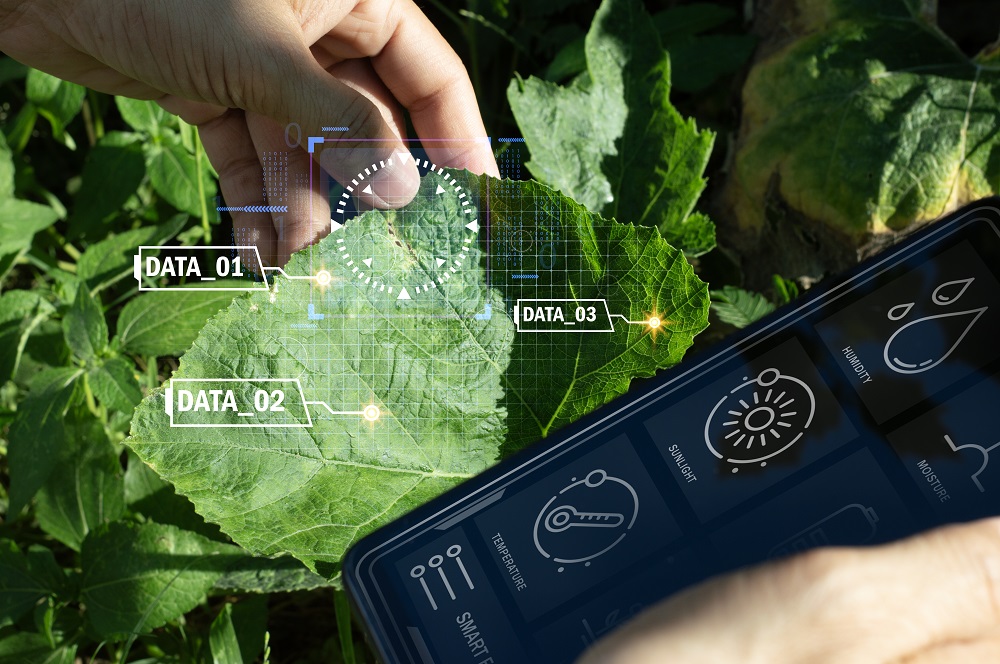
Modern agriculture generates massive volumes of data, from high-resolution satellite imagery to soil moisture readings, drone footage, and food safety reports. Yet the true value of this information lies not in its quantity but in how it is structured and made usable.
For artificial intelligence (AI) and machine learning (ML) models to extract meaningful insights, datasets must be annotated, labeled, and prepared in consistent formats. This critical task, data annotation, sits at the heart of agricultural digital transformation.
Read on to discover how data annotation ensures agricultural data becomes available and actionable.
What Is Data Annotation and Why Is It Crucial for ML and AI?
Data annotation refers to the process of assigning metadata or labels to raw data, enabling machine learning models to interpret it. In agriculture, annotation tasks include:
- Tagging regions of crop disease in drone imagery
- Labeling soil sensor data with moisture thresholds
- Assigning crop types to satellite pixels
- Marking food safety incidents in textual reports
Without quality data, ML models cannot learn patterns or make predictions. For instance, an image classifier trained to detect late blight in potatoes requires thousands of correctly annotated images. Similarly, natural language processing (NLP) models used to scan food safety reports must be trained on annotated corpora that indicate hazard types or severity.
Annotations are also essential for ensuring model reproducibility, reducing bias, and enabling model generalization across different climates, seasons, and crop systems.

Why Agricultural Data is Hard to Annotate
While precision agriculture tools, from drones to IoT sensors, generate rich datasets, this raw data is rarely structured or labeled in ways suitable for AI. Common challenges include:
- Heterogeneity: Data comes in many forms - images, text, sensor streams, GPS tracks, and must be unified
- Unstructured formats: Much of the data lacks standard metadata or uses proprietary file types
- Multimodal complexity: Models must process and relate different data types simultaneously
- Manual effort: Annotation is time-consuming and expensive when performed by experts
These barriers prevent many agricultural datasets from being ML-ready. For example, satellite imagery is abundant, but without pixel-level crop labels or growth stage information, its usefulness in modelling remains limited.
Scientific Perspectives on Scaling Annotation
A recent paper on automating data annotation and labeling with AI highlights the growing need for scalable annotation tools. The authors discuss the importance of automation, especially in sectors like agriculture, where datasets are large, continuous, and domain-specific. They argue that annotation must become more efficient, adaptive, and integrated into ML pipelines.
Complementing this, a 2024 survey outlines major bottlenecks in the annotation process. The authors categorize agricultural data as among the most challenging to annotate due to its noise, seasonal variability, and reliance on expert interpretation. They also stress the importance of domain-specific tools that can process formats like geospatial data, multispectral imagery, and environmental sensor logs.
These findings reinforce that annotation in agriculture is not a one-size-fits-all problem - solutions must be context-aware and technically robust.
The STELAR Project: Connecting Agricultural Data with ML Workflows
The STELAR projectPartnership between Wikifarmer and STELARoffers a real-world response to the challenges outlined above. Funded by the European Union, STELAR is building a platform for publishing, discovering, and preparing agricultural datasets for ML and AI applications. Key features include:
- Metadata-driven discoverability: Datasets are searchable by type, region, and metadata, making it easier to identify usable training material
- Workflow integration: STELAR links data to end-to-end ML pipelines, closing the gap between collection and deployment
- NLP support: The platform extracts structured information from food safety reports to support language-based AI tools
- Sensor fusion: By combining satellite and field sensor data, STELAR enhances accuracy in crop classification, yield prediction, and environmental monitoring
- Standardization: The project aims to harmonize annotation formats across data types to support interoperability
By focusing on both the technical and practical needs of data users, STELAR is helping agricultural data become more ML-ready, usable across borders, and effective in AI-driven decision-making.
NLP in Agricultural Contexts
Natural language processing plays a growing role in agri-food systems, particularly in analyzing unstructured documents such as:
- Food safety reports
- Farmer field notes
- Weather alerts
- Pest and disease monitoring bulletins
However, these documents must be carefully annotated to allow models to extract meaningful insights. STELAR’s work in this area supports semi-automated annotation of such reports, allowing regulatory bodies and researchers to track hazards, trends, and compliance more efficiently.
Building the Future: From Raw Data to Actionable Insight
For AI in agriculture to succeed, data annotation must become more accessible, standardized, and scalable. This means:
- Supporting tools that handle agricultural-specific formats
- Using hybrid methods that combine human expertise with AI-assisted labeling
- Establishing open, annotated datasets to reduce duplication of effort
- Encouraging cross-sector platforms to lead annotation standardisation
While automated methods are evolving, expert human input remains essential, particularly in validating data in complex agricultural environments. A hybrid annotation strategy combining automation and expert review is likely the most effective and sustainable path forward.
Conclusion
Data annotation is the bridge between raw agricultural data and actionable machine learning insights. Without it, AI systems remain limited, regardless of how much data they are given. As research and innovation converge through projects like STELAR, the agriculture sector moves closer to realizing the full value of its data. The result is smarter farming, stronger food systems, and better-informed decisions rooted in well-prepared, high-quality data.
References
- ResearchGate. (2024). Automating Data Annotation and Labelling with AI: A Machine Learning Perspective.
- Tan, Z., et al. (2024). Challenges and Opportunities in Data Annotation for Machine Learning: A Survey. arXiv:2402.13446.
Further reading
When Your Hydroponic Farm Talks Back: AI Tools That Actually Help
If it doesn’t work at 3% margin—and with farmer reality—it's not agri-innovation
AI-Ready Agriculture: How Knowledge Data Lakes Transform Farming with Smart Insights
Decision Support Systems in Crop & Weed Management: Benefits for Farmers
How IoT (Internet of Things) Devices Are Enhancing Farm Management and Food Safety
The Role of Big Data in Improving Crop Yields and Food Quality
Revolutionizing Agriculture: The Impact of AI-Driven Predictive Analytics
Vineyard Management Using Advanced Precision Viticulture Techniques
Listening to Plants with Chips: Decoding Plant Bio Signals
Data-Driven Agriculture: A Sustainable Revolution