


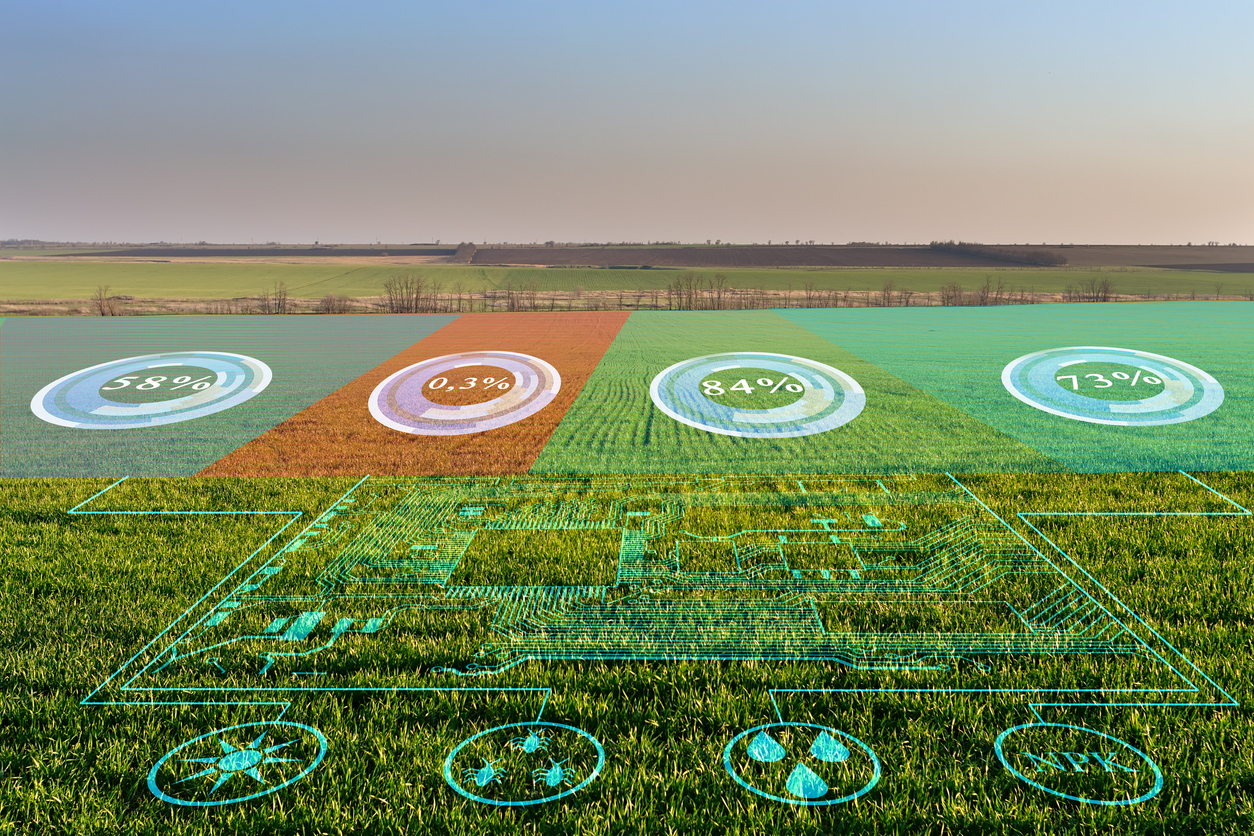
Crop & Weed Management Decision Support Systems and how they can benefit farmers
Until now, farmers in many countries have relied on experience and peer-to-peer learning for decision-making. However, modern decision-makers must take into account new, more complex, and multiple factors, such as climate change, market volatility, and an unstable environment.
What are the Decision Support Systems (DSS)?
Decision Support Systems (DSS) are computer-based systems designed to support farmers in decision-making. In particular, DSS helps decision-makers compile useful information from a combination of raw data, documents, and personal knowledge to optimize decision-making. A DSS consists of a database and an integrated model or algorithm to analyze the data and provide suitable recommendations. Data can be inserted into the system by the farmer or retrieved from soil sensors, satellites, or online databases. The final component of the DSS is the graphical user interface, which allows users to navigate and interact with the system.
How DSS Can Improve Decision-Making in Agriculture
In recent decades, DSS have become valuable tools in agriculture, offering innovative solutions to improve farming practices. By providing tailored recommendations, these systems help farmers reduce losses, adopt more sustainable techniques, and increase both the quality and quantity of their yields. Moreover, DSS supports environmental conservation by enabling producers to choose the best economic, social, or ecological solutions for their specific challenges.
Applications of DSS in Crop and Weed Management
Nowadays, a wide range of DSS tools are available, each designed to address agricultural challenges such as irrigation, pest management, fertilization, and more specific systems like intercropping adaptability to climate change.
At this point, it is important to emphasize that the DSS development process ought to be directly related to the realistic demands of the farmers and result in feasible and efficient practices and adaptations.
Furthermore, DSS can potentially promote sustainable agroecological practices by encouraging resource-efficient solutions, reducing environmental impact, and fostering long-term agricultural sustainability.
Many tools focused on pest and weed management suggest integrating both conventional and organic practices, enabling farmers to make more environmentally conscious decisions. Similarly, there are DSSs designed to predict weekly crop irrigation needs, helping farmers optimize water use, especially in regions where drought poses a significant challenge.
DSS assist farmers in efficiently managing their farms by providing real-time data, automation options, and analytics. These systems offer benefits such as real-time reporting, cost reduction, time-saving, and better resource allocation.
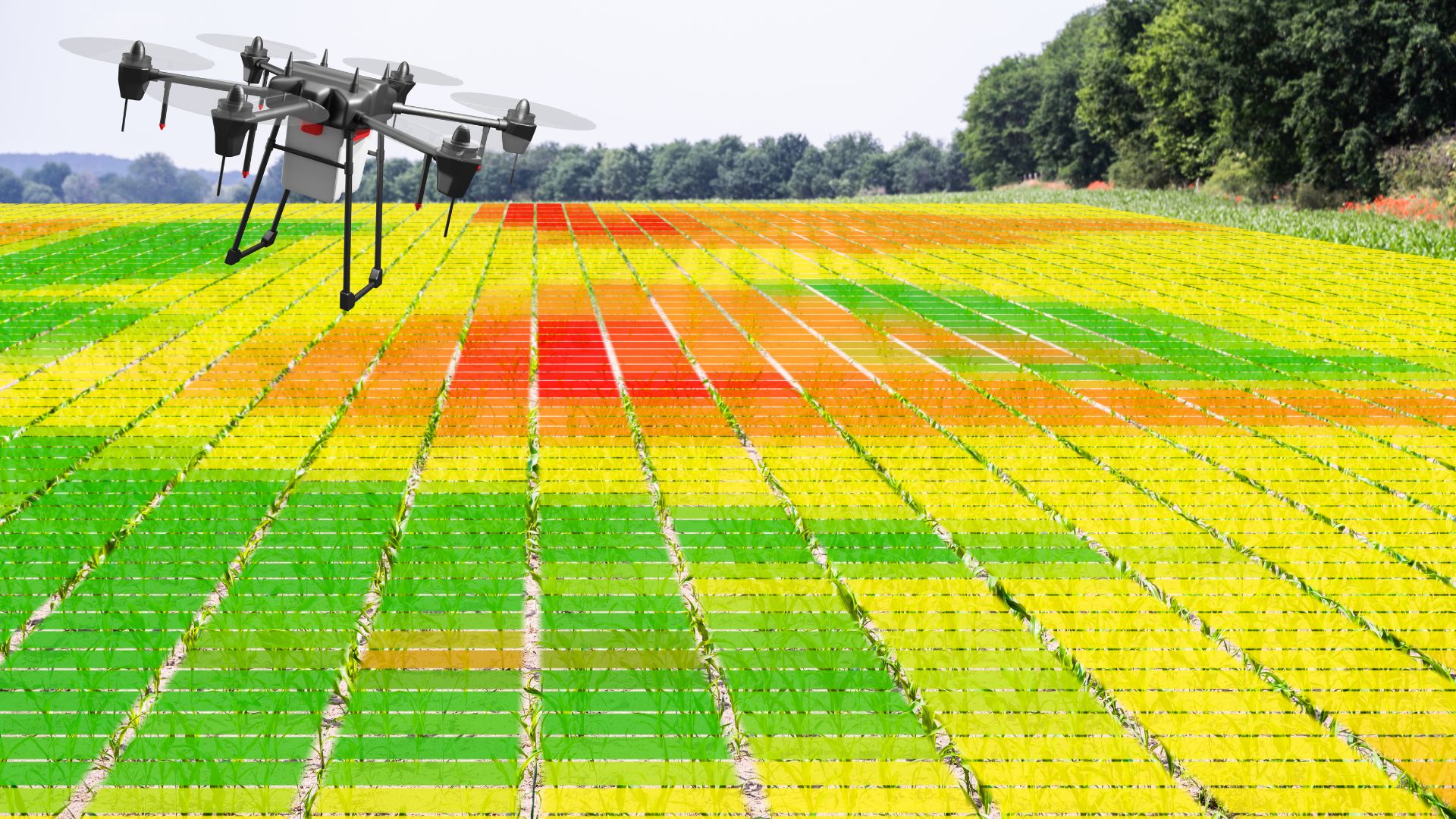
Benefits of DSS for Sustainable Farming
DSS tools deliver recommendations to address challenges in interpreting specific indicator values, such as soil nutrient levels, pest population densities, or crop health metrics, and help identify priority areas for interventions like targeted fertilization or pest control.
They also guide users in determining the optimal timing and location for pesticide applications. The use of DSS often results in a reduction in pesticide usage and provides recommendations for alternative control strategies, significantly reducing negative environmental and health impacts. Some can even assess yield losses caused by weeds that survive herbicide treatments.
Additionally, certain DSS can estimate herbicide residuals in soil and water using environmental indices. Other DSSs evaluate the environmental conditions that support the target pest populations in specific locations using this data to assess the risk of pest outbreaks. These insights help farmers make informed decisions about whether a treatment is necessary, contributing to more sustainable and effective pest management practices.
Challenges in Adopting DSS Among Farmers
Despite the rapid growth of smart farming solutions and the availability of numerous applications, the adoption rate remains low. One key reason for this is that farmers are not always familiar with and often hesitant to embrace digital solutions because their expectations of these tools' potential benefits may not align with the actual capabilities of the available technologies. This lack of confidence in DSS may result from recommendations that are often not applicable under actual (real-life) agricultural conditions.
Additionally, many farmers, especially smallholders, face barriers such as limited digital literacy, insufficient technical skills, or a lack of access to the necessary digital infrastructure to utilize these tools effectively.
Bridging the Gap: Promoting DSS Adoption in Agriculture
To bridge this gap, researchers, agronomists, and companies must actively introduce DSS to farmers through region-specific initiatives, including workshops and hands-on demonstrations of essential tools. This approach will help farmer groups become familiar with DSS and gradually adopt them.
ONE GREEN-DSS: Advancing Agroecological Crop & Weed Management
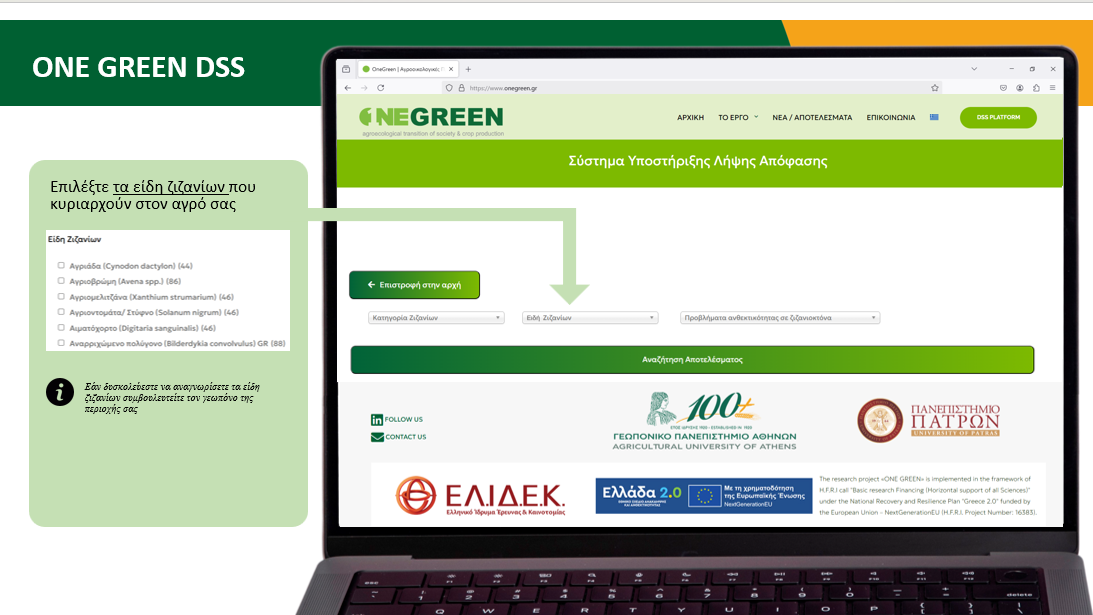
The ONE GREEN project developed a Decision Support System (ONE GREEN-DSS) focused on agroecological crop and weed management. The ONE GREEN-DSS addresses key issues such as landscape-based crop management, weed control, and managing herbicide-resistant weed populations. The DSS receives input from end users about their farm or region's conditions, including main crops, soil type, weed presence, and pedoclimatic factors. Based on this data, the DSS recommends the optimal combinations of agroecological methods for the increase of food security, the increment of revenue, and the reduction of production costs. The solutions provided are based on interviews/questionnaires with stakeholders and experts, evidence-based data coming from the experimentation within the Living Labs of the project, and socioeconomic and environmental analyses. ONE GREEN-DSS is freely accessible by any interested party through the project website (OneGreen).
The Future of DSS: Enhancing Precision Agriculture & Sustainability
Future research must focus on bridging existing gaps while engaging directly with farmers to help them understand how to use DSS effectively and optimize their decision-making processes. Extended research and experimentation are also essential for developing effective DSS tailored to weed management under varying soil and climatic conditions, meeting the specific needs of individual farmers. By addressing these challenges and enhancing the capabilities of DSS, such as improved data analysis, real-time decision support, integration with climate models, and precision agriculture technologies, agriculture can progress toward a more sustainable future.
References
- Ara, I., Turner, L., Harrison, M. T., Monjardino, M., DeVoil, P., & Rodriguez, D. (2021). Application, adoption, and opportunities for improving decision support systems in irrigated agriculture: A review. Agricultural Water Management, 257, 107161.
- Fenu, G., & Malloci, F. M. (2020). DSS LANDS: A decision support system for agriculture in Sardinia. HighTech and Innovation Journal, 1(3), 129-135.
- Kanatas P, Travlos IS, Gazoulis I, Tataridas A, Tsekoura A, Antonopoulos N. Benefits and Limitations of Decision Support Systems (DSS) with a Special Emphasis on Weeds. Agronomy. 2020; 10(4):548. Benefits and Limitations of Decision Support Systems (DSS) with a Special Emphasis on Weeds — Agronomy
- Kanatas, P., Travlos, I., Tataridas, A., & Gazoulis, I. (2022). Decision-making and Decision Support System for a successful weed management. In Information and Communication Technologies for Agriculture—Theme III: Decision (pp. 159-179). Cham: Springer International Publishing.
- Manos, B. D., Papathanasiou, J., Bournaris, T., & Voudouris, K. (2010). A DSS for sustainable development and environmental protection of agricultural regions. Environmental monitoring and assessment, 164, 43-52.
- Petraki D, Gazoulis I, Kokkini M, Danaskos M, Kanatas P, Rekkas A, Travlos I. Digital Tools and Decision Support Systems in Agroecology: Benefits, Challenges, and Practical Implementations. Agronomy. 2025; 15(1):236. Digital Tools and Decision Support Systems in Agroecology: Benefits, Challenges, and Practical Implementations — Agronomy
- Sánchez Céspedes, J. M., Rodríguez Miranda, J. P., & Ramos Sandoval, O. L. (2020). Decision support systems (DSS) are applied to the formulation of agricultural public policies. Tecnura, 24(66), 95-108.
Further reading
Pest, Disease and Weed Management
Weed resistance to herbicides and how to manage it
The Benefits of Crop Rotation with Legumes: Boost Soil Health and Farm Productivity
The Role of AI-Powered Robotics in Modern Farming: Enhancing Efficiency and Sustainability
How can vegetation indices help to improve crop growth and yield?
How IoT (Internet of Things) Devices Are Enhancing Farm Management and Food Safety
Digital Soil Mapping: Boosting West Africa’s Agriculture
Vineyard Management Using Advanced Precision Viticulture Techniques
Machine Learning and Smart Farming: Are the Future of Agriculture?