The Promise of Digital Soil Mapping: Transforming Agriculture in West Africa and the Sahel
West Africa and the Sahel, home to millions of smallholder farmers, face significant challenges related to soil degradation and low agricultural yields. These issues, compounded by climate change, threaten food security and the livelihoods of farming communities. However, digital soil mapping (DSM) offers a transformative solution to address these challenges and revolutionize agricultural practices in the region.
The Role of Digital Soil Mapping in Agriculture
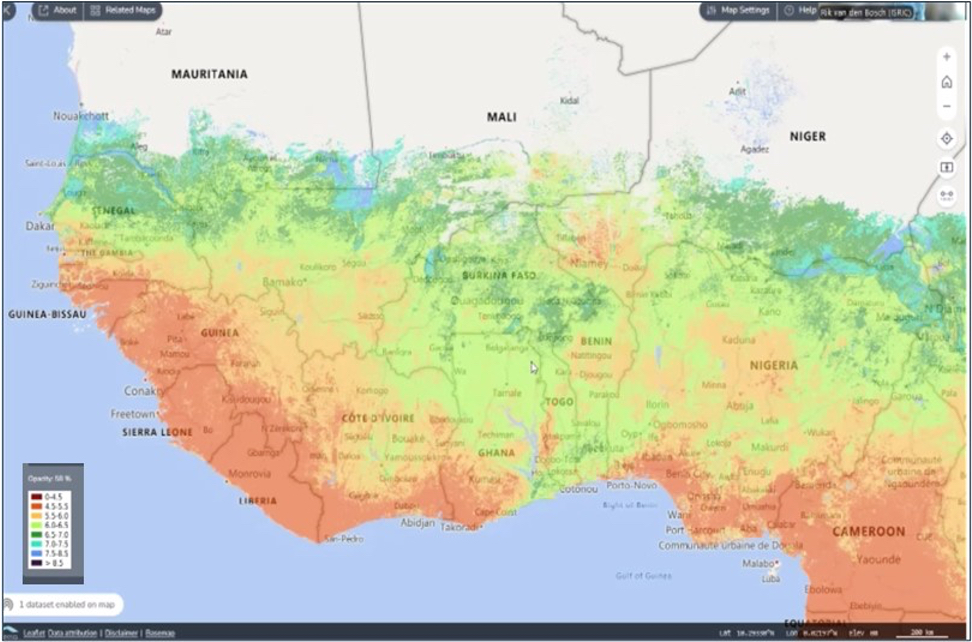
Digital Soil Mapping (DSM) uses advanced technologies like artificial intelligence (AI), machine learning (ML), and geospatial analysis to create high-resolution soil maps. By integrating soil samples with environmental data from satellite imagery and climatic factors, DSM provides precise insights into soil properties, such as fertility, organic matter, pH levels, and nutrient availability.
In regions like West Africa, DSM initiatives have demonstrated the potential to enhance soil fertility assessments. For example, collaborative efforts in Benin have generated maps that offer actionable insights for sustainable soil management. These maps empower smallholder farmers to:
- Optimize Crop Selection: Farmers can choose crops that are well-suited to the local soil conditions, improving yields and reducing the risk of crop failure.
- Implement Precision Agriculture: DSM enables the precise application of fertilizers and irrigation, minimizing waste and environmental harm.
- Enhance Climate Resilience: By identifying areas vulnerable to degradation, farmers can adopt targeted measures to protect soil health against climate risks.
Benefits of DSM for West African Farmers
DSM contributes to sustainable agriculture in multiple ways:
1. Improved Productivity and Profitability
Adopting DSM-driven practices can lead to yield increases of up to 40% and profit gains of approximately 20%. These improvements are critical for smallholder farmers, who rely heavily on agriculture for their livelihoods.
2. Environmental Sustainability
By identifying specific nutrient deficiencies, DSM helps reduce the overuse of fertilizers, a common cause of soil acidification and water contamination. This precision reduces the environmental footprint of farming practices while maintaining soil health for future generations.
3. Enhanced Decision-Making
Tools like AgWise integrate DSM data to deliver tailored, localized recommendations. By advising on optimal planting schedules, crop varieties, and fertilizer applications, these platforms enable farmers to make informed decisions that improve productivity and resilience.
Technological Foundation of DSM
DSM relies on advanced analytical tools and infrastructure:
- Data Integration: Soil samples are combined with geospatial datasets from sources like ISRIC and climate models.
- AI and ML Models: These technologies analyze complex datasets to generate accurate and detailed maps.
- Digital Platforms: User-friendly apps and dashboards, such as AgWise, provide accessible recommendations to farmers and extension agents.
Overcoming Challenges
Despite its promise, DSM faces hurdles that must be addressed:
- Data Quality and Accessibility: Standardized data collection methods and unified databases are crucial to ensure map accuracy.
- Infrastructure and Training: Investments in digital infrastructure and capacity-building programs are needed to enable effective use of DSM tools.
- Collaboration: Partnerships among governments, research institutions, and the private sector are essential to fill data gaps and expand mapping efforts.
A Collaborative Effort for Regional Growth
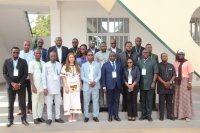
The Regional Hub for Fertilizer and Soil Health for West Africa and the Sahel, launched in 2024, exemplifies the power of collaboration. This initiative, hosted by the International Institute of Tropical Agriculture (IITA), brings together key stakeholders, including OCP Africa, APNI, IFDC, the World Bank, Soil Reference and Information Centre (ISRIC), iSDAsoil, and the Regional Hub for Fertilizer and Soil Health for West Africa and the Sahel (the Hub) contribute to the accuracy and reach of these maps.
The Hub’s activities align with the African Union’s 10-Year Action Plan for Fertilizer and Soil Health, which emphasizes multi-stakeholder partnerships. By fostering regional collaboration and leveraging advanced technologies like DSM, the Hub aims to:
- Expand digital soil mapping coverage.
- Enhance data accuracy.
- Promote the adoption of climate-smart agronomy tools, such as AgWise.
As the updated digital soil maps are set to launch in early 2025, the Regional Hub is actively working on expanding mapping efforts, enhancing data accuracy, and supporting the development and adoption of climate-smart agronomy tools like AgWise. AgWise is a freely available, open-source tool that provides data-driven, localized, and climate-specific agronomic recommendations. It combines agronomic and geospatial datasets from field trials, market analyses, and open data sources to deliver tailored advice on optimal planting times, cultivar selection, fertilizer types and quantities, and good agronomic practices. Currently supporting eight crops, including cassava, maize, rice, potato, and wheat, in key African countries, AgWise integrates soil, weather, and satellite data from sources like ISRIC to contextualize recommendations for specific growing conditions. Designed to empower smallholder farmers, the platform offers actionable insights to improve productivity and profitability, while its open-source nature enables further development by the global agricultural community.
Governments, donors, and private-sector stakeholders have a crucial role to play in realizing the full potential of digital soil maps. By investing in digital infrastructure and capacity building, implementing policies that incentivize the use of these tools, and fostering regional collaboration, they can contribute to a future where West Africa and the Sahel achieve resilient, sustainable, and inclusive agricultural growth, ensuring food security and prosperity for generations to come.
Conclusion
Digital Soil Mapping represents a breakthrough in addressing the soil health challenges faced by West Africa and the Sahel. By providing farmers with actionable insights, DSM empowers them to adopt sustainable practices that boost productivity, enhance resilience, and safeguard the environment. With continued investments in technology, infrastructure, and partnerships, DSM has the potential to transform agriculture and ensure food security for generations to come.
About the Regional Hub for Fertilizer and Soil Health:
Launched in 2024, the Hub is a collaborative platform uniting governments, research institutions, and private-sector entities to combat soil degradation and promote sustainable agriculture in West Africa and the Sahel. Through initiatives like digital soil mapping, the Hub is paving the way for a resilient and food-secure future in the region.
Accelerating the Impacts of CGIAR Climate Research for Africa (AICCRA) is a key knowledge partner that offers soil information, knowledge management, agronomy recommendations, capacity development, policy support, and advocacy. Mohammed VI Polytechnic University (UM6P) drives scientific and technical advancements through soil mapping, remote sensing, and precision agriculture tools. The Economic Community of West African States (ECOWAS) plays a crucial role in aligning the Hub's activities with regional policies and promoting best practices across member states.
Further reading
https://cgspace.cgiar.org/items/0d178941-7f97-4221-98cb-66fb70dae257
https://www.nrcs.usda.gov/resources/data-and-reports/digital-soil-mapping-dsm
FAO Knowledge Repository (PDF)
The Role of Soil Microbiome in Sustainable Farming
Insect Frass: A Sustainable Solution for Soil Health and Fertilization
What is Soil Compaction and How to Reverse it?
How to Combat Desertification and Drought with Regenerative Agriculture
Optimizing Soil Health: Understanding and Balancing Soil Organic Matter
Circular agriculture - The soil microbiome and the advantage of using recycled nutrients