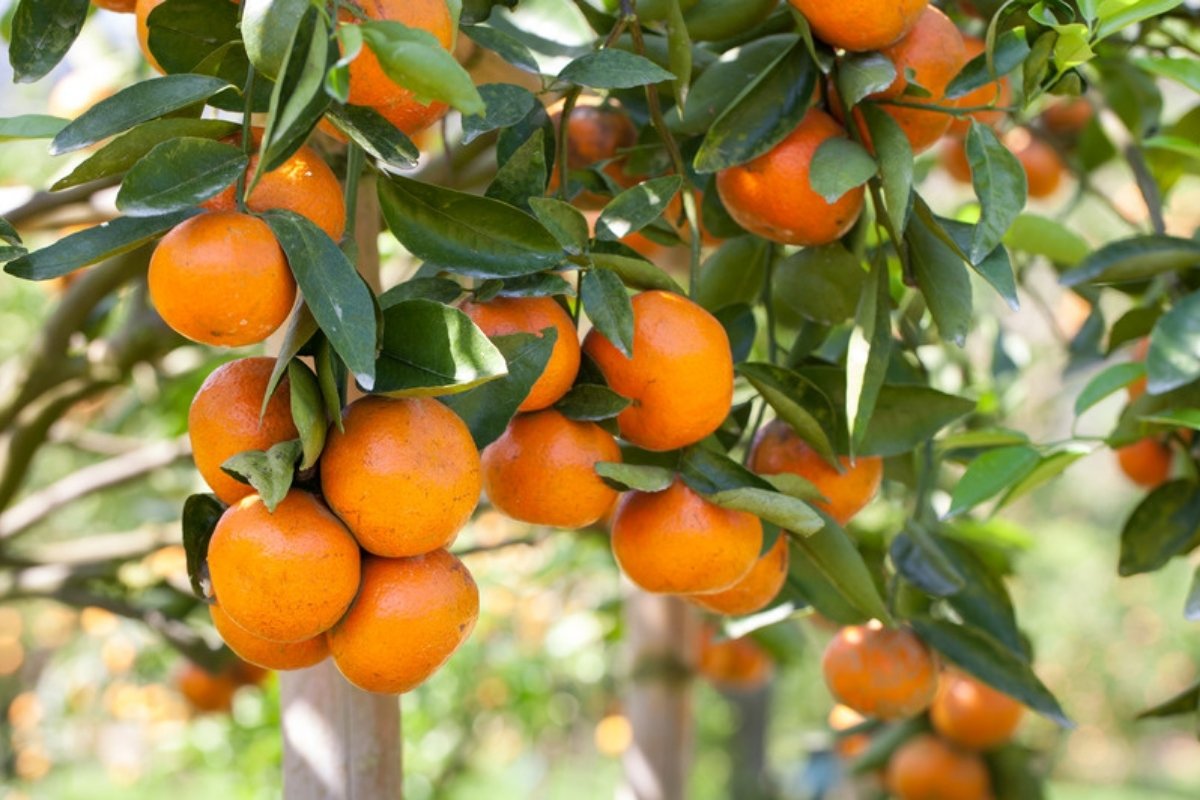
In autumn, the rind of some orange and mandarin varieties tears and the pulp bursts, usually from the bottom of the fruit. This is a physiological disorder that occurs when the rind does not keep pace with the faster growth of the pulp, triggered by sudden or large changes in temperature and in air and soil humidity during ripening, combined with the thin rind of some varieties. No pest or disease is involved, so spraying does not fix it, while good irrigation management limits it.
What fruit splitting looks like
The split usually starts at the stylar end of the fruit, where the navel is, the weakest point of the rind. It can be short and shallow or deep and wide enough to expose the segments, and once it appears on a fruit nothing can be done to repair it.
After a period of stress, older fruit already on the tree commonly split at the bottom. Split fruit cannot be sold and either drops or rots, so it is picked off the tree and cleared from the ground.
Which varieties split most
The problem appears in some orange and mandarin varieties with thin rinds. In Florida, splitting is most severe on Valencia, Hamlin and navel oranges and on Murcott mandarin, while grapefruit and tangelos split less, and incidence rises on trees carrying a heavy crop.
Mandarins and their hybrids are especially vulnerable, because their thin rind increases susceptibility to splitting. In the Nova hybrid, splitting is also linked to an open stylar end, at the point where the flower's style used to be.
Why the rind splits
The exact cause is not known, but it is linked to water relations and rind thickness. Damage often appears when the tree takes up water from rain or irrigation after a long dry spell, the fruit swells quickly and the rind tears across the bottom.
Tree stress comes from high temperatures, hot winds, too much or too little soil moisture and potassium deficiency. Potassium matters in particular, because low levels produce thinner rind, and on Valencia orange trees potassium application reduced splitting and increased rind thickness as well as fruit size.
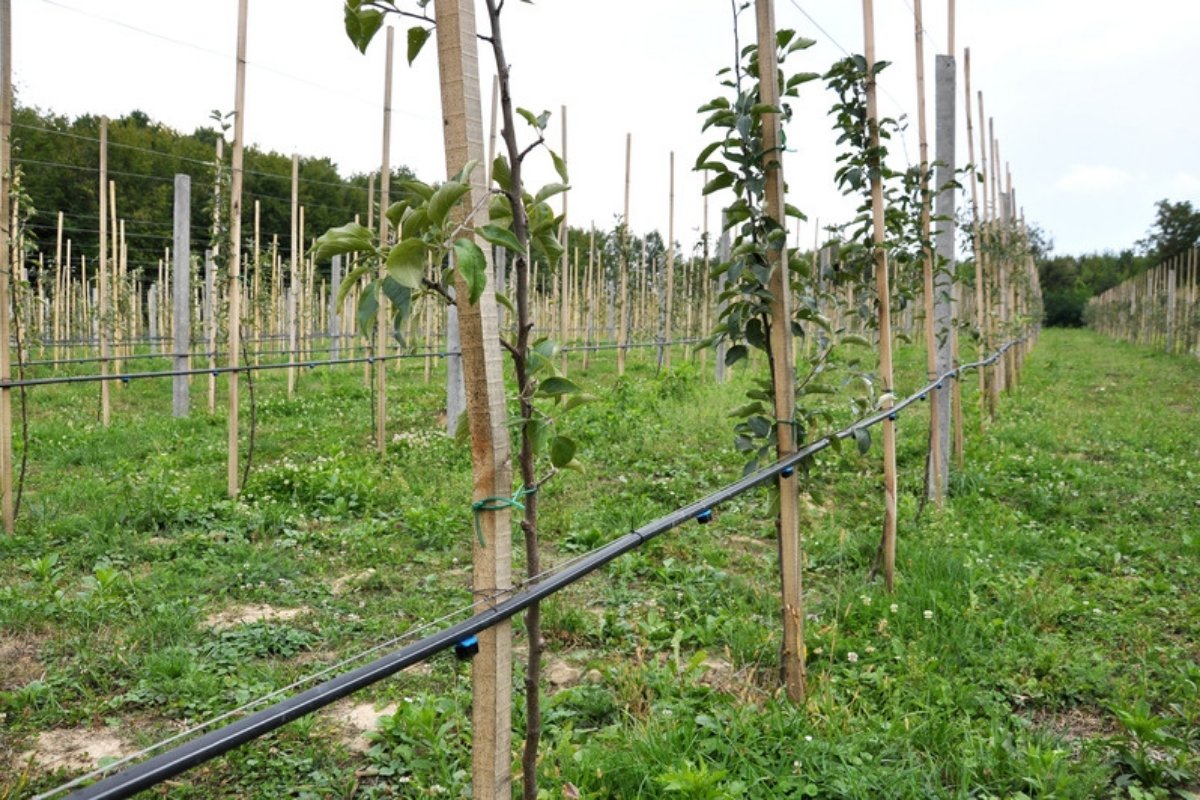
Regular, moderate watering keeps soil moisture steady during ripening, without long dry spells followed by heavy irrigation.
How much good irrigation helps
The Greek bulletin holds that correct irrigation management limits splitting, and US guidelines ask for the amount and frequency of watering to follow the weather, with more water before hot, windy days.
Other observations, however, found that irrigation, fertilizer and other cultural practices made no difference to splitting within a given year, with weather changes playing the bigger role. And while drought before irrigation is seen as a cause, experiments show that high irrigation levels also increase splitting, so the sources disagree on the role of water.
All sources agree, though, that soil moisture should stay as even as possible during ripening, without long dry spells followed by heavy watering, because sudden swings are what tear the rind.
What to do in the orchard and the garden
Water regularly and in moderate amounts, especially in summer and early autumn, since citrus trees are not drought tolerant and need a steady supply of moisture in the root zone. Sandy soils dry out faster, so intervals between irrigations are shorter there, and the water needs and irrigation of orange trees set the baseline.
Nutrition is checked with leaf analysis so that potassium stays at adequate levels, following the fertilizer requirements of orange trees. In new orchards, choosing varieties with thicker rinds reduces the problem in areas with frequent sudden weather changes.
Frequently asked questions
Why do oranges split on the tree
Because the rind does not keep up with the faster growth of the pulp, usually after sudden changes in temperature and humidity during ripening. It is a physiological disorder, not a disease.
Which mandarins split most
Thin-rinded varieties such as Murcott and hybrids like Nova, which are more vulnerable than thicker-rinded oranges.
Can anything be sprayed against fruit splitting
No, because no pest or disease causes it. Splitting is limited through correct irrigation management and adequate potassium nutrition.
Does potassium help prevent orange splitting
Yes, because low potassium produces a thin rind that splits more easily. Leaf analysis shows whether more is needed.
Can overwatering make oranges split
It can, since both too much and too little soil moisture stress the tree. The riskiest pattern is heavy watering after a long dry spell.
What should be done with split fruit
Pick it off the tree and clear it from the ground, because it cannot be saved once the rind has opened and it rots.
Important notes
Conditions vary by region, variety, soil and year, so the above is a general guide and a starting point for checking the orchard. For the irrigation and fertilization programme, an agronomist gives the safest answer.
Sources
- Regional Centre for Plant Protection, Quality and Phytosanitary Control of Heraklion, Plant protection in citrus, Bulletin No 4, 1 October 2026 (in Greek).
- UC Statewide IPM Program, Splitting of citrus fruit.
- Zekri M. et al., Citrus problems in the home landscape, UF/IFAS Extension.
- UC Cooperative Extension, Stanislaus County, Splitting in navel oranges is difficult to prevent.
- Cronje P. J. R. et al., Fruit splitting in citrus, Horticultural Reviews.