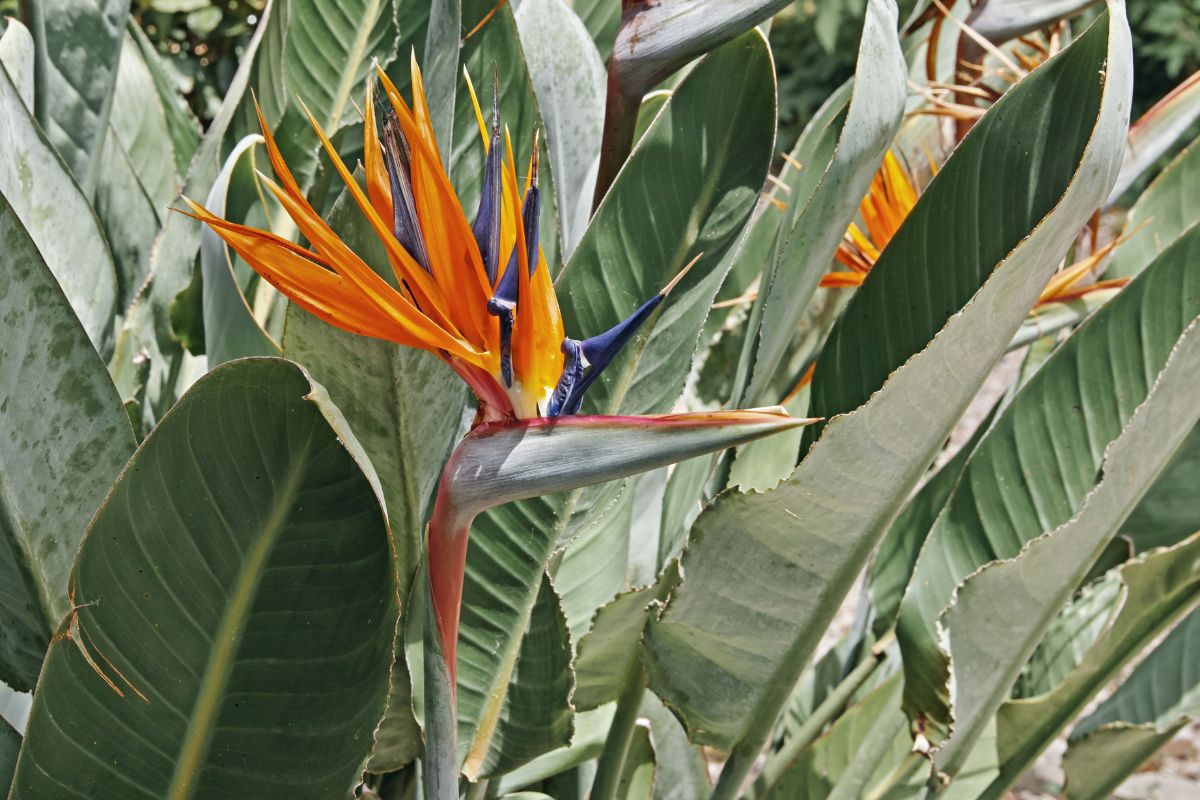
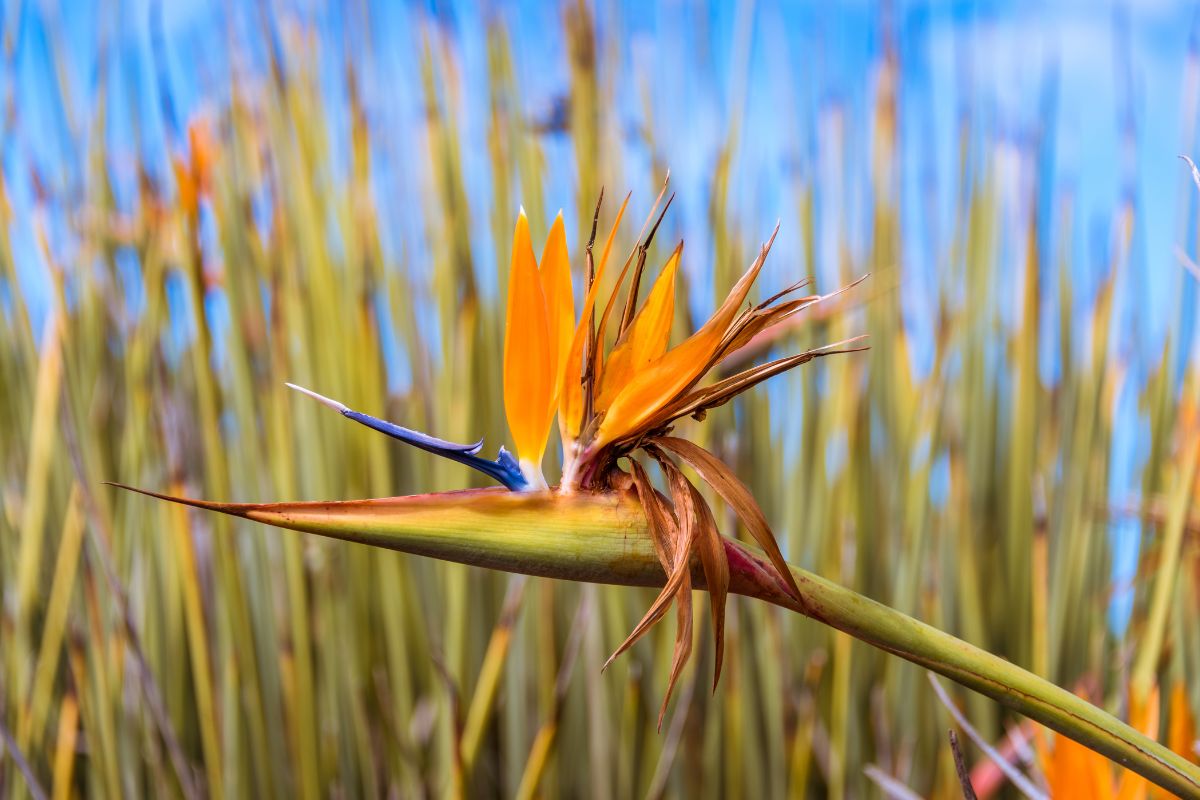
Strelitzia (Strelitzia reginae) is one of the most striking ornamental plants you can grow. Its large banana-like leaves and unmistakable orange-and-blue flowers have earned it the common name bird of paradise, because the open blooms really do look like the head of an exotic bird.
Although it's often thought of as a tropical plant, Strelitzia actually comes from South Africa, specifically the Cape Provinces and KwaZulu-Natal. In Southern California, it's the official flower of the City of Los Angeles, and in South Africa, it appears on the reverse of the 50-cent coin. It thrives outdoors in warm climates and makes an excellent container plant everywhere else.
This guide covers everything you need to care for your strelitzia successfully. It also answers the question that almost everyone who owns one eventually asks: why does it take so long to flower?
What strelitzia symbolises
Strelitzia is associated with joy, freedom, and faithfulness. In the language of flowers, it also stands for beauty, thanks to the vivid colors and the unusual bird-like shape of the bloom.
The genus name Strelitzia was given by the British botanist Joseph Banks in honor of Queen Charlotte of Mecklenburg-Strelitz, wife of King George III, who was a keen botanist and patron of the royal botanic gardens at Kew.
In its native South Africa, it appears on the 50-cent coin, and in Los Angeles, it's the official flower of the city. Worldwide, the strelitzia bloom is one of the most popular cut flowers for tropical and exotic floral arrangements.
Botanical characteristics
Strelitzia is an evergreen perennial that grows in dense clumps. It usually reaches 1 to 1.5 meters in height and spread, though some mature plants can exceed 2 meters.
The leaves are large, oval, held on long stalks, and resemble banana leaves. The foliage alone is enough to make the plant a focal point in a room, even when it isn't in flower.
The flowers are what impress most, though. They emerge from a hard, beak-shaped green bract called the spathe. From inside it, the petals appear in succession, three vivid orange and three deep blue that form the "tongue" of the bird. Each flower lasts more than two weeks, even when cut and placed in a vase.
There are five species in the genus Strelitzia.
Strelitzia reginae: the most common, the classic plant with the orange-and-blue flowers we know as bird of paradise
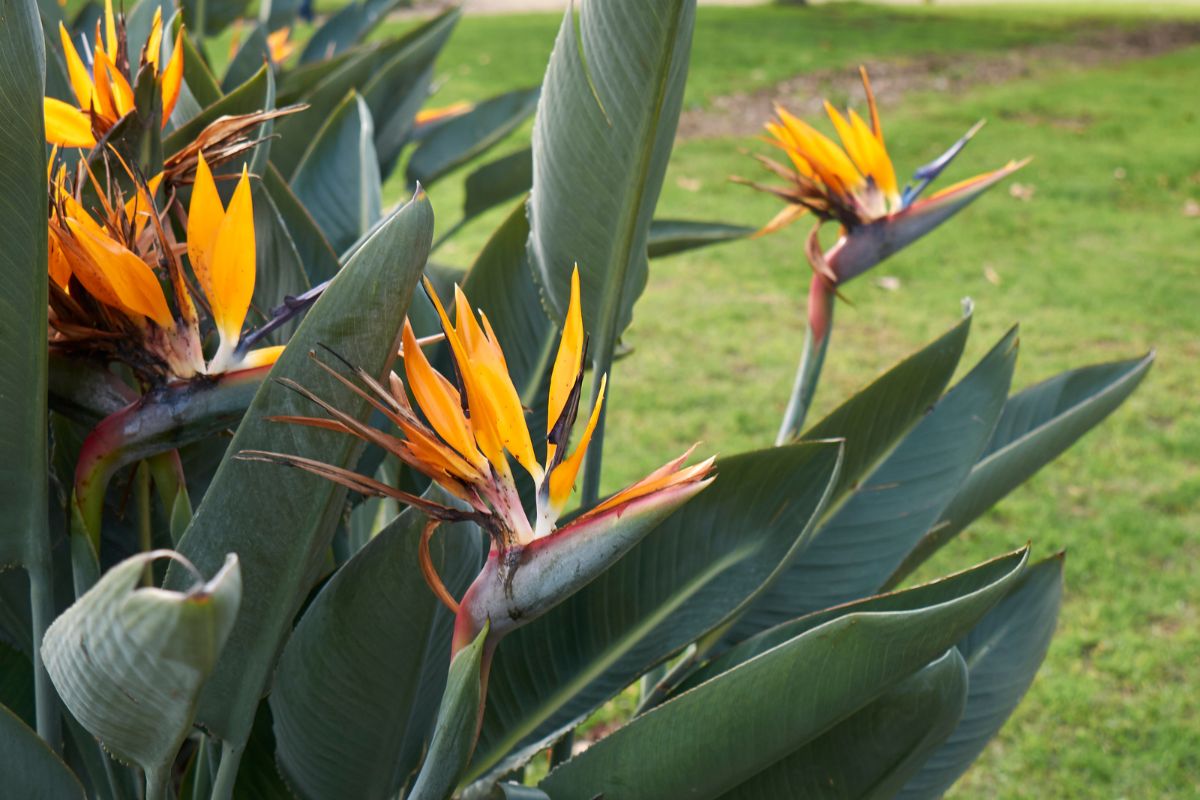
Strelitzia nicolai (giant or white bird of paradise): a much larger species reaching up to 10 meters in the wild. White and blue flowers. Grown mainly for its dramatic foliage
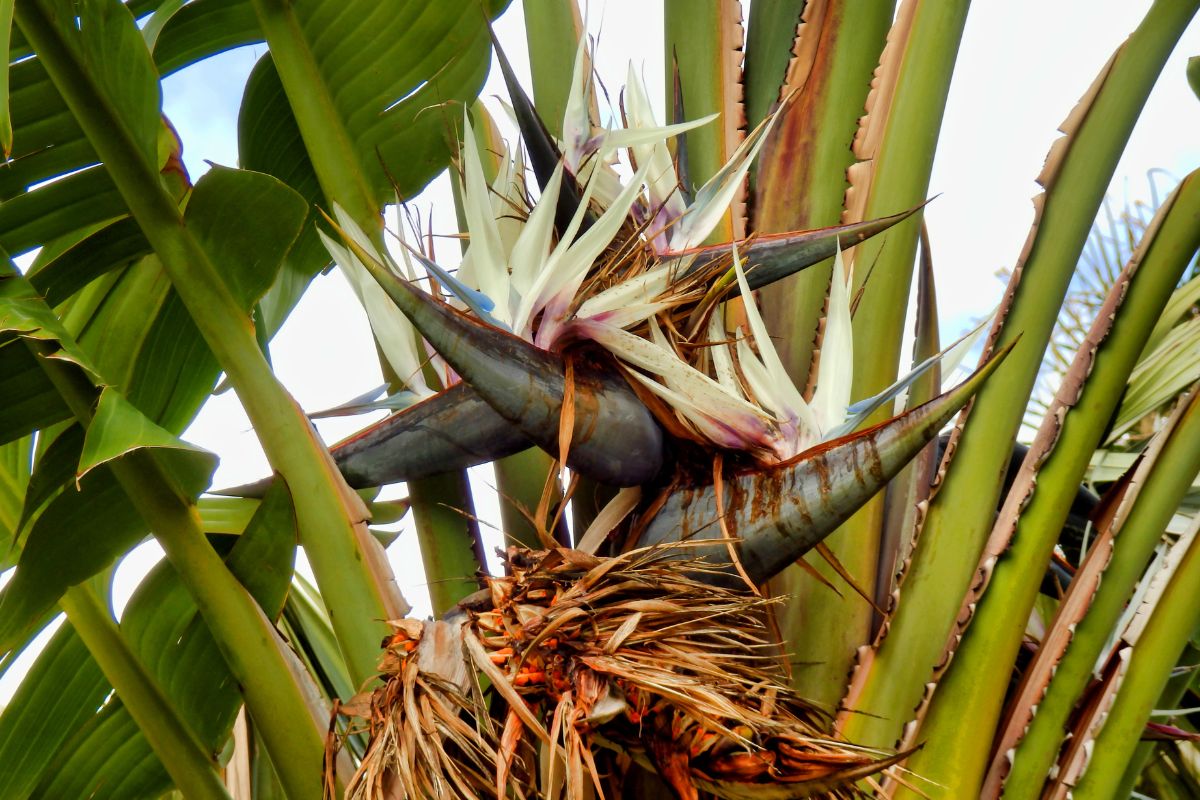
Strelitzia alba: similar to nicolai but slightly smaller
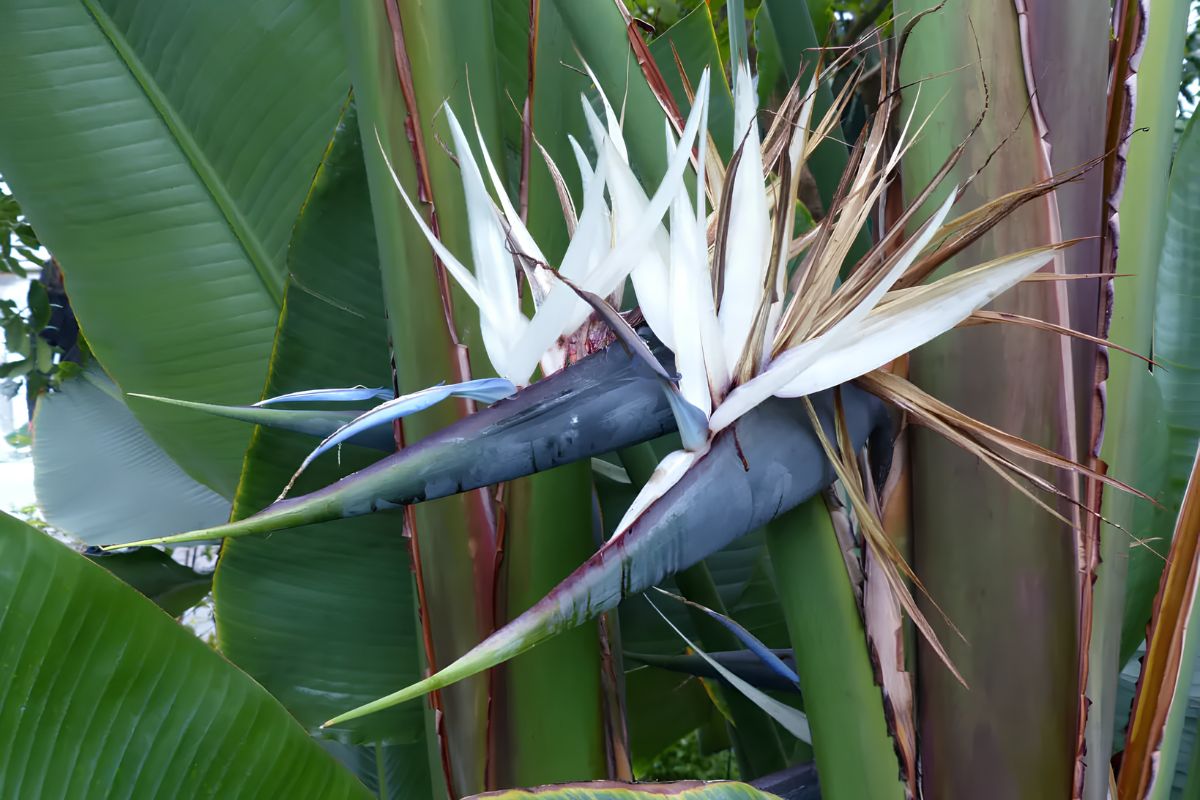
Strelitzia juncea: an unusual species with cylindrical, almost bladeless stems instead of normal leaves. The most cold-hardy of the family
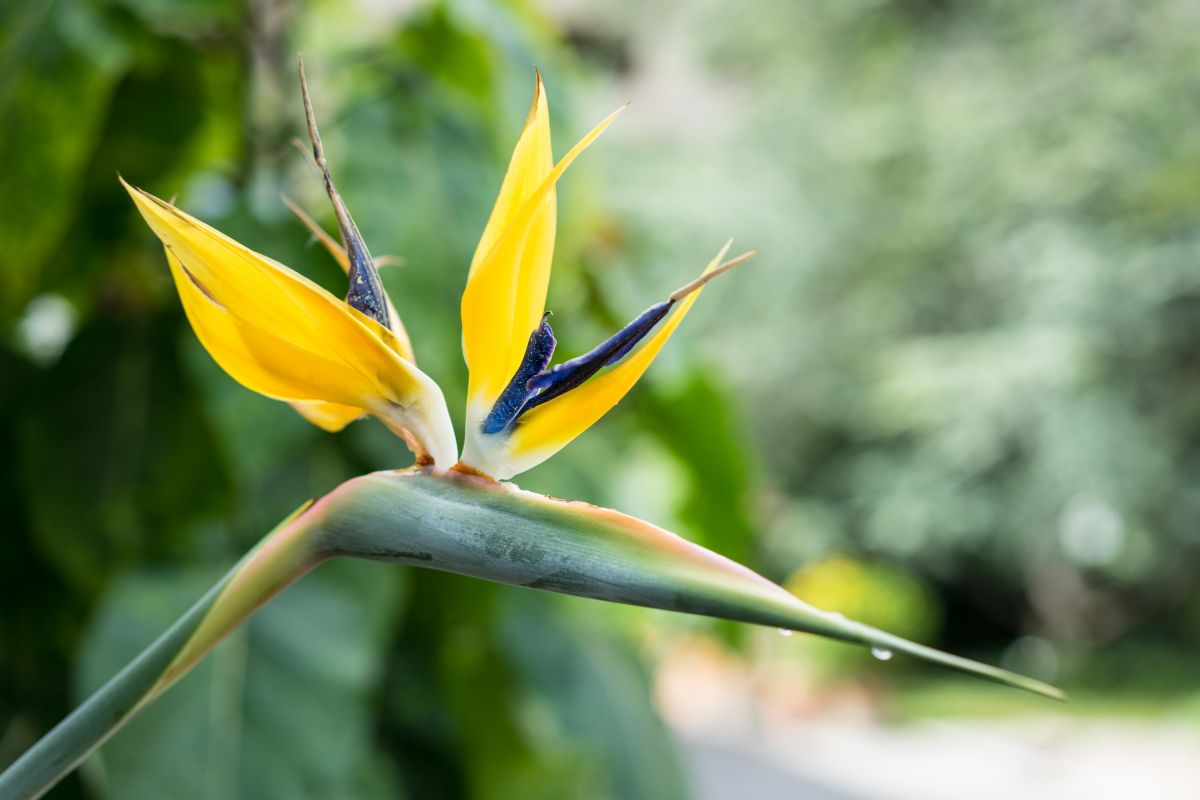
Strelitzia reginae 'Mandela's Gold': a cultivar of reginae with yellow petals instead of orange. Developed at Kirstenbosch National Botanical Garden in South Africa
Where to grow strelitzia
Strelitzia thrives in warm climates and grows outdoors year-round in USDA zones 9-12. In cooler regions, it's grown in a container that comes indoors for winter.
By climate.
- Warm Mediterranean and subtropical regions: plant outdoors year-round in a position sheltered from cold winds and free from hard frost
- Mild temperate climates: outdoors only in favorable microclimates against a south-facing wall, otherwise better in a container
- Cool and cold climates: container culture only, moving the plant into a bright spot indoors or a greenhouse for winter
Strelitzia wants plenty of sun. In the hottest regions, a little shade during the hottest hours of summer keeps leaves from scorching. Indoors, place it in a bright spot near a south- or east-facing window. In low light, it grows but won't flower.
It doesn't tolerate temperatures below 5°C. Mature plants can withstand brief dips to around 0°C without serious damage, but prolonged frost is fatal. Among the species, Strelitzia juncea is the most cold-hardy.
Soil
Strelitzia wants fertile, well-draining soil. It isn't particularly fussy about pH but prefers values of 5.5-7.5. In heavy clay soils, water pooling around the roots causes root rot.
Before planting, work in well-rotted compost or manure. On heavy soils, add coarse grit to improve drainage. On poor sandy soils, add extra organic matter to help the soil hold moisture and nutrients better.
Planting
The best planting times are spring (March-May) and late summer to early autumn (September-October) in mild regions. Spring planting is recommended everywhere else.
Planting in the ground
- Dig a hole twice the diameter of the rootball and the same depth
- Loosen the soil at the bottom and work in well-rotted compost or manure
- Position the plant so the top of the rootball sits level with the surrounding soil
- Backfill with soil, firm gently, and water in well
- Apply a layer of compost or pine bark mulch around the base to retain moisture
Growing strelitzia in a container
Strelitzia is one of the most striking container plants. In cooler regions, it's the only realistic option.
- Choose a pot 35-40 cm in diameter for a young plant, just slightly larger than the rootball
- Make sure it has plenty of drainage holes
- Use a good-quality compost with about 20% perlite or coarse grit for drainage
- Strelitzia prefers to be slightly pot-bound and flowers better when the roots have nearly filled the space. Don't rush to move it into a much bigger pot
- In summer, the container thrives on a sunny patio. In winter, in colder regions, move it into a bright spot indoors
Watering
During the growing season (spring and summer), strelitzia wants regular, generous watering. Water when the top 2-3 cm of soil has dried out. In a container, that usually means every 4-7 days in the warm months.
In winter, cut watering back significantly. The plant goes into semi-dormancy, and excess water easily leads to root rot. Let the soil dry out well between waterings.
When watering a container plant, water thoroughly until water runs from the drainage holes, then empty the saucer. Water shouldn't sit pooled under the pot.
Feeding
In the garden, an annual mulch of well-rotted compost or manure around the base in spring helps significantly. For richer flowering, add a balanced fertilizer for flowering plants in spring and a second feed in midsummer.
In containers, use a liquid fertilizer for flowering plants every two weeks during the growing season. Choose a formulation higher in potassium and phosphorus relative to nitrogen. Too much nitrogen produces large leaves at the expense of flowers.
In winter, stop or minimize feeding. Once a year, in early spring, flush the container compost with plenty of water to wash out accumulated salts.
Repotting
Strelitzia flowers better when its roots have filled the pot, so don't repot it often. Usually, one repotting every 2-3 years is enough, with the new pot only 3-5 cm larger in diameter.
The best time to repot is spring, before active growth begins. In the years between, replace the top 5 cm of compost with fresh material.
Pruning
Strelitzia doesn't need regular pruning. Just remove the following with sharp scissors.
- Dead or yellowing leaves, cutting the stalk as low as possible at the base of the plant
- Spent flower stems, once flowering has finished
- Leaf sections torn or damaged by wind
This keeps the plant looking tidy and lets it put out new growth more easily.
Propagation
Strelitzia is propagated in two ways.
By division
This is the most common and fastest method. In spring, when you repot a mature plant, look for distinct clumps with their own roots (offsets).
- Carefully remove the plant from its pot or the ground
- Gently tease the roots apart
- With a sharp knife, or a saw for large plants, separate the clump into two or more sections, each with plenty of its own roots and at least 3-4 leaves
- Plant each section in its own pot with fresh compost, or in the garden
- Water moderately and keep in a shaded spot until established, usually 4-6 weeks
Divided plants may take a year to flower again, as they need time to rebuild their root system.
From seed
This is a slow, demanding method, and the plants take several years to reach flowering size. It's still rewarding for the patient grower.
- Soak the seeds in lukewarm water for 24 hours before sowing. The hard coating needs softening
- Sow in spring in a well-draining mix, about 2 cm deep
- Keep the temperature at 24-27°C and the humidity steady
- Germination takes 4-8 weeks or longer
Seedlings grow slowly in the first years and can take 5-7 years to flower for the first time.
Why your strelitzia isn't flowering
This is the most common question from people who own a strelitzia. There are two realities to understand.
Flowering takes time. A strelitzia usually needs 3-5 years from planting to its first flower, while plants grown from seed take 5-7 years or more. It isn't a matter of care; it's just how the plant works. If you bought a small plant this year, don't expect blooms soon.
Once mature, it needs the right conditions. When it reaches flowering age, Strelitzia only blooms if it has the following.
- Plenty of sun: at least 4-6 hours of direct sun a day. It won't flower in shady positions
- The right feeding: a fertilizer high in phosphorus and potassium. Too much nitrogen blocks flowering
- A full pot: this is one of the few plants that genuinely prefer to be slightly pot-bound. Too large a pot keeps the plant in root-growth mode instead of putting energy into flowers
- The right temperature: cool winter nights around 10-15°C help trigger flower bud formation for the following year
If you have a mature plant that hasn't flowered for years, check all of the above. Insufficient light is usually the culprit.
Common problems
Yellowing leaves: if many turn yellow at once and feel soft, it's almost always overwatering and root rot. If they yellow one at a time and slowly, it's just the natural aging of older leaves.
Brown leaf tips: usually from salt build-up in the soil or hard tap water. Flush the soil with plenty of water and switch to rainwater or filtered water.
Split leaves: don't worry, this is normal, especially on garden plants. The large leaves split along the veins when it's windy. It's not a disease.
Scorched patches on the leaves: sunburn after moving a plant from a shady to a sunny position. Move plants gradually when relocating them.
Faded green foliage: usually a lack of nutrients or insufficient light.
Pests and diseases
Strelitzia is fairly resilient but can attract common pests.
Scale insects: small brown or whitish scales on the leaves and stalks. For small infestations, remove them with a cotton bud dipped in rubbing alcohol. For larger ones, spray with horticultural oil.
Mealybugs: white cottony patches in leaf joints and at the base of stalks. Treat with rubbing alcohol or spray with insecticidal soap.
Aphids: small green or black insects on tender new leaves. Rinse off with water, then spray with insecticide soap.
Spider mites: appear in dry, hot air, particularly on indoor plants. Leaves develop fine yellow stippling, and thin webbing appears on the undersides. Increase humidity and spray with pressurized water.
Root rot: from overwatering, particularly in winter. Prevention through good drainage and careful watering is the best approach.
Is Strelitzia toxic?
Strelitzia is mildly toxic to pets. According to the ASPCA, all parts of the plant contain gastrointestinal irritants that can cause mild nausea, vomiting, and drowsiness in dogs, cats, and horses if eaten. The most toxic parts are the fruit and seeds.
In humans, the toxicity is generally considered minimal, but eating any part of the plant can cause stomach upset, nausea, or diarrhea. It isn't a seriously toxic plant, but keep it away from small children and pets that might chew the leaves or fruit.
A point of caution: in English-language sources, there's some confusion because another, completely different shrub, Caesalpinia gilliesii (formerly Poinciana gilliesii), is also called bird of paradise. That other plant is significantly more toxic than Strelitzia.
If your pet has eaten part of the plant, contact your veterinarian or an animal poison control hotline.
Frequently asked questions
How fast does strelitzia grow? Strelitzia has moderate to slow growth. A young plant in good conditions may produce 3-5 new leaves a year. It reaches full size in 4-6 years.
Can I keep strelitzia outdoors all year? In warm climates (USDA zones 9-12), yes. In colder regions, it's better in a container that comes indoors for winter when temperatures drop below 5°C.
How long do the flowers last? Each flower can last 2-4 weeks on the plant, and each spathe produces several blooms in succession over that period. As a cut flower in a vase, the blooms last 1-2 weeks with regular water changes.
Why are my strelitzia's leaves splitting? It's perfectly normal. The large leaves split along the veins when it's windy. In the wild this helps the plant withstand strong winds without losing whole leaves. It's not a sign of disease.
Can I grow strelitzia indoors if I don't have a garden? Yes, strelitzia does well in a container in a bright spot indoors. You'll just need patience for flowering, which can take 3-5 years. In the meantime, the foliage alone is striking.
Are strelitzia and bird of paradise the same plant? Yes, "bird of paradise" is the common name for strelitzia. Both names refer to the same plant.
Important notes
Every plant and every environment is unique. Conditions vary significantly depending on your region, exposure, water quality, soil pH and the overall health of the plant. The guidance above is general and a starting point rather than a strict rule.
Given strelitzia's mild toxicity to pets, if you have dogs, cats or other small animals at home, consider carefully whether it's the right plant for the space, or place it where they can't easily reach it. In case of accidental ingestion, contact your veterinarian.
If you suspect a serious nutrient deficiency or disease that doesn't respond to basic remedies, consider talking to a horticulturist for accurate diagnosis.
Use plant protection products with care. Try non-chemical methods first wherever possible (insecticidal soap, horticultural oil). When chemical intervention is needed, use only products approved for ornamental plants, follow the dosage on the label exactly, and avoid spraying when bees and other beneficial insects are active in the garden.
References
- Royal Horticultural Society. How to grow strelitzia.
- Royal Horticultural Society. Strelitzia reginae plant details.
- Royal Horticultural Society. Strelitzia plant guide.
- Royal Horticultural Society. Strelitzia reginae 'Mandela's Gold'.
- University of Wisconsin Horticulture Extension. Bird of Paradise, Strelitzia reginae.
- ASPCA Animal Poison Control. Toxic and Non-Toxic Plants: Bird of Paradise Flower.
- Louisiana State University School of Veterinary Medicine. Bird of Paradise toxicity.