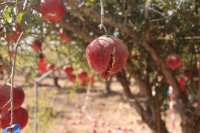
how environmental, biological, and management factors interact
Why is fruit cracking never caused by one factor?
Fruit growth, plant stress, and cracking are influenced by a complex mix of environmental, biological, and management factors. These elements do not act in isolation, but they interact throughout the growing season, amplifying or easing stress depending on timing, intensity, and location.
Want to know how irrigation, soil, plant traits, and genetics all play a role? Keep reading to discover what influences cracking, how water and nutrients matter, and why diversity in germplasm is important.
Soil and nutrition: Building resilience from the ground up
Healthy soil health with balanced nutrient content is key to fruit skin strength and overall resilience. Deficiencies in calcium and other secondary nutrients like magnesium, boron, potassium, zinc, copper, molybdenum, or manganese can weaken cell walls, making fruit more prone to cracking.
Calcium, for example, is essential for cell wall integrity and elasticity, helping fruit withstand changes in water uptake. Zinc regulates water absorption and supports enzyme activity critical for protein, carbohydrate, and nucleic acid metabolism. These nutrients work together to strengthen fruit structure from within.
Maintaining soil organic matter, applying nutrients strategically, and managing salinity through regular irrigation and potential sodium drainage further reduce stress on the plant. Fertilization complements these efforts by providing the nutrients plants need for trunk growth, fruit development, and consistent yield.
This can be done directly in the soil or via fertigation, delivering nutrients dissolved in irrigation water so uptake is efficient and synchronized with watering cycles. Drip irrigation systems excel at this precise delivery, allowing farmers to match nutrient application with plant needs. Together, soil care and nutrition form the backbone of managing fruit cracking in orchards.
Water and soil: The invisible hand
Water is at the heart of fruit growth. The timing and amount of irrigation shape how plants absorb, store, and move water. Too much, too little, or sudden changes in supply can stress the plant and strain the fruit. Even soil properties matter: texture, depth, and structure determine how water is held and released to roots.
Maintaining soil moisture consistently is as important as applying the right amount of water, because fluctuations can intensify stress and affect fruit skin strength. Problems like fruit cracking in carrots demonstrate how water stress during root development causes deformations that could have been prevented with better moisture management.
Plant water status offers a window into this balance. Measures like stem water potential and stomatal conductance show how the plant responds to changes in water supply and environmental demand. When water availability changes, plants adjust their transpiration and gas exchange, directly influencing fruit growth and stress levels.
Climate: Setting the stage
Temperature, rainfall, humidity, and sunlight shape how strongly plants experience stress. Minimum and maximum daily temperatures, average temperatures, precipitation, relative humidity, and cumulative radiation all influence water demand and plant growth.
But the climate does not act alone. Even within the same orchard, differences in slope, elevation, soil depth, and sun exposure create microclimates. Some plants face more water stress than others, meaning management decisions cannot be one-size-fits-all. Have you considered how tiny variations in your field might affect fruit quality?
Fruit growth: Expansion, pressure, and daily fluctuations
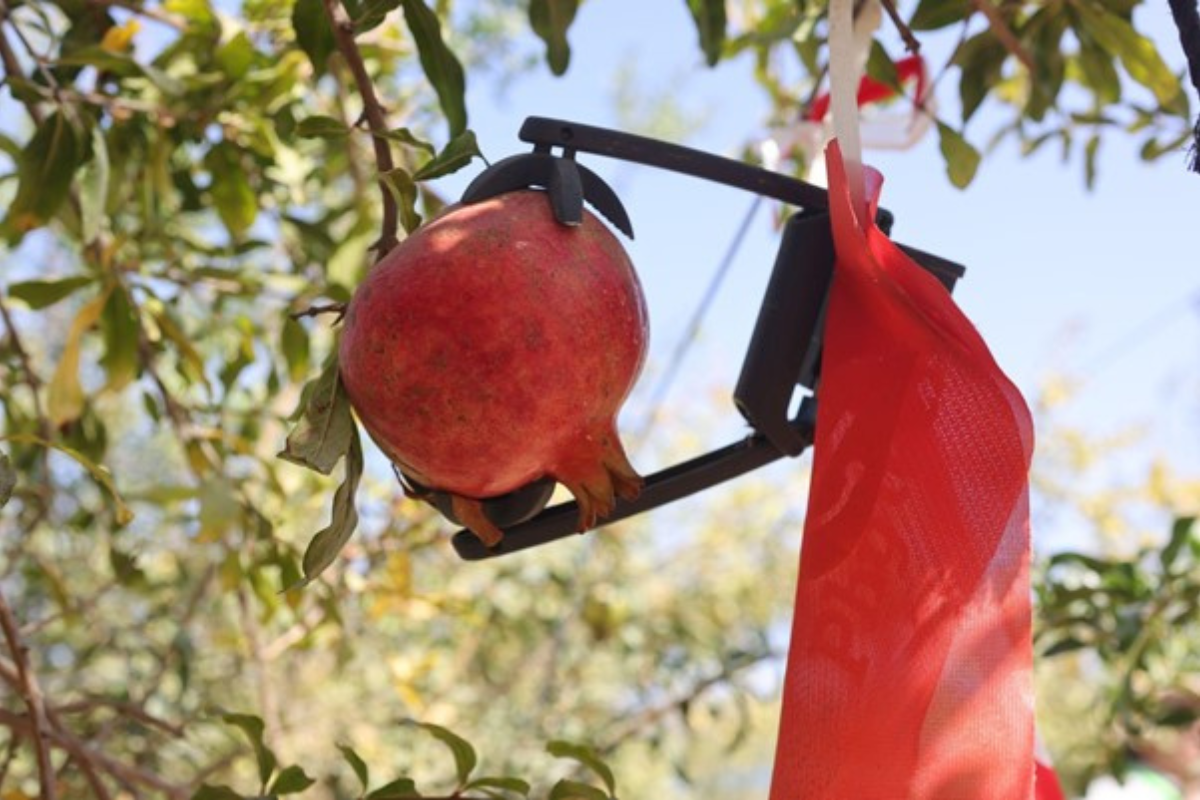
Fruit is never static. Its size, internal pressure, and skin elasticity change daily, and these dynamics are critical for understanding cracking. For instance, maximal daily shrinkage reveals how much stress the fruit experiences from water movement. Rapid expansion or uneven water uptake can overstretch the skin, while slower, steadier growth reduces mechanical stress.
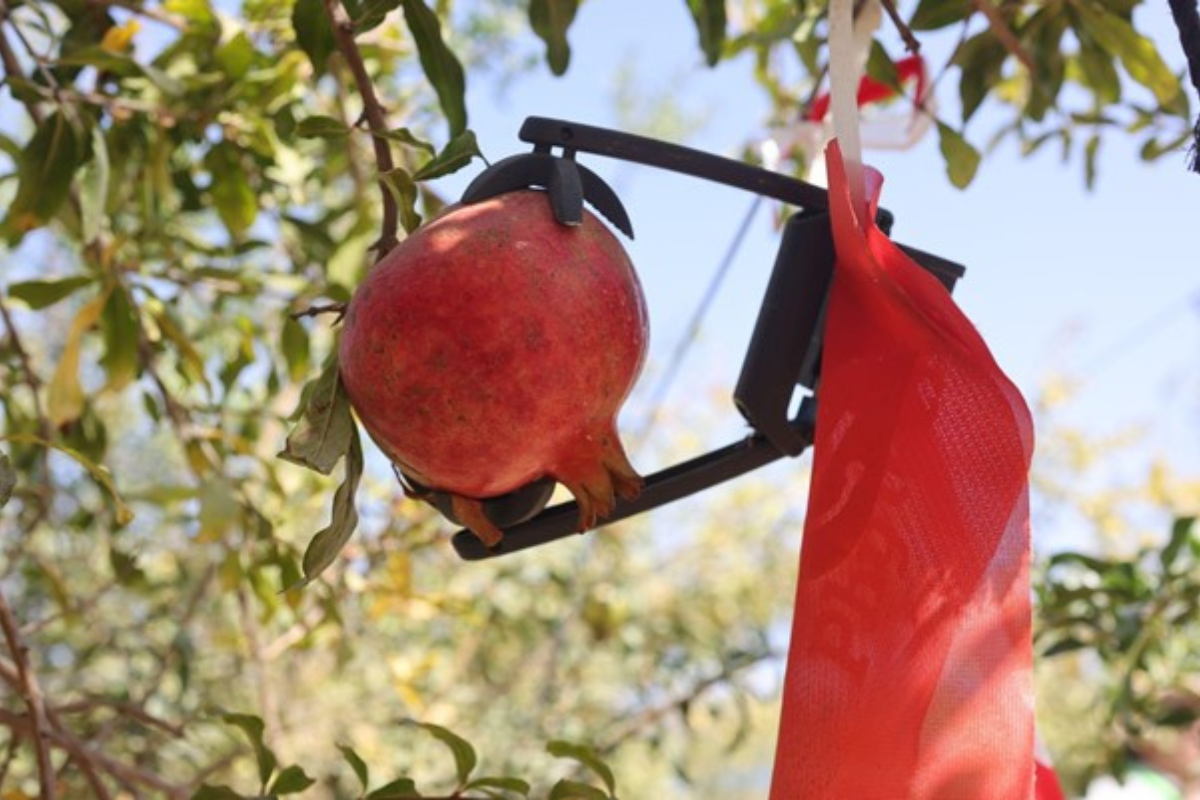
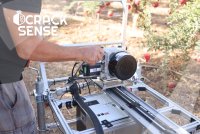
Monitoring fruit size with fruit dendrometers; Author: CrackSense Project
Crop load and timing also matter. More fruits per plant mean more competition for water and nutrients, and some developmental stages are particularly sensitive to stress. Managing irrigation and nutrition around these critical periods can make the difference between intact fruit and a cracked harvest.
Biological factors: Regulators and genetics
Plant growth regulators (PGRs) can influence fruit cracking by affecting fruit development, cell division, cell elongation, size, and firmness. Different types of PGRs, such as gibberellins, cytokinins (for example, CPPU), and synthetic auxins, can be applied at specific developmental stages—during flowering, early fruit set, or fruit growth.
This can modify tissue characteristics, and thereby increase or reduce susceptibility to cracking. Timing, dosage, and uniform application are crucial, making PGRs a precise tool rather than a blunt instrument.
Germplasm, or the genetic material of plants, also shapes fruit traits. It is the basis for plant diversity, breeding, and selection. Differences in germplasm can influence fruit characteristics, growth patterns, stress tolerance, and susceptibility to cracking, as some varieties naturally have thicker skins, firmer flesh, or different water-use strategies.
Maintaining a diverse collection of germplasm allows researchers and growers to select or develop varieties best suited to specific environmental conditions, management practices, and market requirements. This genetic diversity provides insurance against future challenges and opportunities for continuous improvement in fruit quality.
From understanding to action
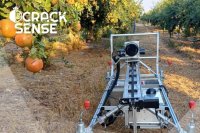
Projects such as CrackSense, a Horizon Europe initiative, build on this understanding by developing and upscaling sensing technologies that monitor fruit cracking in real time across citrus, pomegranate, table grapes, and sweet cherries. The project links field-level observations with environmental and climatic data, creating actionable insights for orchard management.
Curious to see how this knowledge is applied in practice and what comes next? Read more in our Newsroom and follow us on LinkedIn to stay up to date with project insights and field activities.
Conclusion
Fruit cracking results from complex interactions between environmental conditions, biological factors, and management practices. Understanding how soil, water, nutrients, climate, and genetics work together provides farmers with multiple leverage points for prevention.
The key lies in consistent management, maintaining balanced nutrition with adequate calcium and micronutrients, providing steady water supply without sudden fluctuations, and selecting varieties suited to local conditions. While no single intervention eliminates cracking entirely, integrated approaches that address multiple factors simultaneously offer the best protection.
As sensing technologies advance and our understanding deepens, farmers gain better tools to monitor stress in real time and intervene before damage occurs. This shift from reactive to preventive management represents the future of fruit quality control in orchards worldwide.
Reference
Cohen Laor, M. I., Sadka, A., Ginzberg, I., Hochberg, U., Lichter, A., Nikolakopoulou, G., Julhia, L., Quero Garcia, J., & Winkler, A. (2025). D3.2: Environmental and horticultural examiners associated with cracking II (Deliverable No. WP3). CrackSense Project. Attachment 0 56 (PDF)