Predicting fruit cracking is becoming increasingly important for growers facing unstable weather conditions, rising production costs, and growing pressure to reduce crop losses. Fruit cracking affects both yield and fruit quality, often appearing suddenly and leaving farmers with limited time to react.
How can growers identify cracking risks before visible damage appears? And can data from sensors, drones, and weather stations help farmers make better decisions in the orchard? Keep reading to see how new data-driven approaches are helping answer these questions.
Why fruit cracking is a growing challenge
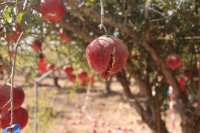
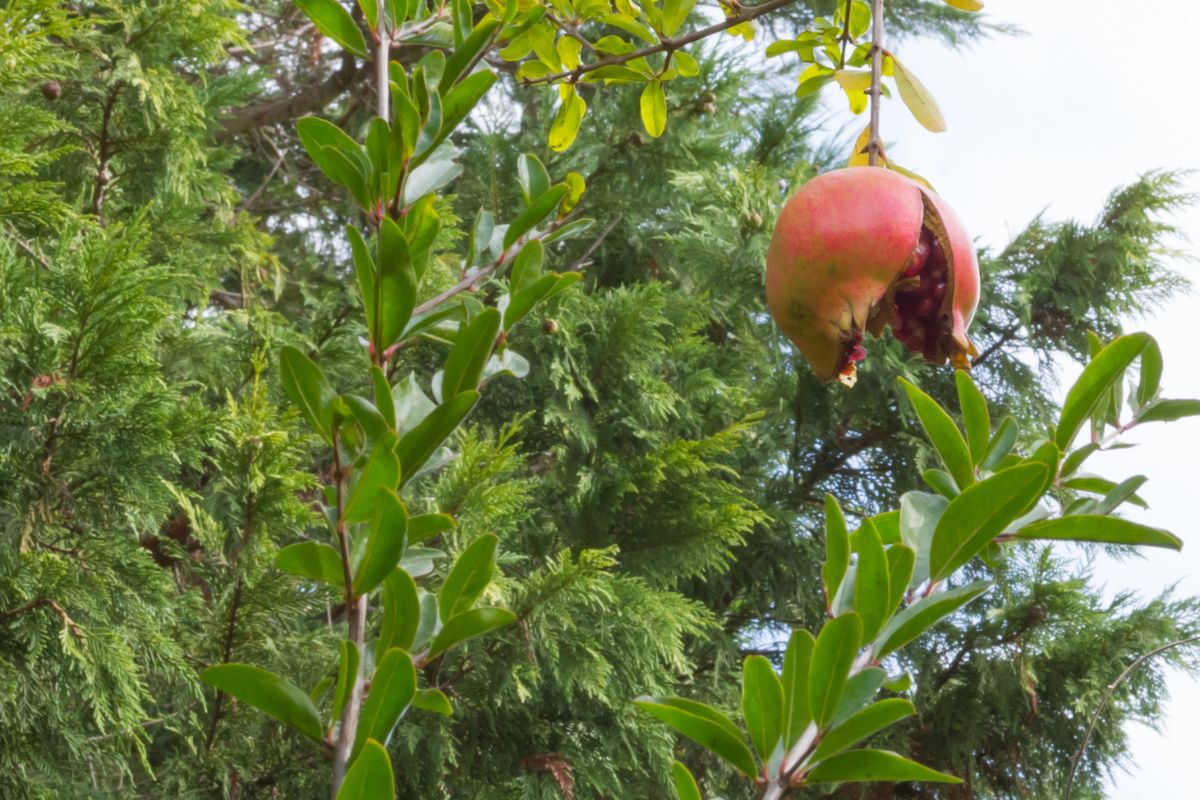
Fruit cracking is a physiological disorder that affects several fruit crops, including pomegranate, sweet cherry, citrus, and table grapes. It usually occurs when environmental and physiological stresses interact during fruit development. Temperature fluctuations, irregular irrigation, rainfall events, humidity, fruit growth rate, and cultivar sensitivity can all contribute to cracking.
The impact on production can be significant. In some crops and seasons, growers may lose a large share of marketable fruit due to cracking. Besides reducing yields, cracked fruit often loses commercial value because it becomes more vulnerable to fungal infections, dehydration, and mechanical damage during handling and transport.
Traditionally, cracking risk has been monitored through field observations and growers' experience. While practical, these methods often rely on visual symptoms that appear after stress has already affected the fruit.
Orchard conditions can also vary greatly within the same field, making it difficult to estimate risk accurately across larger production areas. In one example within the CrackSense project, one grape plot had hardly any cracked berries, while another experienced damage affecting more than 40% of the clusters.
How the Spatial Decision Support System works
The CrackSense project is working on this problem by developing a Spatial Decision Support System, or SDSS, designed to estimate fruit cracking intensity at tree, orchard, and regional levels. By combining field measurements, remote sensing technologies, and artificial intelligence models, the system aims to support more informed and timely orchard management.
At tree level, the system uses detailed measurements collected directly in the field. These include stem water potential, fruit growth dynamics, trunk diameter growth, soil moisture, vegetation indices, and canopy temperature indicators. UAV imagery and physiological measurements are integrated into machine learning models that estimate cracking probability for individual trees.
At orchard level, the SDSS aggregates tree level information to create spatial maps showing areas with higher cracking susceptibility. Remote sensing data and geospatial analysis help identify variability within the orchard, monitor canopy vigour, and detect water stress patterns.
This allows growers and advisors to better understand how cracking risk changes across production zones. Instead of applying the same management strategy everywhere, farmers can apply precision management strategies, such as adjusting irrigation schedules or targeted applications of plant growth regulators.
The system also works at regional level by integrating information from multiple orchards located in different climatic zones. These datasets include meteorological observations, historical cracking records, crop management practices, satellite imagery, and environmental characteristics.
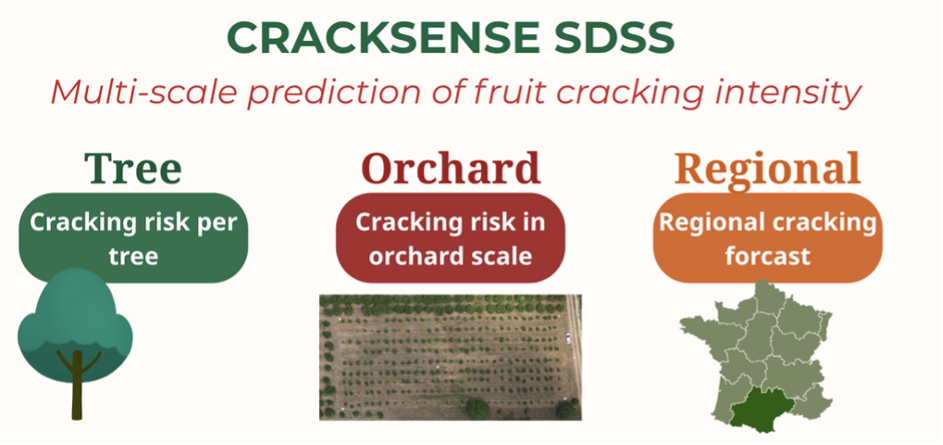
Figure 1: Conceptual overview of the CrackSense SDSS, showing the multi-scale prediction framework for estimating fruit cracking at tree, orchard, and regional levels.
The role of artificial intelligence in prediction models
The artificial intelligence models used within CrackSense are trained using multi season datasets collected across pilot sites. They analyse relationships between environmental stress, plant physiology, remote sensing indicators, and fruit development patterns. As new data are added, the prediction models continue to improve and adapt.
The system currently focuses on predicting fruit cracking probability, tree water stress indicators, and possible yield losses. Importantly, the goal is not to replace growers’ knowledge. The SDSS is designed to support decision making by providing additional information that may be difficult to detect through field observations alone.
A web-based platform for growers and advisors
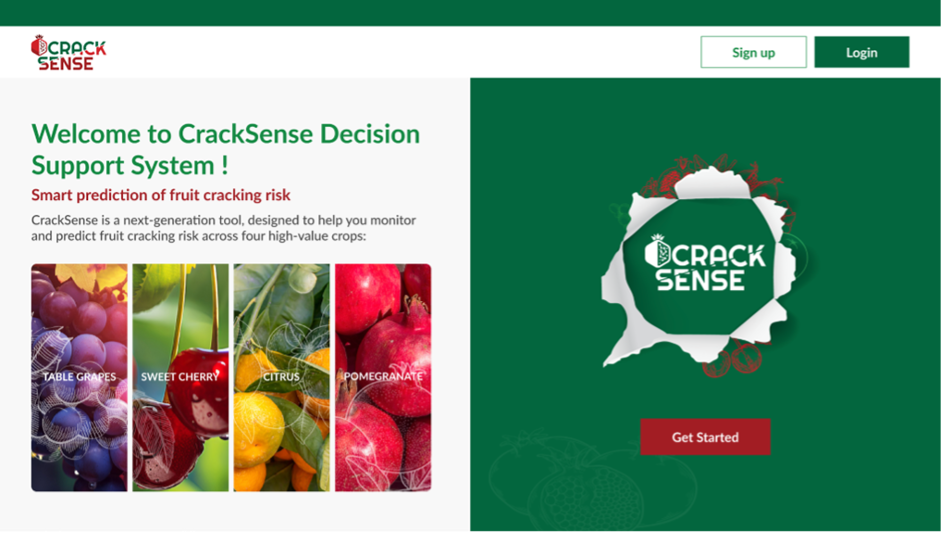
Figure 2: Prototype interface of the CrackSense web-based Decision Support System providing access to fruit cracking risk predictions across four crops and three spatial scales.
Another important part of the project is accessibility.
The CrackSense SDSS is being developed as a web-based platform that allows users to visualise cracking risk assessments and orchard information through a practical interface. Farmers, advisors, researchers, and other stakeholders can access model outputs and monitor orchard conditions at different spatial scales.
The platform is designed with usability in mind so that it can be adapted to different crops, growing conditions, and user needs.
As climate variability continues to affect fruit production, tools that help growers anticipate stress conditions may become increasingly important for maintaining yield, fruit quality, and resource efficiency.
Follow CrackSense on LinkedIn and visit our Newsroom to read more stories about the technologies, pilot activities, and research being developed within the project.