The orchard goes smart
Precision farming is no longer just a concept; it is an approach that allows growers to monitor, understand, and respond to orchard conditions in real time. Fruit cracking, a persistent issue in many types of fruits, can significantly reduce both yield and quality. How can growers anticipate when cracks might occur? Which tools provide the insights needed to make timely irrigation and management decisions?
In this blog, you will discover how modern sensors and data collection strategies are helping farmers track tree growth, soil moisture, and microclimatic conditions to reduce fruit cracking and optimise production.
Mapping the orchard and understanding spatial variability
Even within a single orchard, conditions vary. Slight differences in elevation, slope, or sunlight can influence how a tree grows or responds to stress. Precision farming begins with mapping these variations. Satellite imagery, combined with terrain analysis, helps identify zones with similar conditions. While these maps do not provide exact measurements, they reveal patterns in soil, elevation, and vegetation that guide management practices.
By recognising these zones, growers can adjust irrigation, fertilisation, and monitoring schedules according to local conditions. For example, trees in a sun-exposed, drier area might require slightly different water management than those in a shaded, moisture-retaining zone. By mapping the spatial variability of the orchard, growers can better understand how conditions differ across the field and consider adjustments to management practices accordingly.
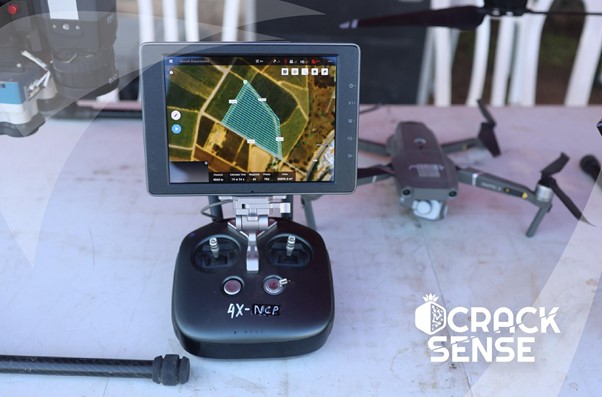
Screenshot of a plot after mapping; Author: CrackSense Project
Monitoring soil: The foundation of fruit Health
Soil moisture is a critical factor influencing fruit cracking. Precision farming uses a range of sensors to measure soil conditions continuously. Tensiometers, for instance, monitor water tension in the soil, providing readings at regular intervals to determine when irrigation is necessary. By integrating soil moisture data into management decisions, growers can minimise extreme fluctuations that often trigger fruit cracking.
Trunk and fruit dendrometers: Seeing growth in real time
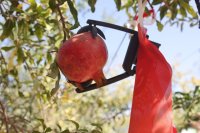
One of the most revealing tools in precision farming is the dendrometer. Trunk dendrometers measure the expansion and contraction of the tree trunk continuously, while fruit dendrometers track fruit growth and daily size changes. These instruments provide minute-by-minute insight into how trees and fruits respond to water availability, temperature, and humidity.
Furthermore, fruit dendrometers detect maximal daily shrinkage (MDS), the daily fluctuation in fruit size caused by water stress. High MDS values indicate increased susceptibility to cracking. Monitoring these fluctuations helps growers adjust irrigation schedules precisely to reduce cracking risk.
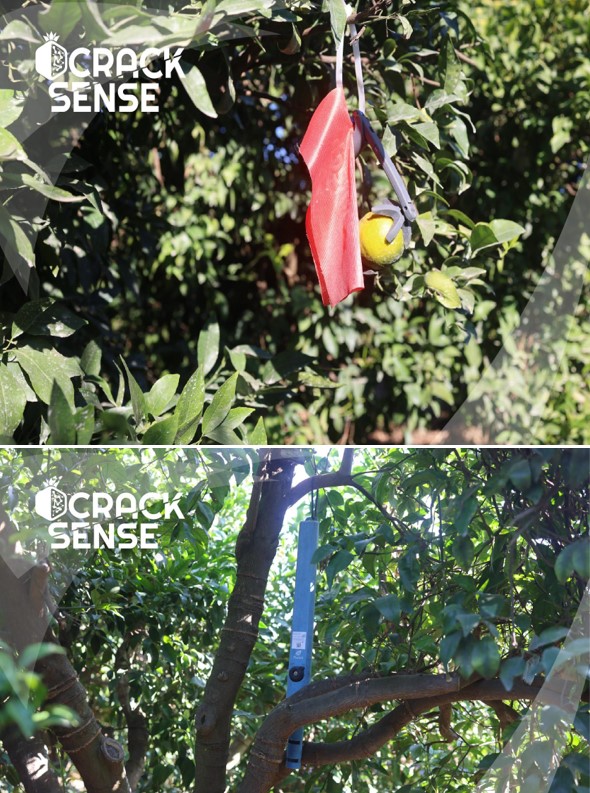
Trunk and Fruit Dendrometers; Author: CrackSense Project
Climate and microclimate sensors
Weather conditions, including temperature, precipitation, humidity, and solar radiation, influence tree water status and fruit development. Precision farming integrates stationary and portable meteorological stations, as well as UAVs, to collect daily, hourly, or even more frequent data. These measurements can reveal how heatwaves, rainfall, and sunlight may affect soil moisture and plant stress, supporting informed decisions to reduce the risk of fruit cracking.
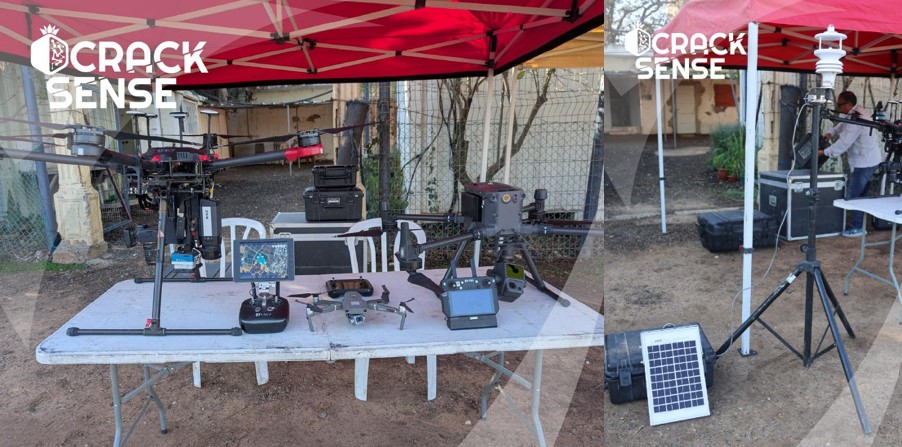
Stationary and portable meteorological station & drones; Author: CrackSense Project
Water status sensors: Stem water potential and stomatal conductance
Beyond soil and environmental sensors, measuring a plant’s internal water status is also crucial. Tools such as stem water potential (SWP) and stomatal conductance provide direct insights into how trees manage water and respond to stress.
SWP indicates the water pressure inside the tree, while stomatal conductance measures how leaf pores regulate water loss and gas exchange. Together, these measurements can reveal periods of potential water stress before visible signs appear, helping growers adjust irrigation and other management practices to maintain fruit quality and reduce cracking risk.
Advanced imaging and 3D monitoring
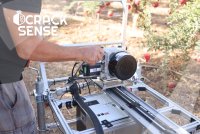
Modern precision farming also uses RGB, thermal, and multispectral imaging, often combined with Light Detection and Ranging (LiDAR), to monitor fruit and tree health. RGB images provide standard visual information, while thermal and multispectral cameras can detect temperature variations and plant stress invisible to the naked eye.
LiDAR works by sending out laser pulses that bounce off objects and return to the sensor, measuring the distance to every point it hits. This allows the creation of a 3D point cloud, which is essentially a digital “map” of the tree and its fruits in three dimensions. From these 3D models, farmers can estimate the number of fruits, the leaf area, or even the size of individual fruits.
Thermal imaging adds another layer of information, it measures temperature across the surface of the tree and fruits. When 3D point clouds from LiDAR are combined with thermal imaging data, each dot in the 3D model is assigned a temperature value. This creates what researchers call a 4D point cloud. In simpler terms, it is like having a 3D model of the tree where each fruit glows in a color representing how hot or cold it is, allowing farmers to see potential hotspots that might stress the fruit.
These 3D and 4D point clouds can be collected repeatedly over time, creating time series that show how fruit size, tree structure, and surface temperature change as the season progresses. Fruit wetness sensors can complement these imaging techniques to identify spots where moisture accumulation might trigger cracking.
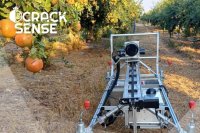
UAVs equipped with these sensors allow for aerial mapping of the orchard, providing a comprehensive overview that complements ground-based measurements. By combining high-resolution imaging, structural mapping, and environmental monitoring, growers gain a detailed picture of orchard conditions.
Edge computing and AI modelling: From data to decisions
All this data is only useful if it can be processed and interpreted efficiently. Edge computing and AI models allow real-time analysis of data collected from soil, plant, and environmental sensors, as well as UAV and satellite imagery. These systems can detect patterns, predict potential cracking events, and support timely interventions, such as adjusting irrigation schedules or targeting specific zones for monitoring.
By integrating edge computing and AI with precision farming tools, growers can make data-driven decisions that reduce fruit cracking, optimise yields, and maintain high fruit quality across the orchard.
This is where the CrackSense project comes in. CrackSense is a Horizon Europe project running from January 2023 to December 2026, involving 14 partners from 7 countries. Its goal is to tackle fruit cracking in citrus, pomegranates, table grapes, and sweet cherries by developing and upscaling sensing technologies that provide real-time data on fruit growth, cracking, and environmental conditions.
By combining multiple sensing methods, CrackSense creates comprehensive datasets that capture both environmental and plant-level information. This data can then be integrated using machine learning and AI, revealing complex relationships between soil, climate, irrigation, and fruit susceptibility to cracking.
The ultimate aim of CrackSense is to predict cracking risk in real time and at scale, helping growers make informed decisions to reduce yield loss and improve fruit quality. Through pilot experiments and upscaling activities, the project is demonstrating how smart farming technologies can transform orchards into well-monitored, data-driven systems, from the level of individual fruits to entire regions.
Final thoughts: The orchard in the era of precision farming
Can fruit cracking be fully prevented? Perhaps not entirely, but precision farming gives growers the tools to reduce it significantly and maintain high-quality yields. As orchards increasingly adopt precision farming technologies, the ability to anticipate and respond to stress will improve, ensuring better yields, healthier trees, and fewer cracked fruits.
For growers and researchers alike, the lesson is clear: careful monitoring, informed decisions, and precise interventions are key to healthier, crack-resistant fruit. Precision farming transforms orchard management from reactive to proactive, offering insights that benefit both the farmer and the consumer.
If you want to learn more about precision farming, fruit cracking, and the innovative tools used to monitor and prevent it, you can explore our articles on the CrackSense newsroom or follow us on LinkedIn for updates and insights.
References
- Cohen Laor, M. I., Sadka, A., Ginzberg, I., Hochberg, U., Lichter, A., Nikolakopoulou, G., Julhia, L., Quero Garcia, J., & Winkler, A. (2024). D3.1: Environmental and horticultural examiners associated with cracking (Deliverable No. WP3). CrackSense Project.Attachment 0 56 (PDF)
- Sadka, A., Alchanatis, V., Morozov, M., Saville, Y., Kamera, I., & Paz-Kagan, T. (2024). CrackSense: High throughput real-time monitoring and prediction of fruit cracking by utilizing and upscaling sensing and digital data technologies. 15th International Citrus Congress (ICC 2024), Jeju, Korea, p. 169. CrackSense project document (PDF)
- Tapia-Zapata, N., & Zude-Sasse, M. (2024). Modelling fruit surface temperature by means of LiDAR 4D point clouds. II International Symposium on Precision Management of Orchards and Vineyards, Tatura, Australia. CrackSense project document (PDF)
- Tapia-Zapata, N., Winkler, A., & Zude-Sasse, M. (2024). Occurrence of wetness on the fruit surface modeled using spatio-temporal temperature data from sweet cherry tree canopies. Horticulturae, 10(7), 757. Occurrence of Wetness on the Fruit Surface Modeled Using Spatio-Temporal Temperature Data from Sweet Cherry Tree Canopies — Horticulturae