Edge computing in agricultural monitoring is helping researchers and growers process large amounts of field data more efficiently, bringing analysis closer to where information is collected.
Agricultural monitoring systems are collecting more information than ever before. But gathering data is only one part of the process. Managing, processing, and making sense of that information can be equally important. This article looks at how edge computing is helping address these challenges and how local data processing can support faster and more efficient agricultural monitoring.
Why agricultural monitoring creates new data challenges
Modern agriculture increasingly depends on large volumes of data generated by proximal sensors, imaging systems, weather stations, dendrometers, and drone platforms.
These technologies help researchers and growers monitor crop conditions and environmental changes in greater detail. Information collected from these systems can provide insight into orchard conditions and support management decisions.
However, increasing amounts of data also create practical challenges. Large datasets can place pressure on bandwidth, cause processing delays, increase storage requirements, and make it difficult to combine information from different technologies.
To address these challenges, an edge processing framework was implemented and tested in pilot orchard studies in the CrackSense project. Instead of relying mainly on cloud-based computation, the framework performed intelligent filtering, preprocessing, and data fusion directly in the field. This helped improve system performance and provided a more reliable solution in environments with limited connectivity.
Edge computing closer to the field
Edge computing refers to processing information near the location where it is collected rather than sending everything immediately to external cloud systems.
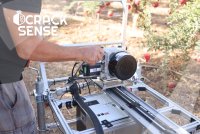
Within this work, a secure system architecture was developed that connected TOMMY (Terrestrial Orchard Monitoring Measuring unit) instruments, UAV platforms, proximal sensing systems, and environmental monitoring devices with an edge controller. The edge controller acted as an intelligent link between field data collection and cloud infrastructure.
Many monitoring systems rely on equipment from different manufacturers and technologies, which often leads to compatibility issues and fragmented workflows. By introducing a unified structure via the edge controller, the framework enabled these systems to communicate more effectively and operate within a single, coordinated pipeline.
Rather than acting as a simple data-transfer layer, the system ensured that information from TOMMY instruments was automatically collected and that data from different devices could be used consistently. It also aligned measurements such as sensor readings, images, locations, and timestamps so they matched correctly. At the same time, it allowed the same data to be used both for immediate analysis in the field and for later storage and review.
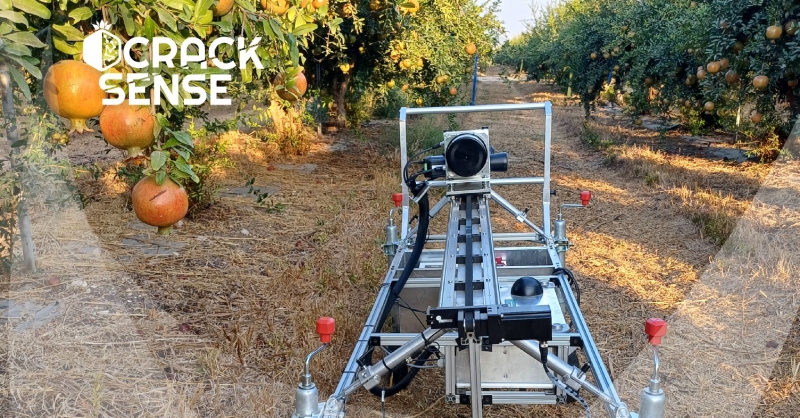
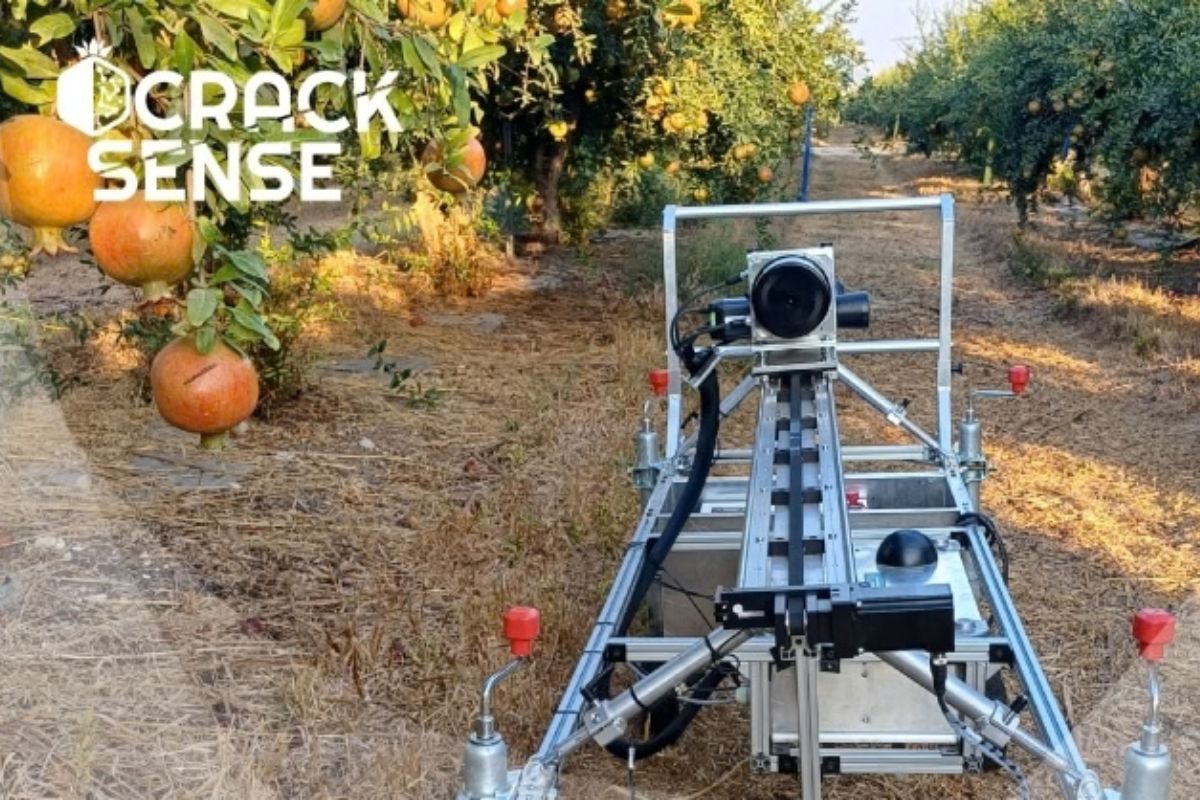
Figure 1: TOMMY, a robotic system equipped with thermal and optical cameras to detect early stress indicators that may lead to cracking
Processing data before it reaches the cloud
A large amount of raw agricultural data may include repeated information, poor quality images, or content that adds little benefit for analysis. Sending all information directly to cloud services can increase storage requirements and consume significant bandwidth.
For this reason, computational intelligence was placed directly on the edge device itself. Processing data locally helped reduce delays, lower bandwidth use, and improve system reliability under field conditions.
The edge device was not simply passing information from one place to another. It actively improved data before transmission and prepared it for later analysis.
A dedicated processing service was developed for RGB and thermal imagery together with dendrometer and meteorological datasets.
The service provided several functions including:
- on device visualisation
- quality control procedures
- preliminary analysis
- structured export for integration with advanced analytical workflows
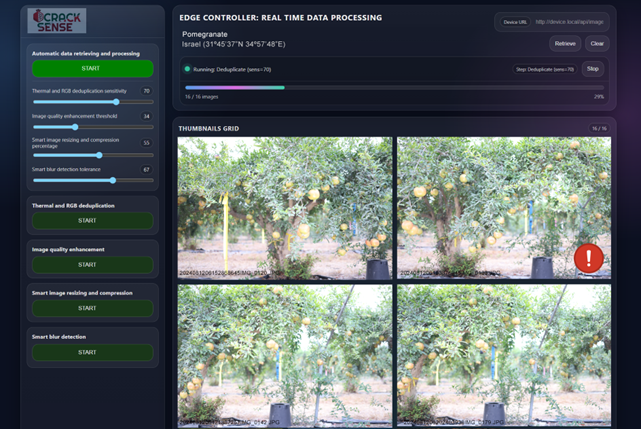
Figure 2: Data processing service on the edge unit
The system also performed several optimisation tasks including:
- noise reduction and image normalisation
- structural enhancement of image datasets
- removal of duplicate optical and thermal images
- adaptive image size reduction through scaling and cropping
- content aware image compression
- motion blur detection
- near real-time preprocessing of UAV imagery
- filtering, correction, and mosaic generation
These steps helped create cleaner and more organised datasets before information moved into more advanced analytical systems.
The results demonstrated a clear effect. Across multiple crop and site conditions, the implemented edge processing pipeline reduced dataset size by an average of 61.3%. This reduction lowered storage requirements and reduced the amount of information needing transmission without affecting the usefulness of the datasets.
Artificial intelligence also played a role within the framework. Machine learning models based on the YOLOv11 architecture were implemented directly on the edge device to support tree detection and segmentation in high resolution drone imagery.
Practical benefits for agricultural monitoring
The combined system delivered several practical benefits in real field conditions.
- Data volumes were reduced by removing redundant or low value information before transmission.
- Data quality was improved by applying filtering and correction steps early in the pipeline. This also reduced the load on cloud systems and storage infrastructure.
- The approach enabled faster access to results, supporting more responsive orchard management decisions through near real-time analysis.
- It also improved system robustness in remote environments where connectivity is limited or inconsistent, allowing processing to continue without interruption.
- Finally, the framework supported scalable integration of both proximal and remote sensing data within a single coherent processing pipeline, making it easier to combine different sources of agricultural information.
For growers and researchers, this means quicker access to structured and reliable information that can support more efficient monitoring and decision-making in the field.
For more information about CrackSense and related topics, follow us on LinkedIn and visit our Newsroom for updates, project stories, and insights from our research activities.