How weaning differs in dairy systems versus nature
In dairy production, weaning refers to the point at which liquid feeding (milk or milk replacer) is stopped and the calf becomes completely reliant on solid feeds and free water. It marks a transition period in which the calf must move from dependence on the dam and the milk she provides to social and nutritional independence.
Under natural conditions, this process is gradual. Milk intake declines slowly, the calf becomes increasingly socially independent from the dam, and intake of solid feed rises in step. In conventional dairy production, by contrast, calves are usually removed from the mother at or soon after birth to minimise bonding between dam and calf, and they are weaned from milk abruptly at a much younger age than they would be in the wild. Weaning often coincides with additional stressors such as mixing with unfamiliar penmates or moving to an unfamiliar pen or barn.
This article examines weaning specifically within cow-calf contact (CCC) systems, in which calves are kept in prolonged contact with the dam or with a foster cow before separation. It looks at why weaning is particularly challenging in these systems, compares the main alternatives to abrupt separation (two-step weaning with nose flaps, fence-line weaning, and gradual reduction of contact time), and examines how each strategy affects calf welfare and growth as well as cow productivity, milk composition, and udder health.
Weaning distress compromises the welfare of the calf, leading to growth slumps, behavioural changes including vocalisation and decreased resting, and increased susceptibility to diseases such as coccidiosis and respiratory disease. Growth and health are impaired because of the lower nutrient intake and the negative effects of responding to the stressors. Calves not adequately prepared for weaning grow poorly and with decreased feed efficiency, and are at increased risk of disease (Roth et al., 2008, 2009).
The most important factor in preparing the calf for weaning is developing the rumen so that the ruminal microbiome can ferment solid feeds and volatile fatty acids can be absorbed. Fermentable carbohydrates lead to butyrate and propionate production that stimulates rumen epithelial development. Starter intake therefore plays the key role in calf rumen development and overall calf nutrition, and the amount of milk or milk replacer fed is inversely related to starter intake (Hodgson, 1971; Stamey Lanier et al., 2022).
Weaning challenges in cow-calf contact systems
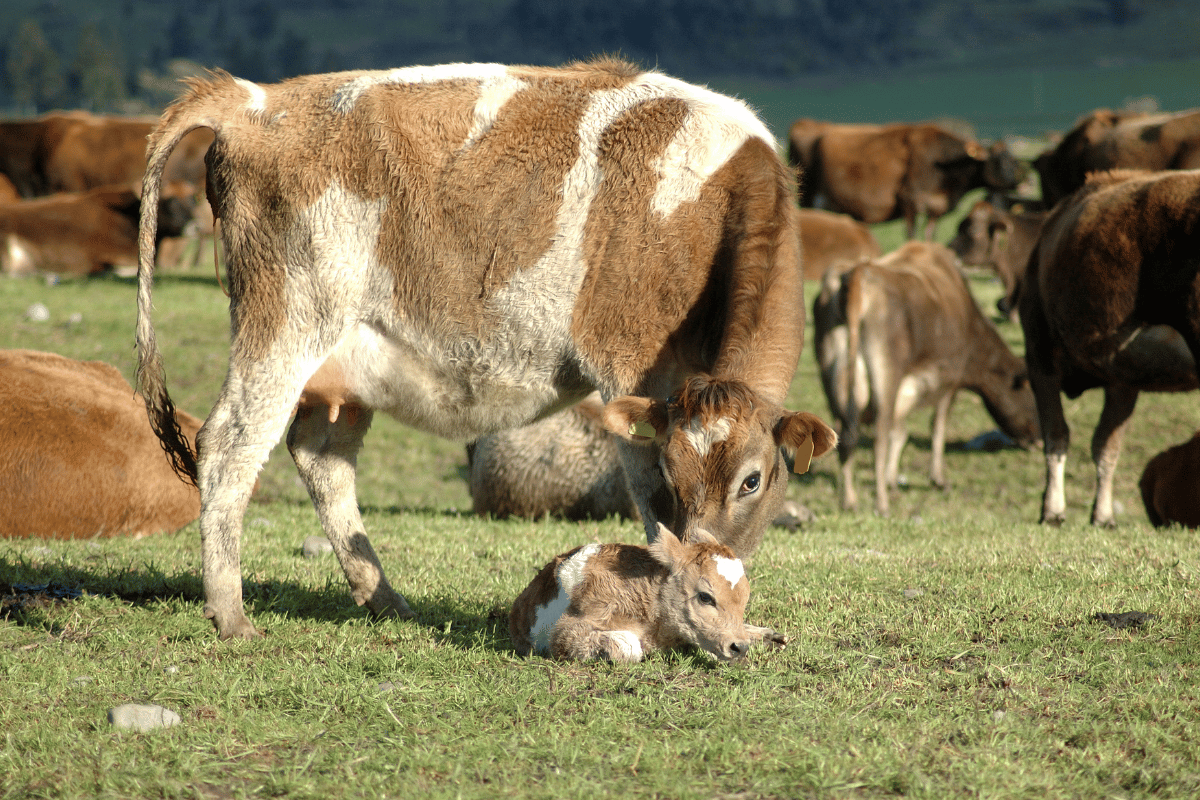
Within the dairy sector, it is routine practice on many farms to separate cow and calf within 24 hours after birth. Proposed benefits of separating cows and calves shortly after birth are increased amount of saleable milk (Neave et al., 2022), decreased stress at separation (Flower and Weary, 2001), and health benefits (for example Muskens et al., 2003). However, there is an increasing interest among consumers and dairy farmers in systems allowing prolonged contact between cow and calf during early life. These so-called cow-calf contact (CCC) systems were recently defined as any type of housing or management system allowing calves contact with their dam or with foster cows (Sirovnik et al., 2020).
Weaning and separation distress is one of the biggest challenges in cow-calf contact systems, as reported by 87% of farmers practising cow-calf contact across Europe (Eriksson et al., 2022). For the calf, the weaning and separation process is not only associated with loss of milk as the main nutritional source and loss of contact with the dam, but often also with the loss of familiar peers, mixing with new conspecifics, and changes in the physical environment (Weary et al., 2008; Lynch et al., 2019).
These multifactorial stressors can result in reduced weight gains (Haley et al., 2005; Sweeney et al., 2010), a strong increase in vocalisations (Haley et al., 2005; Loberg et al., 2008), increased pacing and seeking behaviour (Enríquez et al., 2010), reduced play behaviour (Enríquez et al., 2010), and reduced lying times (Haley et al., 2005; Budzynska and Weary, 2008), as well as neutrophilia (O’Loughlin et al., 2011, 2014) and an increase in cortisol levels (Loberg et al., 2008; O’Loughlin et al., 2014) in abruptly weaned calves.
Because separation from the dam further induces a pessimistic judgment bias in calves (Daros et al., 2014), indicative of a negative affective state, the behavioural and physiological responses to weaning reflect that calves experience distress, in the sense of stress that adversely affects an animal’s welfare (Moberg, 2000), during the process. Recognising these subtle behavioural cues is part of broader observation-based welfare assessment in dairy herds.
Alternatives to abrupt weaning and separation
In order to reduce labour costs and to improve the opportunity of dairy calves to perform their natural behaviours, foster cows may be used to raise several alien calves during the milk period. In such a practice, the calves are held in small groups with one cow, and are allowed to suckle whole milk either freely or restrictedly. Weaning of calves from the foster cow is usually performed abruptly, where the calves are simultaneously separated from the cow and weaned from milk. At weaning, the calves are restless and vocalise (Jonasen and Krohn, 1991), and there may also be negative effects on weight gain after weaning (Jonasen and Krohn, 1991).
To reduce the weaning distress, different methods have been investigated in the past that separate the loss of the milk from the loss of social contact to the dam. These include weaning via two-step separation, in which suckling is prevented with nose flaps before permanent total separation (Sirovnik et al., 2020), as well as fence-line weaning, which allows partial physical contact to the dam without suckling (Sirovnik et al., 2020). A nose flap is a plastic device clipped into the calf’s nostrils. It does not pierce the nasal septum and does not interfere with breathing, grazing, or drinking water, but it physically blocks the teat from reaching the calf’s mouth and so prevents suckling. The calf remains with the dam during the first stage and is fully separated only later, in a second stage.
Two-step weaning with nose flaps
Beef and dairy calves that were weaned with nose flaps showed reduced behavioural reactions (Haley et al., 2005; Loberg et al., 2008; Enríquez et al., 2010) as well as reduced physiological reactions at the time of separation (Loberg et al., 2008) compared with abrupt weaning. Nose flaps have been proposed as a low-stress weaning method for beef calves (Haley et al., 2005) and are also considered as an alternative for dairy cow-calf contact systems (Sirovnik et al., 2020; Schneider and Ivemeyer, 2021; Barth et al., 2022).
The major advantage of two-step weaning with nose flaps is the high practicability for farms because, in contrast to other weaning and separation methods, it requires no modifications of the barn (Barth et al., 2022) or adjustments of on-farm routines for animals or personnel. Additionally, farmers value the lower number of vocalisations by cows and calves during weaning with nose flaps not only as a sign of reduced distress, but also because frequent vocalisations during weaning are emotionally challenging for them and lead to additional worries that others may mistake these as an indication of mistreatment of the animals (Waiblinger and Hebesberger, 2023; S. Waiblinger, University of Veterinary Medicine, Vienna, Austria, personal communication).
However, the use of nose flaps results in diminished weight gains compared with abrupt or fence-line weaning (Boland et al., 2008; Enríquez et al., 2010; Wenker et al., 2022a) and can lead to severe nasal abrasions and open wounds with or without bleeding and secretion (Lambertz et al., 2015; Valente et al., 2022), which potentially even initiate pituitary abscesses (Fernandes et al., 2000). These outcomes leave nose flaps questionable with regard to animal welfare, so there is a need for further improvement or implementation of new weaning strategies.
Gradual reduction of cow-calf contact
One possible approach is a gradual weaning and separation method, in which the cow-calf contact time before permanent separation is gradually reduced. To date, this weaning method has not yet been scientifically investigated; however, a gradual reduction of contact time could also be a promising weaning and separation method for cow-calf contact systems for several reasons.
First, it resembles more the naturally occurring reduction of milk intake during natural weaning, which is typically a gradual process in which the number of suckling bouts declines significantly with age of the calf over the course of several months (Reinhardt and Reinhardt, 1981).
Second, Weary et al. (2008) suggested that during the increased times that cow and calf spend apart before weaning, the calves are potentially able to habituate to the periods of separation and increase their intake of solid feed, which eases the transition at weaning.
Third, gradual weaning is commonly used as a standard procedure for artificially reared dairy calves, either by diluting the milk or milk replacer with water or by feeding the calves less often or with smaller amounts of milk during the end of the milk-feeding period. These practices showed that gradual weaning leads to reduced vocalisations (Jasper et al., 2008; Bittar et al., 2020), increased lying times (Scoley et al., 2019), and increased starter intake pre-weaning, and can alleviate part of the compromised post-weaning weight gains compared with abrupt weaning (Khan et al., 2007; Sweeney et al., 2010; Omidi-Mirzaei et al., 2015). A gradual reduction of the daily cow-calf contact time might therefore cause less distress than weaning with a nose flap.
Effects of weaning strategies on calf health, welfare, and growth
In commercial CCC systems, calves are generally weaned and separated from the dam at 8–12 weeks of age (Sirovnik et al., 2020), which is known to be more stressful for both the dam and the calf compared to weaning at the natural weaning age of about 8 months (de Souza Teixeira et al., 2021; Lambertz et al., 2015; Stěhulová et al., 2017). This relatively early weaning gives calves a shorter time period to learn to live independently from the mother and on a diet of solid feed only (Enríquez et al., 2011), even though this weaning age is comparable to standard rearing systems in Europe (Marcé et al., 2010).
Moreover, when calves are abruptly separated from the dam after prolonged CCC, two stressful events occur at the same time: calves are weaned off milk (i.e., need to become nutritionally independent) and lose contact with the dam (i.e., need to become socially independent) (Newberry and Swanson, 2008). Reducing this dual stress is one element of broader farm animal welfare practice in dairy systems.
Effects of weaning strategies on milk yield, milk composition, and udder health
Milk intake is higher in CCC calves that can suckle freely or for a large part of the day, compared with conventionally reared calves (as reviewed by Johnsen et al., 2016), who often are provided with limited amounts of milk or milk replacer. As a result, less saleable milk is available, which is one of the main reasons CCC systems are not implemented more commonly (Neave et al., 2022).
Furthermore, milk flow rate (MFR) in the milking unit was lower for cows in a whole-day CCC system (Zipp et al., 2018) or in a restricted-suckling CCC system with suckling allowed for 30 minutes after each milking (Mendoza et al., 2010), than in non-suckled cows. The reduction in MFR is possibly because of reduced udder filling at milking, due to suckling being allowed in CCC systems (as reviewed by Johnsen et al., 2016; Zipp et al., 2018). In conventionally managed dairy cows, MFR and the peak milk flow rate (PMFR; the highest MFR measured per milking) have been used as an indication of milking efficiency (Sandrucci et al., 2007), and have been positively correlated with milk yield (Weiss et al., 2004). Milk yield itself varies substantially across the different stages of the lactation cycle, which influences how much suckling can affect the marketable surplus.
Milk electrical conductivity (MEC) has been used as an indicator for mastitis on dairy farms (Viguier et al., 2009; Bonestroo et al., 2022), because the increased concentrations of calcium, magnesium, potassium, chloride, and sodium in milk in inflamed udder quarters result in increased MEC (as reviewed by Norberg, 2005). A lower MEC may therefore indicate better udder health. Cows with prolonged CCC had a decreased risk of mastitis during the suckling period (Walsh, 1974; González-Sedano et al., 2010), as also reported in a recent review article by Beaver et al. (2019).
Studies have shown that machine milk from suckled cows contains less fat than that from non-suckled cows (Barth, 2020; Johnsen et al., 2016). The effect of CCC on the contents of protein and lactose seems less clear. Whereas some studies found a higher protein (Barth, 2020; Ospina Rios et al., 2023) and lactose content (Boden and Leaver, 1994) in CCC cows’ machine milk, others found no differences (Dymnicki et al., 2013). After separation from the calves, while some have found machine milk composition to become similar for suckled and non-suckled cows (Mendoza et al., 2010), others have found differences in machine milk composition to sometimes persist (Nicolao et al., 2022).
In cows having part-time CCC, cow body weight (BW) has been shown to decrease more in suckled cows compared to non-suckling cows (Bar-Peled et al., 1995), or to be similar between treatments (Nicolao et al., 2022). Studies comparing artificial milk feeding versus suckling have found higher body weight gain (BWG) in suckling calves (e.g., Fröberg et al., 2011; Wenker et al., 2022b), but in most of such studies, the artificially reared calves have been provided restricted milk allowance (e.g., Flower and Weary, 2001; Roth et al., 2009).
Milk allowance has been shown to determine calves’ BWG, especially during the first weeks, when an underdeveloped rumen function prevents digestion of solid feed (Khan et al., 2011). However, in a study by Krohn et al. (1999), calves that were allowed only partial CCC due to an udder net preventing suckling the first four days postpartum had higher BWG than single-housed calves with no suckling, even though they had similar milk intakes.
Conclusion
Weaning within cow-calf contact (CCC) systems presents a unique set of challenges and opportunities for improving the health, welfare, and productivity of dairy cows and calves. While CCC offers behavioural and immunological benefits, abrupt separation after prolonged contact can result in intense distress and production losses due to the simultaneous disruption of both nutritional and social bonds. Evidence from both conventional and CCC systems suggests that gradual weaning, whether by using nose flaps or by reducing contact time progressively, can help mitigate the behavioural and physiological stress responses typically observed during separation.
However, each strategy has trade-offs. Nose flaps, while practical and effective in reducing vocalisation and cortisol responses, can lead to injuries and reduced weight gain. Gradual separation that mimics natural weaning shows promise but requires more research to confirm its effectiveness and feasibility under commercial conditions.
From a productivity perspective, CCC systems may reduce saleable milk yield and milking efficiency due to calf suckling but can improve udder health and calf growth, especially when adequate milk access is provided. These findings show the complex interplay between welfare and economic outcomes in CCC systems. More targeted research is needed to optimise weaning protocols that balance productivity with the growing demand for higher welfare standards in dairy farming. As interest in cow-calf contact systems continues to rise, future practices must be guided by science-based strategies that reduce stress during weaning without compromising animal health or farm sustainability.
References
- Bar-Peled, U., Maltz, E., Bruckental, I., Folman, Y., Kali, Y., Gacitua, H., et al. (1995). Relationship between frequent milking or suckling in early lactation and milk production of high producing dairy cows. Journal of Dairy Science, 78(12), 2726–2736.
- Barth, K. (2020). Effects of suckling on milk yield and milk composition of dairy cows in cow-calf contact systems. Journal of Dairy Research, 87(S1), 133–137.
- Barth, K., Bock, A., Breden, A. N., Dwinger, H., Dwinger, S., Gleißner, F., et al. (2022). Cow-Bonded Calf Rearing in Dairy Farming: A Practical Guide.
- Beaver, A., Meagher, R. K., von Keyserlingk, M. A., & Weary, D. M. (2019). Invited review: A systematic review of the effects of early separation on dairy cow and calf health. Journal of Dairy Science, 102(7), 5784–5810.
- Bittar, C. M. M., Gallo, M. P., Silva, J. T., de Paula, M. R., Poczynek, M., & Mourão, G. B. (2020). Gradual weaning does not improve performance for calves with low starter intake at the beginning of the weaning process. Journal of Dairy Science, 103(5), 4672–4680.
- Boden, R. F., & Leaver, J. D. (1994). A dual purpose cattle system combining milk and beef production. Proceedings of the British Society of Animal Production, 1994, 145.
- Boland, H. T., Scaglia, G., Swecker Jr, W. S., & Burke, N. C. (2008). Effects of alternate weaning methods on behavior, blood metabolites, and performance of beef calves. The Professional Animal Scientist, 24(6), 539–551.
- Bonestroo, J., van der Voort, M., Fall, N., Emanuelson, U., Klaas, I. C., & Hogeveen, H. (2022). Estimating the nonlinear association of online somatic cell count, lactate dehydrogenase, and electrical conductivity with milk yield. Journal of Dairy Science, 105(4), 3518–3529.
- Budzynska, M., & Weary, D. M. (2008). Weaning distress in dairy calves: Effects of alternative weaning procedures. Applied Animal Behaviour Science, 112(1–2), 33–39.
- Daros, R. R., Costa, J. H., von Keyserlingk, M. A., Hötzel, M. J., & Weary, D. M. (2014). Separation from the dam causes negative judgement bias in dairy calves. PLoS One, 9(5), e98429.
- de Souza Teixeira, O., da Rocha, M. K., Alforma, A. M. P., Fernandes, V. S., de Oliveira Feijó, J., Corrêa, M. N., & Barcellos, J. O. J. (2021). Behavioural and physiological responses of male and female beef cattle to weaning at 30, 75 or 180 days of age. Applied Animal Behaviour Science, 240, 105339.
- Dymnicki, E., Sosin-Bzducha, E., & Gołębiewski, M. (2013). Effects of calf separation and injection of oxytocin on milk performance and milk composition of the Polish Red cows. Archives Animal Breeding, 56(1), 882–891.
- Enríquez, D. H., Ungerfeld, R., Quintans, G., Guidoni, A. L., & Hötzel, M. J. (2010). The effects of alternative weaning methods on behaviour in beef calves. Livestock Science, 128(1–3), 20–27.
- Eriksson, H., Fall, N., Ivemeyer, S., Knierim, U., Simantke, C., Fuerst-Waltl, B., et al. (2022). Strategies for keeping dairy cows and calves together: a cross-sectional survey study. Animal, 16(9), 100624.
- Fernandes, C. G., Schild, A. L., Riet-Correa, F., Baialardi, C. E. G., & Stigger, A. L. (2000). Pituitary abscess in young calves associated with the use of a controlled suckling device. Journal of Veterinary Diagnostic Investigation, 12(1), 70–71.
- Flower, F. C., & Weary, D. M. (2001). Effects of early separation on the dairy cow and calf: 2. Separation at 1 day and 2 weeks after birth. Applied Animal Behaviour Science, 70(4), 275–284.
- Fröberg, S., Lidfors, L., Svennersten-Sjaunja, K., & Olsson, I. (2011). Performance of free suckling dairy calves in an automatic milking system and their behaviour at weaning. Acta Agriculturae Scandinavica, Section A — Animal Science, 61(3), 145–156.
- González-Sedano, M., Marín-Mejía, B., Maranto, M. I., de Magalhães-Labarthe, A. L., & Alonso-Díaz, M. A. (2010). Effect of residual calf suckling on clinical and sub-clinical infections of mastitis in dual-purpose cows: Epidemiological measurements. Research in Veterinary Science, 89(3), 362–366.
- Haley, D. B., Bailey, D. W., & Stookey, J. M. (2005). The effects of weaning beef calves in two stages on their behavior and growth rate. Journal of Animal Science, 83(9), 2205–2214.
- Hodgson, J. (1971). The development of solid food intake in calves 5. The relationship between liquid and solid food intake. Animal Science, 13(4), 593–597.
- Jasper, J., Budzynska, M., & Weary, D. M. (2008). Weaning distress in dairy calves: Acute behavioural responses by limit-fed calves. Applied Animal Behaviour Science, 110(1–2), 136–143.
- Johnsen, J. F., Zipp, K. A., Kälber, T., De Passille, A. M., Knierim, U., Barth, K., & Mejdell, C. M. (2016). Is rearing calves with the dam a feasible option for dairy farms? Current and future research. Applied Animal Behaviour Science, 181, 1–11.
- Jonasen, B., & Krohn, C. C. (1991). Cow-calf relations, 4: Behaviour, production and health in suckler calves (Danish Holstein-Friesian). Beretning fra Statens Husdyrbrugsforsoeg, 689.
- Khan, M. A., Lee, H. J., Lee, W. S., Kim, H. S., Kim, S. B., Ki, K. S., et al. (2007). Pre- and postweaning performance of Holstein female calves fed milk through step-down and conventional methods. Journal of Dairy Science, 90(2), 876–885.
- Khan, M. A., Weary, D. M., & von Keyserlingk, M. A. G. (2011). Invited review: Effects of milk ration on solid feed intake, weaning, and performance in dairy heifers. Journal of Dairy Science, 94(3), 1071–1081.
- Krohn, C. C., Foldager, J., & Mogensen, L. (1999). Long-term effect of colostrum feeding methods on behaviour in female dairy calves. Acta Agriculturae Scandinavica, Section A — Animal Science, 49(1), 57–64.
- Lambertz, C., Bowen, P. R., Erhardt, G., & Gauly, M. (2015). Effects of weaning beef cattle in two stages or by abrupt separation on nasal abrasions, behaviour, and weight gain. Animal Production Science, 55(6), 786–792.
- Loberg, J. M., Hernandez, C. E., Thierfelder, T., Jensen, M. B., Berg, C., & Lidfors, L. (2008). Weaning and separation in two steps: A way to decrease stress in dairy calves suckled by foster cows. Applied Animal Behaviour Science, 111(3–4), 222–234.
- Lynch, E., McGee, M., & Earley, B. (2019). Weaning management of beef calves with implications for animal health and welfare. Journal of Applied Animal Research.
- Marcé, C., Guatteo, R., Bareille, N., & Fourichon, C. (2010). Dairy calf housing systems across Europe and risk for calf infectious diseases. Animal, 4(9), 1588–1596.
- Mendoza, A., Cavestany, D., Roig, G., Ariztia, J., Pereira, C., La Manna, A., et al. (2010). Effect of restricted suckling on milk yield, composition and flow, udder health, and postpartum anoestrus in grazing Holstein cows. Livestock Science, 127(1), 60–66.
- Moberg, G. P., & Mench, J. A. (Eds.). (2000). The biology of animal stress: Basic principles and implications for animal welfare. CABI.
- Muskens, J., Elbers, A. R. W., Van Weering, H. J., & Noordhuizen, J. P. T. M. (2003). Herd management practices associated with paratuberculosis seroprevalence in Dutch dairy herds. Journal of Veterinary Medicine, Series B, 50(8), 372–377.
- Neave, H. W., Sumner, C. L., Henwood, R. J., Zobel, G., Saunders, K., Thoday, H., et al. (2022). Dairy farmers’ perspectives on providing cow-calf contact in the pasture-based systems of New Zealand. Journal of Dairy Science, 105(1), 453–467.
- Newberry, R. C., & Swanson, J. C. (2008). Implications of breaking mother-young social bonds. Applied Animal Behaviour Science, 110(1–2), 3–23.
- Nicolao, A., Veissier, I., Bouchon, M., Sturaro, E., Martin, B., & Pomiès, D. (2022). Animal performance and stress at weaning when dairy cows suckle their calves for short versus long daily durations. Animal, 16(6), 100536.
- Norberg, E. (2005). Electrical conductivity of milk as a phenotypic and genetic indicator of bovine mastitis: A review. Livestock Production Science, 96(2–3), 129–139.
- O’Loughlin, A., McGee, M., Doyle, S., & Earley, B. (2014). Biomarker responses to weaning stress in beef calves. Research in Veterinary Science, 97(2), 458–463.
- O’Loughlin, A., McGee, M., Waters, S. M., Doyle, S., & Earley, B. (2011). Examination of the bovine leukocyte environment using immunogenetic biomarkers to assess immunocompetence following exposure to weaning stress. BMC Veterinary Research, 7(1), 45.
- Omidi-Mirzaei, H., Khorvash, M., Ghorbani, G. R., Moshiri, B., Mirzaei, M., Pezeshki, A., & Ghaffari, M. H. (2015). Effects of the step-up/step-down and step-down milk feeding procedures on the performance, structural growth, and blood metabolites of Holstein dairy calves. Journal of Dairy Science, 98(11), 7975–7981.
- Ospina Rios, S. L., Lee, C., Andrewartha, S. J., & Verdon, M. (2023). A pilot study on the feasibility of an extended suckling system for pasture-based dairies. Animals, 13(16), 2571.
- Reinhardt, V., & Reinhardt, A. (1981). Natural sucking performance and age of weaning in zebu cattle (Bos indicus). The Journal of Agricultural Science, 96(2), 309–312.
- Roth, B. A., Hillmann, E., Stauffacher, M., & Keil, N. M. (2008). Improved weaning reduces cross-sucking and may improve weight gain in dairy calves. Applied Animal Behaviour Science, 111(3–4), 251–261.
- Roth, B. A., Keil, N. M., Gygax, L., & Hillmann, E. (2009). Influence of weaning method on health status and rumen development in dairy calves. Journal of Dairy Science, 92(2), 645–656.
- Sandrucci, A., Tamburini, A., Bava, L., & Zucali, M. (2007). Factors affecting milk flow traits in dairy cows: results of a field study. Journal of Dairy Science, 90(3), 1159–1167.
- Schneider, C., Bieber, A., Spengler Neff, A., & Ivemeyer, S. (2021). Separation and weaning of calves reared in cow-calf contact systems.
- Scoley, G., Gordon, A., & Morrison, S. (2019). Performance and behavioural responses of group housed dairy calves to two different weaning methods. Animals, 9(11), 895.
- Sirovnik, J., Barth, K., de Oliveira, D., Ferneborg, S., Haskell, M. J., Hillmann, E., & Johnsen, J. F. (2020). Methodological terminology and definitions for research and discussion of cow-calf contact systems. Journal of Dairy Research, 87(S1), 108–114.
- Stamey Lanier, J., Grinstead, K. R., Bremmer, D. R., & Drackley, J. K. (2022). Growth of Holstein calves fed 3 nutritional programs and weaned at 42 d of age. Applied Animal Science, 38(6), 570–580.
- Stěhulová, I., Valníčková, B., Šárová, R., & Špinka, M. (2017). Weaning reactions in beef cattle are adaptively adjusted to the state of the cow and the calf. Journal of Animal Science, 95(3), 1023–1029.
- Sweeney, B. C., Rushen, J., Weary, D. M., & de Passillé, A. M. (2010). Duration of weaning, starter intake, and weight gain of dairy calves fed large amounts of milk. Journal of Dairy Science, 93(1), 148–152.
- Valente, T. S., Ruiz, L. R., Macitelli, F., & Paranhos da Costa, M. J. (2022). Nose-flap devices used for two-stage weaning produce wounds in the nostrils of beef calves: case report. Animals, 12(11), 1452.
- Viguier, C., Arora, S., Gilmartin, N., Welbeck, K., & O’Kennedy, R. (2009). Mastitis detection: current trends and future perspectives. Trends in Biotechnology, 27(8), 486–493.
- Walsh, J. P. (1974). Milk secretion in machine-milked and suckled cows. Irish Journal of Agricultural Research, 13(1), 77–89.
- Weary, D. M., Jasper, J., & Hötzel, M. J. (2008). Understanding weaning distress. Applied Animal Behaviour Science, 110(1–2), 24–41.
- Weiss, D., Weinfurtner, M., & Bruckmaier, R. M. (2004). Teat anatomy and its relationship with quarter and udder milk flow characteristics in dairy cows. Journal of Dairy Science, 87(10), 3280–3289.
- Wenker, M. L., van Reenen, C. G., Bokkers, E. A., McCrea, K., De Oliveira, D., Sørheim, K., et al. (2022a). Comparing gradual debonding strategies after prolonged cow-calf contact: Stress responses, performance, and health of dairy cow and calf. Applied Animal Behaviour Science, 253, 105694.
- Wenker, M. L., Verwer, C. M., Bokkers, E. A., Te Beest, D. E., Gort, G., De Oliveira, D., et al. (2022b). Effect of type of cow-calf contact on health, blood parameters, and performance of dairy cows and calves. Frontiers in Veterinary Science, 9, 855086.
- Zipp, K. A., Barth, K., Rommelfanger, E., & Knierim, U. (2018). Responses of dams versus non-nursing cows to machine milking in terms of milk performance, behaviour and heart rate with and without additional acoustic, olfactory or manual stimulation. Applied Animal Behaviour Science, 204, 10–17.