

The feed vs food debate sits at the heart of current discussions on food security. It raises a simple but uneasy question: should crops and land be used to feed people directly, or to feed animals that later become food?
This article looks at what feed actually is, why the debate matters, and where some of the common assumptions fall short. By reading on, you will gain clarity on definitions, trade-offs, and why the issue is less binary than it often appears.
What do we mean by food security?
Food security exists when all people have regular access to sufficient, safe, and nutritious food. It is not only about production volumes, but also about affordability, stability, and access. Recent crises, such as the COVID-19 pandemic, climate change, and armed conflicts, have shown how fragile food systems can be. These shocks disrupt production, trade, and prices, affecting both crop cultivation and livestock production, often at the same time.
When food prices rise, lower-income households feel the pressure first. According to recent Eurobarometer surveys, 93% of EU citizens identify the cost of living as their primary concern, with food inflation hitting basic staples such as meat, dairy, bread, and cooking oils hardest. When affordability becomes fragile, the structure of food production, including livestock systems, moves to the centre of the debate.
What is feed?
Feed refers to materials used to nourish livestock. These include cereals such as maize and wheat, oilseed meals, forage crops like grass and hay, and co-products from the food industry. Some feed materials are suitable for human consumption. Others are not, due to fibre content, digestibility, or safety considerations.
Animals require balanced diets, just as humans do. Protein, energy, minerals, and vitamins must be supplied in the right proportions, depending on species and growth stage. The technical aspects of feed formulation are tightly regulated in the EU, as feed quality directly affects animal health and the safety of food products reaching consumers.
Introducing the feed vs food debate
The feed vs food debate argues that livestock compete with humans for food and land. Critics often point out that the livestock sector uses a large share of agricultural resources. One commonly cited figure is that over 70% of EU agricultural land is linked to livestock production, including grazing land and feed crops.
This argument often points to land use. Livestock systems are said to require large shares of agricultural land, while also contributing to emissions and pollution. From this perspective, reducing livestock numbers would free calories and land for direct human consumption. Food security, so the claim goes, would improve as a result. But is this assumption complete?
Are animals really eating "our food"?
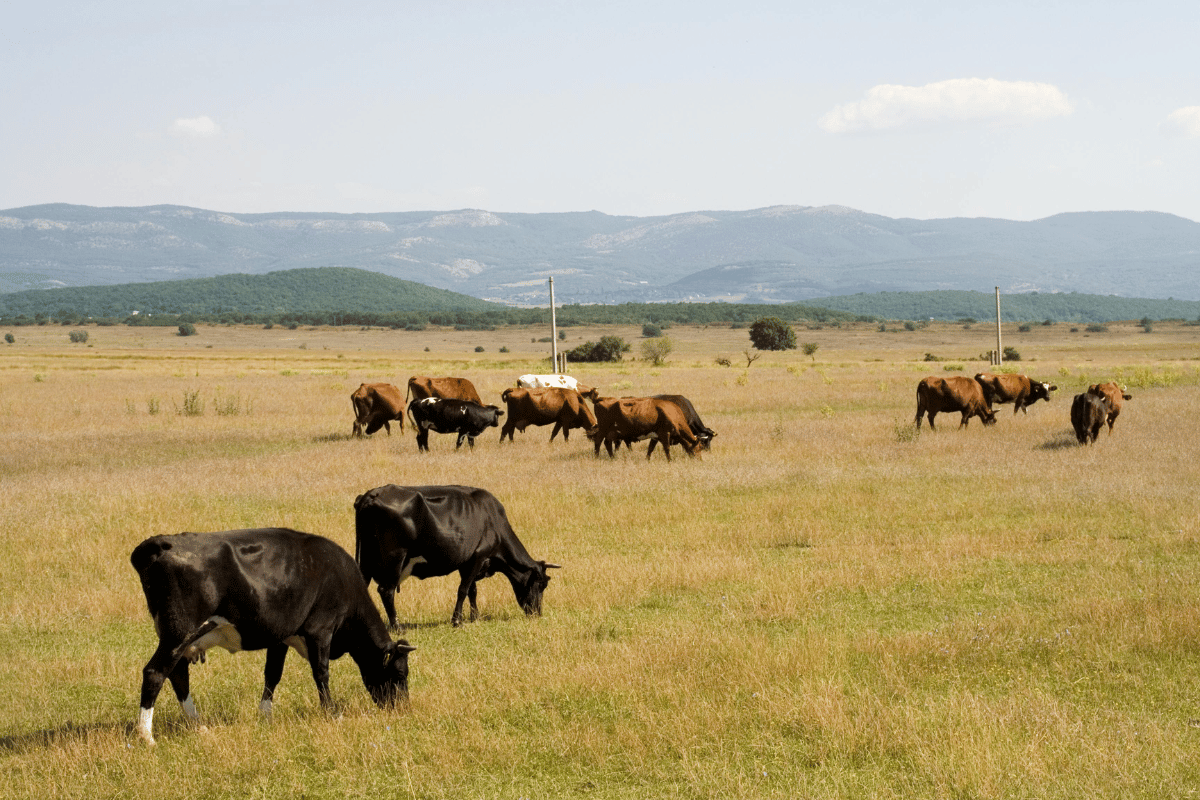
A key counterargument is that not all feed is edible for humans. Much of the land used for livestock is grassland unsuitable for crop production. Soil depth, slope, or climate often limit alternative uses. In these areas, grazing supports rural livelihoods and maintains landscapes through practices like holistic management.
According to the FAO, around 86% of global livestock feed consists of materials that people cannot eat. Pastures, crop residues, and by-products such as oilseed meals fall into this category. Without animals, these resources would not enter the food chain at all. Research on sustainable livestock feed from agro-waste demonstrates how materials previously considered waste can become valuable nutrition sources.
Livestock, therefore, act as converters. They transform grass, by-products, and residues into meat, milk, and eggs. However, concerns remain valid where high-quality arable land is used intensively for feed crops rather than food crops.
Feed costs and food prices
Feed represents the largest production cost for many farmers. Feeding livestock in the EU requires approximately 450 million tonnes of feedstuffs per year. In poultry production, it can account for more than half of total costs.
When feed prices rise, farmers face difficult choices. Either margins shrink, or costs are passed on to consumers. Inflation in basic food items, such as meat, eggs, and dairy, has shown how closely feed markets and food security are linked. Addressing feed supply is therefore not only an agricultural issue, but a social one.
Protein dependence and imports
One structural challenge in the EU is plant protein supply. Crops rich in protein, such as soya, are central to animal nutrition. The EU produces only a fraction of the protein it needs for feed. As a result, it relies heavily on imports from countries such as Brazil, Argentina, and the United States.
This dependence exposes the food system to global market shocks and geopolitical risks. It also raises environmental and ethical questions linked to production practices abroad. Reducing this dependence is often cited as a priority, but alternatives are not straightforward.
Environmental concerns and dietary shifts
Environmental impacts of livestock, including emissions and nutrient losses, are a major driver of the feed vs food debate. Some argue that changing human diets is the most effective response. Plant-based, vegetarian, or flexitarian diets are increasingly discussed in this context, often within broader conversations about building resilient and sustainable agrifood systems.
Others focus on changing what animals eat, favouring feeds with low opportunity cost, such as grass and by-products. These approaches can reduce pressure on land and imports. However, they also require changes in production systems and consumer expectations around animal welfare. Are consumers ready to accept such changes at scale?
Improving efficiency rather than choosing sides
The debate is often framed as a choice between animals and people. In practice, food systems are more interconnected. Improving feed efficiency can reduce pressure without removing livestock altogether. Better formulation, precision feeding, and data-driven management play a role here.
Digital tools allow farmers to match feed supply more closely to animal needs. This reduces waste, lowers costs, and limits environmental losses. Such measures do not solve all issues, but they address some of the most pressing ones. Broader adoption of sustainable livestock production practices can help balance productivity with environmental responsibility.
Building on this approach, the STEP UP project is exploring ways to make livestock systems more sustainable and resilient. Currently, there is limited comprehensive and quantifiable information on the sustainability of environmentally friendly European Livestock Production Systems (ELPS). STEP UP addresses this gap by examining Innovative Livestock Production Systems (ILPS) as testing grounds.
ILPS use technology-driven methods to improve efficiency, reduce environmental impact, and enhance animal welfare. By analysing these systems, STEP UP identifies data gaps and provides recommendations to upgrade traditional ELPS, contributing to more informed and sustainable livestock farming. These insights are particularly relevant to the feed vs food debate, helping optimise feed use, reduce resource competition, and strengthen food security while maintaining animal production.
Food security needs balanced thinking
Food security is not served by simple answers. Removing livestock would not automatically end hunger, just as maintaining current systems without change is not sustainable. The feed vs food debate highlights real tensions, but also risks oversimplification. Not all feed competes with food, and not all land can grow crops. Policy choices need to consider nutrition, affordability, environmental limits, and rural livelihoods together.
So perhaps the better question is not whether we should feed animals or people, but how we design systems that do both responsibly.
Conclusion
The feed vs food debate raises important questions about resource allocation, environmental impact, and food security. While livestock systems do use significant agricultural resources, the picture is more complex than simple competition between animals and humans for food.
Much of the feed used globally consists of materials unsuitable for human consumption, and much of the land used for livestock cannot support crop production. At the same time, legitimate concerns exist about the use of high-quality arable land for feed crops, protein import dependence, and environmental impacts.
Moving forward requires balanced approaches that improve feed efficiency, reduce waste, diversify protein sources, and adapt production systems to local conditions. The goal should not be to eliminate livestock or maintain business as usual, but to build food systems that provide adequate nutrition for all while respecting environmental limits and supporting rural communities.
Those interested in following ongoing discussions and project updates can visit the STEP UP Newsroom or follow us on LinkedIn for the latest news and insights.
References
Albaladejo Román, A. (2023). EU feed autonomy: Closing the gaps in European food security. European Parliamentary Research Service (EPRS), Members' Research Service, PE 739.328, February 2023.
Directorate-General for Agriculture and Rural Development. (2024, May 24). Feed protein: Overview of EU production and options to diversify sources. European Commission.