Introduction
By 2050, feed demand on a global scale is projected to increase by 60%-120% compared to the
levels in 2005. Some reasons for that are population growth, rising incomes, and shifts in dietary preferences (Alexandratos and Bruinsma, 2012; Tilman et al., 2011). Increasing global income is driving dietary shifts, moving away from cereal-based diets toward those richer in meat, dairy, and eggs. (Delgado, 2003; Kastner et al., 2012; Delgado et al., 2020).
The world's increasing demand for meat and dairy products is important because their production requires more land, water, and energy than plant feeds (Gerbens-Leenes and Nonhebel, 2002; Pimentel and Pimentel, 2003; Wirsenius et al., 2010). About 6 million tons of feed are generally consumed by producing animals, and 72% of it is consumed by ruminants (i.e., cattle, goats, and sheep) (Mottet et al., 2017).
Along food supply chains, food moves from a primary producer to an end consumer, progressing from harvesting, production, handling, processing, distribution, and retailing to plate. During this progression, food is lost or wasted due to various technical, economic and/or societal reasons specific to each stage of the supply chain (Rajeh et al., 2021). More than 1.3 billion tons of food is annually wasted each year (Gustavsson et al., 2011) which is 3 million tons more than the global consumption of all grains and by-products by pigs and poultry.
What Is Agro-Waste?
Agro-industrial wastes are non-product outputs generated during the production and processing of plant products (Girotto et al., 2015). They can be crop residues, fruit and vegetable wastes, by-products from starch, sugar, confectionary processing, distilleries, breweries, grain and legume processing, and residues from the oil industry (Ajila et al., 2012). They can be crop residues, fruit and vegetable wastes, by-products from starch, sugar, confectionary processing, distilleries, breweries, grain and legume processing, and residues from oil industry (Ajila et al., 2012).
Although some of the waste is utilized as compost or other functions that yield little economic return, much of it is simply left in fields to be plowed under or deposited in landfills, contributing to air pollution, water contamination, and public health issues. These challenges require that measures be put in place for environmentally friendly recycling processes, thus minimizing agro-waste, adding economic value to our agricultural products and protecting the environment through biodegradation (Onyegeme-Okerenta et al., 2020)
This agro-waste management strategy has attracted worldwide research attention due to its potential as an environmentally, economically, and socially sustainable alternative. It is clear from the literature that incorporating agro-waste in animal feeds is an ingenious alternative "disposal" strategy that protects the environment and complements efforts to feed a growing human population sustainably.
Benefit of Using Food Waste as Supplement Feeds
Integrating food waste can reduce the emission rate of current greenhouse gas (MMT CO2 3.7) from products that can be directly considered for livestock feed (Lee and Willis, 2010). The traditional disposal of agro-wastes in landfills and through incineration results in soil, air, and water pollution (eutrophication), emission of greenhouse gases, contamination of the ozone layer, and destruction of marine life (Yeilagi et al., 2021). There is a need to consider these wastes as potential resources rather than considering them as undesirable and unwanted, to avoid contamination of air, water, and land resources and to avoid transmission of hazardous materials. These problems may be circumvented by utilizing residues to feed domesticated animals.
Cost Reduction for Farmers
Large-scale animal production is hampered by high feed costs, which account for more than two-thirds of total production costs (Ajila et al., 2012) due to over-reliance on maize and soybean grains as major feed ingredients. The prices of these grains have been rising on the world market in response to high demand that is also driven by their direct use as human food and for biofuel production (Masenya et al., 2021). Livestock feed is the cost center of any production phase.
Hence, incorporating waste helps reduce the cost of production without affecting the livestock's overall productivity, thus enhancing the sustainability of these valuable agro-enterprises. For example, MGM Grand transferred food waste to a farm to feed livestock, and it saved approximately 6000 to 8000 dollars per month in livestock feed (Zanolli, 2012). Using agro-waste can increase animal production output and lower compounded feed costs, thus contributing to global food security (Rajehet al., 2021).
The use of food waste for livestock feed has helped reduce the outbreak of diseases (Leib et al., 2016). When properly processed, it is worth noting that the process of thermal treatment of feed wastes to be used for livestock feed production is done at a very high temperature, and very few microorganisms and bacterial can exist at that temperature, The inclusion of agro-waste polyphenols in animal feed could improve the production performance and oxidative stability of meat derived from farm animals by reducing oxidative stress, linked to severe metabolic diseases and poor meat stability (Vuolo et al., 2019).
Enhancing Circular Economy Practices
In addition, converting agro-waste into livestock feed ingredients is an efficient way to upgrade low-quality feeds into high-quality animal products (Mlambo and Mnisi, 2019), thus contributing to improved food and nutrition security. Kasapidou et al. 2015 reported that using agro-wastes as functional ingredients with antimicrobial and pharmacological bioactivities in place of prophylactic antibiotics in animal diets could be a valuable strategy to satisfy the consumer demands for clean, natural, and organically produced animal food products.
Nutritional Values Of Agricultural Industrial Wastes As Animal Feeds
When used as dietary ingredients, these agro-waste are natural sources of nutrients and bioactive compounds with antioxidant, antimicrobial, immunomodulatory, and growth-stimulating properties (Ominski et al., 2021). Indeed, research has shown that agro-waste possesses nutraceutical properties that could improve animal growth and product quality (Fang et al., 2016). The consumption of nutraceuticals directly affects animal health, resulting in either improved health or illness prevention, or both (Donno et al., 2018). In addition to their nutritional value, nutraceuticals possess biocompounds with growth-stimulating, health-promoting, antioxidative, anti-inflammatory, and immunomodulating activities. These biocompounds have been linked with reduced risk for chronic illnesses (Donno et al., 2018) and improved animal performance and product quality (Hashem et al., 2020).
Agro-wastes can be divided into three classes, namely, (1) high-energy feeds (molasses, mango, and citrus waste, and sugarcane bagasse), (2) protein supplements (soybean and canola cake/meals), and (3) byproducts from grain milling and refinery (Ajila et al., 2012). This classification of agro-wastes used for animal feeding is based on their protein, carbohydrate (fibrousness), lipid, mineral, and vitamin composition, as well as organic matter digestibility and energy values (Mirzaei-Aghsaghali et al., 2008). Agro-waste that is rich in protein and energy can be used as supplements to enhance the nutritional value of low quality crop residues and thus improve animal production (Mnisi et al., 2023).
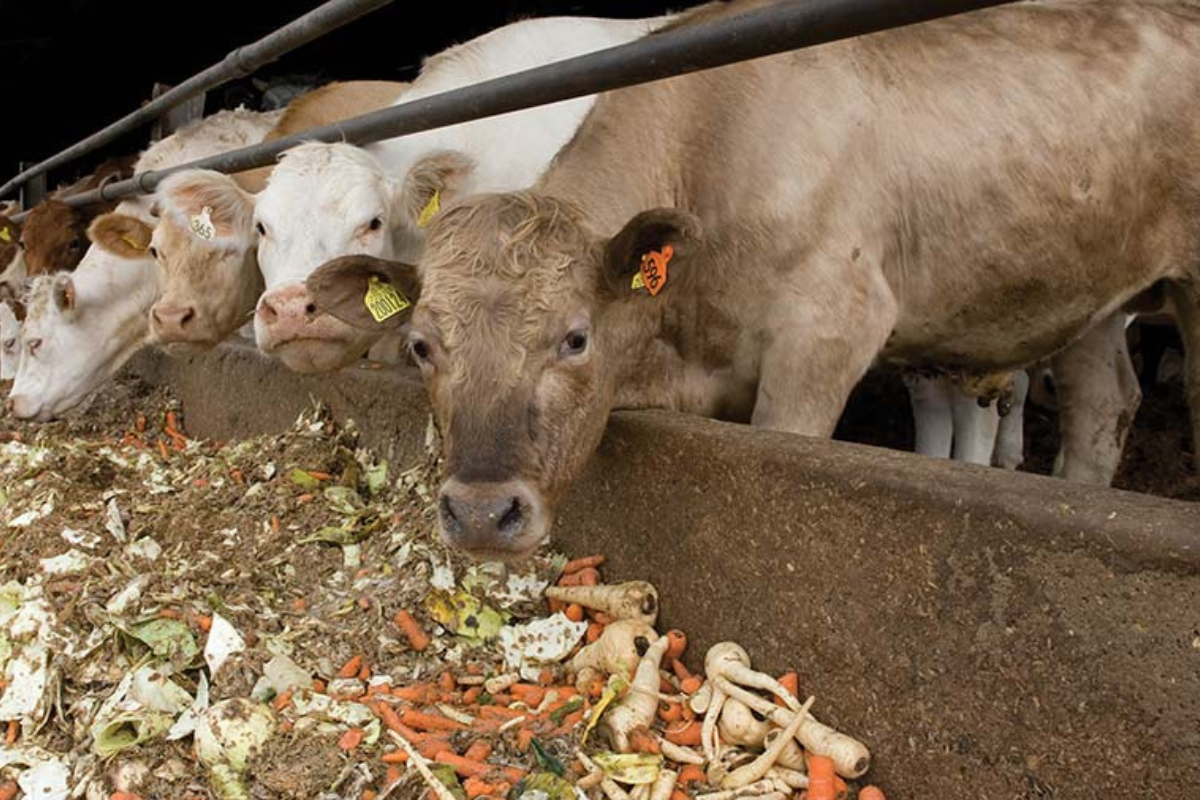
Agro-waste is increasingly recognized as a putative source of bioactive substances with beneficial biological activities on animal performance and product quality (Hashem et al., 2020). Vegetable residues, such as carrots, are classified as vitamin-rich foods because they are high in beta-carotene and ascorbic acid (Raees-ul and Prasad, 2015), while fruit pomaces have high concentrations of reducing sugars, such as glucose, fructose, and sucrose (Wadhwa et al., 2015). Agro-wastes can be used as sources of antioxidant, antitumor, antiaging, antimicrobial, and anti-inflammatory agents (Leouifoudi et al., 2015). Agro-wastes have different polyphenolic profiles. For example, grape residues are rich in anthocyanins, quercetin, stilbenes or resveratrol,
and tannins; green tea residues have high concentrations of catechins, and olive residues are high in hydroxytyrosol and tyrosol phenolic acids (Leouifoudi et al., 2015; Idowu, 2017). Including agro-waste polyphenols in animal feed could improve the production performance and oxidative stability of meat derived from farm animals by reducing oxidative stress linked to severe metabolic diseases and poor meat stability (Vuolo et al., 2019). Polyphenolic chemicals derived from aromatic plants are also reported to enhance palatability and thereby increase growth performance (Kumanda et al., 2019). In addition, polyphenols have been reported to decrease pathogenic bacteria in the lower gut and modulate gut morphology through their antioxidant and anti-inflammatory functions (Mahfuz et al., 2021).
Challenges of Using Agro-Waste as Feed Ingredient
The utilization of agro-wastes in animal feeds is limited by several factors, including seasonal availability, production logistics, presence of pathogens, high concentration of anti-nutritional and toxic compounds, the need for preprocessing, and bulkiness (Ajila et al., 2012; Yang et al., 2021). The utilization of agro-waste remains a worldwide challenge due to collection and distribution issues (Ominski et al., 2021). In many countries, agro-industrial activities are usually located in urban areas, which is a major challenge restricting distribution and utilization, given that most farms are located far from these urban centers. Furthermore, properly incorporating these by-products in animal diets is restricted by a lack of professional training on diet formulation and the machinery required for drying, milling, and blending into animal feeds (Ajila et al., 2012).
Regulatory Constraints
Moreover, the use of agro-wastes in animal diets must conform to regulatory policies because most countries must register feedstuffs under the Feed Act (Ominski et al., 2021). This severely restricts the use of agro-waste as a feed component or sole feed without prior processing (Thomas et al., 2020).
Presence of Anti-Nutritional Factors (ANFs)
Animal feed provides animals with nutritional energy requirements. Agro-wastes are highly perishable in their raw form and may contain a wide range of antinutritional factors with severe health consequences in farm animals (Sharif et al., 2018). The presence of anti-nutritional factors (ANFs), such as hydrogen cyanide, caffeine, oxalates, phytates, tannins, polyphenols, and saponins, hinders nutrient availability and digestibility within foods, feeds, and agro-industrial wastes. Therefore, to reduce ANFs and enhance nutritional quality, agro-industrial wastes can be subjected to either biological (microbial), chemical, or mechanical processes. Whereas chemical and mechanical processes are capital- and labor-intensive, the biological fermentation process is a cheaper and safer option to improve the nutrient composition of agro-industrial wastes (Yafeto et al., 2023).
High Moisture Content and Spoilage Issues
A major limitation of plant waste is its high moisture content, which makes handling difficult and favors its rapid decomposition. Therefore, it is necessary to conserve this waste (Ulloa et al., 2004) without diminishing its quality (Esteban et al., 2007). In addition, it should be considered that plant residues are not always produced constantly throughout the year. Thus most of the production is available only during certain months of the year (Acosta-Martínez et al., 2015).
Silages are an option that could be used to conserve plant residues for a longer time (Hossain, et al., 2015, Salinas-Chavira 2016), as there are examples of their application in various fruits and vegetables, such as cassava, beets, carrots, broccoli, squash, various citrus fruits, banana, and pineapple (Zivkov-Balos et al., 2013).
Due to its high moisture content, plant residues cannot be silage alone, so they are mixed with straw or stubble; in this way (Wadhwa and Bakshi, 2017), the mixture of vegetable/straw residue has a dry matter level between 25% and 40% for its correct fermentation process (Martínez-Fernándeze et al., 2014 ). Drying and subsequent transformation into flour can also be a viable storage alternative (Ferreirra et al., 2015). In order to achieve this, the use of solar dryers can be considered or simply through direct drying under the sun (Wadhwa and Bakshi, 2017)
A case study: Pumpkins in Animal Nutrition
Ruminants (Cattle, Buffalos, and Sheep)
There is evidence that pumpkins are used traditionally and on a small scale in the feeding of several species of domestic animals, such as ruminants (Lans et al., 2007) and equines (Lans et al., 2006). Research on the use of pumpkins in animal feeding and its productivity benefits are attributed to its protein and fat content in the case of seeds and carbohydrates, minerals, and vitamins in the case of the fruit (Achilonu et al., 2018). Studies on the use of pumpkins in ruminant feeding are scarce.
In cattle, Halik et al. 2018 reported an increase of about 6 kg/d of milk by replacing 17% of corn silage with Cucurbita maxima silage (20.7 kg/d vs. 26.5 kg/d, respectively), while in buffalos, there was no change in weight gain by including up to 14% of Cucurbita pepo silage (Razzaghzadeh et al., 2007). Research on sheep has focused on the use of pumpkinseed. In this regard, Klir et al. 2017, did not report changes in milk production or its composition by adding 16% of pumpkin seed flour in the diet of dairy goats, completely replacing soybean meal.
Poultry (Broilers, Layers, and Turkeys)
On the other hand, Antunovic et al. 2018 found that replacing soybean meal with up to 15% of pumpkin seed meal in the sheep diet does not alter the color of the meat or the carcass yield. The largest number of studies regarding the use of pumpkin seeds as animal feed has been conducted in broiler chickens in which an increase in weight gain and carcass yield was observed. In this regard, Martínez et al. 2011 reported greater weight, greater breast yield, and lower abdominal fat when 6% of Cucurbita moschata seed flour was included in the diet, while Zinabu et al. 2019 improved weight gain with only 1% of Cucurbita maxima seed flour included in the chicken diet.
Hajati et al. 2011 showed that an addition of 5 g/kg of pumpkin seed oil to the ration does not affect the productive performance. In laying hens, there were no changes in the laying rate or the quality of the egg using pumpkin seed flour (Martínez,et al.,2012). In the case of turkeys, the use of 5% of seeds in their diet improved the fertility of the eggs, reduced embryonic death, and increased hatching rate (Machebe et al., 2013).
A study by Kumanda et al. (2019) reported similar body weight gain and meat quality traits in broiler chickens fed with a diet containing 75 g/kg of red grape (Vitis vinifera) pomace (GP), and those offered a maize-based control diet. Moreover, the birds fed with 75 g/kg GP had the lowest feed conversion ratio (FCR) compared to those in the control group, which indicated the potential of the waste by-product to improve feed utilization efficiency.
Apple Pomace as an Alternative Feed Source
The use of dry apple (Malus domestica) pomace up to 150 g/kg did not affect the body weight gain of three-week- old broiler chickens (Ayhan et al., 2009). However, six-week-old birds fed with 150 g/kg of the pomace had lower body weights compared to the control group, which could be attributed to the presence of high crude fibre (17%) in apple pomace that is known to reduce nutrient digestibility in the gastrointestinal tract (Ayhan et al., 2009).
Pomegranate By-Products in Poultry Diets
The inclusion of pomegranate (Punica granatum L.) by-product at different dietary levels (up to 20 g/kg) in broiler chicken diets enhanced breast meat protein, total fatty acids, and reduced cholesterol levels (Ahmed et al., 2015). The reduction in the cholesterol levels could be attributed to the presence of b-sitosterol, campesterol, and stigmasterol in pomegranate, which is known to compete with the absorption of dietary cholesterol and inhibit the re-absorption of endogenous cholesterol in the gastrointestinal tract (Ahmed et al., 2015).
Pigs
In pigs, research on the use of pumpkins as food is scarce; however, the report by Medina et al. 2019) indicates that the weight gain of pigs is not affected when up to 30% of the ration is replaced by Cucurbita pepo ferment. However, food consumption increases by 75%, which affects food conversion.
Conclusion
It is concluded that agro-waste can be effectively used as animal feed once the waste material has been subjected to the right valorization process. Replacement of conventional feed material partially with agro-waste has helped to reduce the cost of feeding livestock, reduce competition between humans and livestock for food, enhance food security as well as ensure environment conservation without compromising the productivity of livestock. The utilization of agro-waste in compounding feed for experimental animals is an innovation that can reintroduce agro-waste into the environment in a more profitable form It is essential to note that Feed safety must not be compromised in the drive to convert these wastes to worth.
References
- Alexandratos, N., and J. Bruinsma. 2012. World Agriculture Towards 2030 / 2050 The 2012 Revision Proof Copy. Available at: www.fao.org/economic/esa. Accessed December 12, 2022.
- Tilman, D., C. Balzer, J. Hill, and B. L. Befort. 2011. Global food demand and the sustainable intensification of agriculture. In Proceedings of the National Academy of Sciences of the United States of America, 108(50): 20260–20264.
- Delgado, C. L. 2003. Rising consumption of meat and milk in developing countries has created a new food revolution. Journal of Nutrition, 133(11): 3907S-3910S
- Kastner, T., M. J. I. Rivas, W. Koch, and S. Nonhebel. 2012. Global changes in diets and the consequences for land requirements for food. In Proceedings of the National Academy of Sciences of the United States of America, 109(18): 6868–6872
- Delgado, C., M. Rosegrant, H. Steinfeld, S. Ehui, and C. Courbois. 2020. Live stock to 2020 The Next Food Revolution. Available at:https://cgspace.cgiar.org/bitstream/handle/10568/333/dp28.pdf?sequence=2andisAllowed=y. Accessed June 10, 2021.
- Gerbens-Leenes, P. W., and S. Nonhebel. 2002. Consumption patterns and their effects on land required for food. Ecological Economics, 42(1–2): 185-199 .
- Mottet, A., C. de Haan, A. Falcucci, G. Tempio, C. Opio, and P. Gerber. 2017. Livestock: On our plates or eating at our table? A new analysis of the feed/food debate. Global Food Security, 14(January): 1–8.
- Rajeh, C., I. P. Saoud, S. Kharroubi, S. Naalbandian, and M. G. Abiad. 2021. Food loss and food waste recovery as animal feed: a systematic review. Journal of Material Cycles and Waste Management, 23(1): 1-17.
- Gustavsson, J., C. Cederberg, and S. Ulf. 2011. Global food losses and food waste. The Swedish Institute for Food and Biotechnology, Extent, causes and prevention. Rome.
- Kumanda, C., Mlambo, V., and Mnisi, C. M. (2019). From landfills to dinner table: Red grape pomace waste as a nutraceutical for broiler chickens. Sustainability, 22(7), 1931
- Ajila, C. M., Brar, S. K., Verma, M., Tyagi, R. D., Godbout, S., and Valéro, J. R. (2012). Bio-processing of agro by products to animal feed. Crit. Rev. Biotechnol., 32, 382–400.
- Ayhan, V., Duru, A. A., and Özkaya, S. (2009). Possibilities of using dried apple pomace in broiler chicken diets. Vet. Fak. Derg., 15(5), 669–672
- Ahmed, S. T., Islam, M. D., Bostami, A. B. M., Mun, H. S., Kim, Y. J., and Yang, C. J. (2015). Meat composition, fatty acid profile and oxidative stability of meat from broilers supplemented with pomegranate (Punica granatum L.) by-products. Food Chem., 188, 481–488.
- Lans, C.; Turner, N.; Khan, T.; Brauer, G.; Boepple, W. Ethnoveterinary medicines used for ruminants in British Columbia, Canada. J. Ethnobiol. Ethnomed. 2007, 3, 11.
- Lans, C.; Turner, N.; Brauer, G.; Lourenco, G.; Georges, K. Ethnoveterinary medicines used for horses in Trinidad and in British Columbia, Canada. J. Ethnobiol. Ethnomed. 2006, 2, 31.
- Achilonu, M.C.; Nwafor, I.C.; Umesiobi, D.O.; Sedibe, M.M. Biochemical Proximates of Pumpkin (Cucurbitaeae Spp.) and Their Beneficial E_ects on the General Well-Being of Poultry Species. J. Anim. Physiol. Anim. Nutr. (Berlin) 2018, 102, 5–16.
- Halik, G.; Lozicki, A.; Wilczak, J.; Arkuszewska, E.; Makarski, M. Pumpkin (Cucurbita Maxima D.) Silage as a Feed That Improves Nutritional Properties of Cow’s Milk. J. Agric. Sci. Technol. 2018, 20, 1383–1394.
- Razzaghzadeh, S.; Amini-Jabalkandi, J.; Hashemi, A. E_ects of di_erent levels of pumpkin (Cucurbita pepo) residue silage replacement with forage part of ration on male buffalo calves fattening performance. Ital. J. Anim. Sci. 2007, 6, 575–577.
- Klir, Ž.; Castro-Montoya, J.M.; Novoselec, J.; Molkentin, J.; Domacinovic, M.; Mioc, B.; Dickhoefer, U.; Antunovic, Z. Influence of pumpkin seed cake and extruded linseed on milk production and milk fatty acid profile in Alpine goats. Animal 2017, 11, 1772–1778.
- Antunovic, Z.; Klir, Ž.; Šperanda, M.; Sicˇja, V.; Cˇ olovic´, D.; Miocˇ, B.; Novoselec, J. Partial replacement of soybean meal with pumpkin seed cake in lamb diets: E_ects on carcass traits, haemato-chemical parameters and fatty acids in meat. S. Afr. J. Anim. Sci. 2018, 48, 695–704.
- Martínez, Y.; Yero, O.; Navarro, M.; Hurtado, C.; López, J.; Mejía, L. E_ect of squash seed meal (Cucurbita moschata) on broiler performance, sensory meat quality, and blood lipid profile. Rev. Bras. Ciência Avícola 2011, 13, 219–226.