Syria was once a breadbasket of the Middle East. In the 1990s, it produced enough wheat to feed its people and export the surplus. Today the country imports millions of tonnes of wheat a year, and its farmers face the worst drought in decades. What happened?
This article looks at how Syria's agricultural policies, from the land reforms of the 1950s to today's emergency strategies, reshaped the land, the economy, and the lives of millions. For farmers and policymakers across the region, Syria's story is a powerful lesson in what works, what fails, and what must change.
The land reform era, 1958 to 2000
The first wave, 1958 to 1963
When Syria united with Egypt in 1958, it adopted Egypt's land reform model. The government capped private land ownership at 80 hectares for irrigated land and 300 hectares for rain-fed land. Large estates were broken up and redistributed to farmers in small parcels.
The intention was sound, to reduce inequality and give landless farmers a stake in agriculture, but the execution was flawed. Compensation to the original landowners stretched over 75 years, and many received far less than their land was worth. The new smallholders, meanwhile, received fragmented plots that were often too small to sustain a family.
The Ba'athist intensification, 1963 to 1970
After the 1963 coup, the Ba'ath Party tightened control further. Ownership limits were reduced to 15-55 hectares for irrigated land. Within 18 months, nearly one million hectares were expropriated and 240,000 hectares redistributed.
By 1966, confiscated lands had become state property. Farmers worked the land but owned nothing. The government decided what to plant, how to market it, and at what price. Wheat and cotton were declared strategic crops, and farmers had little choice but to comply.
The cost of central planning
The World Bank documented the damage. Between 1953 and 1976, agriculture's contribution to Syria's GDP grew by only 3.2%, far below its potential, because the policy of forcing farmers into wheat and cotton ignored market realities.
By 1995, wheat and cotton accounted for 35% of agricultural value but drove only 17% of sector growth between 1993 and 2003. Fruits, vegetables, and other non-strategic crops, which accounted for just 26% of value, generated 39% of the growth. The support system was also deeply unequal. The wealthiest 2% of rural households captured 8% of total cotton subsidies, while the poorest 16% received only 6%.
From self-sufficiency to dependence
The production collapse
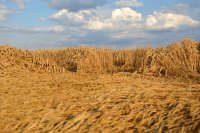
Syria's grain production has collapsed. In 2025, total cereal output reached just 1.2 million tonnes, a drop of around 60% from historical averages. Rainfall from November 2024 to May 2025 was more than 50% below the long-term average.
The Syria Community Consortium reported in February 2026 that over 95% of farming households suffered crop losses, and about 14% lost their entire harvest. The FAO warned that up to 75% of the wheat crop could fail. Many farmers simply abandoned their fields.
The water crisis
Syria is among the most climate-vulnerable countries in the region. Research by World Weather Attribution found that climate change has made droughts in Syria far more likely. By September 2022, nearly 2 million people had fled rural areas due to water scarcity.
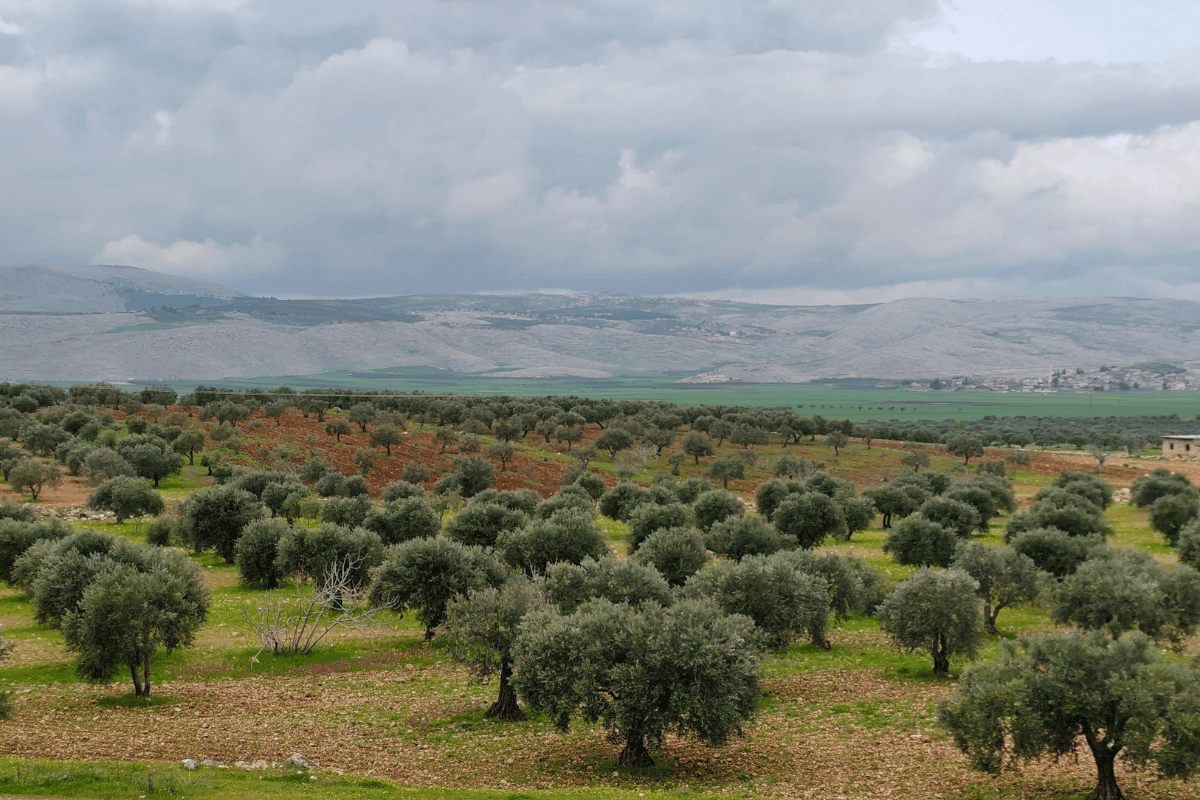
The structural vulnerability is stark. According to the Central Bureau of Statistics, 74% of Syria's cultivated land, some 2.78 million hectares, is rain-fed, and only 26% has irrigation. Even the irrigated areas face severe groundwater depletion, and 77% of irrigated land relies on diesel-powered pumps. Decades of over-pumping have drained aquifers and caused widespread soil salinization. In the Ghab region, the collapse of the Afamia dam, damaged by looting and neglect, worsened water shortages in some of Syria's most fertile land.
Soil degradation
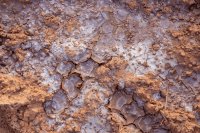
The combination of poor policy, over-irrigation, and climate stress has degraded Syria's soils. Salt buildup, erosion, and loss of organic matter are now widespread problems that will take decades to reverse.
The regional ripple effect
From exporter to importer
In 2007, Syria planted 1.7 million hectares of wheat and produced over 4 million tonnes. Today it is a major wheat importer. The FAO has estimated a wheat shortfall of around 2.7 million tonnes for 2025, enough to feed over 16 million people for a year, and import requirements for the 2025 to 2026 marketing year are forecast at about 3 million tonnes, far above the recent average. Emergency wheat shipments from Iraq and limited financial aid from Gulf states have barely covered the gap.
Shifting power and water diplomacy
The loss of agricultural output in the north, which historically produced a large share of the country's wheat, has reshaped food control. International sanctions in place since 2011 forced Syria to rely on a narrow set of import sources, primarily Russia. In June 2025, financial sanctions were partially lifted, making imports easier, though economic uncertainty and currency devaluation still restrict the foreign exchange needed for wheat purchases.
Water is also becoming a flashpoint. The Euphrates River, shared by Iraq and Turkey, is running lower. Historic agreements, such as the 1955 Yarmouk River agreement between Syria and Jordan and the Orontes River arrangements between Lebanon and Syria, are under growing strain as all parties face shrinking resources.
A new beginning, policy after the transition
The National Agriculture Strategy 2026 to 2030
In February 2026, Syria's Ministry of Agriculture launched the National Agriculture Strategy 2026 to 2030, which officials described as a pivotal step toward rebuilding the sector and strengthening food security. The strategy targets several areas, including support for rural livelihoods, infrastructure rehabilitation, rural development, the empowerment of women in agriculture, and the development of institutional partnerships.
Smart support instead of handouts
The agriculture minister announced a shift away from direct subsidies toward what the ministry calls smart support, in-kind loans for seeds and fertilisers provided through the Agricultural Cooperative Bank, with the focus placed on production-oriented agricultural institutions instead of individual farmers.
The gap between policy and reality
Despite these plans, farmers in rural Aleppo report receiving little or no government support. Input costs for fuel, fertiliser, seeds, and labour have soared, and many farmers cannot afford to plant more land even when they want to.
What Syria's experience teaches us
Climate adaptation is not optional
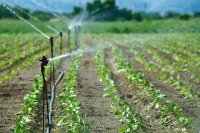
Syria's Ministry of Agriculture has announced plans to reduce the cultivation of water-intensive crops as part of its emergency climate adaptation efforts. For farmers and policymakers across the Middle East, three actions stand out. Modern irrigation, through drip and sprinkler systems, can cut water use by 30-50% while maintaining yields. Drought-resistant varieties, developed through crop breeding for heat and drought tolerance, pay off in dry years. And crop diversification, moving beyond wheat and cotton, reduces risk and opens new markets.
Land ownership reform matters
Decades of nationalisation and forced redistribution broke Syria's rural social fabric. Rebuilding requires clear land rights that give farmers the confidence to invest in their land. Without secure tenure, long-term improvements such as tree planting, soil conservation, and infrastructure are unlikely.
Regional food security needs regional cooperation
Syria's crisis exposed the danger of over-reliance on wheat imports. Cooperation across the region can reduce that vulnerability in three ways. Technology sharing lets countries with advanced irrigation and breeding programs support their neighbors. Joint water management recognises that shared rivers need shared governance, not unilateral control by any one country. And a coordinated regional grain reserve could buffer against droughts and supply shocks.
A cautionary tale, and a chance to learn
Syria's agricultural journey is a cautionary tale written in policy documents and measured in lost harvests. Land reform that broke up working farms. Crop policies that ignored market signals. Water management that depleted aquifers. Climate adaptation that came too late.
It is also a story of resilience, of farmers who kept working their land through war and drought, of a new government trying to chart a different course, and of a region that has the chance to learn from Syria's experience before repeating it.
For the global agricultural community, the lesson is clear. Agriculture is more than an economic sector. It is a foundation of social stability, national security, and regional peace, and policies that ignore this reality risk far more than poor harvests.
References
Food and Agriculture Organization (FAO). (2026). GIEWS Country Brief, Syrian Arab Republic.
The World Bank. (2008). Agriculture in Syria, Towards the Social Market.
Karam Shaar Advisory. (2025). Ringing the alarm bells, Syria may be facing its worst drought in decades.
Enab Baladi. (2026). Syria's Agriculture Minister to Enab Baladi, Ministry adopts smart support.
The Syrian Observer. (2025). Syria's Wheat Crisis, Drought, Foreign Aid, and Government Gamble.
Syria Direct. (2025). Zero season, Syrian farmers face worst drought in decades.
World Weather Attribution. (2023). Human-induced climate change compounded by socio-economic water stressors increased severity of drought in Syria, Iraq and Iran.
Food and Agriculture Organization (FAO). (2025). The Syrian Arab Republic, Farmers struggle amid worst agricultural crisis in decades.