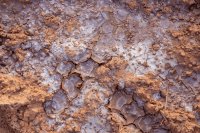
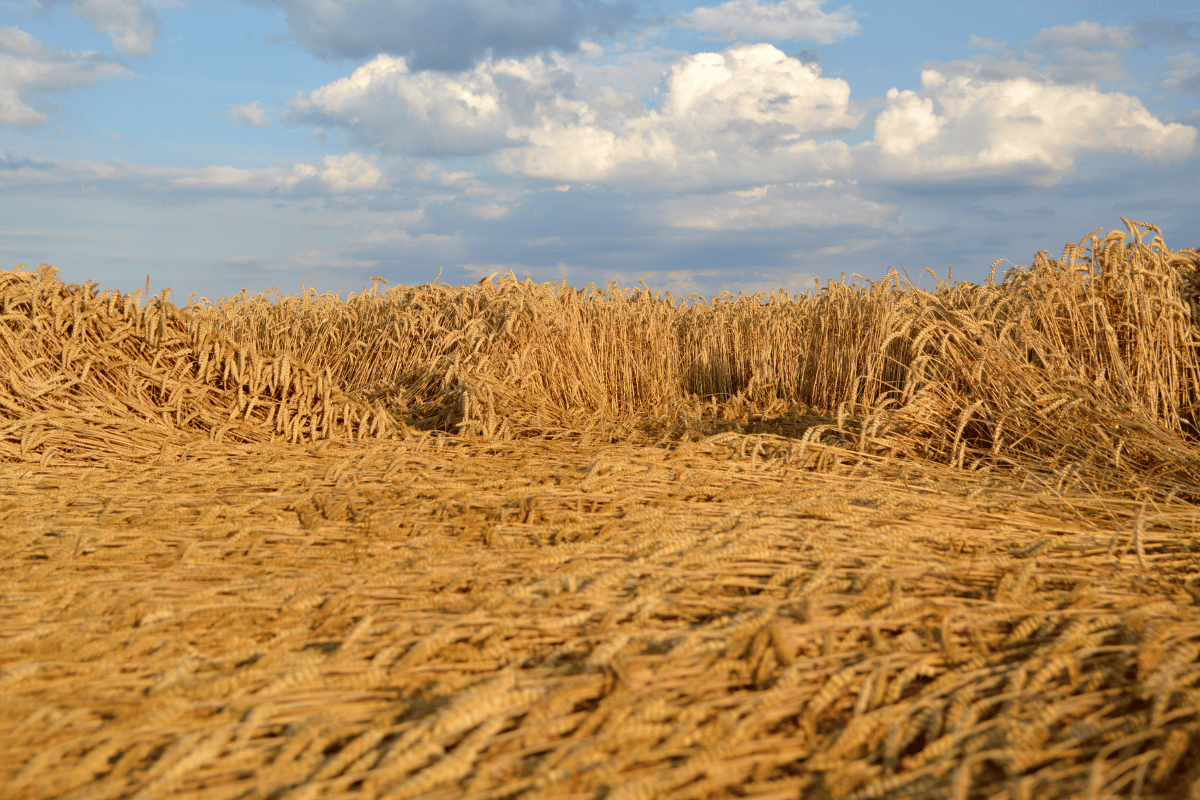
On a cold January morning in 2025, an agricultural engineer stood in a wheat field on the outskirts of Aleppo, trying to understand why the sky had sent no rain for months. The fields, usually green at that time of year, had turned grey, and the soil had cracked like old leather. Not a drop had fallen in February or March.
This is the reality for thousands of farmers in the countryside of Hasakah, Aleppo, Daraa, and Raqqa. Syria recorded its worst drought in at least 36 years during the 2024 to 2025 season. Rainfall in the first quarter of the year reached only 94.9 mm, less than 60% of the historical average of 165.4 mm, and in some areas the deficit reached 69%. Only 40% of the planned land was planted, and most of what was sown failed.
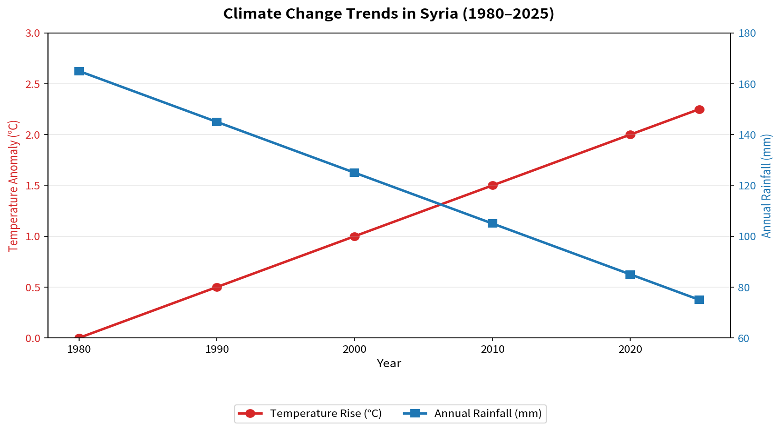
Figure 1: Climate change trends in Syria, 1980 to 2025. Data and chart by Murad Kara Mustafa.
A climate moving faster than farms can adapt
Regional climate data show the area warming by about half a degree Celsius each decade, while the annual rainfall average loses around 20 mm over the same period. This is a rapid shift, and it has turned rain-fed agriculture, which makes up 74% of Syria's cultivated land, into a gamble. In the northeast, once the country's historic breadbasket, the share of land that depends on rain reaches 85% in Hasakah governorate alone. According to the Carnegie Endowment for International Peace, desertification now affects close to 73% of Syria's territory to varying degrees, although stricter assessments that count only advanced degradation put the figure nearer 55 to 60%.
Wheat, from surplus to shortfall
Wheat, the backbone of Syria's food security, tells the story of this decline in plain numbers. Before 2011, Syria produced between 3.2 and 4 million tonnes a year and was self-sufficient, with surplus to export. In severe drought years production has since fallen to around one million tonnes, and 2024 recorded roughly 900,000 tonnes. The 2026 season brought a recovery to about 2.3 million tonnes thanks to better rains, but that does not change the underlying picture, since the country needs around 2.5 million tonnes simply to secure its bread and has faced a deficit estimated by the FAO at about 2.7 million tonnes, enough to feed some 16 million people for a year.
The timing and intensity of the rain matter as much as the total. Sudden, heavy storms wash soil away instead of soaking into it, while long dry spells scorch buds and exhaust trees. Olive, citrus, and apple trees no longer get enough winter chill hours to flower and fruit normally. The result shows up in the fields as lower yields, poorer quality, and higher costs.
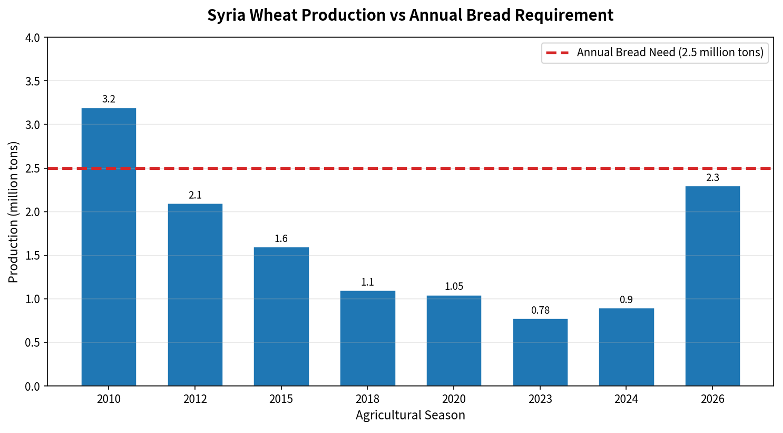
Figure 2: Syria wheat production against the annual bread requirement. Data and chart by Murad Kara Mustafa.
Groundwater running low
Groundwater, the resource that keeps much of Syria's agriculture alive, is being drawn down quietly. Successive droughts have depleted around 60% of groundwater reserves, especially in the Jazira region of the northeast. Farmers have responded by digging ever deeper wells, which raises the salinity of both water and soil. Thousands of hectares have gone out of production because pumping water, whether with fuel or solar power, has become too expensive. Even the Euphrates, which once irrigated vast areas, now runs at an unreliable and fluctuating level.
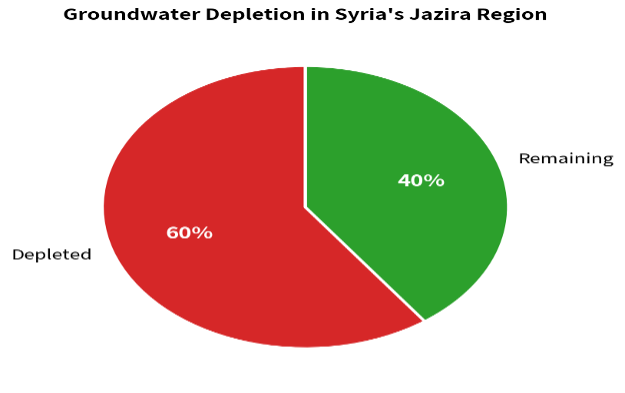
Figure 3: Groundwater depletion in Syria's Jazira region. Data and chart by Murad Kara Mustafa.
When farming families leave the land
Behind every one of these numbers is a human story. Since the major droughts of the past decade, well over a million people from rural areas and the Badia have left their villages for the edges of the major cities, after their land failed and their livestock died. Estimates of the total displaced reach as high as two million. This loss has emptied the countryside of skilled labour and shifted poverty and pressure into the cities. In the Badia, animal feed prices rose sharply during the worst periods, forcing many herders to sell their animals cheaply or watch them die.
Desertification continues to advance. On the Notre Dame Global Adaptation Initiative's ND-GAIN index, which measures both climate vulnerability and readiness to cope, Syria ranks among the most vulnerable countries and 185th, near the very bottom, for readiness. In practical terms, the Syrian farmer is facing climate change with some of the fewest resources and the weakest support of any country in the world.
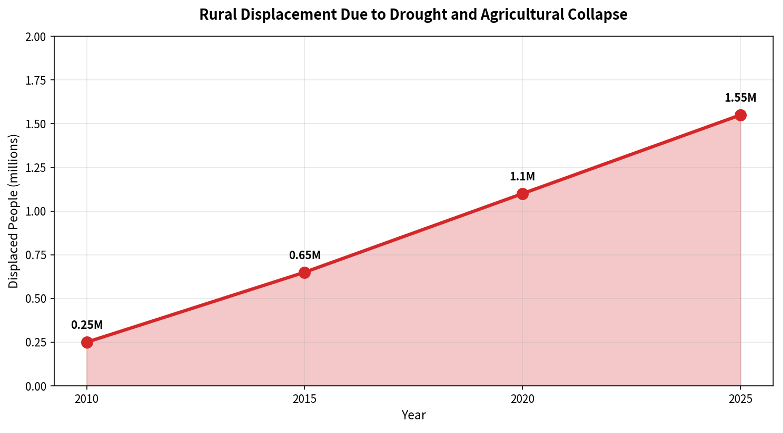
Figure 4: Rural displacement linked to drought and agricultural decline. Data and chart by Murad Kara Mustafa.
What a way forward could look like
The situation is serious, but it is not hopeless, and Syrian land has a long history of adaptation. What it needs now are clear and rapid decisions. A full shift to drip and sprinkler irrigation is no longer optional, since it is the way to stop the water losses that flood irrigation causes. Developing locally adapted wheat and barley varieties that tolerate drought and salinity has become an urgent research priority. Building small earthen and stone check dams in valleys to capture winter rainfall can create a reserve for the harsh summer months. All of this depends on real support for farmers, through improved seed at affordable prices, low-interest loans for irrigation, and practical training that does not leave them to face the sky alone.
The Syrian farmer is not asking for a miracle, only to stay able to work the land without losing everything in a single season. Climate change is no longer a distant environmental question here. It has become part of the daily struggle to secure bread, and the question being asked in the villages is shifting from what to plant to whether farming will remain possible at all.
Sources
Carnegie Endowment for International Peace. (2026). Syria on the brink of water scarcity, climate change, drought, and threats to food security.
Notre Dame Global Adaptation Initiative. ND-GAIN Country Index, Syria.
Reuters / Arab News. (2026). Syria's wheat harvest expected to more than double this year.
climate-change-syria-agriculture-drought-wheat