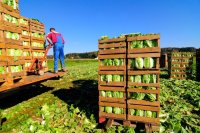
Freshly harvested fruits and vegetables may look as though they have finished growing, but they are still alive. Their cells keep working after they are separated from the plant, and one of the things they keep doing is respiring. Respiration keeps the tissue alive for a while, but it also uses up stored food reserves and drives ageing. Understanding it helps farmers, handlers, retailers and consumers make decisions that slow deterioration, reduce food losses and preserve quality.
What is respiration in harvested produce?
Respiration is the process in which living plant cells break down stored food, mainly sugars, to release the energy they need, much of it given off as heat. Most respiration is aerobic, meaning it uses the oxygen in the air. In simplified form it can be written as glucose + oxygen → carbon dioxide + water + energy.
A harvested tomato, mango, cabbage or carrot therefore keeps using energy after picking. On the plant, it was supplied with sugars from photosynthesis and with water and nutrients through the roots. Once harvested, it is cut off from these supplies and has to live on what is stored in its tissues. As those reserves are used up, flavour, texture, nutritional value and marketability decline.
Respiration cannot be stopped without killing the produce, so the practical aim of postharvest handling is to slow it down between the farm and the market. Produce with a high respiration rate generally deteriorates faster than produce with a low rate. Leafy vegetables, asparagus, broccoli and ripe fruit are highly perishable, while onions, garlic and some root vegetables respire slowly under suitable storage conditions.
Large stores and packhouses sometimes track the respiratory quotient (RQ), the ratio of carbon dioxide produced to oxygen consumed. It shows what the produce is burning. When sugars are used, the RQ is close to 1, with roughly equal amounts of carbon dioxide released and oxygen taken in, while fats give a lower RQ and organic acids a higher one. A sharp rise in RQ is a warning sign that the produce has run short of oxygen and started to ferment, which is why it is useful in monitoring stored produce.
Why respiration shortens shelf life
Respiration consumes the stored carbohydrates that give produce its flavour and nutritional value, and as these run down, the produce moves towards senescence, the natural ageing of harvested tissue. It also releases heat. If that heat is not removed, the temperature around the produce rises, which speeds up respiration further and starts a cycle of faster deterioration.
Temperature has an outsized effect. For every 10°C rise, the respiration rate doubles or even triples, so produce left in the sun at 30°C can use up its reserves four to nine times faster than the same produce kept at 10°C.
Respiration is also tied to other causes of quality loss. Water loss through transpiration leads to wilting, shrivelling and loss of firmness. Bruises and cuts from rough harvesting damage cells, raise respiration and open entry points for decay organisms. Ethylene, a plant hormone produced by some fruits, speeds up ripening and ageing in sensitive produce. Because these processes interact, keeping produce fresh takes more than putting it in a cool room.
Seven ways to slow respiration after harvest
Remove field heat quickly
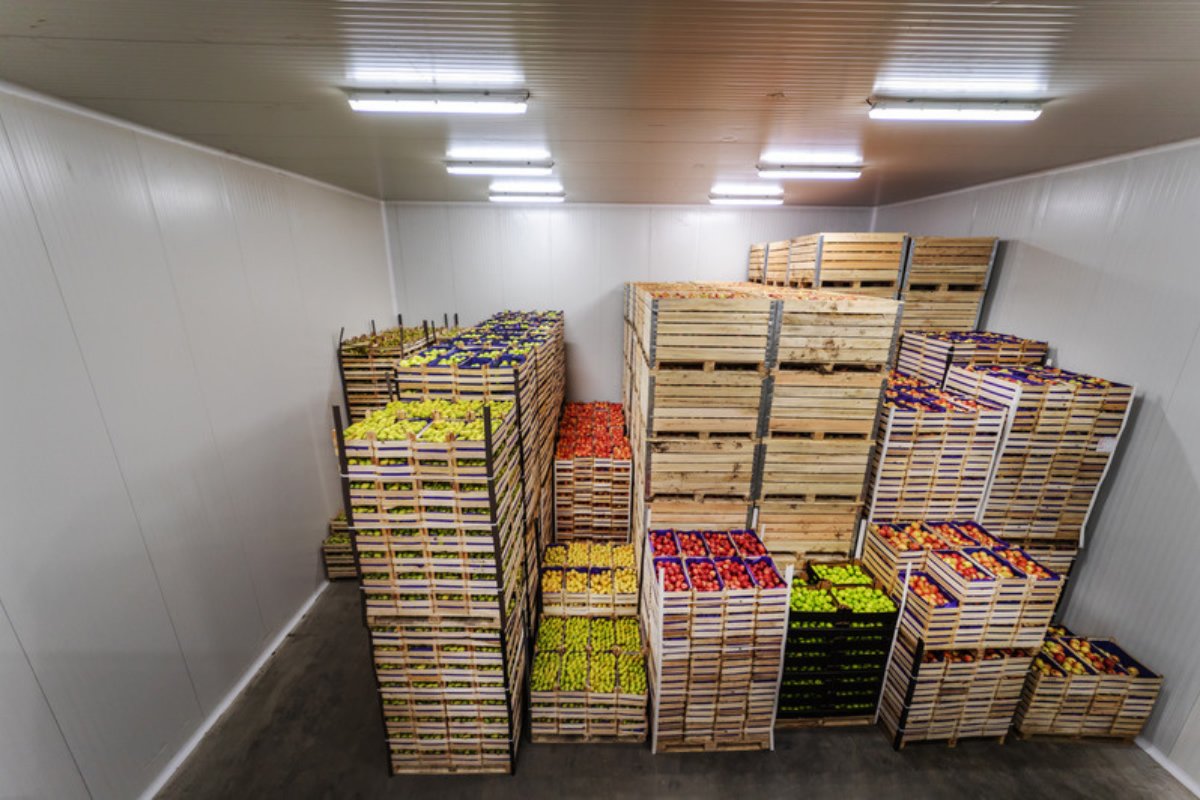
Temperature management is the most effective way to slow respiration. Produce harvested in warm weather carries field heat, and leaving it in the sun or in a hot, poorly ventilated shed keeps its metabolism running fast. Cooling soon after harvest buys time before the produce reaches the market. Depending on the crop and the scale of the operation, the options include room cooling, forced-air cooling, hydrocooling and icing.
No single storage temperature suits all produce. Temperate crops may tolerate temperatures close to 0°C, while chilling-sensitive produce such as bananas, mangoes, cucumbers and some tomatoes is injured by temperatures that are too low. Chilling injury can show as pitting, browning, poor ripening or off-flavours, so use crop-specific guidance rather than assuming colder is always better.
Keep humidity at the right level
Relative humidity affects how quickly produce loses water. Many fresh vegetables need fairly high humidity to limit wilting and shrivelling, but surface moisture and condensation encourage mould and bacterial decay. Storage has to balance moisture retention with hygiene and air movement. Avoid leaving wet produce in sealed, unventilated containers, and avoid temperature swings that cause condensation.
Handle produce gently
Bruising, cuts, punctures and crushing during harvest and storage damage tissue and raise respiration. Use clean, suitable tools, avoid overfilling containers and choose crates that protect produce during stacking and transport. Keep containers clean, minimise drops and rough movement, and sort out damaged or rotting items so that problems do not spread through a batch.
Manage ethylene and separate incompatible produce
Climacteric fruits, which can be picked before they are fully ripe and ripen afterwards, such as bananas, mangoes, avocados and tomatoes, show a rise in respiration as they ripen. Ethylene-sensitive produce may yellow, soften or age faster when exposed to the gas. Where practical, store ripe ethylene-producing fruit apart from sensitive vegetables, and use ventilation and careful stock rotation to limit unwanted exposure. Ethylene is also used deliberately in commercial ripening rooms, but uncontrolled exposure during storage and transport shortens shelf life. My earlier article explains how farmers can control ethylene after harvest in more detail.
Use suitable packaging and modified atmospheres
Packaging protects produce from physical damage, reduces moisture loss and can create a better atmosphere around it. Modified-atmosphere packaging changes the levels of oxygen and carbon dioxide inside a pack through the interaction of the produce, the film and the storage conditions. Lower oxygen and moderately higher carbon dioxide slow respiration and some ripening processes, but the gas levels have to be designed for the specific crop, temperature and packaging material. If oxygen falls too low or carbon dioxide rises too high, the produce switches to fermentation, with off-flavours, tissue injury and quality loss. Packaging never replaces temperature control.
Keep stores well ventilated
Good ventilation removes respiratory heat and stops carbon dioxide and moisture from building up, which slows deterioration. Clean storage rooms, crates and handling equipment regularly, remove spoiled produce promptly, keep fresh produce away from chemicals and other contaminants, and leave room for air to circulate around stacked containers. Do not block cold-room vents or pack produce so tightly that cold air cannot reach it.
Match storage and transport to the crop
Crops differ in respiration rate, moisture needs, chilling sensitivity and response to ethylene, so storage conditions vary from one crop to another. Leafy greens need rapid cooling and high humidity, while onions and garlic need dry, well-ventilated storage, and bananas need warmer conditions than many temperate fruits. Identify the crop, its maturity stage and its intended market before choosing storage conditions. During transport, load in the shade, minimise delays, protect produce from direct sun and keep it at the required temperature for as much of the journey as possible.
Every hour after harvest counts
The aim of managing respiration is to slow deterioration while keeping produce healthy and safe, since the process itself cannot be stopped. The most useful steps are often simple: harvest at the right stage, get produce out of the sun, cool it promptly where possible, handle it carefully, keep humidity and temperature right for the crop, and use clean, ventilated storage and transport.
These practices matter at every level of the supply chain. A smallholder can use shade, clean ventilated crates and a faster trip to market to limit heat build-up. A packhouse can introduce crop-specific cooling and grading. Retailers can rotate stock, avoid damaging displays and store each commodity under suitable conditions, and consumers can extend freshness by following storage guidance for each item. By understanding respiration and managing the conditions that drive it, everyone along the chain can keep produce in good condition for longer, improve returns for growers and traders, and stop more nutritious food from being lost before it reaches the plate.
Sources
eOrganic. Respiration and ethylene and their relationship to postharvest handling.
FAO. Prevention of post-harvest food losses, fruits, vegetables and root crops. Rome.
FAO. Small-scale postharvest handling practices, temperature and relative humidity control. Rome.
NC State Extension. Postharvest engineering, introduction.
Penn State Extension. Keeping produce fresh, best practices for producers.
University of Massachusetts Amherst. Postharvest handling and storage. New England Vegetable Management Guide.