Summary
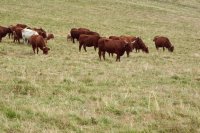
Ruminant livestock, like dairy and beef cattle, produce methane during feed digestion, contributing to greenhouse gas emissions. Fortunately, researchers have found several feed additives that can reduce methane production. These additives work by either directly targeting the methanogens (microbes responsible for methane production) or by redirecting hydrogen to other pathways. The method of delivering these feed additives is very important for their effectiveness in reducing methane production. It's easier to incorporate additives into the diets of housed animals. However, administering them to ruminants on pasture, especially under extensive grazing conditions, can be challenging. This highlights the need for research to find effective delivery methods for anti-methanogenic (methane-reducing) feed additives for extensively grazed livestock.
Background
Various strategies exist to reduce enteric methane in ruminants (Almeida and Hegarty, 2021). One effective approach is using feed additives to cut down methane production in cattle (Honan et al., 2022). However, these additives work best in controlled feeding environments, posing a challenge for pasture-fed animals (Muller and Muller, 2017). Current delivery methods for these supplements are not well-suited for grazing settings, limiting their effectiveness in reducing methane emissions (Belanche et al., 2025).
This gap in technology prevents feed supplements from reaching their full potential (Future Food Systems, 2023). To address this, new technologies are needed to deliver these supplements to free-ranging ruminants effectively. Research focuses on extending feed additives to grazing scenarios through supplements, lick blocks, encapsulation, and slow-release boluses (Muller and Muller, 2017). In addition, there is also a need to identify optimum doses for certain feed additives to ensure effective methane mitigation (Hodge et al., 2024). This article discusses different methods for delivering methane-mitigating feed additives to cattle.
Methods of Delivery of Feed Additives
Reducing methane emissions from cattle, especially in pasture-based systems, is challenging due to the need for effective and consistent delivery of feed additives. The method and timing of administering these additives greatly impact their effectiveness (Stefenoni et al., 2021; Alvarez-Hess et al., 2023, 2024). The delivery method also depends on the type of animal being fed (Belanche et al., 2025).
Water-based Delivery
Liquid additives can be administered through the animal's drinking water, which works well when there is uniform access to water.

Total Mixed Ration
Feed additives are easily incorporated into total mixed ration (TMR), ensuring consistent intake with every mouthful (Belanche et al., 2025). However, feedlots contribute only a small percentage of global livestock enteric emissions, and most research on additives has been conducted using TMR (Belanche et al., 2025). Additives like Asparagopsis are more effective in TMR than when pulse-fed (Alvarez-Hess et al., 2023). Some additives are also delivered via a fresh diet during a transition period to meet the higher energy requirements of cows in early lactation (Pitta et al., 2022).
Pulse Dosing
Pulse feeding of oil-steeped Asparagopsis armata (ASP-Oil) has been shown to be as effective as continuous feeding in TMR for reducing methane emissions, offering more flexibility (Alvarez-Hess et al., 2023). This method involves delivering supplement additives during grazing or partial rations (Belanche et al., 2025). Many effective additives require a continuous supply to the rumen to maintain their potency, which is challenging when cows are grazing freely (Alvarez-Hess et al., 2023). Oil-based formulations, such as ASP-Oil, may help stabilize active compounds and improve delivery consistency. Pulse feeding systems where ASP-Oil is mixed with a grain supplement and fed twice daily during milking have been effective (Alvarez-Hess et al., 2023).
 Supplements
Pasture-based systems present unique challenges for consistent delivery of feed additives due to the lack of a controlled feeding environment (Stefenoni et al., 2021). Additives can be administered through supplements, lick blocks, or slow-release boluses (Belanche et al., 2025), which are especially useful for grazing scenarios. Strategic supplementation, delivering potent doses at key times, could be a viable alternative (Alvarez-Hess et al., 2023).
Mineral Supplements
Feed additives can be incorporated into lick blocks or loose mineral mixes, designed for consistent consumption by grazing animals, although intake can be variable. Molasses nitrate lick blocks can affect supplement intake, body weight, condition score, and blood methaemoglobin in sheep. Slow-release boluses during grazing can provide a more consistent dose compared to lick blocks.
Slow-Release Capsules/Boluses
Slow-release boluses are being developed for grazing ruminants to provide a more consistent dose than lick blocks. These devices are administered orally and release the additive slowly over time, reducing the need for frequent administration and potentially increasing overall effectiveness. This method ensures a consistent dose over time without relying on the consumption of supplements (Grace and Knowles, 2012; Almassri et al., 2024).
Parlor Feed
Additives can be added to parlor feed given to cows during milking (Belanche et al., 2025). This method can be challenging if the amount of parlor feed varies with milk yield. Supplementation of 3-NOP to grazing dairy cows twice per day at milking may be less effective than TMR due to the time gap between delivery and grass consumption (Ungerfeld, 2022). Alternative delivery methods, such as encapsulation or slow-release formulations, can provide a consistent supply to the rumen over time (Ma and Faciola, 2024).
Encapsulation
Encapsulation technology enhances ruminant nutrition by protecting and delivering various feed additives. This method involves coating the additive with a protective material, allowing it to bypass initial digestion stages and reach the rumen effectively (Garba and Fırıncıoğlu, 2023). Encapsulation can also protect sensitive additives from degradation and mask unpalatable tastes (Tolve et al., 2021; Wei et al., 2022). Adaptation protocols and the gradual introduction of feed additives can mitigate palatability issues and maintain dry matter intake (Kinley et al., 2020; Alvarez-Hess et al., 2023).
Encapsulation improves nutrient bioavailability by protecting them from ruminal degradation, allowing absorption in the abomasum and small intestine. It is useful for delivering probiotics, prebiotics, and vitamins. Encapsulated products can range from nano-size to millimeter-size, with particles up to 6 mm in diameter suggested for cattle (Contreras-López et al., 2024). Rumen-resistant nanoparticles have been developed to deliver lysine to dairy cows, releasing their content in the blood. However, attention must be paid to toxicity, especially with nano-size materials (Gelaye, 2024; Idowu et al., 2024). Several encapsulation techniques are used in animal feed, such as extrusion and nanoencapsulation. These methods increase the stability and bioavailability of nutrients and drugs. Coating materials must withstand rumen pH (5.6-7.0) to allow release in the small intestine (Almassri et al., 2024).
Direct-Fed Microbials
Direct-Fed Microbials (DFMs) including bacteria, yeasts, and fungi, enhance production in cattle by altering microbial ecology, improving nutrient absorption, and boosting immune functions (McAllister et al., 2011). Delivery methods of DFMs, such as in milk or starter, powder or liquid form, and top-dressed or mixed with ration, need optimization for different types and production stages. Dietary composition must be considered to optimize DFM supplementation, as interactions with other additives like monensin can occur. Lactic acid bacteria treatments are more effective when gradually included as silage inoculants rather than being directly fed (Wei et al., 2022).
Challenges in Feed Additive Delivery
Time-Dependent Efficacy and Mechanisms of Reduced Methane Mitigation
Several studies have shown that the methane-reducing effects of certain feed additives, such as Asparagopsis taxiformis (AT), may diminish over time (Stefenoni et al., 2021). Initially, a 65% reduction in methane emissions was observed using AT, but this reduction was not sustained throughout the study (Stefenoni et al., 2021). One reason for this decline is the potential adaptation of methanogens in the rumen to the active compounds in the feed additives. For example, the methanogen Methanosphaera may develop resistance to bromoform, the primary methane inhibitor in Asparagopsis spp., by dehalogenating it (Indugu et al., 2024).
Another factor contributing to reduced efficacy is the degradation of the active compounds in the feed additive during storage or in the rumen. Bromoform, found in Asparagopsis spp., can degrade, reducing its effectiveness over time (Stefenoni et al., 2021). The timing of feed additive administration relative to feeding is also important. Consistent availability of the additive in the rumen is essential for optimal methane reduction (Alvarez-Hess et al., 2023).
Accuracy of Feeding
Ensuring accurate feeding levels can be challenging, especially with parlor cake (concentrate), which can be fed at variable rates depending on milk yield (Belanche et al., 2025). Combining different additives may help to overcome resistance and maintain efficacy, as this may provide multiple pathways for reducing methanogen activity.
Conclusion
Enteric methane emissions can be reduced through dietary manipulation, including the use of feed additives; however, maintaining the efficacy of methane-reducing feed additives over time, particularly in pasture-based systems, is a significant hurdle in mitigating enteric methane emissions from cattle. Standard delivery methods, such as mixing with TMR, are unsuitable for pasture-based systems. Innovative solutions are being explored through research. Microencapsulation techniques are being investigated to deliver a variety of substances, including proteins, peptides, amino acids, minerals, probiotics, and essential oils. Further research is needed to explore strategies targeting additional pathways in the rumen to maintain the inhibitory effects on methane emissions and prevent the development of resistance in methanogens. Using combinations of additives that work via different mechanisms can potentially enhance methane reduction and extend the period of effect. Further research is needed to optimize feed additives delivery and overcome pasture-based systems' limitations.
References
- Almeida, A. K., Hegarty, R. S., & Cowie, A. (2021). Meta-analysis quantifying the potential of dietary additives and rumen modifiers for methane mitigation in ruminant production systems. Animal Nutrition, 7(4), 1219-1230.
- Almassri, N., Trujillo, F. J., & Terefe, N. S. (2024). Microencapsulation technology for delivery of enzymes in ruminant feed. Frontiers in Veterinary Science, 11, 1352375.
- Alvarez-Hess, P. S., Jacobs, J. L., Kinley, R. D., Roque, B. M., Neachtain, A. S. O., Chandra, S., ... and Williams, S. R. O. (2024). Effects of a range of effective inclusion levels of Asparagopsis armata steeped in oil on enteric methane emissions of dairy cows. Animal Feed Science and Technology, 310: 115932.
- Alvarez-Hess, P. S., Jacobs, J. L., Kinley, R. D., Roque, B. M., Neachtain, A. S. O., Chandra, S., and Williams, S. R. O. (2023). Twice daily feeding of canola oil steeped with Asparagopsis armata reduced methane emissions of lactating dairy cows. Animal Feed Science and Technology, 297:115579.
- Belanche, A., Bannink, A., Dijkstra, J., Durmic, Z., Garcia, F., Santos, F. G., ... & Ungerfeld, E. M. (2025). Feed additives for methane mitigation: A guideline to uncover the mode of action of antimethanogenic feed additives for ruminants. Journal of Dairy Science, 108(1), 375-394.
- Contreras-López, G., Carrillo-López, L. M., Vargas-Bello-Pérez, E., & García-Galicia, I. A. (2024). Microencapsulation of Feed Additives with Potential in Livestock and Poultry Production: A Systematic Review. Chilean journal of agricultural & animal sciences, 40(1), 229-249.
- Future Food Systems. (2023). Harnessing encapsulation expertise to slash methane emissions in free-ranging ruminants. Harnessing Encapsulation Expertise to Slash Methane Emissions in Free Ranging Ruminants – com.au
- Garba, A. M., & Fırıncıoğlu, S. Y. (2023). Role of Encapsulation Nutrients for Improvement of Ruminant Performance and Ruminant Derived–Products. Eurasian Journal of Agricultural Research, 7(2), 109-126.
- Gelaye, Y. (2024). Application of nanotechnology in animal nutrition: Bibliographic review. Cogent Food & Agriculture, 10(1), 2290308.
- Grace, N. D., & Knowles, S. O. (2012). Trace element supplementation of livestock in New Zealand: Meeting the challenges of free‐range grazing systems. Veterinary medicine international, 2012(1), 639472.
- Hodge, I., Quille, P., & O’Connell, S. (2024). A Review of Potential Feed Additives Intended for Carbon Footprint Reduction through Methane Abatement in Dairy Cattle. Animals, 14(4), 568.
- Idowu, A. O., Ojebiyi, O. O., Lateef, A., Odunsi, A. A., Ola, A. K., & Akinola, A. O. (2024). Applications of Nanotechnology in Animal nutrition: A Review. Nano Plus: Science and Technology of Nanomaterials, 8(1), 61-71.
- Honan, M., Feng, X., Tricarico, J. M., & Kebreab, E. (2022). Feed additives as a strategic approach to reduce enteric methane production in cattle: modes of action, effectiveness and safety. Animal Production Science. Animal Production Science, 62, 1303–1317 Feed additives as a strategic approach to reduce enteric methane production in cattle: modes of action, effectiveness and safety
- Indugu, N., Narayan, K., Stefenoni, H. A., Hennessy, M. L., Vecchiarelli, B., Bender, J. S. and Pitta, D. W. (2024). Microbiome-informed study of the mechanistic basis of methane inhibition by Asparagopsis taxiformis in dairy cattle. Mbio, 15(8): e00782-24.
- Kinley, R. D., Martinez-Fernandez, G., Matthews, M. K., de Nys, R., Magnusson, M., and Tomkins, N. W. (2020). Mitigating the carbon footprint and improving productivity of ruminant livestock agriculture using a red seaweed. Journal of Cleaner production, 259:120836.
- Ma, S. W., & Faciola, A. P. (2024). Impacts of slow-release urea in ruminant diets: A review. Fermentation, 10(10), 527.
- McAllister, T. A., & Newbold, C. J. (2008). Redirecting rumen fermentation to reduce methanogenesis. Australian journal of experimental agriculture, 48(2), 7-13.
- Muller, R. A., & Muller, E. A. (2017). Fugitive methane and the role of atmospheric half-life. Geoinformatics & Geostatistics: An Overview, 5(3), 1-7.
- Pitta, D., Indugu, N., Narayan, K., & Hennessy, M. (2022). Symposium review: Understanding the role of the rumen microbiome in enteric methane mitigation and productivity in dairy cows. Journal of Dairy Science, 105(10), 8569-8585.
- Stefenoni, H. A., Räisänen, S. E., Cueva, S. F., Wasson, D. E., Lage, C. F. A., Melgar, A., ... and Hristov, A. N. (2021). Effects of the macroalga Asparagopsis taxiformis and oregano leaves on methane emission, rumen fermentation, and lactational performance of dairy cows. Journal of dairy science, 104(4):4157-4173.
- Tolve, R., Tchuenbou-Magaia, F., Di Cairano, M., Caruso, M. C., Scarpa, T., & Galgano, F. (2021). Encapsulation of bioactive compounds for the formulation of functional animal feeds: The biofortification of derivate foods. Animal Feed Science and Technology, 279, 115036.
- Ungerfeld, E. M. (2022). Opportunities and hurdles to the adoption and enhanced efficacy of feed additives towards pronounced mitigation of enteric methane emissions from ruminant livestock. Methane, 1(4), 262-285.
- Wasson, J. L., Johnson, J. C., Brown, B. A., & Clark, A. (2022). Microencapsulation of essential oils to improve the performance and efficiency of ruminant animals. Journal of Agricultural Science, 14(1), 77-83.
- Wei, W., Zhen, Y., Wang, Y., Shahzad, K., & Wang, M. (2022). Advances of rumen functional bacteria and the application of micro-encapsulation fermentation technology in ruminants: a review. Fermentation, 8(10), 564.