By Samuel Usen Essien and Ishaya Gadzama
Introduction: Advancing sustainable poultry nutrition through feed additives
The global poultry industry faces a big challenge: balancing the need for high productivity with the urgent need to cut down on antibiotic growth promoters (AGPs). This is due to serious public health and environmental concerns. Long-term use of AGPs has led to antibiotic-resistant bacteria in poultry, which can be dangerous to human health through transmission and residue in meat (Diaz-Sanchez et al., 2015; Untari et al., 2021; Ahmed et al., 2022). AGPs also pollute the environment through unmetabolized antibiotics and cause economic losses due to higher mortality and lower efficiency (Denli & Demirel, 2018; Untari et al., 2021; Abd El-Hack et al., 2022). As a result, AGPs are banned or restricted in many areas, making it crucial to find effective, natural alternatives to keep poultry healthy and productive. This need has led to a lot of research into feed additives like probiotics, prebiotics, phytogenics, organic acids, and enzymes.
Probiotics help improve gut health and nutrient absorption by balancing microbes and boosting the immune system. They can replace antibiotic growth promoters (AGPs) without affecting growth or meat quality (Alagawany et al., 2018; Jha et al., 2020; Abd El-Hack et al., 2020; Shehata et al., 2024). Phytogenic feed additives (PFAs), made from herbs, spices, and essential oils, have strong antimicrobial and antioxidant properties. They also enhance feed efficiency, gut health, egg production, and overall animal well-being (Windisch et al., 2008; Murugesan et al., 2015; Abdelli et al., 2021; Dissa et al., 2023).
While these alternatives show promise, there are still challenges. Results can vary between studies, the best amounts to use aren't always clear, and we don't fully understand how they work, especially for PFAs and probiotics (Windisch et al., 2008; Jha et al., 2020; Aminullah et al., 2025). This mini review looks at the latest research on these AGP alternatives, focusing on their effectiveness, how they work, and practical uses for improving poultry health, performance, and sustainability.
1. The compelling case against antibiotic growth promoters (AGPs)
The drawbacks of AGPs are many and well-known. That's why they're being phased out in many areas.
- Health Implications & Antibiotic Resistance: Using antibiotics as growth promoters (AGPs) in poultry can lead to antibiotic-resistant bacteria developing in the birds' intestines (Denli & Demirel, 2018). These resistant bacteria can then spread to humans through the food chain or the environment, which is a serious health risk (Untari et al., 2021; Zhu et al., 2021; Ahmed et al., 2022). High resistance rates to common antibiotics like tetracycline, streptomycin, amoxicillin, and erythromycin have been found (Untari et al., 2021). Additionally, AGPs can leave residues in poultry meat, which raises food safety concerns for consumers (Diaz-Sanchez et al., 2015; Alghirani et al., 2021; Djunaidi et al., 2023).
- Economic Impacts: The emergence of resistant bacteria compromises flock health, increasing mortality rates and treatment costs, ultimately leading to significant economic losses for producers (Untari et al., 2021). Interestingly, while antibiotics were first used to improve performance, studies show that the boost in important measures like feed conversion ratio (FCR) is often small. This raises questions about whether the benefits outweigh the risks and costs (El-Fateh et al., 2024).
- Environmental Effects: When poultry excrete antibiotics that haven't been fully metabolized, these drugs can end up in the soil and waterways. This pollution can lead to the development and spread of multidrug-resistant pathogens in the environment (Denli & Demirel, 2018; Abd El-Hack et al., 2022). These significant drawbacks highlight the urgent need for natural alternatives to keep poultry healthy, happy, and productive.
2. Phytogenic feed additives (PFAs)
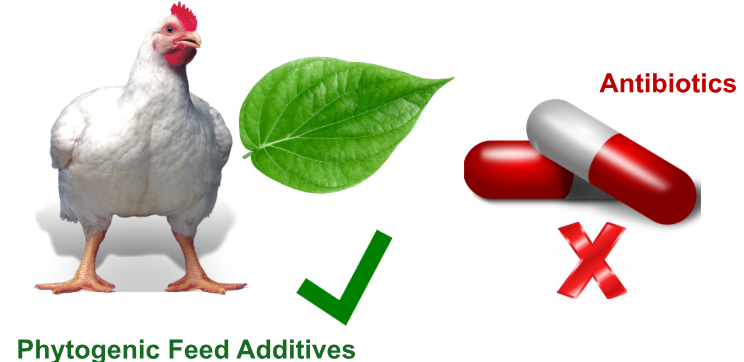
PFAs come from herbs, spices, essential oils, and plant extracts, offering many benefits for poultry nutrition and health (Table 1). Adding PFAs to diets consistently improves feed intake, body weight gain, and feed efficiency (FCR) in broilers (Windisch et al., 2008; Abdelli et al., 2021; Murugesan et al., 2015). In layers, PFAs boost egg production, egg mass, and feed conversion efficiency, while also improving egg quality like weight, yolk height, and color (Dissa et al., 2023). These benefits partly come from better digestion of key nutrients like dry matter, crude protein, and fats (Abdelli et al., 2021).
Mechanisms of action
PFAs work through several pathways. They have strong antimicrobial properties, fighting off pathogens like Salmonella and E. coli (Murugesan et al., 2015; Makala, 2022; Biswas et al., 2024). Their rich polyphenols and flavonoids provide strong antioxidant activity, reducing oxidative stress and supporting overall health (Windisch et al., 2008; Settle et al., 2014). PFAs also stimulate digestive enzyme secretion (e.g., bile, amylase, protease) and improve gut structure (increased villus height, reduced crypt depth), enhancing nutrient absorption (Abdelli et al., 2021; Windisch et al., 2008). Additionally, they balance gut bacteria, promoting good bacteria (e.g., Lactobacillus) and suppressing harmful ones (e.g., Clostridium, coliforms), leading to a healthier gut (Abdelli et al., 2021).
Challenges and comparative advantages
A key challenge in the use of PFAs is inconsistent results across studies, often due to differences in plant source, extraction method, composition, dosage, and diet (Windisch et al., 2008; Aminullah et al., 2025). More research is needed to fully understand how they work. However, compared to AGPs, PFAs offer a big advantage: they promote growth and health without causing antibiotic resistance or leaving harmful residues (Gadzama, 2024; Aminullah et al., 2025). Their natural origin also meets consumer demand for cleaner production.
3. Probiotics: Engineering a Healthy Gut Microbiome
Probiotics are live microorganisms that provide health benefits when given in the right amounts (Table 1). They are a key part of strategies to replace antibiotic growth promoters (AGPs). Probiotics mainly improve gut health and nutrient absorption. They help keep harmful pathogens out, produce digestive enzymes (lipase, amylase, protease), and strengthen the gut barrier, leading to better feed efficiency and growth (Khan & Naz, 2013; Abd El-Hack et al., 2020; Jha et al., 2020; Shehata et al., 2024).
They also boost the immune system by increasing immunoglobulin production and enhancing cellular immune responses, making birds more resistant to diseases (Khan & Naz, 2013; Jha et al., 2020; Shehata et al., 2024). Some strains can help reduce heat stress by supporting gut health and immune function during tough conditions (Ahmad et al., 2022). Additionally, probiotics can improve meat and egg quality by better nutrient use and lowering pathogen levels (Chitura, 2024; Dong et al., 2024).
Mechanisms of Action
Probiotics work by changing the gut microbial balance, promoting beneficial bacteria. They produce antimicrobial substances (e.g., bacteriocins, organic acids, hydrogen peroxide) that inhibit harmful pathogens. They also interact with the host's immune system in the gut, boosting defense mechanisms and reducing inflammation (Al-Otaibi et al., 2023; Zaidi et al., 2023). They stick to the intestinal lining, forming a protective barrier against pathogens.
Challenges
The main challenge with probiotics is inconsistent results. Outcomes depend on the specific strain(s) used, the amount given, the bird's age and health, diet, management practices, and environmental factors (Jha et al., 2020; Shehata et al., 2024; Naeem & Bourassa, 2025). Ensuring the strains stay viable through processing, storage, and passage through the acidic proventriculus is also crucial. More research is needed on their long-term effects on meat quality and gut health (Shehata et al., 2024).
4. Synergistic and emerging alternatives
Besides phytogenics and probiotics, other feed additives show promise, and often working best together for instance, prebiotics which are non-digestible compounds (e.g., fructooligosaccharides - FOS, mannan-oligosaccharides - MOS) selectively boost the growth and activity of beneficial gut bacteria (e.g., bifidobacteria, lactobacilli) (Ricke et al., 2020). Prebiotics enhance nutrient absorption, growth, and disease resistance by improving gut microbiota balance and stimulating immune responses. They often work well with probiotics (forming synbiotics) (Adhikari & Kim, 2017; Ricke, 2021).
Organic Acids (OAs) & Short/Medium-Chain Fatty Acids (SCFAs/MCFAs)
OAs (e.g., formic, propionic, lactic) and SCFAs/MCFAs (e.g., butyric, caprylic, capric acid) lower gut pH, making it hard for pathogens like Salmonella and E. coli to thrive (Table 1). They also have direct antimicrobial effects, improve nutrient digestibility (especially minerals and protein), and enhance gut development (Sapsuha et al., 2021; Gomez-Osorio et al., 2021; Szabó et al., 2023). Butyrate is a key energy source for colon cells, supporting gut barrier health.
Essential Oils (EOs)
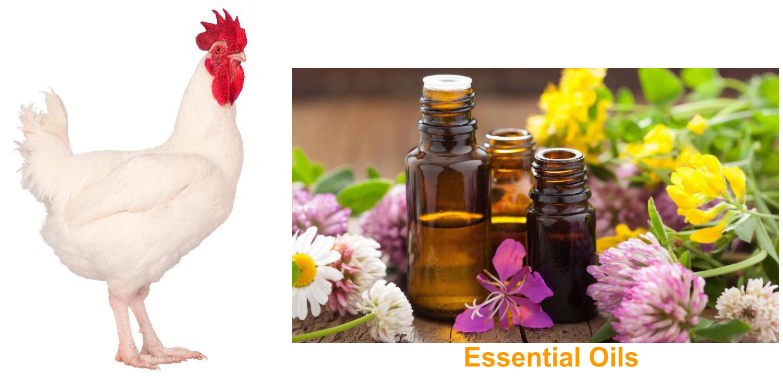
Often grouped with PFAs, EOs are volatile compounds from plants with strong antimicrobial, antioxidant, anti-inflammatory, and digestive-stimulant properties. They can improve feed efficiency, growth, and gut health, often working well with organic acids and probiotics (Sapsuha et al., 2021; Abd El-Hack et al., 2022).
Microalgae
Species like Chlorella and Spirulina are rich in proteins, essential amino acids, vitamins, minerals, and bioactive compounds (e.g., carotenoids, omega-3 fatty acids). They offer antioxidant, anti-inflammatory, and immune-boosting benefits, improving growth, meat quality (e.g., omega-3 enrichment, reduced lipid oxidation), and potentially egg yolk color (Tsamesidis et al., 2024; Van Nerom et al., 2024; Gadzama et al., 2025). Careful dosage is needed, as high levels can sometimes cause issues like oxidative stress or dermatitis (Van Nerom et al., 2024).
Table 1. Comparative analysis of key additive classes
|
Feature |
Phytogenics (PFAs) |
Probiotics |
Prebiotics |
Organic Acids/SCFAs/MCFAs |
|
Primary Action |
Antimicrobial, Antioxidant, Digestive Stim. |
Gut Microbiota Mod., Immune Stim., Pathogen Excl. |
Selective Stim. Beneficial Bacteria |
Gut pH Reduction, Antimicrobial, Nutr. Digest. |
|
Key Benefits |
Improved FCR, Growth, Egg Prod., Meat Qual., Antioxidant status |
Improved Gut Health, Immune Funct., FCR, Stress Resilience |
Enhanced Beneficial Microbes, Immune Support, Nutr. Digest. |
Pathogen Control, Gut Health (Butyrate), Nutr. Digest. |
|
Major Challenge |
Inconsistent Results, Complex Composition |
Strain-Specificity, Viability, Consistency |
Source & Structure Specificity |
Corrosiveness, Palatability (High Doses), Cost |
|
AMR Contribution |
None |
None |
None |
None |
|
Synergy Potential |
High (with OAs, Pro/Prebiotics) |
High (with Prebiotics/Synbiotics, PFAs) |
High (with Pro/Synbiotics) |
High (with EOs, Probiotics) |
Conclusion and future outlook
Moving away from AGPs is not just about following rules; it's essential for sustainable and responsible poultry farming. There is a wide range of effective alternatives available such as probiotics, prebiotics, phytogenic feed additives, organic acids, essential oils, and specific fatty acids. These additives can enhance gut health and microbiota balance, improve nutrient digestibility and feed efficiency, boost immune function, and mitigate stressors like heat, thereby supporting growth performance, meat and egg quality, and overall bird health and welfare.
Phytogenic feed additives are powerful natural growth promoters with antimicrobial and antioxidant benefits. Probiotics help create a healthier gut microbiome, improving digestion and immunity. Prebiotics, organic acids, essential oils, and microalgae each offer unique ways to boost health, performance, and product quality. However, challenges remain, including inconsistent results, insufficient understanding of mechanisms, and the need for standardized dosages and formulations to maximize efficacy. Further research is essential to optimize the application of these alternatives.
The future is not about finding one perfect solution but using strategic combinations of these additives tailored to specific goals, bird ages, and health challenges. Ongoing research is vital to optimize dosages, understand interactions, improve consistency (especially for PFAs and probiotics), and fully understand long-term effects. Regulatory frameworks, like those in the EU (Bampidis et al., 2024), ensure safety and effectiveness but need clear evidence for approval.
Economically, while some additives may initially increase feed costs, their benefits in better feed efficiency, lower mortality, improved product quality, and access to markets for antibiotic-free products usually offer a good return on investment (Seidavi et al., 2023; Perera & Ravindran, 2025). Poultry farmers can keep their flocks healthy and productive, by using these science-backed natural additives, thereby meeting consumer demands for safe and sustainable food, protect important antibiotics for human medicine, and help create a healthier environment. The way forward is clear: innovative nutrition is key to succeeding in the post-antibiotic era of poultry farming.
References
- Abd El-Hack, M. E., Naiel, M. A. E., Negm, S. S., Khafaga, A. F., Farag, M. R., Elnesr, S. S., & Alagawany, M. (2020). Beneficial impacts of probiotics on poultry nutrition. In Natural Feed Additives Used in the Poultry Industry (pp. 240-261).
- Abd El-Hack, M. E., El-Saadony, M. T., Salem, H. M., El-Tahan, A. M., Soliman, M. M., Youssef, G. B. A., Taha, A. E., Soliman, S. M., Ahmed, A. E., El-kott, A. F., Al Syaad, K. M., & Swelum, A. A. (2022). Alternatives to antibiotics for organic poultry production: Types, modes of action and impacts on bird's health and production. Poultry Science, 101(4), art. no. 101696.
- Abdelli, N., Solà-Oriol, D., & Pérez, J. F. (2021). Phytogenic feed additives in poultry: Achievements, prospective and challenges. Animals, 11(12), art. no. 3471.
- Adhikari, P. A., & Kim, W. K. (2017). Overview of prebiotics and probiotics: Focus on performance, gut health and immunity - A review. Annals of Animal Science, 17(4), 949-966.
- Ahmad, R., Yu, Y.-H., Hsiao, F. S.-H., Su, C.-H., Liu, H.-C., Tobin, I., Zhang, G., & Cheng, Y.-H. (2022). Influence of heat stress on poultry growth performance, intestinal inflammation, and immune function and potential mitigation by probiotics. Animals, 12(17), art. no. 2297.
- Ahmed, I., Li, Z., Shahzad, S., Naveed, S., Khan, A. K., Ahmed, A., Kamran, Z., Yousaf, M., Ahmad, S., Afzal, G., Ahmad, H. I., Yasin, N. A., Jia, J., Hussain, M., & Munir, S. (2022). Potential probiotics role in excluding antibiotic resistance. Journal of Food Quality, 2022, art. no. 5590004.
- Alagawany, M., Abd El-Hack, M. E., Farag, M. R., Sachan, S., Karthik, K., & Dhama, K. (2018). The use of probiotics as eco-friendly alternatives for antibiotics in poultry nutrition. Environmental Science and Pollution Research, 25(11), 10611-10618.
- Alghirani, M. M., Chung, E. L. T., Jesse, F. F. A., Sazili, A. Q., & Loh, T. C. (2021). Could phytobiotics replace antibiotics as feed additives to stimulate production performance and health status in poultry? An overview. Journal of Advanced Veterinary Research, 11(4), 254-265. b
- Al-Otaibi, A. M., Abd El-Hack, M. E., Dmour, S. M., Alsowayeh, N., Khafaga, A. F., Ashour, E. A., Nour-Eldeen, M. A., & Świątkiewicz, S. (2023). A narrative review on the beneficial impacts of probiotics on poultry: An updated knowledge. Annals of Animal Science, 23(2), 405-418. A narrative review on the beneficial impacts of probiotics on poultry: an updated knowledge — Annals of Animal Science
- Aminullah, N., Mostamand, A., Zahir, A., Mahaq, O., & Azizi, M. N. (2025). Phytogenic feed additives as alternatives to antibiotics in poultry production: A review. Veterinary World, 18(1), 141-154.
- Bampidis, V., Azimonti, G., Bastos, M. D. L., Christensen, H., Durjava, M., Dusemund, B., Kouba, M., López-Alonso, M., López Puente, S., Marcon, F., Mayo, B., Pechová, A., Petkova, M., Ramos, F., Villa, R. E., Woutersen, R., Glandorf, B., Anguita, M., Innocenti, M. L., & Pettenati, E. (2024). Safety of the feed additive consisting of endo-1,4-β-xylanase (produced with Trichoderma reesei CBS 143953), subtilisin (produced with Bacillus subtilis CBS 143946) and α-amylase (produced with Bacillus amyloliquefaciens CBS 143954) (Avizyme® 1505) for all poultry species (Danisco (UK) Ltd.). EFSA Journal, 22(5), art. no. e8797.
- Biswas, S., Ahn, J. M., & Kim, I. H. (2024). Assessing the potential of phytogenic feed additives: A comprehensive review on their effectiveness as a potent dietary enhancement for nonruminant in swine and poultry. Journal of Animal Physiology and Animal Nutrition, 108(3), 711-723.
- Chitura, T. (2024). Growth performance and meat attributes of poultry in response to dietary probiotic supplementation: A review. Advances in Animal and Veterinary Sciences, 12(5), 977-985.
- Denli, M., & Demirel, R. (2018). Replacement of antibiotics in poultry diets. CAB Reviews: Perspectives in Agriculture, Veterinary Science, Nutrition and Natural Resources, 13, art. no. 035.
- Diaz-Sanchez, S., D'Souza, D., Biswas, D., & Hanning, I. (2015). Botanical alternatives to antibiotics for use in organic poultry production. Poultry Science, 94(6), 1419-1430.
- Dissa, M., Yesuf, Y. K., & Belete, E. (2023). Effect of papaya (Carica papaya) seed as phytogenic feed additives on egg performance, egg quality and blood serum biochemical constituents of layer hens. Veterinary Medicine and Science, 9(6), 2747-2754.
- Djunaidi, I. H., Damayanti, C. A., Wibowo, S., & Sjofjan, O. (2023). Exploring the potential of natural feed additives from herbs as an alternative to antibiotic growth promoters for Mojosari layer duck (Anas javanica) farming: In-silico and in-vivo studies. Journal of the Indonesian Tropical Animal Agriculture, 48(4), 243-257.
- Dong, S., Li, L., Hao, F., Fang, Z., Zhong, R., Wu, J., & Fang, X. (2024). Improving quality of poultry and its meat products with probiotics, prebiotics, and phytoextracts. Poultry Science, 103(2), art. no. 103287.
- El-Fateh, M., Bilal, M., & Zhao, X. (2024). Effect of antibiotic growth promoters (AGPs) on feed conversion ratio (FCR) of broiler chickens: A meta-analysis. Poultry Science, 103(12), art. no. 104472.
- Gadzama, I. U., Ray, S., Méité, R., Mugweru, I. M., Gondo, T., Rahman, M. A., Redoy, M. R. A., Rohani, M. F., Kholif, A. E., Salahuddin, M., & Brito, A. F. (2025a). Chlorella vulgaris as a Livestock Supplement and Animal Feed: A Comprehensive Review. Animals, 15(6), 879.
- Gadzama, I. U. (2024). Improving Broiler Chicken Production Trends and Techniques. Wikifarmer. Available online: ResearchGate publication 384293335
- Gomez-Osorio, L.-M., Yepes-Medina, V., Ballou, A., Parini, M., & Angel, R. (2021). Short and medium chain fatty acids and their derivatives as a natural strategy in the control of necrotic enteritis and microbial homeostasis in broiler chickens. Frontiers in Veterinary Science, 8, art. no. 773372.
- Jha, R., Das, R., Oak, S., & Mishra, P. (2020). A systematic review of probiotics (Direct‐fed microbials) in poultry nutrition and their effects on nutrient utilization, growth and laying performance, and gut health. Animals, 10(10), art. no. 1863, 1-19.
- Khan, R. U., & Naz, S. (2013). The applications of probiotics in poultry production. World's Poultry Science Journal, 69(3), 621-632.
- Makala, O. (2022). Herbs and phytogenic feed additives in poultry nutrition [Zioła i fitogeniczne dodatki paszowe w żywieniu drobiu]. Medycyna Weterynaryjna, 78(1), 11-18.
- Murugesan, G. R., Syed, B., Haldar, S., & Pender, C. (2015). Phytogenic feed additives as an alternative to antibiotic growth promoters in broiler chickens. Frontiers in Veterinary Science, 2(AUG), art. no. 21.
- Naeem, M., & Bourassa, D. (2025). Probiotics in poultry: Unlocking productivity through microbiome modulation and gut health. Microorganisms, 13(2), art. no. 257.
- Perera, W. N. U., & Ravindran, V. (2025). Role of feed additives in poultry nutrition: Historical, current and future perspectives. Animal Feed Science and Technology, 326, art. no. 116371.
- Ricke, S. C., Lee, S. I., Kim, S. A., Park, S. H., & Shi, Z. (2020). Prebiotics and the poultry gastrointestinal tract microbiome. Poultry Science, 99(2), 670-677. Prebiotics and the poultry gastrointestinal tract microbiome — Poultry Science
- Ricke, S. C. (2021). Prebiotics and alternative poultry production. Poultry Science, 100(7), art. no. 101174.
- Sapsuha, Y., Suprijatna, E., Kismiati, S., & Sugiharto, S. (2021). Combination of probiotic and phytobiotic as an alternative for antibiotic growth promoter for broilers chickens - A review. Livestock Research for Rural Development, 33(4).
- Seidavi, A., Hosseintabar-Ghasemabad, B., Gorlov, I. F., Slozhenkina, M. I., Mosolov, A. A., Oteri, M., Chiofalo, B., & Liotta, L. (2023). Feed additives and future perspectives. In Sustainable Use of Feed Additives in Livestock Novel Ways for Animal Production (pp. 929-961).
- Settle, T., Leonard, S. S., Falkenstein, E., Fix, N., Van Dyke, K., & Klandorf, H. (2014). Effects of a phytogenic feed additive versus an antibiotic feed additive on oxidative stress in broiler chicks and a possible mechanism determined by electron spin resonance. International Journal of Poultry Science, 13(2), 62-69.
- Shehata, A. A., Basiouni, S., Tellezisaias, G., Eisenreich, W., & Hafez, H. M. (2024). Probiotics as alternative to antibiotics in poultry: Challenges and prospects. In Alternatives to Antibiotics against Pathogens in Poultry (pp. 59-78).
- Szabó, R. T., Kovács-Weber, M., Zimborán, Á., Kovács, L., & Erdélyi, M. (2023). Effects of short- and medium-chain fatty acids on production, meat quality, and microbial attributes—A review. Molecules, 28(13), art. no. 4956.
- Tsamesidis, I., Pappa, A., Charisis, A., Prentza, Z., Theocharis, K., Patsias, A., Foukas, D., Chatzidoukas, C., & Kalogianni, E. P. (2024). Impact of Chlorella sorokiniana feed additive on poultry growth health and oxidative stress in erythrocytes. Scientific Reports, 14(1), art. no. 31588.
- Untari, T., Herawati, O., Anggita, M., Asmara, W., Wahyuni, A. E. T. H., & Wibowo, M. H. (2021). The effect of antibiotic growth promoters (AGP) on antibiotic resistance and the digestive system of broiler chicken in Sleman, Yogyakarta. BIO Web of Conferences, 33, art. no. 04005.
- Van Nerom, S., Coleman, B., De Baets, R., Van Immerseel, F., Robbens, J., & Delezie, E. (2024). Microalgae as feed additives in poultry: A review on the health-promoting effects. Algal Research, 83, art. no. 103733.
- Windisch, W., Schedle, K., Plitzner, C., & Kroismayr, A. (2008). Use of phytogenic products as feed additives for swine and poultry. Journal of Animal Science, 86(14), E140-E148.
- Zaidi, T., Belwal, P., & Mahida, N. (2023). Influence of probiotics on poultry production: An organized review. Revista Electronica de Veterinaria, 24(4), 122-133.
- Zhu, Q., Sun, P., Zhang, B., Kong, L., Xiao, C., & Song, Z. (2021). Progress on gut health maintenance and antibiotic alternatives in broiler chicken production. Frontiers in Nutrition, 8, art. no. 692839.