Co-author Ishaya Gadzama
Technological Innovations and Ongoing Challenges in the Poultry Industry: Toward Sustainable and Efficient Production
Introduction
The global poultry industry stands at a pivotal juncture, driven by escalating demand projected to reach $494.55 billion by 2028 (Mottet & Tempio, 2017; Farrelly, 2025). However, as demand for poultry products continues to rise, the sector faces mounting challenges, including disease outbreaks, rising feed costs, environmental concerns, and labor shortages (Farrelly, 2025). The sector is rapidly integrating transformative technologies to meet this demand and challenges while addressing sustainability, welfare, and efficiency imperatives (Corredor, 2024).
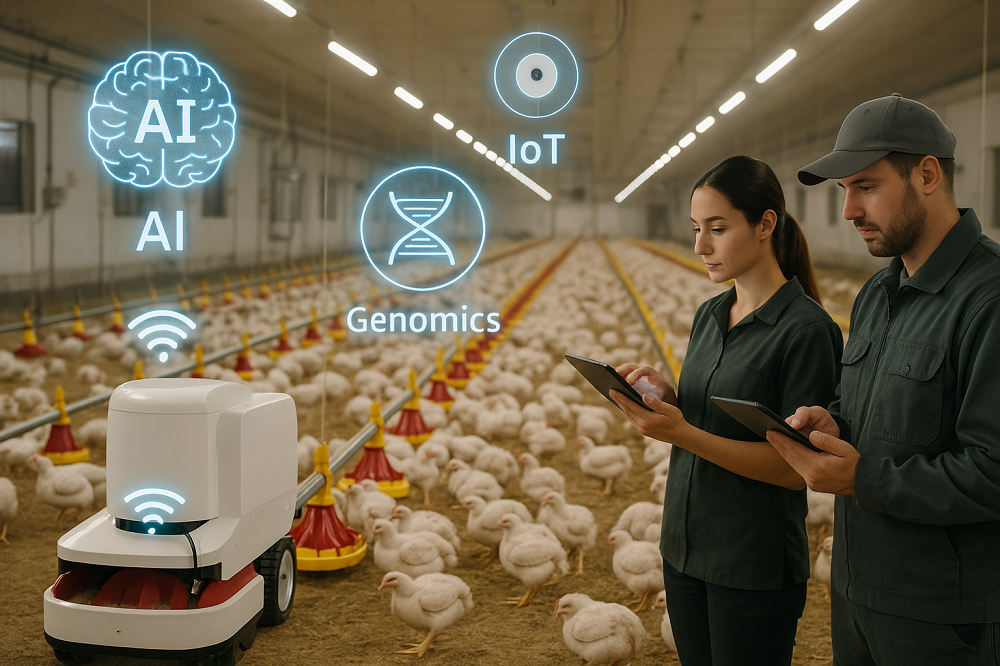
Recent innovations such as precision livestock farming (PLF), artificial intelligence (AI), robotics, and IoT-based monitoring systems are transforming poultry production (Astill et al., 2020; Leong et al., 2023). Smart sensors and automated feeding systems optimize feed efficiency, reducing waste and costs (Barbut, 2010). Meanwhile, AI-driven disease detection tools can help farmers identify health issues early and minimize losses (Ahmed et al., 2021; Gadzama, 2025). Despite these advancements, barriers remain, including high implementation costs, technical complexities, and the need for skilled labor (da Silva et al., 2023).
Sustainable practices are also gaining traction, with waste recycling, renewable energy integration, and climate-smart farming helping reduce environmental impact (Bist et al., 2024). However, balancing productivity with animal welfare and ecological responsibility remains a critical challenge (Naik & Kumar, 2024). This article synthesizes current research on these advancements and the challenges hindering their adoption, providing a clear roadmap for scientists, farmers, and industry stakeholders.
1. Genomic Techniques: Decoding Performance and Resilience
Genomics has revolutionized poultry breeding and management. Omics technologies (transcriptomics, proteomics, metabolomics; Figure 1) provide unprecedented insights into broiler physiology. Zampiga et al. (2018) demonstrated their utility in optimizing feed efficiency, meat quality traits (like marbling and tenderness), and disease resistance markers, which enables precise genetic selection. Building on this, digital phenotyping creates "digital twins" – virtual replicas of broilers that simulate responses to environmental or nutritional changes. Neethirajan (2023) highlights how this technology enhances genomic research by predicting health outcomes and production resilience under stressors like heat, allowing for proactive management. While omics deliver deep biological understanding, digital phenotyping offers practical predictive power. Both, however, require significant computational resources and expertise, which limit accessibility for smaller operations.
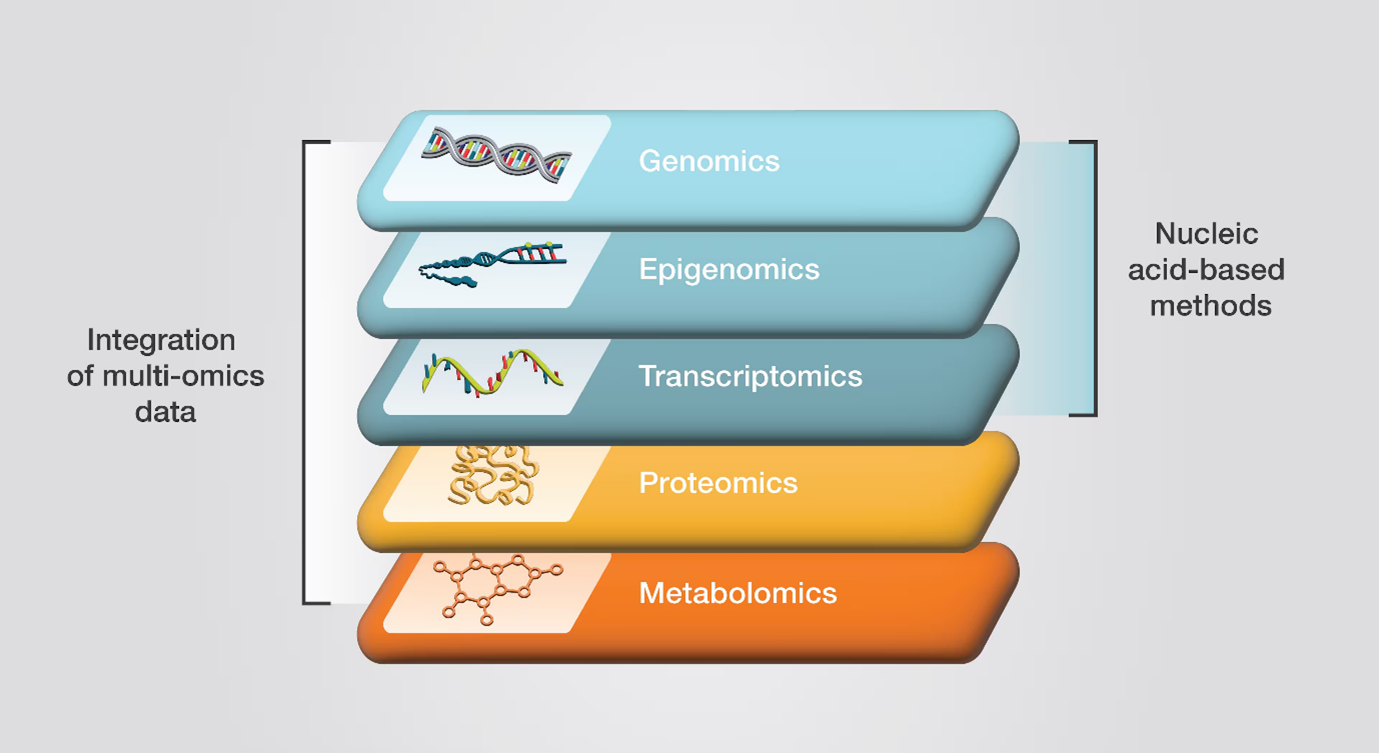
Figure 1: This illustration shows the different types of omics contributing to integrated multi-omics. The top three omics methods are based on nucleic acids. Source: Supporting Multi Omics Approaches
2. Automation and Robotics: Precision and Labor Solutions
Robotics addresses critical labor shortages and enhances precision. Feeding and Cleaning Robots significantly improve operational hygiene and efficiency. Xiao et al. (2024) documented that robots ensure consistent feed delivery, minimizing waste and automating manure removal, which directly improves bird health and environmental conditions. Robotic Manipulation, particularly in processing, tackles dangerous or repetitive tasks. Sohrabipour et al. (2025) developed advanced vision systems for automated chicken rehanging. This technology improves line speed and worker safety. While feeding/cleaning robots focus on barn management, manipulation robots excel in processing efficiency. However, the primary contrast lies in maturity: for example, basic automation (feeding, cleaning) is more widely deployed, whereas complex manipulation (like rehanging) requires sophisticated AI integration and faces higher implementation barriers (Xiao et al., 2024; Sohrabipour et al., 2025).
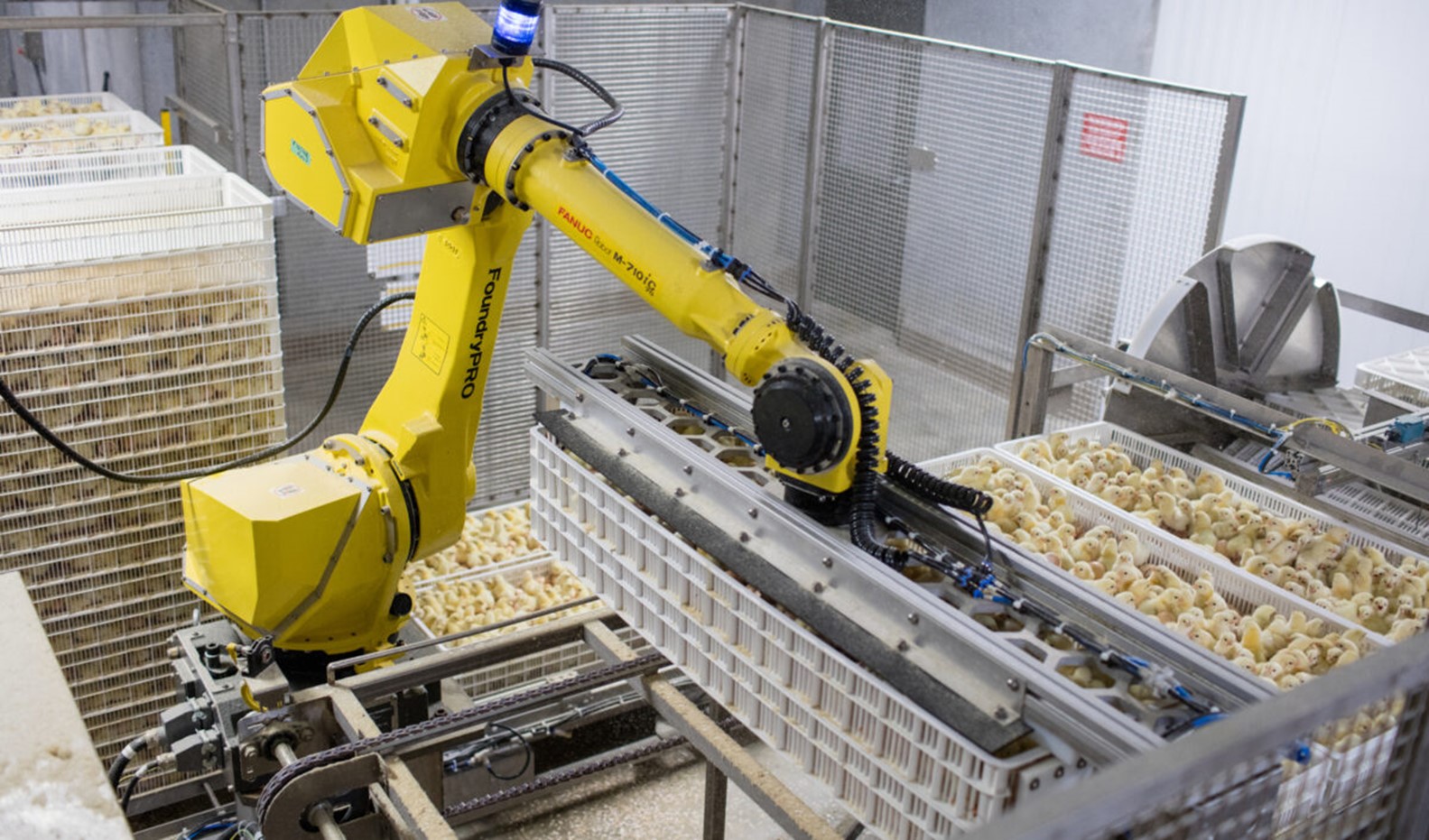
Source: Hatchery Automation Technology Comes to the UK
3. AI, Machine Learning, and IoT: The Brains of Modern Poultry Farms
AI and IoT form the core of Precision Livestock Farming (PLF). AI in Management leverages machine learning (ML) and deep learning (DL) for real-time monitoring. Subramani et al. (2025) reviewed applications, including activity tracking (detecting lameness), vocalization analysis (stress indicators), weight prediction, and automated environmental control (ventilation, heating). IoT and Predictive Analytics utilize networks of sensors (wearable, environmental) feeding data to predictive models. For instance, Ahmed et al. (2021) achieved over 90% accuracy in early disease detection (e.g., Newcastle disease) using wearable sensors combined with ML algorithms, enabling timely interventions. Leong (2025) further emphasizes IoT's role in climate control optimization. While general AI management focuses on diverse farm operations, predictive health analytics specifically targets disease mitigation – a major industry cost driver. Both face challenges in data integration, model interpretability ("black box" issue), and requiring robust farm-wide connectivity (Astill et al., 2020; Franzo et al., 2023).
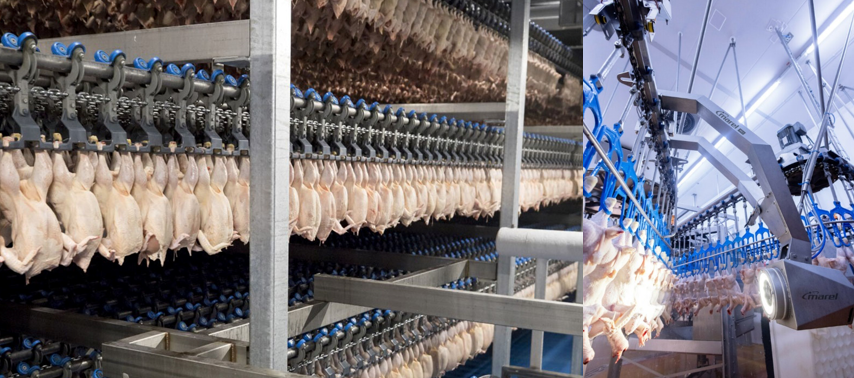
Source: Funds Awarded to Develop Poultry Processing Robotics
4. Industry 4.0 Integration: Smart Manufacturing for the Broiler Chain
Integrating AI, Big Data, and IoT signifies the advent of Industry 4.0 in poultry. Da Silva et al. (2023) systematically reviewed its application across the broiler production chain, highlighting benefits that include optimized logistics, real-time supply chain visibility, predictive maintenance on equipment, and enhanced resource allocation. This integration promises significant economic gains through reduced waste and downtime, alongside environmental benefits via optimized energy and resource use. However, da Silva et al. (2023) and Leong et al. (2023) starkly contrast these potentials with the reality of high initial investment costs, cybersecurity vulnerabilities, and a significant technical skills gap, particularly hindering adoption in developing economies or by small-to-medium enterprises (SMEs).
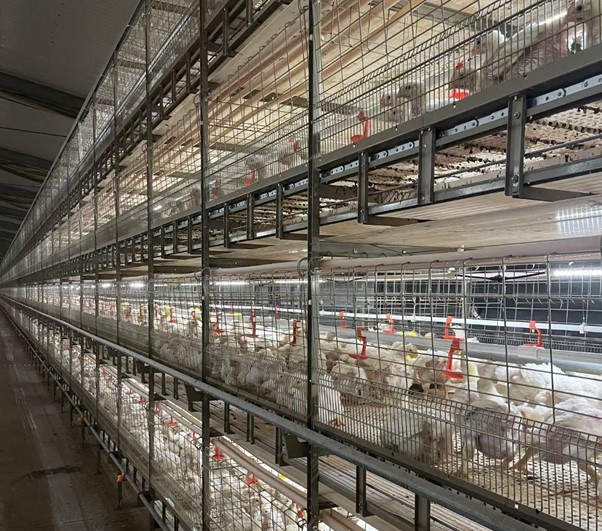
Source: New Chain Type Harvesting Broiler Cage Hightop Automatic Broiler Cage
5. Processing Advancements: Speed, Quality, and Safety
Processing technology has seen dramatic evolution. Barbut (2010) documented foundational shifts, including a four-fold increase in line speeds, major sanitation improvements (automated carcass washes, steam pasteurization), and a rise in value-added cut-up/deboned products. Recent advancements focus on Mechanization and In-line Processing. Barbut & Leishman (2022) detail innovations like AI-guided evisceration, automated portioning with vision systems, and real-time microbial detection sensors, enhancing yield, meat quality consistency, and food safety. While Barbut (2010) established the modern high-speed paradigm, current research (Barbut & Leishman, 2022) emphasizes intelligent automation, data-driven quality control, and enhanced traceability, moving beyond pure speed to integrated quality and safety assurance.
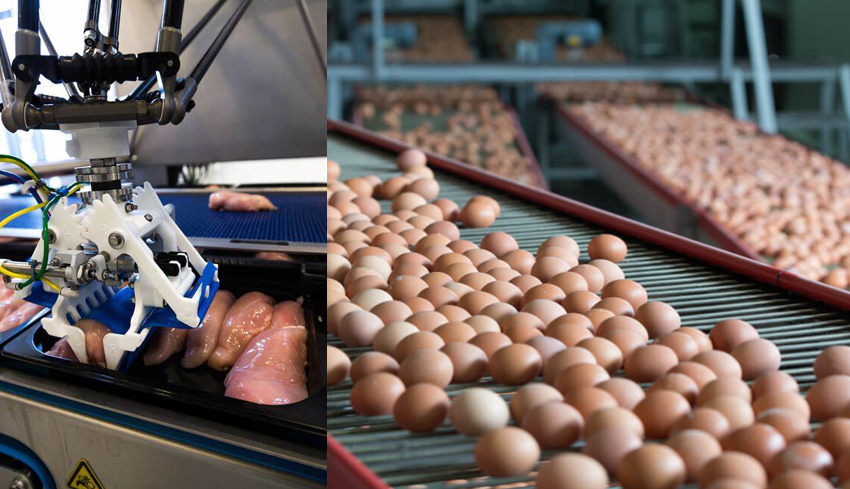
Source: Grading and Batching: Batchingand Process of Egg Production
6. Persistent Challenges: Barriers to a Tech-Driven Future
Despite advancements, significant hurdles remain:
- Economic & Technical Barriers: High capital costs for robotics and AI systems, coupled with complex integration needs and a shortage of skilled personnel, are major adoption barriers globally (da Silva et al., 2023). Castro et al. (2023) emphasize this creates a divide between large integrators and smaller producers. Maintenance complexities and uncertain ROI further deter investment.
- Disease Management: Intensification heightens disease risks like Avian Influenza (AI). Astill et al. (2018) stress that while rapid diagnostic tech exists (PCR, biosensors), implementation is uneven, and predicting outbreaks remains challenging. Hafez (2011) emphasized that the constant emergence of pathogens necessitates continuous innovation in surveillance and biosecurity tech integration.
- Environmental & Welfare Concerns: Balancing productivity with sustainability is critical. Naik and Kumar (2024) highlight challenges in managing manure runoff (nutrient pollution) and greenhouse gas emissions. Franzo et al. (2023) noted that consumer and regulatory pressure demands tech solutions for better welfare monitoring (space, behavior) alongside environmental footprint reduction (e.g., efficient waste-to-energy conversion).
- Market & Political Instability: Fluctuating feed/energy costs and output prices disrupt operations. Chapot et al. (2024) show that this is acute in regions like Indonesia, compounded by inadequate biosecurity infrastructure and policy gaps. Global trade disputes and disease-related export bans add further volatility (Mottet & Tempio, 2017).
7. Sustainable Waste Management: Closing the Loop
Effective waste management is paramount for sustainability. Briukhanov & Gaas (2016) stress compliance with environmental regulations using the Best Available Techniques (BAT). Key strategies include:
- Waste Utilization: Converting litter/manure into high-quality organic fertilizers via composting (Rosas-Martínez & Aguilar-Rivera, 2022; Aboutayeb et al., 2024) or anaerobic digestion for biogas (Odales-Bernal et al., 2021; Ajmal et al., 2024) transforms waste into resources, adhering to circular economy principles.
- Integrated Systems: Combining poultry with aquaculture (using manure to fertilize ponds - (Falayi et al., 2008) or crop cultivation (using processed sludge - Ozdemir et al., 2019, 2021) enhances resource efficiency.
- Socio-Economic Factors: Ahmed et al. (2023) emphasize farmer education (Knowledge, Attitudes, Practices—KAP) and gender-inclusive training (Faborode, 2022) as crucial for the successful adoption of waste valorization practices and for ensuring economic viability (Ozdemir et al., 2019; Sumiyati et al., 2024).
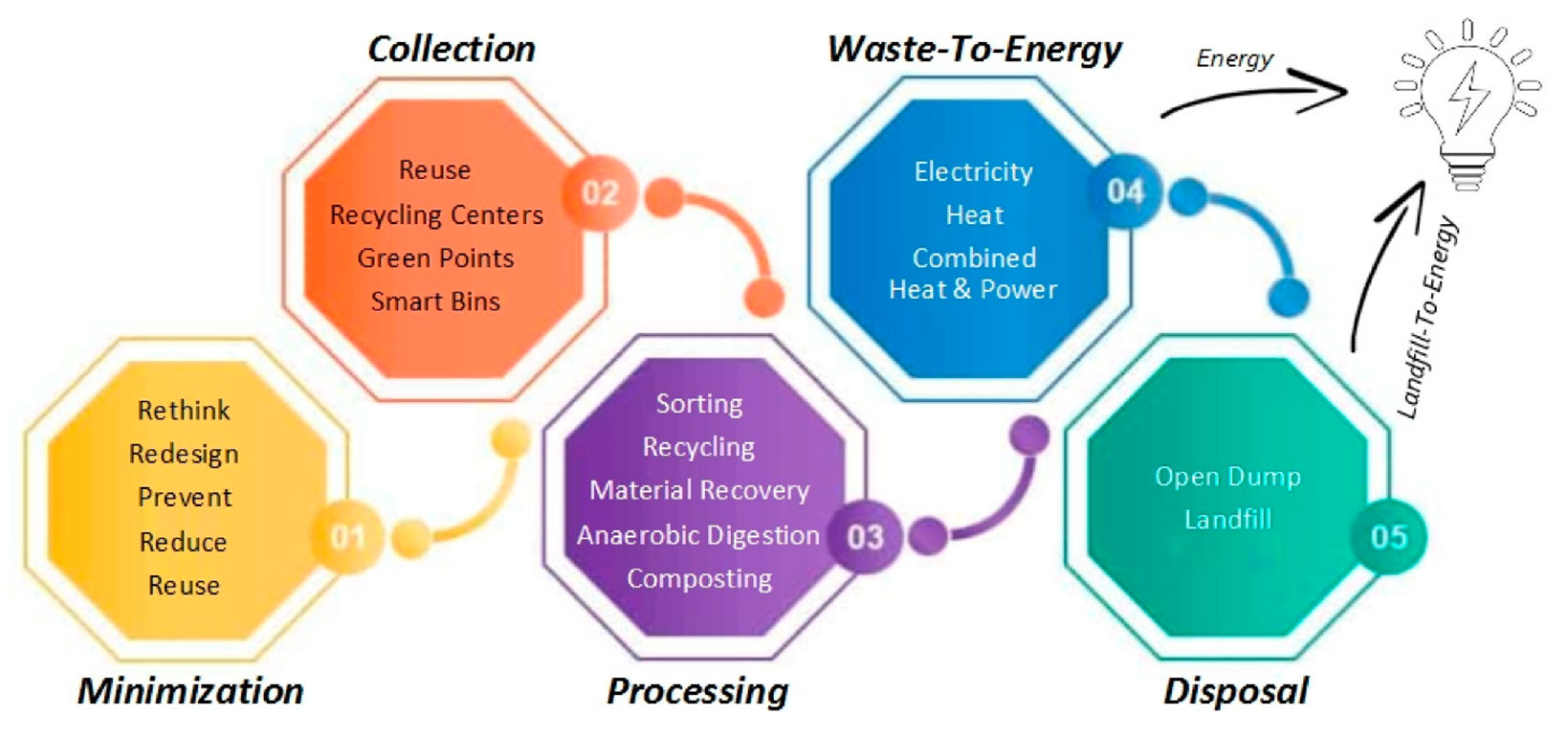
Adapted from Vlachokostas (2020): Closing the Loop Between Energy Production and Waste Management: A Conceptual Approach Towards Sustainable Development — Sustainability
Conclusion: Toward a Resilient and Sustainable 2030
The poultry industry is unequivocally leveraging technology – genomics, robotics, AI, IoT, and Industry 4.0 – to enhance efficiency, productivity, and sustainability (Leong et al., 2023; Corredor et al., 2024). These advancements enable precise management, early disease detection, improved welfare, and reduced environmental impact. However, the path forward is not without significant obstacles. High implementation costs, technical complexity, skilled labor shortages, evolving disease threats, and the imperative to balance intensification with environmental and welfare sustainability demand continuous innovation and collaborative solutions (da Silva et al., 2023; Bist et al., 2024; Farrelly, 2025).
Successfully navigating towards 2030 requires a multi-faceted approach: reducing technology costs, improving user-friendliness, developing robust biosecurity tech, investing in renewable energy integration (e.g., solar, biogas), and fostering policies that support sustainable intensification and fair market access. By addressing these challenges head-on and harnessing the full potential of emerging technologies, the poultry industry can achieve a future that is productive, profitable, environmentally responsible, and ethically sound.
References
Aboutayeb, R., Fijahi, S., Hssaini, L., & Azim, K. (2024). Quality assessment of poultry manure compost: Focus on organic amendment and bioremediation roles toward sustainable agriculture. Euro-Mediterranean Journal for Environmental Integration. https://doi.org/10.1007/s41207-024-00698-7
Ahmed, S., Moni, M. I. Z., Begum, M., Sultana, M. M., Kabir, A., Eqbal, M. J., Das, S. K., Ullah, W., & Haque, T. S. (2023). Poultry farmers' knowledge, attitude, and practices toward poultry waste management in Bangladesh. Veterinary World, 16(3), 554-563. https://doi.org/10.14202/vetworld.2023.554-563
Ahmed, G., Malick, R. A. S., Akhunzada, A., Zahid, S., Sagri, M. R., & Gani, A. (2021). An approach towards IoT-based predictive service for early detection of diseases in poultry chickens. Sustainability (Switzerland), 13(23), art. no. 13396. https://doi.org/10.3390/su132313396
Ajmal, M., Aslam, S., & Sahi, A. A. (2024). Achieving decarbonization in the waste management sector. In Solid Waste Management for Resource-Efficient Systems: Circularity in Action (pp. 179-203). Achieving decarbonization in the waste management sector — Solid Waste Management for Resource-Efficient Systems
Astill, J., Dara, R. A., Fraser, E. D. G., Roberts, B., & Sharif, S. (2020). Smart poultry management: Smart sensors, big data, and the Internet of Things. Computers and Electronics in Agriculture, 170, art. no. 105291. Smart poultry management: Smart sensors, big data, and the internet of things — Computers and Electronics in Agriculture
Astill, J., Fraser, E., Dara, R., & Sharif, S. (2018). Detecting and predicting emerging disease in poultry with the implementation of new technologies and big data: A focus on avian influenza virus. Frontiers in Veterinary Science, 5(OCT), art. no. 263. https://doi.org/10.3389/fvets.2018.00263
Barbut, S. (2010). Past and future of poultry meat harvesting technologies. World's Poultry Science Journal, 66(3), 399-410. https://doi.org/10.1017/S0043933910000498
Barbut, S., & Leishman, E. M. (2022). Quality and processability of modern poultry meat. Animals, 12(20), art. no. 2766. https://doi.org/10.3390/ani12202766
Bist, R. B., Bist, K., Poudel, S., Subedi, D., Yang, X., Paneru, B., Mani, S., Wang, D., & Chai, L. (2024). Sustainable poultry farming practices: A critical review of current strategies and future prospects. Poultry Science, 103(12), art. no. 104295. Sustainable poultry farming practices: a critical review of current strategies and future prospects — Poultry Science
Briukhanov, A. Y., & Gaas, A. V. (2016). Strategy of waste management at poultry farming enterprises based on introduction of best available techniques for dung processing. Ecology and Industry of Russia, 20(2), 60-63. Strategy of Waste Management at Poultry Farming Enterprises Based on Introduction of Best Available Techniques for Dung Processing — Ecology and Industry of Russia
Cao, K.-X., Deng, Z.-C., Li, S.-J., Yi, D., He, X., Yang, X.-J., Guo, Y.-M., & Sun, L.-H. (2024). Poultry nutrition: Achievement, challenge, and strategy. Journal of Nutrition, 154(12), 3554-3565. Poultry Nutrition: Achievement, Challenge, and Strategy — The Journal of Nutrition
Castro, F. L. S., Chai, L., Arango, J., Owens, C. M., Smith, P. A., Reichelt, S., DuBois, C., & Menconi, A. (2023). Poultry industry paradigms: Connecting the dots. Journal of Applied Poultry Research, 32(1), art. no. 100310. https://doi.org/10.1016/j.japr.2022.100310
Chapot, L., Hibbard, R., Ariyanto, K. B., Maulana, K. Y., Yusuf, H., Febriyani, W., Cameron, A., Paul, M., Vergne, T., & Faverjon, C. (2024). Needs and capabilities for improving poultry production and health management in Indonesia. PLoS ONE, 19(8), art. no. e0308379. Needs and capabilities for improving poultry production and health management in Indonesia — PLOS ONE
Corredor, D. (2024). The role of technology in ensuring sustainable poultry production. aviNews. The Role of Technology in Ensuring Sustainable Poultry Production
da Silva, V. L., Kovaleski, J. L., Pagani, R. N., & Gomes, M. A. S. (2023). Industry 4.0 implementations: A systematic review of approaches and main applicabilities in the broiler meat production chain. World's Poultry Science Journal, 79(3), 563-579. Industry 4.0 implementations: a systematic review of approaches and main applicabilities in the broiler meat production chain — World's Poultry Science Journal
Faborode, H. F. B. (2022). Gender assessment of poultry waste utilisation among small-scale poultry farmers in Osun State, Nigeria: Exploring the untapped potentials. African Journal of Food, Agriculture, Nutrition and Development, 22(4), 20259-20279. https://doi.org/10.18697/ajfand.109.19780
Falayi, F. R., Ogunlowo, A. S., & Alatise, M. O. (2008). Effects of environmental variables on poultry performance and pond water quality in an integrated poultry/fishery farming. European Journal of Scientific Research, 20(4), 805-816. Inward: Record Uri
Farrelly, M. (2025). The biggest challenges facing the poultry industry. Retrieved from Challenges Facing the Poultry Industry
Franzo, G., Legnardi, M., Faustini, G., Tucciarone, C. M., & Cecchinato, M. (2023). When everything becomes bigger: Big data for big poultry production. Animals, 13(11), art. no. 1804. When Everything Becomes Bigger: Big Data for Big Poultry Production — Animals
Gadzama, I. U. (2025). How AI is Revolutionizing Animal Farming: Benefits, Applications, and Challenges. Wikifarmer. Available online: https://www.researchgate.net/publication/387828770
Hafez, H. M. (2011). Poultry health and poultry production: Current and future challenges. Slovenian Veterinary Research, 48(SUPPL.13), 259-260. Inward: Record Uri
Kleyn, F. J., & Ciacciariello, M. (2021). Future demands of the poultry industry: Will we meet our commitments sustainably in developed and developing economies? World's Poultry Science Journal, 77(2), 267-278. Future demands of the poultry industry: will we meet our commitments sustainably in developed and developing economies? — World's Poultry Science Journal
Leong, W. Y. (2025). Smart poultry farming 4.0: Leveraging IoT for climate control and productivity. In Proceedings of the International Colloquium on Signal Processing and Its Applications, CSPA, 2025 (pp. 172-175). Smart Poultry Farming 4.0: Leveraging IoT for Climate Control and Productivity — 2025 21st IEEE International Colloquium on Signal Processing & Its Applications (CSPA)
Leong, W. Y., Leong, Y. Z., & Leong, W. S. (2023). Intelligence in poultry farming: Enhancing efficiency and welfare through intelligent manufacturing. IET Conference Proceedings, 2023(35), 170-171. Intelligence in poultry farming: enhancing efficiency and welfare through intelligent manufacturing — IET Conference Proceedings
Madkour, M., Salman, F. M., El-Wardany, I., Abdel-Fattah, S. A., Alagawany, M., Hashem, N. M., Abdelnour, S. A., El-Kholy, M. S., & Dhama, K. (2022). Mitigating the detrimental effects of heat stress in poultry through thermal conditioning and nutritional manipulation. Journal of Thermal Biology, 103, art. no. 103169. Mitigating the detrimental effects of heat stress in poultry through thermal conditioning and nutritional manipulation — Journal of Thermal Biology
Mottet, A., & Tempio, G. (2017). Global poultry production: Current state and future outlook and challenges. World's Poultry Science Journal, 73(2), 245-256. Global poultry production: current state and future outlook and challenges — World's Poultry Science Journal
Naik, G., & Kumar, A. (2024). Megha Farms. In Management for Professionals, Part F3736 (pp. 163-178). Megha Farms — Management for Professionals
Neethirajan, S. (2023). Digital phenotyping: A game changer for the broiler industry. Animals, 13(16), art. no. 2585. Digital Phenotyping: A Game Changer for the Broiler Industry — Animals
Odales-Bernal, L., Schulz, R. K., López González, L., & Barrera, E. L. (2021). Biorefineries at poultry farms: A perspective for sustainable development. Journal of Chemical Technology and Biotechnology, 96(3), 564-577. Biorefineries at poultry farms: a perspective for sustainable development — Journal of Chemical Technology & Biotechnology
Olejnik, K., Popiela, E., & Opaliński, S. (2022). Emerging precision management methods in poultry sector. Agriculture (Switzerland), 12(5), art. no. 718. Emerging Precision Management Methods in Poultry Sector — Agriculture
Ozdemir, S., Ozdemir, S., & Yetilmezsoy, K. (2019). Agro-economic and ecological assessment of poultry abattoir sludge as bio-nutrient source for walnut plantation in low-fertility soil. Environmental Progress and Sustainable Energy, 38(6), art. no. 13225. Agro‐economic and ecological assessment of poultry abattoir sludge as bio‐nutrient source for walnut plantation in low‐fertility soil — Environmental Progress & Sustainable Energy
Ozdemir, S., Ozdemir, S., Ozer, H., & Yetilmezsoy, K. (2021). A techno-sustainable bio-waste management strategy for closing chickpea yield gap. Waste Management, 119, 356-364. A techno-sustainable bio-waste management strategy for closing chickpea yield gap — Waste Management
Rosas-Martínez, V., & Aguilar-Rivera, N. (2022). Composting for the reduction of bird droppings (Gallus gallus domesticus) [Compostaje para la reducción de excretas de aves (Gallus gallus domesticus)]. Agronomia Mesoamericana, 33(1), art. no. 44815. https://doi.org/10.15517/am.v33i1.44815
Sohrabipour, P., Pallerla, C. K. R., Davar, A., Mahmoudi, S., Crandall, P., Shou, W., She, Y., & Wang, D. (2025). Cost-effective active laser scanning system for depth-aware deep-learning-based instance segmentation in poultry processing. AgriEngineering, 7(3), art. no. 77. Cost-Effective Active Laser Scanning System for Depth-Aware Deep-Learning-Based Instance Segmentation in Poultry Processing — AgriEngineering
Subramani, T., Jeganathan, V., & Kunkuma Balasubramanian, S. (2025). Machine learning and deep learning techniques for poultry tasks management: A review. Multimedia Tools and Applications, 84(2), 603-645. Machine learning and deep learning techniques for poultry tasks management: a review — Multimedia Tools and Applications
Sumiyati, S., Samadikun, B. P., Widiyanti, A., Budihardjo, M. A., Qadar, S. A., & Puspita, A. S. (2024). Life cycle assessment of agricultural waste recycling for sustainable environmental impact. Global Journal of Environmental Science and Management, 10(2), 907-938. https://doi.org/10.22035/gjesm.2024.02.30
Vlachokostas, C. (2020). Closing the Loop Between Energy Production and Waste Management: A Conceptual Approach Towards Sustainable Development. Sustainability, 12(15), 5995. Closing the Loop Between Energy Production and Waste Management: A Conceptual Approach Towards Sustainable Development — Sustainability
Xiao, D., Huang, Y., Xiong, Y., Liu, J., Tan, Z., & Lv, S. (2024). Research progress on robotic technology in the field of livestock and poultry farming. Journal of South China Agricultural University, 45(5), 624-634. Journal of South China Agricultural University
Zampiga, M., Flees, J., Meluzzi, A., Dridi, S., & Sirri, F. (2018). Application of omics technologies for a deeper insight into quali-quantitative production traits in broiler chickens: A review. Journal of Animal Science and Biotechnology, 9(1), art. no. 61. Application of omics technologies for a deeper insight into quali-quantitative production traits in broiler chickens: A review — Journal of Animal Science and Biotechnology