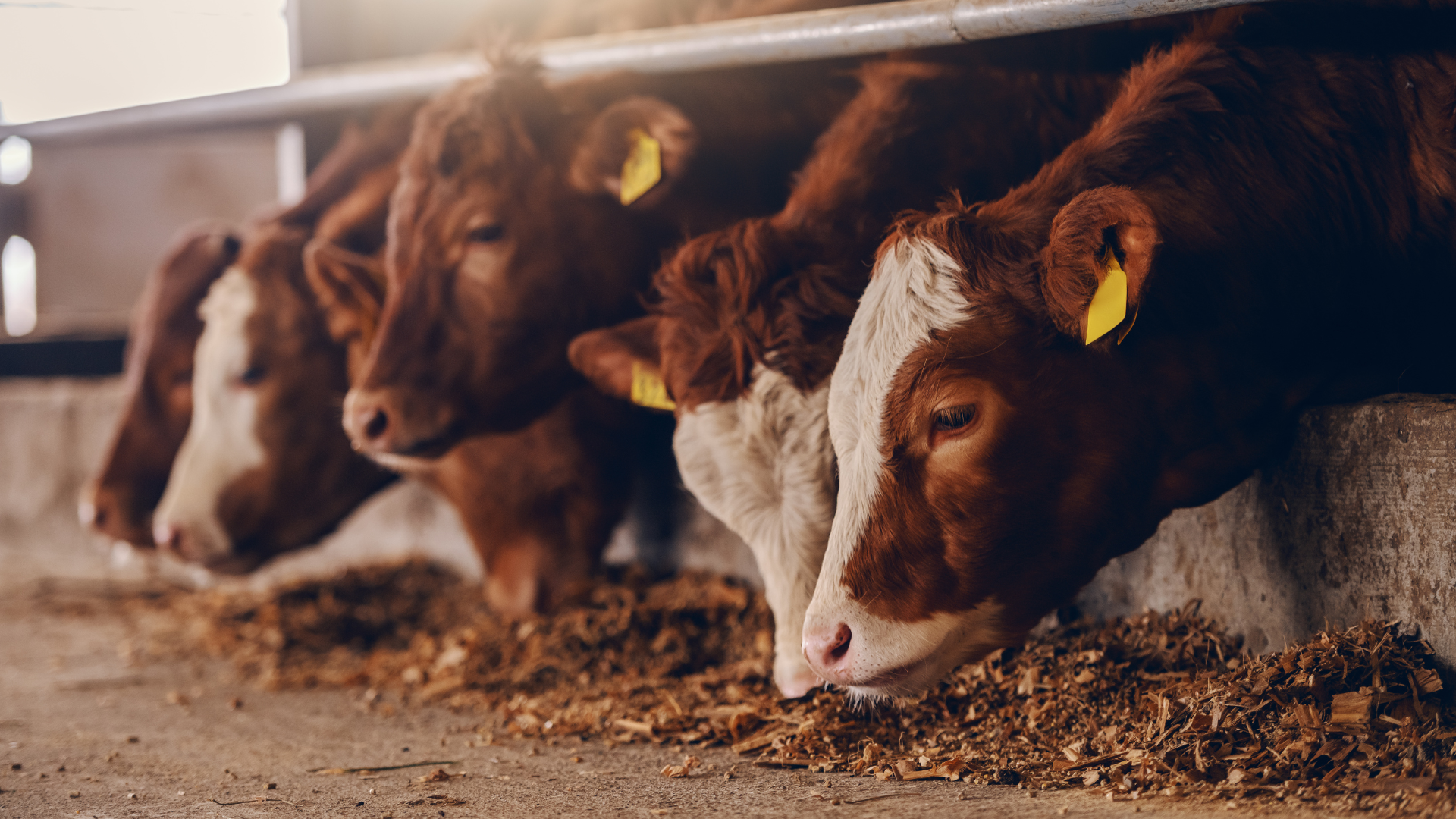
The animal feed industry relies heavily on soybean meal and fishmeal as the main protein source, but these ingredients are costly and scarce. Therefore, finding alternative protein sources that are environmentally friendly and sustainable is crucial for producing meat, milk, and eggs. Insects such as the black soldier fly larvae (Hermetia illucens; BSFL) are being considered as sustainable, protein-rich feed ingredients to meet the increasing demand for meat (Van Huis et al., 2013; Van Huis and Oonincx, 2017; Gadzama and Ndudim, 2019).
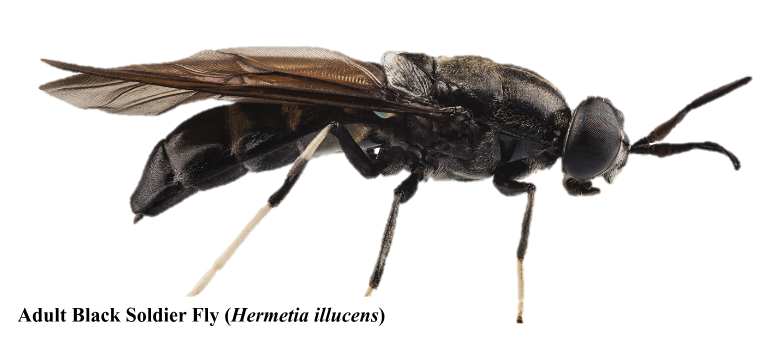
Black soldier fly larvae can convert organic food waste into high-quality protein and fat for livestock, aquaculture, and pet feed. Recent studies have shown that BSFL can be safely included in animal diets without negative impacts on growth or nutrient digestibility and may even offer immune benefits due to their chitin content. However, the nutritional value of BSFL as an animal feed ingredient is directly influenced by the substrates on which they are reared. Other factors that may influence the nutritional composition of BSFL include the methods of killing and drying (Larouche et al., 2019; Huang et al., 2019) or product fractionation (e.g., defatting). This review presents a comparative overview of BSFL-rearing substrates and BSFL crude protein, crude fat, and metabolizable energy content across different companies.
Sources of BSFL as reported in various studies
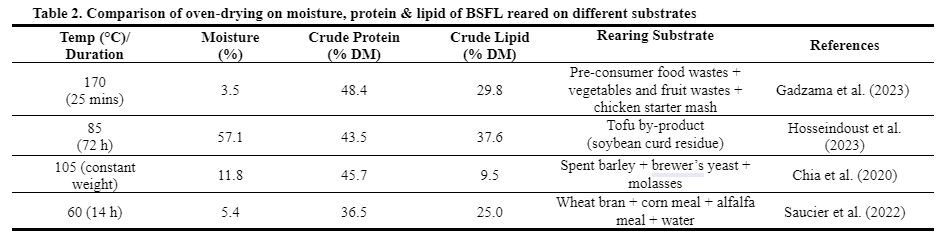
Black Soldier Fly Larvae have gained significant attention as a sustainable solution for organic waste management and as a source of protein and fat for animal feed (Gadzama et al., 2023; Silva et al., 2024). Companies across the globe are utilizing various substrates to rear BSFL (Table 1). The global distribution of these companies, from Europe to Asia, Australia, South America, and Africa, reflects the scalability and adaptability of BSFL farming. Some of the rearing substrates of BSFL, as reported by various companies, include:
- Food waste
- Chicken feed
- Kitchen waste
- Chicken manure
- Brewer's by-product
- Blend of flour (35%), water (65%), and vegetable waste
- Recycled pre-consumer food from farms, processors, and stores
- Pre-consumer vegetable and fruit waste with a bit of chicken feed
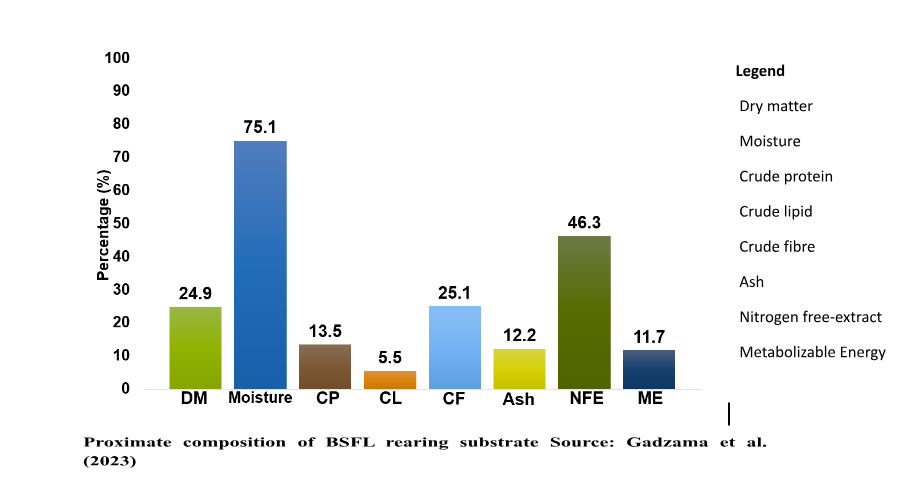
Proximate composition of BSFL rearing substrate
The optimal substrate moisture content for BSFL growth and development is between 60% and 80% (Dzepe et al., 2020). The figure below shows a typical proximate composition of BSFL rearing substrate: pre-consumer food wastes, vegetables and fruit wastes, and chicken starter mash (Gadzama et al., 2023).
Rearing Substates of Black Soldier Fly Larvae
Black soldier fly larvae can be reared on various organic materials, ranging from pre-consumer recycled food to chicken manure and brewery by-products (Table 1). Studies have shown that BSFL can also thrive on substrates such as cow manure, fish offal, restaurant waste, and sewage sludge (Spranghers et al., 2017; Meneguz et al., 2018; Lalander et al., 2019). In addition, BSFL can be easily reared and propagated on any nutrient-rich substrate, including plant residues, animal manure, and waste, food scraps, agricultural byproducts, or straws (Lu et al., 2022; Dou et al., 2024). This approach aligns with the principles of circular economy, where waste is transformed into valuable feed resources.

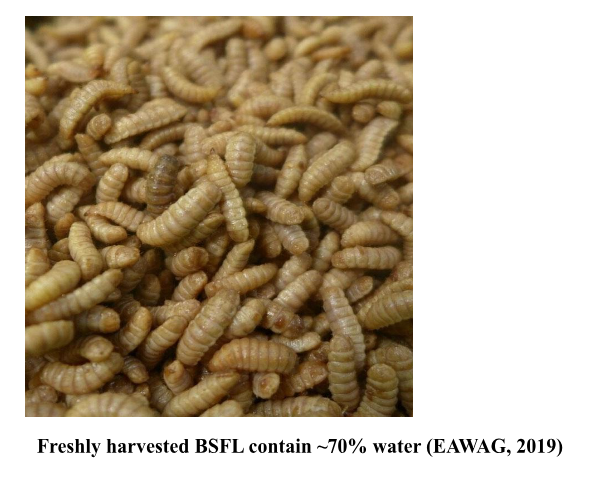
Nutritional composition of BSFL as influenced by rearing Substrate
The nutritional composition of BSFL is directly influenced by the substrates they are reared on For instance, larvae reared on substrates with higher protein content, such as chicken feed, tend to have higher crude protein levels (Table 1). Generally, BSFL typically contains about 40% protein and 30% fat on a dry matter basis (Barragan-Fonseca et al., 2017). However, recent studies have indicated variations in this nutritional composition based on different rearing substrates. For example, Table 1 shows that crude protein content ranges from 25.30% to 60.69% DM, and fat ranges from 6.84% to 40.99% DM across different rearing substrates as reported by various, surpassing the figures reported by Barragan-Fonseca et al. (2017). These ranges indicate that the choice of substrate is crucial in determining the nutritional value of BSFL, which can be tailored to specific needs based on the desired protein and fat content for various applications.
Similarly, BSFL reared on a mixture of pre-consumer food waste, including fruits and vegetables, supplemented with a small amount of chicken starter mash, was reported to have a crude protein content of 48.20% DM (Gadzama et al., 2023). While BSFL reared on fish waste, specifically Sardinella aurita, for a brief period of two days, it has an exceptionally high total protein content of 78.8% (Hopkins et al., 2021). In contrast, BSFL reared on various fruit and vegetable waste formulations was found to have a lower protein content of 12.9% (Hopkins et al., 2021).
The correlation between the substrate's composition and the nutritional content of BSFL is further supported by Fuso et al. (2021), who found that the protein content in BSFL is mainly correlated with the fiber and protein content of the rearing substrate. Shumo et al. (2019) reported that the rearing substrate affects all the proximate nutritional parameters of BSFL except ash. Similarly, the fat content in BSFL can fluctuate based on the fat content of the rearing substrate. For instance, BSFL reared on brewer's by-product, which is inherently rich in fats, was reported to have high fat levels (Campbell et al., 2020).
Studies have shown that the rearing substrate of BSFL can be manipulated to enhance specific nutritional components, such as essential fatty acids (Spranghers et al., 2017; Meneguz et al., 2018). For instance, when BSFLs are fed with fish offal and algae, they exhibit increased levels of EPA and DHA, which are crucial for the health of animals consuming the BSFL-based feed. The metabolic energy value, which indicates the energy available from the feed, also reflects the substrate's composition (Table 1). The ability to modify the fatty acid profile of BSFL through diet customization is pivotal for optimizing their utilization as animal feed ingredients.
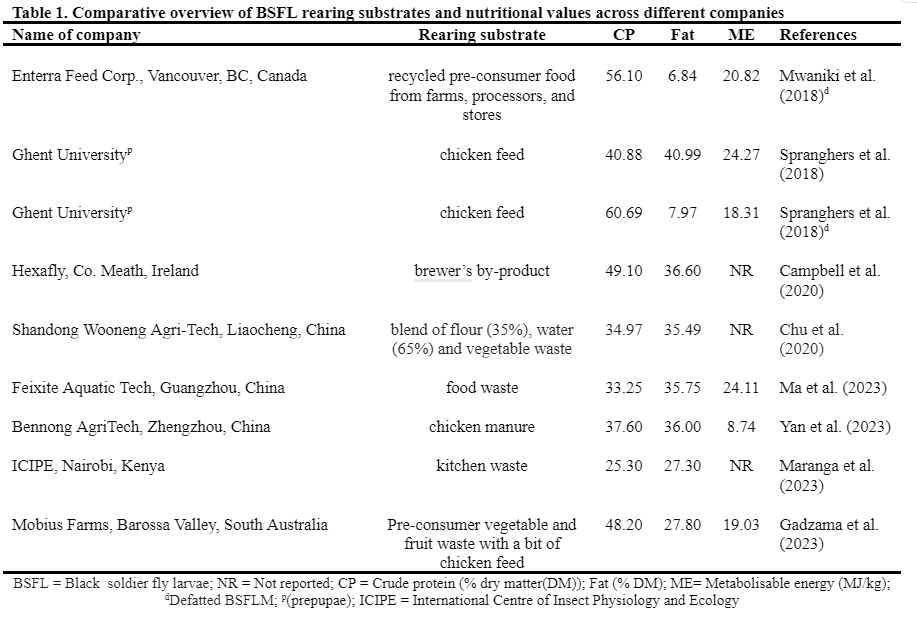
The data presented in Table 2 suggest a significant variation in the nutritional composition of BSFL when reared on different substrates and subjected to various oven-drying temperatures and durations. The data suggests that substrate selection and processing conditions are key to optimizing BSFL for use as a sustainable protein source in animal feed.
Conclusion
The rearing substrates used for BSFL cultivation significantly impact their nutritional profile, particularly the crude protein, fat, and metabolizable energy content. Selecting appropriate rearing substrate is essential for optimizing the nutrient content of BSFL, which can be tailored depending on the larvae's intended application, whether animal feed or other uses. The nutritional composition of BSFL positions it for use as a sustainable feed ingredient in the diets of various animals, such as cattle, poultry, pigs, rabbits, fish, dogs, etc.
References:
- Barragan-Fonseca, K. B., Dicke, M., & van Loon, J. J. (2017). Nutritional value of the black soldier fly (Hermetia illucens L.) and its suitability as animal feed–a review. Journal of Insects as Food and Feed, 3(2), 105-120. Nutritional value of the black soldier fly (Hermetia illucens L.) and its suitability as animal feed – a review — Journal of Insects as Food and Feed
- Campbell, M., Ortuño, J., Stratakos, A. C., Linton, M., Corcionivoschi, N., Elliott, T., Koidis, A., & Theodoridou, K. (2020). Impact of Thermal and High-Pressure Treatments on the Microbiological Quality and In Vitro Digestibility of Black Soldier Fly (Hermetia illucens) Larvae. Animals, 10(4), 682. Impact of Thermal and High-Pressure Treatments on the Microbiological Quality and In Vitro Digestibility of Black Soldier Fly (Hermetia illucens) Larvae — Animals
- Chia, S. Y., Tanga, C. M., Osuga, I. M., Cheseto, X., Ekesi, S., Dicke, M., & van Loon, J. J. (2020). Nutritional composition of black soldier fly larvae feeding on agro‐industrial by‐products. Entomologia Experimentalis et Applicata, 168(6-7), 472-481. Nutritional composition of black soldier fly larvae feeding on agro‐industrial by‐products — Entomologia Experimentalis et Applicata
- Chu, X., Li, M., Wang, G., Wang, K., Shang, R., Wang, Z., & Li, L. (2020). Evaluation of the Low Inclusion of Full-Fatted Hermetia illucens Larvae Meal for Layer Chickens: Growth Performance, Nutrient Digestibility, and Gut Health. Frontiers in Veterinary Science, 7, 585843. Evaluation of the Low Inclusion of Full-Fatted Hermetia illucens Larvae Meal for Layer Chickens: Growth Performance, Nutrient Digestibility, and Gut Health — Frontiers in Veterinary Science
- Dou, Z., Dierenfeld, E. S., Wang, X., Chen, X., & Shurson, G. C. (2024). A critical analysis of challenges and opportunities for upcycling food waste to animal feed to reduce climate and resource burdens. Resources, Conservation and Recycling, 203, 107418.
- Dzepe, D., Nana, P., Fotso, A., Tchuinkam, T., & Djouaka, R. (2020). Influence of larval density, substrate moisture content and feedstock ratio on life history traits of black soldier fly larvae. Journal of Insects as Food and Feed, 6(2), 133-140.
- EAWAG (2019). Small-scale drying methods for Black Soldier Fly Larvae. https://www.eawag.ch/fileadmin/Domain1/Abteilungen/ sandec/schwerpunkte/swm/Practical_knowhow_on_BSF/ bsf_factsheet_drying.pdf
- Fuso, A., Barbi, S., Macavei, L. I., Luparelli, A. V., Maistrello, L., Montorsi, M., Sforza, S., & Caligiani, A. (2021). Effect of the Rearing Substrate on Total Protein and Amino Acid Composition in Black Soldier Fly. Foods (Basel, Switzerland), 10(8), 1773. Effect of the Rearing Substrate on Total Protein and Amino Acid Composition in Black Soldier Fly — Foods
- Gadzama, I.U., Malcolm, J. and Malcolm, C. (2023). Impact of drying methods on nutritional composition and energy efficiency of black soldier fly (Hermetia illucens) larvae as animal feed ingredient. In Proceedings of Recent Advances in Animal Nutrition (RAAN), Gold Coast, Queensland, Australia (July 26 – 28), pp. 29 – 30. https://www.researchgate.net/publication/374544950_Impact_of_drying_methods_on_the_nutritional_composition_of_black_soldier_fly_larvae_as_animal_feed_ingredient_Gadzama_et_al_2023
- Gadzama, I. U., & Ndudim, R. K. (2019). Nutritional composition of housefly larvae meal: a sustainable protein source for animal production–a review. Acta Scientific Agriculture, 3(4), 74-77. Acta Scientific Agriculture 3 (PDF)
- Hosseindoust, A., Ha, S. H., Mun, J. Y., & Kim, J. S. (2023). Quality characteristics of black soldier flies produced by different substrates. Insects, 14(6), 500.
- Hopkins, I., Newman, L. P., Gill, H., & Danaher, J. (2021). The influence of food waste rearing substrates on black soldier fly larvae protein composition: A systematic review. Insects, 12(7), 608.
- Huang, C., Feng, W., Xiong, J., Wang, T., Wang, W., Wang, C., & Yang, F. (2019). Impact of drying method on the nutritional value of the edible insect protein from black soldier fly (Hermetia illucens L.) larvae: amino acid composition, nutritional value evaluation, in vitro digestibility, and thermal properties. European Food Research and Technology, 245, 11-21.
- Lalander, C. D. S. Z., Diener, S., Zurbrügg, C., & Vinnerås, B. (2019). Effects of feedstock on larval development and process efficiency in waste treatment with black soldier fly (Hermetia illucens). Journal of Cleaner Production, 208, 211-219.
- Larouche, J., Deschamps, M. H., Saucier, L., Lebeuf, Y., Doyen, A., & Vandenberg, G. W. (2019). Effects of killing methods on lipid oxidation, colour and microbial load of black soldier fly (Hermetia illucens) larvae. Animals, 9(4), 182.
- Lu, S., Taethaisong, N., Meethip, W., Surakhunthod, J., Sinpru, B., Sroichak, T., Archa, P., Thongpea, S., Paengkoum, S., Purba, R. A. P., & Paengkoum, P. (2022). Nutritional Composition of Black Soldier Fly Larvae (Hermetia illucens L.) and Its Potential Uses as Alternative Protein Sources in Animal Diets: A Review. Insects, 13(9), 831. Nutritional Composition of Black Soldier Fly Larvae (Hermetia illucens L.) and Its Potential Uses as Alternative Protein Sources in Animal Diets: A Review — Insects
- Ma, T. T., Zhu, S. P., Chen, A. L., Zhong, Y. J., Fu, Z. Q., Deng, S., ... & Fu, J. (2023). Effects of black soldier fly larvae meal on production performance, meat quality, antioxidant capacity and serum biochemical indices of squabs. Journal of Insects as Food and Feed, 1(aop), 1-13. Effects of black soldier fly larvae meal on production performance, meat quality, antioxidant capacity and serum biochemical indices of squabs — Journal of Insects as Food and Feed
- Maranga, B., Kagali, R., Mbogo, K., Orina, P., Munguti, J., & Ogello, E. (2022). Growth Performance of African Catfish (Clarias Gariepinus) Fed on Diets Containing Black Soldier Fly (Hermetia illucens) Larvae Under Aquaponic System. Aquaculture Studies, 23(5). Growth Performance of African Catfish (Clarias Gariepinus) Fed on Diets Containing Black Soldier Fly (Hermetia Illucens) Larvae Under Aquaponic System — Aquaculture Studies
- Meneguz, M., Schiavone, A., Gai, F., Dama, A., Lussiana, C., Renna, M., & Gasco, L. (2018). Effect of rearing substrate on growth performance, waste reduction efficiency and chemical composition of black soldier fly (Hermetia illucens) larvae. Journal of the Science of Food and Agriculture, 98(15), 5776-5784.
- Mwaniki, Z., Neijat, M., & Kiarie, E. (2018). Egg production and quality responses of adding up to 7.5% defatted black soldier fly larvae meal in a corn–soybean meal diet fed to Shaver White Leghorns from wk 19 to 27 of age. Poultry Science, 97(8), 2829-2835. Egg production and quality responses of adding up to 7.5% defatted black soldier fly larvae meal in a corn–soybean meal diet fed to Shaver White Leghorns from wk 19 to 27 of age — Poultry Science
- Saucier, L., M’ballou, C., Ratti, C., Deschamps, M. H., Lebeuf, Y., & Vandenberg, G. W. (2022). Comparison of black soldier fly larvae pre-treatments and drying techniques on the microbial load and physico-chemical characteristics. Journal of Insects as Food and Feed, 8(1), 45-64.
- Shumo, M., Osuga, I. M., Khamis, F. M., Tanga, C. M., Fiaboe, K. K., Subramanian, S., ... & Borgemeister, C. (2019). The nutritive value of black soldier fly larvae reared on common organic waste streams in Kenya. Scientific Reports, 9(1), 10110. The nutritive value of black soldier fly larvae reared on common organic waste streams in Kenya — Scientific Reports
- Silva, B.C.R., Paulino, M.T.F., da Silva, L.A.L., de Moura Andrade, J.M., & Marcato, S.M. (2024). Black Soldier Fly (Hermetia illucens) Larvae meal improves quail growth performance. Tropical Animal Health and Production, 56(2),1-8. Black soldier fly (Hermetia illucens) larvae meal improves quail growth performance — Tropical Animal Health and Production
- Spranghers, T., Ottoboni, M., Klootwijk, C., Ovyn, A., Deboosere, S., De Meulenaer, B., ... & De Smet, S. (2017). Nutritional composition of black soldier fly (Hermetia illucens) prepupae reared on different organic waste substrates. Journal of the Science of Food and Agriculture, 97(8), 2594-2600.
- Van Huis, A., Van Itterbeeck, J., Klunder, H., Mertens, E., Halloran, A., Muir, G., & Vantomme, P. (2013). Edible Insects: future prospects for food and feed security (No. 171). Food and Agriculture Organization of the United Nations (FAO), Rome, Italy. Wageningen University & Research publication (PDF)
- Yan, Y., Zhang, J., Chen, X., & Wang, Z. (2023). Effects of Black Soldier Fly Larvae (Hermetia illucens Larvae) Meal on the Production Performance and Cecal Microbiota of Hens. Veterinary Sciences, 10(5), 364. Effects of Black Soldier Fly Larvae (Hermetia illucens Larvae) Meal on the Production Performance and Cecal Microbiota of Hens — Veterinary Sciences
- Van Huis, A., Van Itterbeeck, J., Klunder, H., Mertens, E., Halloran, A., Muir, G., & Vantomme, P. (2013). Edible Insects: future prospects for food and feed security (No. 171). Food and agriculture organization of the United Nations.
- Van Huis, A., & Oonincx, D. G. (2017). The environmental sustainability of insects as food and feed. A review. Agronomy for Sustainable Development, 37, 1-14.