Ishaya Usman Gadzama
School of Agriculture and Food Sustainability, University of Queensland, QLD 4343, Australia
Correspondence to: [email protected]
Summary
The GreenFeed System is an innovative tool that helps farmers measure methane and carbon dioxide emissions from their cattle in a stress-free way. Cows voluntarily visit a feeding station offering tasty pellets, and as they eat, the system captures their breath to analyze gas levels. It uses simple technology like electronic ear tags (for animal identification) to track individual animals, a small fan to collect exhaled air, and non-dispersive infrared (NDIR) sensors to measure methane and carbon dioxide levels. GreenFeed works in various farm settings, such as tie-stall barns, open pastures, or free-stall barns. It has been deployed globally in over 30 countries. However, understanding the factors influencing GreenFeed data accuracy, its advantages, and its limitations is key to monitoring methane emissions in ruminants. This article provides an overview of the GreenFeed unit, its applications, potential, and some of the challenges in its operation as a methane monitoring technology.
Introduction
Animal agriculture plays a significant role in global greenhouse gas (GHG) emissions, with methane (CH₄) being a major concern due to its potent warming effect 28–34 times greater than carbon dioxide (CO₂) over 100 years (Sellers et al., 2024; Gadzama, 2025). Methane is primarily produced during enteric fermentation, a natural digestive process in ruminants like cattle, sheep, and goats (Almeida et al., 2021; Gadzama, 2024). Globally, livestock accounts for approximately 15% of human-caused GHG emissions, with enteric methane being a key contributor (Sellers et al., 2024; Gadzama, 2025). As the agricultural sector seeks sustainable solutions, innovative technologies like the GreenFeed System are emerging as promising tools to measure these emissions (Zimmerman et al. (2020).
Nutritional strategies are at the forefront of efforts to reduce methane emissions (Figure 1; Gadzama, 2025). Feed additives have shown promise in modifying ruminal fermentation and directly targeting methane-producing microbes (Panthee, 2017; Almeida et al., 2021; Akter et al., 2025). These strategies not only enhance feed digestibility but also reduce methane production by altering hydrogen availability in the rumen. Research has shown that diets high in concentrates and low in fiber can promote propionate production, which can reduce methane emissions (O’Mara, 2011). Furthermore, improving forage quality by using legumes or selective breeding of low-methane forage cultivars, can further decrease methane output (O’Mara, 2011). However, accurately measuring methane emissions is the first step toward implementing effective mitigation strategies (Almeida et al., 2021; Gadzama et al., 2023; Gadzama, 2024).

Figure 1. Summary of enteric methane mitigation strategies. Adapted from Mousa (2020).
The GreenFeed System, developed by C-Lock Inc. (South Dakota, USA), offers a non-invasive and voluntary way to measure methane and carbon dioxide emissions from individual cattle (Martin et al., 2020). Cows visit a feeding station offering palatable pellets, and as they eat, the system captures their breath to analyze gas levels (methane and carbon dioxide emissions; Figure 2). This real-time, on-farm data allows farmers to evaluate the effectiveness of dietary interventions and management practices, making it easier to identify high-emitting animals and test feed strategies (Zimmerman et al., 2020).

Figure 2. The GreenFeed system. Adapted from Dida et al. (2025)
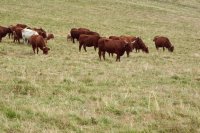
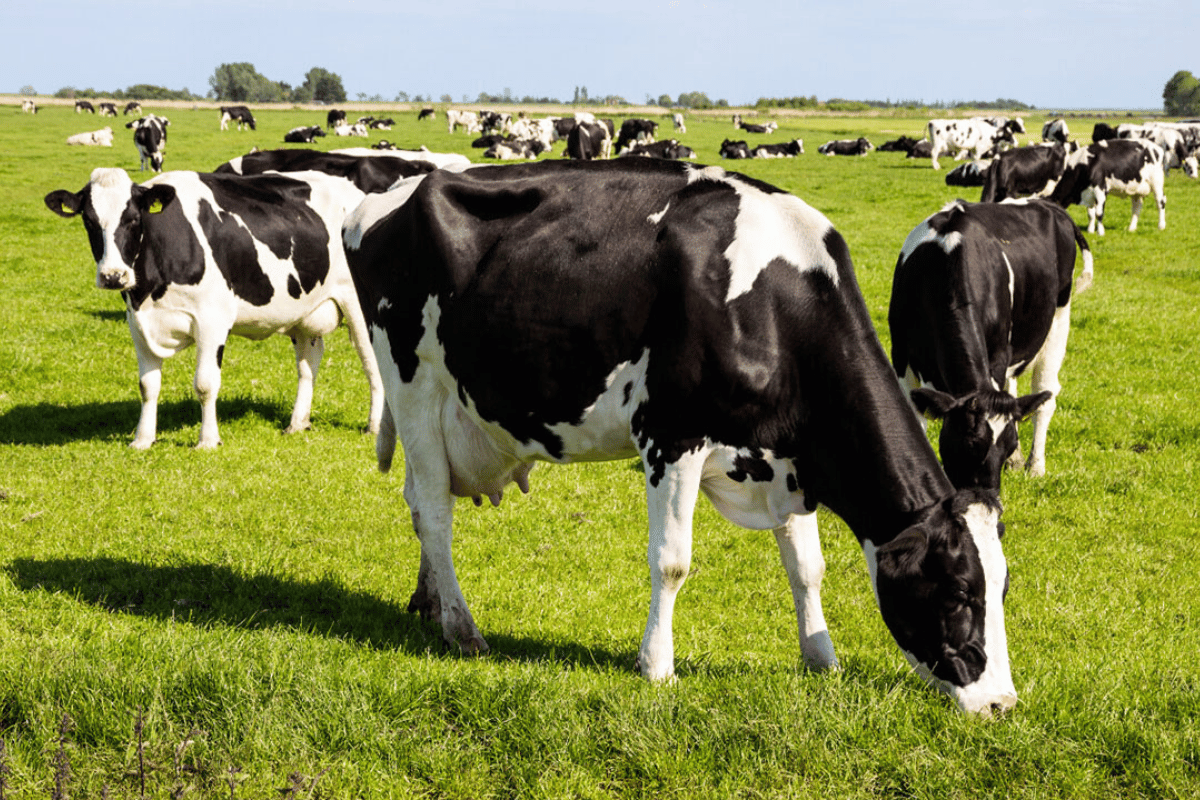
While feed additives and improved diets show great potential for methane abatement in ruminants (Gadzama, 2024), factors like dry matter intake, feed efficiency, and animal genetics also play a role in methane production (Flay, 2018). Animals with higher feed efficiency (low residual feed intake) tend to emit less methane, and certain dairy cow breeds, like Jersey heifers (Figure 3A), produce lower methane yields compared to Holstein-Friesians (Figure 3b; ICAR, 2020; Flay, 2018). 
Figure 3A. Jersey heifers. Adapted from

Figure 3B. Holstein Friesian heifers. Adapted from The Farming Forum
Units for Measuring Ruminant Methane Emissions
Methane emissions from ruminants are typically measured using the following units:
- Grams per day (g/day): This is a common unit for measuring the amount of methane produced by a single animal over a 24-hour period.
- Grams per kilogram of dry matter intake (g/kg DMI): This unit measures methane emissions relative to the amount of dry matter the animal consumes. It helps account for differences in feed intake and diet composition.
- Grams per kilogram of body weight (g/kg BW): This unit expresses methane emissions relative to the animal's body weight, which can be useful for comparing emissions across different sizes or breeds of animals.
- Grams per kilogram of milk produced (g/kg milk): For dairy animals, methane emissions are sometimes expressed relative to milk production, providing insight into the efficiency of milk production in terms of methane output.
- Grams per kilogram of meat produced (g/kg meat): In beef or meat-producing ruminants, methane emissions can be expressed relative to the amount of meat produced, reflecting the environmental impact per unit of product.
- Metric tons of CO2 equivalent (t CO2-eq): Methane is a potent greenhouse gas, and its global warming potential (GWP) is often converted to CO2 equivalents for comparison with other greenhouse gases. Methane has a GWP of 28-34 over a 100-year timeframe, meaning 1 ton of methane is equivalent to 28-34 tons of CO2 in terms of global warming impact. These units are used in research, environmental assessments, and policymaking to quantify and manage methane emissions from ruminant livestock.
How GreenFeed Works
The GreenFeed system operates by attracting animals to a feeding station using small amounts of palatable feed pellets (Figure 4). When an animal approaches the unit, it is identified via an RFID (Radio-Frequency Identification) ear tag (Martin et al., 2020). The RFID system uses electromagnetic fields to automatically identify and track tags attached to animals, ensuring accurate data collection for individual animals. As the animal consumes the pellets, its exhaled breath is captured by a fan system that draws air from around the animal's head into an intake manifold.
The captured air is then filtered and analyzed using sensors, including non-dispersive infrared (NDIR) sensors for methane and carbon dioxide, and a paramagnetic sensor for oxygen. The system calculates gas flux (emission rates) based on airflow and gas concentrations, ensuring accurate and reliable data. Data is stored and transmitted to a central server for analysis, allowing for real-time monitoring and comprehensive reporting (Zimmerman et al., 2020; CLEAR Center at UC Davis, 2020).

Figure 4. The applications of the GreenFeed system. Adapted from Martin et al. (2020).
Calculating gas produced (methane (CH₄) and carbon dioxide (CO₂))
Gas emissions (CH₄ and CO₂ in g/d) can be calculated using the formula:
CH₄_volume=CR×Σt[Δt×(CH₄_average−CH₄_background)×Qair]×FcCH₄_volume=CR×Σt[Δt×(CH₄_average−CH₄_background)×Qair]×Fc
where:
- CR = capture rate adjustment, determined using the tracer (%);
- Δt = time period over which emissions are measured (1 s);
- CH₄_average = average concentrations during the measurement period (%);
- CH₄_background = background concentrations of CH₄ (%);
- Qair = airflow rate during the measurement period (flow per unit time);
- Fc = dimensional factor (Martin et al., 2020).
Spot Sampling and Diurnal Emission Patterns
The GreenFeed system employs a spot sampling method that analyses the breath of animals for short durations, typically between 3 to 7 minutes, at varying times throughout the day and over extended periods such as days, weeks, or months (Martin et al., 2020). The primary objective is to understand diurnal methane emission patterns comprehensively, necessitating that animal visits to the GF unit are appropriately distributed across a 24-hour feeding cycle (Hristov et al., 2018). Achieving this even distribution can be challenging due to naturally occurring peaks in visit frequency at certain times, although dietary manipulations can exert some influence on visit patterns (Figure 5; Hammond et al., 2015; Hammond et al., 2016).

Figure 5. Holstein cow visiting and feeding from the GreenFeed System.
Adapted from
Research has investigated the optimal number of spot measurements required for reliable methane emission estimates using the GreenFeed system (Martin et al., 2020). Studies have suggested varying requirements depending on factors such as animal type and diet, ranging from 30 observations over 15 days for beef cattle (Arthur et al., 2017) to 50 measurements over 17 days for dairy cows to achieve high repeatability (Arbre et al., 2016), and a minimum of 20 spot samples over 7 to 14 days showing high repeatability and correlation with feed intake (Manafiazar et al., 2017). Ultimately, the accuracy of the GreenFeed system relies on the operator's diligent control over the frequency and timing of animal visits (Martin et al., 2020).
Installation and Calibration
Installation of the GreenFeed system requires careful consideration of the animal housing environment. The relatively compact unit, often mounted on a wheeled trolley for mobility during maintenance, should be placed in locations offering easy access for animals (Figure 6) while avoiding dark areas or direct light sources that might cause fright (Martin et al., 2020). If multiple GF units are used in a single yard, they should not be placed adjacent to each other without effective barriers to prevent animals from switching units, which can compromise the quality of visits (Martin et al., 2020). Environments with high dust levels should be avoided to protect the internal components, although the system is equipped with a dust filtration mechanism (Martin et al., 2020).

Figure 6. GreenFeed unit mounted on a wheeled trolley in an open paddock setting. Adapted from Condon (2024).
Prior to commencing experiments, all measurement components of the GF system must undergo thorough testing, including the fan, proximity sensor, temperature sensors, and RFID reader (Martin et al., 2020). Calibration of the gas concentration sensors for both methane and carbon dioxide is of paramount importance for accurate gas measurements (Martin et al., 2020). This can be performed automatically daily if the unit is equipped with this feature, using certified calibration gas mixtures and a zero-air standard. Manual calibration, if used, should be conducted at least weekly (Martin et al., 2020).
Animal Training and Adaptation
An approximately one-week adaptation period is recommended to allow animals to become accustomed to the GF unit (Martin et al., 2020). A standard training procedure involves initially introducing the unit without barriers and with the fan off, gradually introducing barriers to create a short race to ensure individual animal access (Martin et al., 2020). Effective programming of the GF system via the online interface is key to obtaining representative gas emission data (Martin et al., 2020).
This includes specifying the concentrations of standard calibration gases and correctly scheduling individual animal visits, defining parameters such as the number of visits per day, minimum return time, number of pellets per visit, and the interval between pellet drops (Martin et al., 2020). The goal of visit scheduling is to encourage animals to maintain their head position in the hood for at least 3 minutes per visit and to distribute these visits evenly throughout the 24-hour cycle (Martin et al., 2020).
Applications of GreenFeed
GreenFeed systems can be deployed in various settings, including tie-stall barns, free-stall environments, and pasture systems (Figure 6). Each deployment method has unique advantages and challenges:
- Tie-Stall Systems: In tie-stall applications, the GreenFeed unit is moved to each animal individually (Figure 7). The unit is positioned in front of the animal for approximately five minutes to measure emissions, followed by a 2-3 minute background air sampling period. This method allows for precise control over sampling times and yields high-quality data but is labor-intensive (Zimmerman et al., 2020).
- Free-Stall Systems: In free-stall environments, such as dairy barns or research pens, the GreenFeed unit is placed in a fixed location, allowing animals to visit voluntarily. Strategic placement of the unit is important to ensure adequate space for animals to access it comfortably. This method is less labor-intensive but requires careful design of alleyways to prevent multiple animals from entering simultaneously, which could compromise data accuracy (Zimmerman et al., 2020).
- Pasture Applications: For grazing animals, the GreenFeed unit is typically mounted on a trailer that can be moved to different locations within the pasture (Figure 8). Powering the system in pasture settings often relies on solar panels or generators. Challenges include training animals to use the system and ensuring consistent access, especially in large pastures. Environmental factors such as wind and temperature must also be managed to maintain data accuracy (Zimmerman et al., 2020).
- Unconventional Applications: GreenFeed has been adapted for integration with milking robots, allowing for simultaneous measurement of methane emissions and milk yield. Custom-designed feed intake measurement units have also been developed, enabling researchers to collect data on both feed intake and methane emissions (Zimmerman et al., 2020).

Figure 7. GreenFeed unit in a tie-stall barn. Adapted from Jonker et al. (2020).

Figure 8. GreenFeed Unit: Typically mounted on a trailer, the GreenFeed unit can be easily moved to various locations within the pasture. (Photo Credit: Ishaya Gadzama)
Design Considerations for Optimal Performance
The design of the GreenFeed system plays a critical role in ensuring accurate data collection and encouraging consistent animal usage. The key design considerations include:
- Alleyway Design: The alleyway leading to the GreenFeed unit must be narrow enough to prevent multiple animals from entering simultaneously but wide enough to ensure animal comfort. A poorly designed alleyway can discourage animal usage or lead to inaccurate measurements due to background gas contamination (Zimmerman et al., 2020).
- Pellet Bait and Delivery: The type, size, and palatability of the feed pellets are crucial for encouraging animals to use the system. Pellets with a diameter of less than 9 millimeters are recommended to prevent jamming. The frequency and quantity of pellet delivery must be balanced to ensure consistent animal visitation without significantly altering the animal’s diet (Zimmerman et al., 2020).
- Animal Training and Acclimation: Training animals to use the GreenFeed system is essential, particularly in pasture settings. Acclimating animals to the unit in a controlled environment, such as a dry lot, before deploying it in the pasture can improve usage rates. Shy or unfamiliar animals may require additional training to ensure consistent data collection (Zimmerman et al., 2020).
- Environmental Factors: Wind and temperature can affect the accuracy of gas measurements. Wind sensors are used to adjust for wind-related sample dilution, while heating systems may be necessary in cold climates to prevent the intake manifold from freezing (Zimmerman et al., 2020).
Maintenance and Data Accuracy
- Regular monitoring and maintenance of the GF system are essential for its continued functionality and data accuracy (Martin et al., 2020). Daily checks of general system parameters and animal access information via the C-Lock website are recommended (Martin et al., 2020). Monthly carbon dioxide recovery tests should be performed to verify the accuracy of the volumetric flow rate and gas concentration sensors (Martin et al., 2020). Routine tasks such as keeping the feed bin filled, checking the weight and distribution of concentrate, and regular cleaning of the system, including air filter changes, are also vital (Martin et al., 2020). When the system is not in use for extended periods, proper shutdown and storage procedures should be followed to protect it from damage and pests (Martin et al., 2020).
Factors Influencing Data Accuracy
Several factors can affect how accurately the GreenFeed system measures methane emissions:
- Animal Behavior: Since the system relies on voluntary visits, some cows may be hesitant to use it, while others might overuse it. Proper training and acclimation (usually taking 1–2 weeks) are essential to ensure consistent usage and reliable (Zimmerman et al., 2020).
- System Calibration and Maintenance: Regular upkeep is required. Auto-calibration every three days and monthly carbon dioxide recovery tests can ensure precise measurements. Cleaning air filters and checking for feed jams are also very crucial to maintain airflow and data quality (Zimmerman et al., 2020).
- Data Processing and Analysis: To get reliable results, researchers typically need 20–30 measurements per animal. Data from cows with fewer visits may be excluded, and statistical methods must account for differences between animals and environmental factors (Zimmerman et al., 2020).
Limitations and Considerations
The GreenFeed system is a tool for monitoring greenhouse gas emissions, specifically methane and carbon dioxide. However, farmers should be aware of certain challenges associated with its use. GreenFeed is unsuitable for rumen cannulated animals (Figure 9) due to potential gas loss and altered eructation patterns, which can compromise data accuracy (Martin et al., 2020).
- Animal Training: Some cows may take time to adapt to the system. Therefore, farmers/researchers need to plan a training period often from 1–2 weeks to ensure that cattle use the unit consistently (Martin et al., 2020).
- Environmental Factors: Research suggests that wind can dilute gas samples, while freezing temperatures may require heaters to keep the system running smoothly (Zimmerman et al., 2020).
- Maintenance: Regular cleaning of air filters, checking for feed jams, and sensor calibration are essential for accurate data collection (Zimmerman et al., 2020).
- Cost: The initial investment in GreenFeed technology can be high, but the long-term benefits of improved efficiency and sustainability often outweigh the costs.

Figure 9. Ruminal cannulated cows are not suitable for the GreenFeed unit. This is due to potential gas loss and altered eructation patterns. (Photo Credit: Mariano C. Parra)
Conclusion
GreenFeed System represents a significant advancement in measuring methane emissions from ruminants, offering a non-invasive, voluntary, and stress-free method for monitoring greenhouse gases. Leveraging innovative technology such as RFID tags, NDIR sensors, and real-time data collection, it provides farmers and researchers with valuable insights into individual animal emissions, enabling the evaluation of dietary and management interventions. Despite its global adoption and versatility across various farm settings, challenges such as animal behavior, environmental factors, and system maintenance must be carefully managed to ensure data accuracy.
Additionally, the initial cost and need for proper training and calibration may pose barriers to widespread implementation. As the animal agricultural sector continues to evolve, using innovative and cost-effective technologies to measure greenhouse gases like methane and carbon dioxide is essential. More practical, cost-effective, scalable, and commercially viable solution for accurately measuring greenhouse gases such as methane and carbon dioxide is crucial in balancing productivity with environmental stewardship. By combining advanced technologies with targeted nutritional strategies, farmers can take meaningful steps toward reducing methane emissions, improving efficiency, and contributing to a greener future.
References
- Akter, A., Li, X., Grey, E., Wang, S. C., & Kebreab, E. (2025). Grape pomace supplementation reduced methane emissions and improved milk quality in lactating dairy cows. Journal of Dairy Science, 108(3), 2468–2480. Grape pomace supplementation reduced methane emissions and improved milk quality in lactating dairy cows — Journal of Dairy Science
- Almeida, A. K., Hegarty, R. S., & Cowie, A. (2021). Meta-analysis quantifying the potential of dietary additives and rumen modifiers for methane mitigation in ruminant production systems. Animal Nutrition, 7(4), 1219-1230. Meta-analysis quantifying the potential of dietary additives and rumen modifiers for methane mitigation in ruminant production systems — Animal Nutrition
- Arbre, M., Rochette, Y., Guyader, J., Lascoux, C., Gómez, L. M., Eugène, M., et al. (2016). Repeatability of enteric methane determinations from cattle using either the SF6 tracer technique or the GreenFeed system. Animal Production Science, 56(3), 238-243. Repeatability of enteric methane determinations from cattle using either the SF6 tracer technique or the GreenFeed system — Animal Production Science
- Arthur, P. F., Barchia, I. M., Weber, C., Bird-Gardiner, T., Donoghue, K. A., Herd, R. M., & Hegarty, R. S. (2017). Optimizing test procedures for estimating daily methane and carbon dioxide emissions in cattle using short-term breath measures. Journal of animal science, 95(2), 645–656. Optimizing test procedures for estimating daily methane and carbon dioxide emissions in cattle using short-term breath measures1,2 — Journal of Animal Science
- CLEAR Center at UC Davis. (2020, December 15). GreenFeed Measures Methane Emissions from Cattle Burps [Video]. YouTube.
- Condon, J. (2024). Technology: In-field methane monitoring units offer exciting potential. Beef Central. Retrieved from [Insert actual URL of the Beef Central article here if available in your resources]. Technology in Field Methane Monitoring Units Offer Exciting Potential
- Dida, M. F., Shirvan, M. B., Kawaguchi, T., Garcia, S. C., & Gonzalez, L. A. (2025). Potential applications of a low-cost gas sensor to monitor enteric methane emission from ruminant animals. Smart Agricultural Technology, 10, 100706.Potential applications of a low-cost gas sensor to monitor enteric methane emission from ruminant animals — Smart Agricultural Technology
- Flay, H. E. (2018). Methane emissions from dairy heifers as affected by residual feed intake and breed (Master's thesis, Massey University, Manawatū, New Zealand).
- Gadzama, I. U. (2025). Novel approaches to feed additive delivery for enteric methane reduction in cattle. Wikifarmer. https://www.researchgate.net/publication/388281236_Novel_Approaches_to_Feed_Additive_Delivery_for_Enteric_Methane_Reduction_in_Cattle
- Gadzama, I. U. (2024). Asparagopsis Seaweed as a Feed Supplement for Dairy Cows. Nigerian Journal of Animal Science and Technology (NJAST), 7(4), 63-84. Asparagopsis Seaweed as a Feed Supplement for Dairy Cows — Nigerian Journal of Animal Science and Technology
- Gadzama, I. U., Meale, S. J., & Chaves, A. V. (2023). Effect of microalgae on in vitro rumen fermentation, gas and methane production. In Recent Advances in Animal Nutrition - Australia (RAAN-A) Conference, Gold Coast, Australia. https://www.researchgate.net/publication/383180460_Effect_of_microalgae_on_in_vitro_rumen_fermentation_gas_and_methane_production
- Hammond, K. J., Jones, A. K., Humphries, D. J., Crompton, L. A., & Reynolds, C. K. (2016). Effects of diet forage source and neutral detergent fiber content on milk production of dairy cattle and methane emissions determined using GreenFeed and respiration chamber techniques. Journal of dairy science, 99(10), 7904–7917. Effects of diet forage source and neutral detergent fiber content on milk production of dairy cattle and methane emissions determined using GreenFeed and respiration chamber techniques — Journal of Dairy Science
- Hammond, K. J., Humphries, D. J., Crompton, L. A., Green, C., & Reynolds, C. K. (2015). Methane emissions from cattle: Estimates from short-term measurements using a GreenFeed system compared with measurements obtained using respiration chambers or sulphur hexafluoride tracer. Animal Feed Science and Technology, 203, 41-52.Methane emissions from cattle: Estimates from short-term measurements using a GreenFeed system compared with measurements obtained using respiration chambers or sulphur hexafluoride tracer — Animal Feed Science and Technology
- Hristov, A. N., Kebreab, E., Niu, M., Oh, J., Bannink, A., Bayat, A. R., Boland, T. M., Brito, A. F., Casper, D. P., Crompton, L. A., Dijkstra, J., Eugène, M., Garnsworthy, P. C., Haque, N., Hellwing, A. L. F., Huhtanen, P., Kreuzer, M., Kuhla, B., Lund, P., Madsen, J., … Yu, Z. (2018). Symposium review: Uncertainties in enteric methane inventories, measurement techniques, and prediction models. Journal of dairy science, 101(7), 6655–6674. Symposium review: Uncertainties in enteric methane inventories, measurement techniques, and prediction models — Journal of Dairy Science
- ICAR. (2020). Section 20 - Recording Dairy Cattle Methane Emission for Genetic Evaluation. Version 1.02. https://icar.org/wp-content/uploads/20-Recording-Dairy-Cattle-Methane-Emission-for-Genetic-Evaluation.pdf
- Jonker, A., Difford, G. F., Garnsworthy, P. C., Negussie, E., Pszczola, M., Roman-Ponce, S. I., & Waghorn, G. C. (2020). Guidelines for estimating methane emissions from individual ruminants using: GreenFeed, ‘sniffers’, hand-held laser detector and portable accumulation chambers. In Ministry for Primary Industries (pp. 27-40). Guidelines for Estimating Methane Emissions from Individual Ruminants Using Green Feed Sniffers
- Manafiazar, G., Zimmerman, S., & Basarab, J. A. (2017). Repeatability and variability of short-term spot measurement of methane and carbon dioxide emissions from beef cattle using GreenFeed emissions monitoring system. Canadian Journal of Animal Science, 97(1), 118-126. Repeatability and variability of short-term spot measurement of methane and carbon dioxide emissions from beef cattle using GreenFeed Emissions Monitoring System — Canadian Journal of Animal Science
- Martin, C., Rochette, Y., Humphries, D., & Renand, G. (2020). Greenfeed system. In S. D. Mesgaran, R. Baumont, L. Munksgaard, D. Humphries, E. Kennedy, J. Dijkstra, R. Dewhurst, H. Ferguson, M. Terré, & B. Kuhla (Eds.), Methods in cattle physiology and behaviour research – Recommendations from the SmartCow consortium (pp. 1-10). PUBLISSO. Greenfeed systems — Methods in cattle physiology and behaviour research – Recommendations from the SmartCow consortium
- Mousa, S. A. A. (2020). Establishment of procedures for integrative mitigation of greenhouse gases relating to ruminant production: effects of feeding fruits by-products. Doctoral Dissertation (Shinshu University).
- O’Mara, F. (2011). Greenhouse Gas Production from Dairying: Reducing Methane Production. Environmental Science and Engineering, 10(2), 65-70.
- Panthee, A. (2017). Methane emission and plasma nutrients metabolism in sheep fed garlic diets (Doctoral dissertation, University of the Ryukyus).
- Sellers, T. (2024). Report released from the state of the science summit: Reducing methane from animal agriculture. CLEAR Center. Report Released State Science Summit Reducing Methane Animal Agriculture
- Zimmerman, S., Cunningham, T., & Billers, M. (2020). GreenFeed Webinar Part 2 - Experimental Design and Applications [YouTube video transcript]. C-Lock Inc.