Written by Chidiebere Nnabuihe Azubuike, Opeyemi Faruk Olatinwo, Samuel Usen Essien, and Fahad Bin Islam
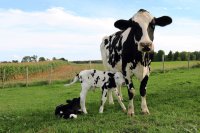
The early separation of dairy cows and their calves, usually within 24 hours of birth, has long been standard practice. It is justified on grounds of maximising saleable milk, reducing disease transmission, and simplifying farm management (Neave et al., 2022; Muskens et al., 2003). The practice is increasingly facing ethical scrutiny from consumers, farmers, and researchers who argue that it fundamentally restricts maternal care, natural behaviour, and calf social development (Ventura et al., 2013; Hötzel et al., 2017; Vaarst & Alrøe, 2012). In response, cow-calf contact (CCC) systems, where calves remain with their dam or a foster cow for an extended period after birth, have attracted increasing scientific and commercial attention as a welfare-oriented alternative to conventional rearing (Sirovnik et al., 2020; Meagher et al., 2019; Constancis et al., 2022).
CCC encompasses a range of approaches, from full-time unrestricted bonding to part-time or foster-cow arrangements that offer management flexibility while preserving elements of natural behaviour (Johnsen et al., 2016; Hautzinger et al., 2025). Farmer motivations for adoption are equally diverse, ranging from personal ethical commitments and the satisfaction of seeing cows and calves together (Vaarst et al., 2020; Wagenaar & Langhout, 2006) to welfare-based marketing strategies targeting ethically conscious consumers (Sirovica et al., 2022). Despite these motivations, CCC adoption remains limited and irregular across regions, facing challenges such as reduced machine-harvested milk yields (Johnsen et al., 2016; Wenker et al., 2022b), altered milk let-down dynamics (Tančin & Bruckmaier, 2001), context-specific health risks (Mee, 2008; Wenker et al., 2022b), and the significant challenge of managing weaning and separation distress in bonded pairs (Haley et al., 2005; Eriksson et al., 2022).
This article focuses on how farmers run CCC systems on the ground and how they manage the most demanding moment in the cycle, weaning and separation. It examines the diversity of farmer motivations and system designs, and evaluates strategies for low-stress weaning. A companion article, Stakeholder perspectives and adoption drivers of cow-calf contact systems, reviews the production, health, and welfare evidence and the broader stakeholder dynamics shaping CCC's future.
Farmer motivations and management diversity in cow-calf contact systems
Motivations and diversity of CCC systems
Dairy farmers who adopt cow-calf contact systems do so for diverse reasons that strongly influence how these systems are designed and managed. A primary motivation is the commitment to animal welfare and the desire to offer cows and calves more natural living conditions (Hautzinger et al., 2025). For some farmers, CCC also functions as a marketing strategy to strengthen their public image and appeal to ethically conscious consumers (Sirovica et al., 2022). Other studies echo that CCC farmers were motivated by the joy and satisfaction of seeing cows and calves together (Vaarst et al., 2020; Berge & Langseth, 2022; Wagenaar & Langhout, 2006), with Johanssen et al. (2023) reporting that all interviewed farmers felt CCC improved their own well-being.
CCC practices differ widely across farms depending on the goals, resources, housing, and local challenges. Hautzinger et al. (2025) documented examples ranging from seasonal CCC adoption to foster-cow rearing combined with bucket feeding, while Johanssen et al. (2023) confirmed that many farmers had to tailor their housing or grazing arrangements due to unsuitable facilities. Pasture was seen as both a promoter of natural calf behaviour, such as hiding (Vaarst et al., 2019), and a challenge for management (Lehmann et al., 2021). This diversity highlights the absence of universal CCC guidelines, making farm-specific adaptation the prevailing approach.
Forms of CCC and management challenges
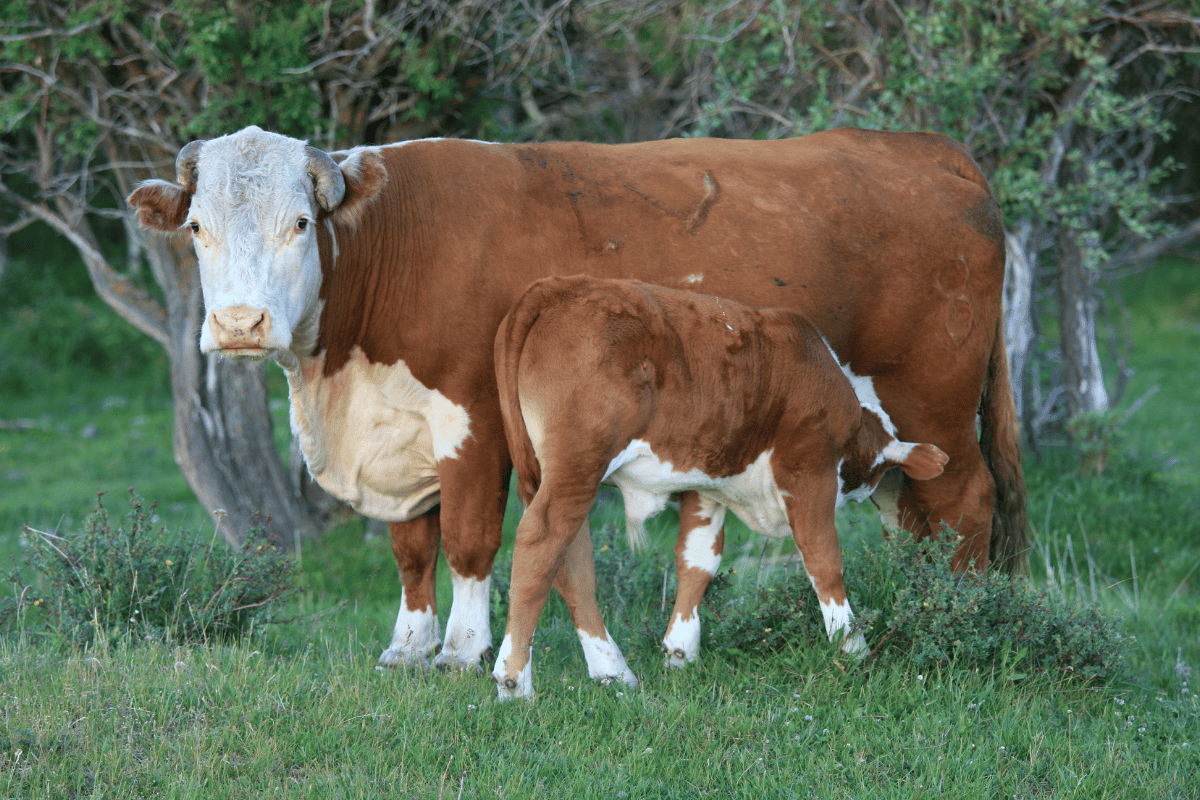
CCC generally ranges from full-contact to restricted-contact approaches. Full-contact systems keep cows and calves together up to 24 hours per day until weaning, promoting strong bonding and higher calf weight gains (Johnsen et al., 2016), but they often lead to intense distress vocalisations at separation (Johnsen et al., 2015) and higher risks of respiratory disease and diarrhoea (Wenker et al., 2022b). Restricted-contact systems allow brief daily interactions around milking, typically 2 × 15 to 2 × 60 minutes while keeping pairs apart otherwise (De Passillé et al., 2008; Fröberg et al., 2007). This intermittent suckling can encourage gradual calf independence (Newberry & Swanson, 2008).
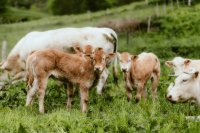
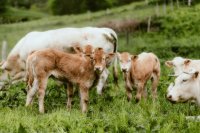
Another form, the foster-cow system, houses one cow with two to four calves, often not her own, enabling natural multiple suckling (Sirovnik et al., 2020). Foster cows are chosen for sound maternal behaviour, lower milking performance, and resilience (Hautzinger et al., 2025), though challenges include calf rejection or insufficient milk. Farmers also vary in managing colostrum, separation, and weaning.
Neave et al. (2022) found CCC farmers less concerned about colostrum intake than early-separation farmers, while Berge & Langseth (2022) noted that over half of those who discontinued CCC did so because of calf stress after delayed separation. Perceptions of pasture-based calving further differed, with some farmers seeing it as most natural and others reluctant to expose small calves to pasture (Johanssen et al., 2023; Vaarst et al., 2019; Lehmann et al., 2021). These findings show that while CCC fosters natural behaviours and welfare gains, it also introduces management dilemmas that shape farmer decisions.
Broader regional practices, barriers, and farmer well-being
Outside Europe, adoption gaps in reproductive and calf-management practices illustrate further complexity. In Mexico, year-round breeding (93%) and natural service by bulls (97.4%) dominate, but only 41% of producers conduct breeding-soundness evaluations and just 20% test sires for reproductive diseases (Lassala et al., 2020). Pregnancy diagnosis is underused (31%), vaccination rates are low (16 to 17.5%), and record-keeping is often limited to basic calf or reproduction data (González-Padilla, 2019). These constraints, compounded by limited credit access and under-utilised extension, restrict both welfare and productivity.
Similar patterns appear in Canada, where abrupt weaning predominates (70%) and pain mitigation is rarely used outside cesarean sections, with resistance to changing traditional practices common (Moggy et al., 2017; Magana et al., 2023).
Research also reveals a strong link between farmers' well-being and animal welfare. Johanssen et al. (2023) reported that CCC farmers used overwhelmingly positive language when describing cows and calves together, while Neave et al. (2022) observed that early-separation farmers worried CCC might negatively affect staff mental health. Across studies, CCC consistently emerged as emotionally rewarding, enhancing both farmer satisfaction and perceived welfare (Vaarst et al., 2020; Berge & Langseth, 2022; Wagenaar & Langhout, 2006). CCC adoption ultimately reflects a balance of welfare-minded motivations, farm-specific adaptations, and systemic barriers. Aligning these through evidence-based guidelines, targeted extension, supportive policy, and financial tools will be vital to align farmer well-being with sustainable animal productivity.
Weaning challenges and low-stress separation strategies
Calves that are not adequately prepared for weaning often show poor growth, reduced feed efficiency, and a greater risk of disease (Roth et al., 2008, 2009b). Proper rumen development is central to successful weaning, as a functional microbiome and the production of volatile fatty acids from fermentable carbohydrates, particularly butyrate and propionate, stimulate rumen epithelium growth. Starter intake is therefore critical, and because milk suppresses solid-feed intake, high milk allowances can delay rumen maturation (Hodgson, 1971; Lanier et al., 2021).
In conventional systems, routine separation within 24 hours of birth allows more saleable milk (Neave et al., 2022), may reduce separation stress (Flower & Weary, 2001), and can lower disease transmission risks (Muskens et al., 2003). Growing consumer and farmer interest in natural rearing has increased the adoption of cow-calf contact systems, defined as systems allowing calves direct contact with their dam or foster cows (Sirovnik et al., 2020).
One major challenge in CCC is weaning distress, reported by 87% of European CCC farmers (Eriksson et al., 2022). For calves, weaning involves loss of milk, separation from the dam, and often a change of group and environment (Weary et al., 2008; Lynch et al., 2019). These combined stressors can lead to reduced growth (Haley et al., 2005; Sweeney et al., 2010), increased vocalisation, restlessness, heightened seeking behaviour, reduced play, altered lying patterns, and physiological stress responses including elevated cortisol and neutrophilia (Haley et al., 2005; Loberg et al., 2008; Enríquez et al., 2010; O'Loughlin et al., 2011, 2014). Calves also show pessimistic judgement bias after separation, reflecting negative affective states (Daros et al., 2014). On CCC farms with foster cows, abrupt weaning is common and can trigger intense vocalisations and post-weaning growth setbacks (Krohn, 2001).
To reduce distress, two-step separation using nose-flap devices aims to separate milk loss from social separation. This method lowers behavioural and physiological stress at final separation (Haley et al., 2005; Loberg et al., 2008; Enríquez et al., 2010) and is practical because it requires no facility changes (Barth et al., 2022). However, nose flaps can reduce weight gains (Boland et al., 2008; Wenker et al., 2022b) and may cause nasal lesions or even severe complications (Lambertz et al., 2015; Valente et al., 2022; Fernandes et al., 2000), raising welfare concerns.
A promising alternative is gradual weaning and separation, in which daily contact or milk availability is progressively reduced before final separation. This approach mimics natural weaning patterns, where suckling declines gradually, and may help calves adapt behaviourally and nutritionally (Weary et al., 2008). Gradual weaning is already effective in artificially reared calves, reducing vocalisations, improving starter intake, increasing resting time, and preventing post-weaning growth slumps compared with abrupt weaning (Jasper et al., 2008; Khan et al., 2007; Sweeney et al., 2010; Scoley et al., 2019; Bittar et al., 2020; Omidi-Mirzaei et al., 2015). Although gradual weaning remains largely untested in CCC systems, it offers potential welfare and performance advantages that justify targeted on-farm research.
Putting it together
The evidence on CCC management points toward one clear conclusion. The way weaning and separation are handled is the single most important determinant of whether a CCC system succeeds for cows, calves, and farmers. Abrupt simultaneous weaning and separation reliably produce the worst outcomes (Newberry & Swanson, 2008; Johnsen et al., 2021). Two-step separation and gradual weaning offer promising alternatives that require minimal infrastructure investment, though direct evidence within CCC systems remains limited and warrants targeted on-farm research (Haley et al., 2005; Jasper et al., 2008).
Farmer motivations for adopting CCC are intrinsically linked to personal values, satisfaction, and well-being (Johanssen et al., 2023; Vaarst et al., 2020), which means purely economic incentive frameworks will not drive change on their own. Regional disparities in management capacity, illustrated by the limited use of breeding technologies, vaccination, and record-keeping in some contexts (Lassala et al., 2020; Moggy et al., 2017), further highlight that CCC cannot be introduced in isolation from broader systemic improvements in extension services and infrastructure.
CCC is best understood as a flexible, welfare-oriented pathway whose benefits are unlocked through the quality of transition management, stockmanship, and institutional support surrounding it. The companion article on production, health, welfare outcomes, and stakeholder dynamics looks at the next layer of this picture, including how consumers and the wider dairy supply chain are shaping the trajectory of CCC.
Acknowledgement
The authors sincerely appreciate Wikifarmer for its impactful contributions to the global research community and for supporting young researchers. We further extend our heartfelt thanks to Dr. Ishaya Usman Gadzama for his mentorship and guidance in developing our research writing skills. His training and academic experience, gained during his Master of Philosophy and Doctoral studies at the University of Queensland and the University of Adelaide, have been invaluable to our growth as researchers.
Conflict of interest
The authors declare that they have no conflict of interests.
Authors' contribution
C.N.A. contributed to conceptualisation, review writing, editing, project management, coordination, and proofreading. O.F.O. contributed to conceptualisation, original draft preparation, review writing, and proofreading. S.U.E. and F.B.I. contributed to review writing, editing, and proofreading. All authors have read and approved the final manuscript.
References
- Barth, K., Bock, A., Breden, A. N., Dwinger, H., Dwinger, S., Gleissner, F., Haeussermann, A., Kubera, J., Kubera, E., Kuckelkorn, J., Lotterhos, A., Miesorski, M., Möller, H., Otterbach, J., Peschel, U., Petersen, J., Tams-Detlefsen, U., Teschemacher, M., Teschemacher, F., & Volling, O. (2022). Cow-bonded calf rearing in dairy farming, a practical guide.
- Beaver, A., Meagher, R. K., von Keyserlingk, M. A. G., & Weary, D. M. (2019). Invited review, a systematic review of the effects of early separation on dairy cow and calf health. Journal of Dairy Science, 102, 5784–5810.
- Berge, C., & Langseth, E. (2022). Animal welfare and economics in the dairy industry, is cow-calf contact the future of Norwegian milk production? (Master's thesis, Norges Handelshøyskole).
- Bittar, C. M. M., Gallo, M. P., Silva, J. T., de Paula, M. R., Poczynek, M., & Mourão, G. B. (2020). Gradual weaning does not improve performance for calves with low starter intake at the beginning of the weaning process. Journal of Dairy Science.
- Boland, H. T., Scaglia, G., Swecker, W. S., Jr., & Burke, N. C. (2008). Effects of alternate weaning methods on behavior, blood metabolites, and performance of beef calves. The Professional Animal Scientist, 24(6), 539–551.
- Constancis, C., Hellec, F., Bareille, N., & Vaarst, M. (2022). Introduction and development of foster cow systems on organic dairy farms in France. Biological Agriculture & Horticulture, 39(2), 73–90.
- Daros, R. R., Costa, J. H., von Keyserlingk, M. A. G., Hötzel, M. J., & Weary, D. M. (2014). Separation from the dam causes negative judgement bias in dairy calves. PLOS ONE, 9(5), e98429.
- De Passillé, A. M., Marnet, P. G., Lapierre, H., & Rushen, J. (2008). Effects of twice-daily nursing on milk ejection and milk yield during nursing and milking in dairy cows. Journal of Dairy Science, 91, 1416–1422.
- Enríquez, D. H., Ungerfeld, R., Quintans, G., Guidoni, A. L., & Hötzel, M. J. (2010). The effects of alternative weaning methods on behaviour in beef calves. Livestock Science, 128(1–3), 20–27.
- Erjavec, K., & Klopčič, M. (2022). Views of consumers, farmers and stakeholders on alternative dairy cattle housing systems. Animals, 12(10), Article 1231.
- Eriksson, H., Fall, N., Ivemeyer, S., Knierim, U., Simantke, C., Fuerst-Waltl, B., Winckler, C., Weissensteiner, R., Pomiès, D., Martin, B., Michaud, A., Priolo, A., Caccamo, M., Sakowski, T., Stachelek, M., Spengler Neff, A., Bieber, A., Schneider, C., & Alvåsen, K. (2022). Strategies for keeping dairy cows and calves together, a cross-sectional survey study. Animal, 16, 100624.
- Fernandes, C. G., Schild, A. L., Riet-Correa, F., Baialardi, C. E. G., & Stigger, A. L. (2000). Pituitary abscess in young calves associated with the use of a controlled suckling device. Journal of Veterinary Diagnostic Investigation, 12(1), 70–71.
- Flower, F. C., & Weary, D. M. (2001). Effects of early separation on the dairy cow and calf, II. Separation at 1 day and 2 weeks after birth. Applied Animal Behaviour Science, 70(4), 275–284.
- Fröberg, S., Aspegren-Güldorff, A., Olsson, I., Marin, B., Berg, C., Hernández, C., & Svennersten-Sjaunja, K. (2007). Effect of restricted suckling on milk yield, milk composition and udder health in cows, and behaviour and weight gain in calves in dual-purpose cattle in the tropics. Tropical Animal Health and Production, 39(1), 71–81.
- Haley, D. B., Bailey, D. W., & Stookey, J. M. (2005). The effects of weaning beef calves in two stages on their behavior and growth rate. Journal of Animal Science, 83(9), 2205–2214.
- Hautzinger, T., Rauch, E., Kantwerk, J., Weindl, P., Busch, G., & Zeiler, E. (2025). Farmers' experiences of implementing cow-calf-contact systems on organic dairy farms. Animal, 19(7), 101568.
- Hodgson, J. (1971). The development of solid food intake in calves. 5. The relationship between liquid and solid food intake. Animal Science, 13(4), 593–597.
- Hötzel, M. J., Cardoso, C. S., Roslindo, A., & von Keyserlingk, M. A. G. (2017). Citizens' views on the practices of zero-grazing and cow-calf separation in the dairy industry, does providing information increase acceptability? Journal of Dairy Science, 100, 4150–4160.
- Jasper, J., Budzynska, M., & Weary, D. M. (2008). Weaning distress in dairy calves, acute behavioural responses by limit-fed calves. Applied Animal Behaviour Science, 110(1–2), 136–143.
- Johanssen, J. R. E., Kvam, G.-T., Logstein, B., & Vaarst, M. (2023). Interrelationships between cows, calves, and humans in cow-calf contact systems, an interview study among Norwegian dairy farmers. Journal of Dairy Science, 106(7), 6325–6341.
- Johnsen, J. F., Johanssen, J. R. E., Aaby, A. V., Kischel, S. G., Ruud, L. E., Soki-Makilutila, A., Kristiansen, T. B., Wibe, A. G., Bøe, K. E., & Ferneborg, S. (2021). Investigating cow-calf contact in cow-driven systems, behaviour of the dairy cow and calf. Journal of Dairy Research, 88(1), 52–55.
- Johnsen, J., Zipp, K., Kälber, T., de Passillé, A. M., Knierim, U., Barth, K., & Mejdell, C. M. (2016). Is rearing calves with the dam a feasible option for dairy farms? Current and future research. Applied Animal Behaviour Science, 181, 1–11.
- Johnsen, J. F., Ellingsen, K., Grøndahl, A. M., Bøe, K. E., Lidfors, L., & Mejdell, C. M. (2015). The effect of physical contact between dairy cows and calves during separation on their post-separation behavioural response. Applied Animal Behaviour Science, 166, 11–19.
- Khan, M. A., Lee, H. J., Lee, W. S., Kim, H. S., Kim, S. B., Ki, K. S., et al. (2007). Pre- and postweaning performance of Holstein female calves fed milk through step-down and conventional methods. Journal of Dairy Science, 90(2), 876–885.
- Krohn, C. C. (2001). Effects of different suckling systems on milk production, udder health, reproduction, calf growth and some behavioural aspects in high-producing dairy cows, a review. Applied Animal Behaviour Science, 72(3), 271–280.
- Lambertz, C., Bowen, P. R., Erhardt, G., & Gauly, M. (2015). Effects of weaning beef cattle in two stages or by abrupt separation on nasal abrasions, behaviour, and weight gain. Animal Production Science, 55(6), 786–792.
- Lanier, J. S., McKeith, F. K., Janovick, N. A., Molano, R. A., Van Amburgh, M. E., & Drackley, J. K. (2021). Influence of starter crude protein content on growth and body composition of dairy calves in an enhanced early nutrition program. Journal of Dairy Science, 104, 3082–3097.
- Lassala, A., Hernández-Cerón, J., Pedernera, M., González-Padilla, E., & Gutiérrez, C. G. (2020). Cow-calf management practices in Mexico, reproduction and breeding. Veterinaria México OA, 7(1).
- Lehmann, J. O., Mogensen, L., Bertelsen, M., & Vaarst, M. (2021). Dam-rearing of dairy calves, lessons from practice for future research and development. Aarhus University.
- Loberg, J. M., Hernandez, C. E., Thierfelder, T., Jensen, M. B., Berg, C., & Lidfors, L. (2008). Weaning and separation in two steps, a way to decrease stress in dairy calves suckled by foster cows. Applied Animal Behaviour Science, 111(3–4), 222–234.
- Lynch, E., McGee, M., & Earley, B. (2019). Weaning management of beef calves with implications for animal health and welfare. Journal of Applied Animal Research.
- Magana, J., Gavojdian, D., Menahem, Y., Lazebnik, T., Zamansky, A., & Adams-Progar, A. (2023). Machine learning approaches to predict and detect early-onset of digital dermatitis in dairy cows using sensor data. Frontiers in Veterinary Science, 10, Article 1295430.
- McPherson, S. E., Bokkers, E. A. M., Sinnott, A. M., McFadden, M. C., Webb, L. E., & Kennedy, E. (2025). Effect of weaning and cow-calf contact on the physiological and clinical health, performance, and behaviour of dairy cows and their calves. Animal, 19(6), 101541.
- Mee, J. F. (2008). Newborn dairy calf management. Veterinary Clinics of North America, Food Animal Practice, 24(1), 1–17.
- Meagher, R. K., Beaver, A., Weary, D. M., & von Keyserlingk, M. A. G. (2019). Invited review, a systematic review of the effects of prolonged cow-calf contact on behavior, welfare, and productivity. Journal of Dairy Science, 102, 5765–5783.
- Moggy, M. A., Pajor, E. A., Thurston, W. E., Parker, S., Greter, A. M., Schwartzkopf-Genswein, K. S., Campbell, J. R., & Windeyer, M. C. (2017). Management practices associated with pain in cattle on western Canadian cow-calf operations, a mixed methods study. Journal of Animal Science, 95(2), 958–969.
- Muskens, J., Elbers, A. R. W., Van Weering, H. J., & Noordhuizen, J. P. T. M. (2003). Herd management practices associated with paratuberculosis seroprevalence in Dutch dairy herds. Journal of Veterinary Medicine, Series B, 50(8), 372–377.
- Neave, H. W., Sumner, C. L., Henwood, R. J. T., Zobel, G., Saunders, K., Thoday, H., & Webster, J. R. (2022). Dairy farmers' perspectives on providing cow-calf contact in the pasture-based systems of New Zealand. Journal of Dairy Science, 105(1), 453–467.
- Newberry, R. C., & Swanson, J. C. (2008). Implications of breaking mother-young social bonds. Applied Animal Behaviour Science, 110(1–2), 3–23.
- Nicolao, A., Veissier, I., Bouchon, M., Sturaro, E., Martin, B., & Pomiès, D. (2022). Animal performance and stress at weaning when dairy cows suckle their calves for short versus long daily durations. Animal, 16(6), 100536.
- O'Loughlin, A., McGee, M., Doyle, S., & Earley, B. (2014). Biomarker responses to weaning stress in beef calves. Research in Veterinary Science, 97(2), 458–463.
- O'Loughlin, A., McGee, M., Waters, S. M., Doyle, S., & Earley, B. (2011). Examination of the bovine leukocyte environment using immunogenetic biomarkers to assess immunocompetence following exposure to weaning stress. BMC Veterinary Research, 7(1), 45.
- Omidi-Mirzaei, H., Khorvash, M., Ghorbani, G. R., Moshiri, B., Mirzaei, M., Pezeshki, A., & Ghaffari, M. H. (2015). Effects of the step-up/step-down and step-down milk feeding procedures on the performance, structural growth, and blood metabolites of Holstein dairy calves. Journal of Dairy Science, 98(11), 7975–7981.
- Roth, B. A., Barth, K., Gygax, L., & Hillmann, E. (2009b). Influence of artificial vs. mother-bonded rearing on sucking behaviour, health and weight gain in calves. Applied Animal Behaviour Science, 119, 143–150.
- Roth, B. A., Hillmann, E., Stauffacher, M., & Keil, N. M. (2008). Improved weaning reduces cross-sucking and may improve weight gain in dairy calves. Applied Animal Behaviour Science, 111(3–4), 251–261.
- Scoley, G., Gordon, A., & Morrison, S. (2019). Performance and behavioural responses of group-housed dairy calves to two different weaning methods. Animals, 9(11), 895.
- Sinnott, A. M., Bokkers, E. A. M., Murphy, J. P., McPherson, S., Sugrue, K., & Kennedy, E. (2024). The effects of full-time, part-time and no cow-calf contact on calf health, behaviour, growth and labour in pasture-based dairy systems. Livestock Science, 284, 105492.
- Sirovica, L. V., Ritter, C., Hendricks, J., Weary, D. M., Gulati, S., & von Keyserlingk, M. A. G. (2022). Public attitude toward and perceptions of dairy cattle welfare in cow-calf management systems differing in type of social and maternal contact. Journal of Dairy Science, 105, 3248–3268.
- Sirovnik, J., Barth, K., De Oliveira, D., Ferneborg, S., Haskell, M. J., Hillmann, E., Jensen, M. B., Mejdell, C. M., Napolitano, F., Vaarst, M., Verwer, C. M., Waiblinger, S., Zipp, K. A., & Johnsen, J. F. (2020). Methodological terminology and definitions for research and discussion of cow-calf contact systems. Journal of Dairy Research, 87(S1), 108–114.
- Sweeney, B. C., Rushen, J., Weary, D. M., & de Passillé, A. M. (2010). Duration of weaning, starter intake, and weight gain of dairy calves fed large amounts of milk. Journal of Dairy Science, 93(1), 148–152.
- Tančin, V., & Bruckmaier, R. M. (2001). Factors affecting milk ejection and removal during milking and suckling of dairy cows. Veterinary Medicine, Czech, 46(4), 108–118.
- Vaarst, M., Hellec, F., Verwer, C., Johanssen, J. R. E., & Sørheim, K. (2020). Cow-calf contact in dairy herds viewed from the perspectives of calves, cows, humans, and the farming system, farmers' perceptions and experiences related to dam-rearing systems. Journal of Sustainable Organic Agricultural Systems, 70, 49–57.
- Vaarst, M., Sørheim, K., Johanssen, J. E. R., & Verwer, N. C. (2019). Calves with their dams in dairy cow systems.
- Vaarst, M., & Alrøe, H. F. (2012). Concepts of animal health and welfare in organic livestock systems. Journal of Agricultural and Environmental Ethics, 25(3), 333–347.
- Valente, T. S., Ruiz, L. R., Macitelli, F., & Paranhos da Costa, M. J. (2022). Nose-flap devices used for two-stage weaning produce wounds in the nostrils of beef calves, case report. Animals, 12(11), 1452.
- Ventura, B. A., von Keyserlingk, M. A. G., Schuppli, C. A., & Weary, D. M. (2013). Views on contentious practices in dairy farming, the case of early cow-calf separation. Journal of Dairy Science, 96(10), 6105–6116.
- Wagenaar, J. P. T. M., & Langhout, J. (2007). Practical implications of increasing "natural living" through suckling systems in organic dairy calf rearing. NJAS, Wageningen Journal of Life Sciences, 54(4), 375–386.
- Wagenaar, J.-P., & Langhout, J. (2006). Rearing calves with cows, nature works! LBI Publications, no. LV60E. Louis Bolk Institute.
- Weary, D. M., Jasper, J., & Hötzel, M. J. (2008). Understanding weaning distress. Applied Animal Behaviour Science, 110(1–2), 24–41.
- Wenker, M. L., Verwer, C. M., Bokkers, E. A. M., Te Beest, D. E., Gort, G., de Oliveira, D., Koets, A., Bruckmaier, R. M., Gross, J. J., & van Reenen, C. G. (2022b). Effect of type of cow-calf contact on health, blood parameters, and performance of dairy cows and calves. Frontiers in Veterinary Science, 9, 855086.