Written by Chidiebere Nnabuihe Azubuike, Opeyemi Faruk Olatinwo, Samuel Usen Essien, and Fahad Bin Islam
The dairy industry faces growing pressure to reconcile productive efficiency with animal welfare, particularly regarding the management of the cow-calf relationship. Conventional practice involves separating calves from their dams within hours of birth, a procedure increasingly scrutinised by consumers, researchers, and ethicists alike (Ventura et al., 2013; Hötzel et al., 2017; Busch et al., 2017). This early separation restricts fundamental maternal behaviours such as licking, grooming, and bonding (von Keyserlingk & Weary, 2007), and contrasts sharply with the natural weaning age of approximately eight to eleven months (Reinhardt & Reinhardt, 1981).
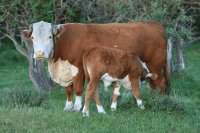
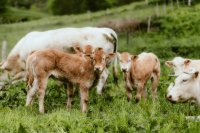
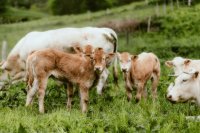
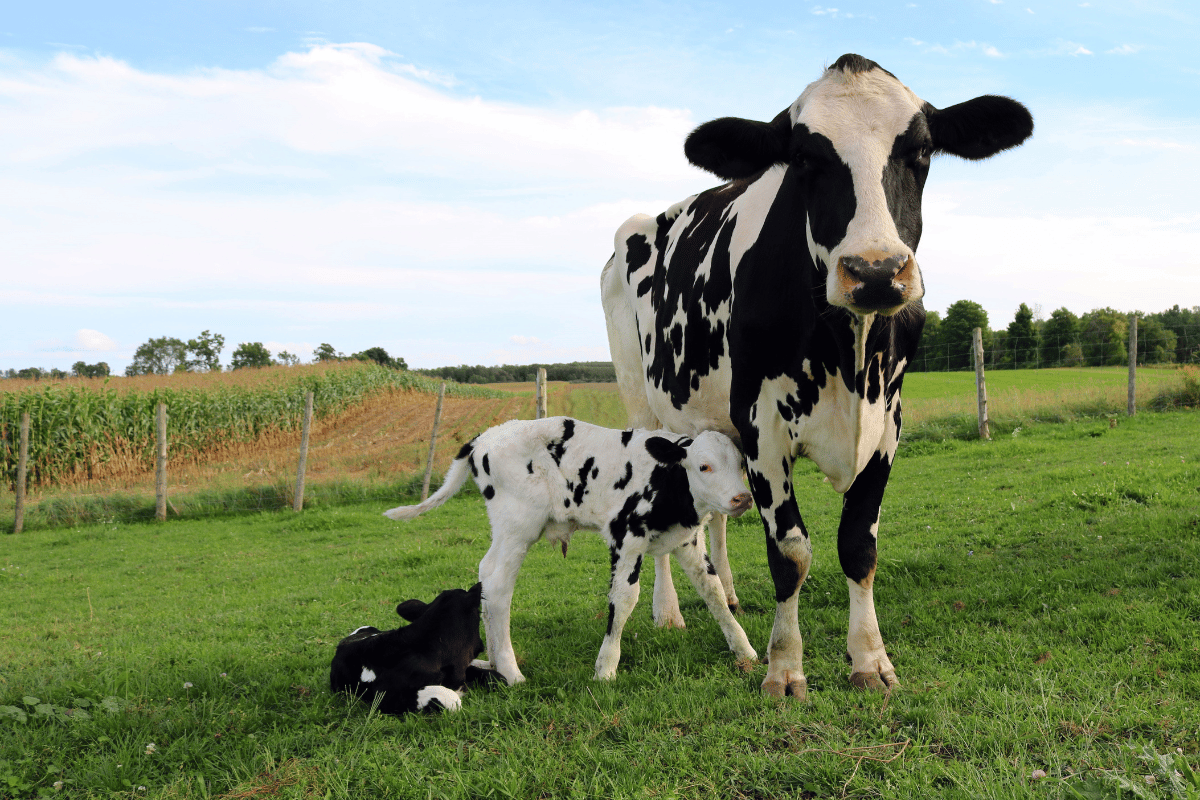
Cow-calf contact (CCC) systems, in which dams and calves maintain physical and social contact for extended periods, have gained renewed scientific and commercial interest as a welfare-oriented alternative (Sirovnik et al., 2020; McPherson et al., 2025). Adoption is far from straightforward. Reduced machine-harvested milk yield (Johnsen et al., 2016; Wenker et al., 2022b), challenges in managing weaning and separation (Newberry & Swanson, 2008; Johnsen et al., 2021), and context-specific health risks (Wenker et al., 2022b; Sinnott et al., 2024) represent real barriers that farmers must navigate.
This article reviews the evidence on production, health, and welfare outcomes in CCC systems, alongside the stakeholder perspectives and adoption drivers that will shape their future in dairy production. A companion article, Farmer motivations and management approaches to carefree weaning in cow-calf contact systems, examines the diversity of CCC management styles and the strategies farmers use to manage weaning with the least distress.
Production
In commercial CCC systems, calves are typically weaned and separated at 8 to 12 weeks, far earlier than the natural weaning age of about eight months (Sirovnik et al., 2020; De Souza Teixeira et al., 2021). Abrupt separation after prolonged CCC intensifies stress by simultaneously removing both milk and maternal contact (Newberry & Swanson, 2008). Because CCC calves consume more milk directly from the dam, less saleable milk is available to the farmer (Johnsen et al., 2016; Neave et al., 2022). Suckling alters milk let-down dynamics by reducing milk-flow rate (MFR) and peak MFR due to lower udder filling (Mendoza et al., 2010; Zipp et al., 2018), and milk from suckled cows generally contains less fat, while effects on protein and lactose are inconsistent (Barth, 2020; Johnsen et al., 2016).
Full-contact (FC) cows usually produce less machine-harvested milk than no-contact (NC) or partial-contact (PC) cows (Wenker et al., 2022b), a trend linked to reduced oxytocin release and decreased udder filling (Tančin & Bruckmaier, 2001; Mendoza et al., 2010; Caja et al., 2004; Albaaj et al., 2018). The timing and duration of contact shape production outcomes. Short-time suckling can depress yield more strongly, whereas night-time contact can moderate losses through oxytocin-driven milk ejection (De Passillé et al., 2008; Barth, 2020). In whole-day contact systems, yields often fall further immediately after separation as cows shift from frequent suckling to twice-daily machine milking (Barth, 2020). Effects on cow body weight are variable, with some studies noting greater body-weight loss in part-time CCC cows (Bar-Peled et al., 1995) and others reporting no difference (Nicolao et al., 2022).
For calves, CCC consistently boosts pre-weaning growth because unrestricted suckling increases average daily gain (Fröberg et al., 2011; Roth et al., 2009a; Wagenaar & Langhout, 2007; Wenker et al., 2022b). Although this advantage may diminish by six months (Wenker et al., 2022b), some studies report longer-lasting growth benefits (Meagher et al., 2019). A recurring production challenge is post-weaning growth slumps, particularly when high-milk calves are separated early without adequate solid-feed adaptation (Johnsen et al., 2015; Enríquez et al., 2011).
CCC systems present clear trade-offs. Reduced machine-harvested milk yield and possible effects on cow body reserves are balanced against improved calf growth during the milk stage. Optimising timing, contact patterns, and nutritional transitions is therefore essential for balancing welfare gains with sustainable production efficiency across both the milk-feeding and post-weaning phases.
Health
Consumer, farmer, and research interest in alternative rearing systems, especially CCC, continues to grow (McPherson et al., 2025; Sirovnik et al., 2020). CCC adoption on commercial farms is often limited by the difficulty of separating the bonded pair (Neave et al., 2022). When weaning and separation occur simultaneously, they trigger pronounced distress in both cow and calf (Johnsen et al., 2021; Wenker et al., 2022a; Bertelsen & Jensen, 2023), reflected in vocalisations (Štěhulová et al., 2008; Enríquez et al., 2010; Johnsen et al., 2015), searching behaviours, and restlessness (Wenker et al., 2022a; Bertelsen & Jensen, 2023). These responses can coincide with performance losses, including reduced calf weight gain (Sinnott et al., 2024) and cow body-weight decline (Bar-Peled et al., 1995), demonstrating links between behaviour, performance, and health (Dittrich et al., 2019; Belaid et al., 2020; Duthie et al., 2021).
Earlier reviews found no consistent health benefit to immediate separation (Beaver et al., 2019), though recent studies reveal new challenges. Full-time CCC with weaning and separation at 8 to 9 weeks has been associated with increased antibiotic use and post-weaning dietary adaptation problems (Wenker et al., 2022b; Sinnott et al., 2024). McPherson et al. (2025) also showed that combining weaning and separation in both full- and part-time systems affected cow and calf health, performance, and behaviour. Clinical health scores were similar between CCC and conventional systems, but physiological indicators were poorer in CCC cows. Part-time cows showed energy-balance issues, and full-time cows experienced diet-related problems. In calves, weaning stage influenced health more than rearing system, and CCC calves often showed lower post-weaning growth and higher NEFA levels despite higher solid-feed intake (McPherson et al., 2025). These results show that CCC success depends on managing the sensitive weaning-separation transition.
Full-time contact, especially with access to pasture, supports strong pre-weaning growth and behaviour but increases labour and post-weaning health risks, whereas part-time contact has been linked to abnormal behaviours and post-weaning growth setbacks (Sinnott et al., 2024). Udder-health outcomes, however, are favourable. CCC cows show lower milk electrical conductivity (Viguier et al., 2009; Norberg, 2005), and suckling reduces mastitis risk (González-Sedano et al., 2010; Beaver et al., 2019). Early weaning shortens time for solid-feed adaptation, while high milk intake may slow rumen development (Enríquez et al., 2011; Khan et al., 2011), highlighting the nutrition-health trade-off.
Health challenges in CCC calves are often context-specific. Full-contact calves show higher risks of navel infections, diarrhoea, and respiratory disease due to greater exposure in maternity pens (Wenker et al., 2022b; Mee, 2008; Maunsell & Donovan, 2008). Diarrhoea outcomes are mixed, and most studies show improvement or no change, while some report increases (Beaver et al., 2019). Some full-contact calves require more antibiotics and show elevated stress or infection biomarkers (Wenker et al., 2022b). Effective colostrum management remains essential. Natural suckling can improve immunoglobulin transfer (Godden, 2008), but delayed or contaminated intake reduces absorption. CCC calves also develop distinct gut microbiota because of maternal microbial transfer (Wenker et al., 2022b; Oikonomou et al., 2020; Sarkar et al., 2020; Beaver et al., 2021), even when antibiotic treatments are similar.
Overall, CCC does not generally worsen cow health but alters physiology, including oxytocin-driven milk let-down, which can cause milk retention (Tančin & Bruckmaier, 2001). The evidence shows that CCC offers benefits such as improved udder health and early calf growth, while introducing vulnerabilities around weaning, nutrition, and pathogen exposure. CCC outcomes depend less on contact itself and more on transition management, especially the timing of weaning and separation, alongside good hygiene, nutrition, and colostrum protocols to secure long-term health and productivity.
Welfare
Animal welfare is closely tied to allowing animals to express natural behaviours and meet innate needs (Vaarst & Alrøe, 2012), and growing concern for "natural living" in dairy systems has increased scrutiny of conventional rearing (Placzek et al., 2021). On many European organic farms, calves are still separated from their dams within hours of birth and reared indoors on whole milk for about three months, without further adult contact until first calving (Budzynska & Weary, 2008). This restricts maternal behaviours such as licking, grooming, and bonding (von Keyserlingk & Weary, 2007) and contrasts with natural weaning at 8 to 11 months (Reinhardt & Reinhardt, 1981). Early separation may reduce visible distress (Weary & Chua, 2000), but calves weaned before 10 weeks frequently develop abnormal oral behaviours like cross-sucking, indicating welfare compromise (Veissier et al., 2013). These concerns underpin public support for CCC systems (Agenäs, 2017).
Constancis et al. (2022) described two main CCC strategies, extended dam-calf contact and foster-cow systems. In foster systems, calves are separated within a few days and bonded to a foster cow for 2 to 7 days before unrestricted suckling until weaning. On French organic farms, this improved health, growth, welfare, and social behaviour, while supporting farmer working conditions and positive human-animal relationships (Constancis et al., 2022). These systems were commonly paired with seasonal calving, cross-breeding, and once-a-day milking, reflecting welfare-oriented, agro-ecological management.
Full CCC promotes affiliative behaviours including licking, resting together, and natural maternal care (Johnsen et al., 2016; Wagenaar & Langhout, 2007), but presents challenges such as reduced saleable milk, separation stress, hygiene issues, and weaker early human-calf bonding (Johnsen et al., 2016). Part-time CCC can ease these trade-offs but increases labour (Sirovnik et al., 2020; Johnsen et al., 2016). Other partial-contact methods such as adjacent pens and udder nets preserve social interaction while limiting suckling (Sirovnik et al., 2020). Gradual nutritional independence can reduce separation stress and maintain milk sales (Johnsen et al., 2018; De Passillé et al., 2008), although suckling remains central to bonding (Lévy, 2016; von Keyserlingk & Weary, 2007).
Farmer perceptions highlight handling quality as crucial. Gentle, consistent handling produces calmer calves (Johanssen et al., 2023), and CCC herds often develop confident animals when farmers interact calmly and frequently (Vaarst et al., 2020). Some farmers fear CCC calves will be harder to manage (Neave et al., 2022), although CCC farmers report no such problems. Occasional shyness in pasture-raised calves declines with continued human contact (Vaarst et al., 2020).
Larger farms often have more fearful calves (Leruste et al., 2012), and human behaviour strongly shapes calf responses (Calderón-Amor et al., 2020; Ellingsen et al., 2014). Farmers who avoid CCC frequently cite mastitis, colostrum concerns, late-separation stress, and bad weather exposure (Neave et al., 2022). Social contact with adult cows improves calmness and affiliative behaviour (Field et al., 2023). Low-stress weaning tools such as nose flaps can reduce distress (Orihuela & Galina, 2019), though inconsistent gradual weaning may increase hunger and frustration (Rosenberger et al., 2017; Miller-Cushon & DeVries, 2015; Borderas et al., 2009).
Extended CCC increases affiliative maternal behaviour beyond the first 48 hours, despite high individual variation (Wenker et al., 2021). Early weaning at 8 to 12 weeks is considerably more stressful than gradual, natural weaning closer to eight months (De Souza Teixeira et al., 2021; Lambertz et al., 2015; Stěhulová et al., 2017), and abrupt separation after prolonged CCC is especially distressing (Newberry & Swanson, 2008). Extended CCC sustains bonds and supports secure attachment and species-typical care (Flower & Weary, 2003; Johnsen et al., 2016; Meagher et al., 2019). Early separation also raises ethical concerns and harms public trust (Ventura et al., 2013; Hötzel et al., 2017; Mohd Nor et al., 2012). Partial-contact CCC has therefore been promoted as a compromise to support welfare while retaining saleable milk (Flower & Weary, 2003; von Keyserlingk et al., 2013).
CCC supports natural care, social learning, and low-stress transitions, aligning welfare science with public expectation. Realising these benefits requires context-sensitive management that balances welfare with milk yield, labour, and environment, positioning CCC as a promising component of welfare-focused dairy production.
Stakeholder perspectives and adoption drivers
McKendree et al. (2018) highlighted that understanding both public and producer attitudes is essential for successful implementation of CCC systems. Core welfare expectations, including pain control, responsible antibiotic use, and comfortable environments, align closely with CCC principles that promote natural behaviour and reduced stress. Differences in perceptions, especially around pain management and antibiotic use (McKendree et al., 2015; Walmart, 2015; Storm, 2015), indicate a need for clearer communication, documentation, and welfare certification. Producer participation in traceability systems such as the National Animal Identification System (NAIS) depends on costs, market incentives, and regional priorities (Schroeder & Tonsor, 2012), which is relevant for CCC because credible traceability can enhance monitoring, product integrity, and consumer trust.
The adoption and implementation of CCC in dairy production involves navigating multiple interconnected dimensions. These include aligning public concerns with scientific evidence, applying technological innovations for improved performance, understanding farmer motivations and the practical challenges they face, fostering effective stakeholder communication, addressing current implementation realities, and integrating animal welfare with economic viability and public trust.
Public concerns and scientific evidence
Routine early separation is widely criticised by the public (Busch et al., 2017), driving renewed interest in CCC systems. Reviews show that some concerns, such as disease transmission, are not strongly supported by evidence (Beaver et al., 2019), while reduced saleable milk is consistently documented (Meagher et al., 2019). Because CCC systems vary in timing and duration of contact, stakeholder perspectives differ on feasibility and outcomes. Given ethical objections to early separation (Ventura et al., 2013; Hötzel et al., 2017), partial CCC may offer a compromise, improving public perception (von Keyserlingk et al., 2013) while supporting farmer priorities such as calf health and yield (Flower & Weary, 2003).
As stockmanship and housing are key welfare determinants (Marcé et al., 2010; Palczynski et al., 2021), Wenker et al. (2022b) emphasise identifying best practices for successful transitions to CCC. The sustainable introduction and development of foster cow systems on organic dairy farms in France, including their growth, production, and suitability for agroecological contexts (Constancis et al., 2022), make them an important CCC model that preserves natural suckling while offering management flexibility.
Technological innovations and performance insights
Partial-contact systems are viewed as a practical compromise, supporting welfare while fostering calf independence (Veissier et al., 2013; Johnsen et al., 2018). Technologies such as smart gates may improve CCC by enabling cow-driven contact while maintaining milk harvest (Johnsen et al., 2021). Few studies have assessed performance outcomes (Meagher et al., 2019), and available data show high pre-weaning growth with unrestricted suckling (Grøndahl et al., 2007), followed by setbacks if separation is abrupt (Fröberg et al., 2011). These developments highlight the need to understand farmer perceptions of feasibility and cost before wider adoption.
Farmer motivations, challenges, and welfare trade-offs
In Denmark, CCC adoption is increasing among organic farmers motivated by naturalness and calf welfare, but it is constrained by reduced saleable milk and space limitations (Hansen et al., 2023). Farmers used part-time contact or foster systems to ease economic pressures, but weaning distress remained unresolved. Public opinion played a minor role unless farms hosted visitors.
Stakeholder communication and broader adoption
Erjavec and Klopčič (2022) showed that successful adoption of alternative housing requires targeted communication tailored to different stakeholder groups. Similar communication strategies will be essential for CCC to gain acceptance among farmers, consumers, and industry actors.
Current trends and farmer realities
Public awareness of early separation remains low, and disapproval rises when people learn about it (Hautzinger et al., 2025). CCC remains uncommon but is growing, with farmers citing welfare benefits and workload reduction, alongside challenges such as barn space and separation management. Interest in CCC is higher among smaller, younger, or organic farms (Tang et al., 2024; Hansen et al., 2023), although emotional stress at separation remains a major barrier.
Integrating welfare, viability, and public trust
Broader CCC adoption will require balancing welfare gains with economic and logistical realities. The evidence shows that progress depends on farmer-centred innovation, supportive policy, effective communication, and transparent traceability. With these elements, CCC can evolve from a niche practice into a welfare-oriented system aligned with societal expectations and sustainable dairy production.
Conclusion
The evidence reviewed in this article demonstrates that CCC systems offer genuine welfare benefits, supporting natural maternal care, affiliative social behaviour, pre-weaning calf growth, and improved udder health, while simultaneously introducing real challenges around milk yield, post-weaning nutrition, and separation management (Beaver et al., 2019; Meagher et al., 2019; Wenker et al., 2022b). The outcomes of CCC depend critically on how and when weaning and separation are managed, and on the quality of nutrition, hygiene, and colostrum protocols surrounding those transitions (McPherson et al., 2025). Partial-contact and foster-cow systems offer promising middle-ground approaches that balance welfare gains with economic and logistical realities (Flower & Weary, 2003; Constancis et al., 2022), particularly in organic and agroecological contexts.
Wider adoption will nonetheless require targeted communication strategies for diverse stakeholder groups (Erjavec & Klopčič, 2022), farmer-centred innovation including technologies such as smart gates (Johnsen et al., 2021), and policy frameworks that make welfare-oriented transitions economically viable. Public awareness of early separation remains low, but disapproval rises markedly once people are informed (Hautzinger et al., 2025), which underscores the reputational and ethical imperative for the industry to act.
Realising the full potential of CCC will depend on moving past binary choices between conventional and contact systems, toward context-sensitive, evidence-based management that aligns animal welfare, farmer viability, and the growing expectations of society.
Acknowledgement
The authors sincerely appreciate Wikifarmer for its impactful contributions to the global research community and for supporting young researchers. We further extend our heartfelt thanks to Dr. Ishaya Usman Gadzama for his mentorship and guidance in developing our research writing skills. His training and academic experience, gained during his Master of Philosophy and Doctoral studies at the University of Queensland and the University of Adelaide, have been invaluable to our growth as researchers.
Conflict of interest
The authors declare that they have no conflict of interests.
Authors' contribution
C.N.A. contributed to conceptualisation, review writing, editing, project management, coordination, and proofreading. O.F.O. contributed to conceptualisation, original draft preparation, review writing, and proofreading. S.U.E. and F.B.I. contributed to review writing, editing, and proofreading. All authors have read and approved the final manuscript.
References
- Agenäs, S. (2017). Editorial, we need to bring the calves back to the dairy cows. Journal of Dairy Research, 84(3), 239.
- Albaaj, A., Marnet, P. G., Hurtaud, C., & Guinard-Flament, J. (2018). Adaptation of dairy cows to increasing degrees of incomplete milk removal during a single milking interval. Journal of Dairy Science, 101(9), 8492–8504.
- Bar-Peled, U., Maltz, E., Bruckental, I., Folman, Y., Kali, Y., Gacitua, H., Lehrer, A. R., Knight, C. H., Robinson, B., Voet, H., & Tagari, H. (1995). Relationship between frequent milking or suckling in early lactation and milk production of high-producing dairy cows. Journal of Dairy Science, 78(12), 2726–2736.
- Barth, K. (2020). Effects of suckling on milk yield and milk composition of dairy cows in cow-calf contact systems. Journal of Dairy Research, 87, 133–137.
- Beaver, A., Petersen, C., Weary, D. M., Finlay, B. B., & von Keyserlingk, M. A. G. (2021). Differences in the fecal microbiota of dairy calves reared with differing sources of milk and levels of maternal contact. JDS Communications, 2, 200–206.
- Beaver, A., Meagher, R. K., von Keyserlingk, M. A. G., & Weary, D. M. (2019). Invited review, a systematic review of the effects of early separation on dairy cow and calf health. Journal of Dairy Science, 102, 5784–5810.
- Belaid, M. A., Rodríguez-Prado, M., Rodríguez-Prado, D. V., Chevaux, E., & Calsamiglia, S. (2020). Using behavior as an early predictor of sickness in veal calves. Journal of Dairy Science, 103(2), 1874–1883.
- Bertelsen, M., & Jensen, M. B. (2023). Comparing weaning methods in dairy calves with different dam contact levels. Journal of Dairy Science, 106(12), 9598–9612.
- Borderas, T. F., de Passillé, A. M., & Rushen, J. (2009). Feeding behavior of calves fed small or large amounts of milk. Journal of Dairy Science, 92(6), 2843–2852.
- Budzynska, M., & Weary, D. M. (2008). Weaning distress in dairy calves, effects of alternative weaning procedures. Applied Animal Behaviour Science, 112(1–2), 33–39.
- Busch, G., Weary, D. M., Spiller, A., & von Keyserlingk, M. A. G. (2017). American and German attitudes towards cow-calf separation on dairy farms. PLoS ONE, 12(3), Article e0174013.
- Caja, G., Ayadi, M., & Knight, C. H. (2004). Changes in cisternal compartment based on stage of lactation and time since milk ejection in the udder of dairy cows. Journal of Dairy Science, 87(8), 2409–2415.
- Calderón-Amor, J., Beaver, A., von Keyserlingk, M. A. G., & Gallo, C. (2020). Calf- and herd-level factors associated with dairy calf reactivity. Journal of Dairy Science, 103, 4606–4617.
- Constancis, C., Hellec, F., Bareille, N., & Vaarst, M. (2022). Introduction and development of foster cow systems on organic dairy farms in France. Biological Agriculture & Horticulture, 39(2), 73–90.
- De Passillé, A. M., Marnet, P. G., Lapierre, H., & Rushen, J. (2008). Effects of twice-daily nursing on milk ejection and milk yield during nursing and milking in dairy cows. Journal of Dairy Science, 91, 1416–1422.
- De Souza Teixeira, O., da Rocha, M. K., Alforma, A. M. P., Fernandes, V. S., de Oliveira Feijó, J., Corrêa, M. N., & Barcellos, J. O. J. (2021). Behavioural and physiological responses of male and female beef cattle to weaning at 30, 75 or 180 days of age. Applied Animal Behaviour Science, 240, 105339.
- Dittrich, I., Gertz, M., & Krieter, J. (2019). Alterations in sick dairy cows' daily behavioural patterns. Heliyon, 5(11), e02902.
- Duthie, C. A., Bowen, J. M., Bell, D. J., Miller, G. A., Mason, C., & Haskell, M. J. (2021). Feeding behaviour and activity as early indicators of disease in pre-weaned dairy calves. Animal, 15(3), 100150.
- Ellingsen, K., Coleman, G. J., Lund, V., & Mejdell, C. M. (2014). Using qualitative behaviour assessment to explore the link between stockperson behaviour and dairy calf behaviour. Applied Animal Behaviour Science, 153, 10–17.
- Enríquez, D., Hötzel, M. J., & Ungerfeld, R. (2011). Minimising the stress of weaning of beef calves, a review. Acta Veterinaria Scandinavica, 53, 28.
- Enríquez, D. H., Ungerfeld, R., Quintans, G., Guidoni, A. L., & Hötzel, M. J. (2010). The effects of alternative weaning methods on behaviour in beef calves. Livestock Science, 128(1–3), 20–27.
- Erjavec, K., & Klopčič, M. (2022). Views of consumers, farmers and stakeholders on alternative dairy cattle housing systems. Animals, 12(10), Article 1231.
- Field, L., Hemsworth, L. M., Jongman, E., Hunt, L., & Verdon, M. (2023). Observations on the effects of non-maternal adult contact on the behavioural patterns of pre-weaned dairy heifers. Animal Production Science, 63(7), 652–663.
- Flower, F. C., & Weary, D. M. (2003). The effects of early separation on the dairy cow and calf. Animal Welfare, 12(3), 339–348.
- Fröberg, S., Lidfors, L., Svennersten-Sjaunja, K., & Olsson, I. (2011). Performance of free-suckling dairy calves in an automatic milking system and their behaviour at weaning. Acta Agriculturae Scandinavica, Section A, Animal Science, 61(3), 145–156.
- Godden, S. (2008). Colostrum management for dairy calves. Veterinary Clinics of North America, Food Animal Practice, 24(1), 19–39.
- González-Sedano, M., Marín-Mejía, B., Maranto, M. I., de Magalhães-Labarthe, A. L., & Alonso-Díaz, M. A. (2010). Effect of residual calf suckling on clinical and sub-clinical infections of mastitis in dual-purpose cows, epidemiological measurements. Research in Veterinary Science, 89(3), 362–366.
- Grøndahl, A. M. G., Skancke, E. M., Mejdell, C. M., & Jansen, J. H. (2007). Growth rate, health and welfare in a dairy herd with natural suckling until 6 to 8 weeks of age, a case report. Acta Veterinaria Scandinavica, 49, Article 16.
- Hansen, B. G., Langseth, E., & Berge, C. (2023). Animal welfare and cow-calf contact, farmers' attitudes, experiences and adoption barriers. Journal of Rural Studies, 97, 34–46.
- Hautzinger, T., Rauch, E., Kantwerk, J., Weindl, P., Busch, G., & Zeiler, E. (2025). Farmers' experiences of implementing cow-calf-contact systems on organic dairy farms. Animal, 19(7), 101568.
- Hötzel, M. J., Cardoso, C. S., Roslindo, A., & von Keyserlingk, M. A. G. (2017). Citizens' views on the practices of zero-grazing and cow-calf separation in the dairy industry, does providing information increase acceptability? Journal of Dairy Science, 100, 4150–4160.
- Johanssen, J. R. E., Kvam, G.-T., Logstein, B., & Vaarst, M. (2023). Interrelationships between cows, calves, and humans in cow-calf contact systems, an interview study among Norwegian dairy farmers. Journal of Dairy Science, 106(7), 6325–6341.
- Johnsen, J. F., Johanssen, J. R. E., Aaby, A. V., Kischel, S. G., Ruud, L. E., Soki-Makilutila, A., Kristiansen, T. B., Wibe, A. G., Bøe, K. E., & Ferneborg, S. (2021). Investigating cow-calf contact in cow-driven systems, behaviour of the dairy cow and calf. Journal of Dairy Research, 88(1), 52–55.
- Johnsen, J. F., Mejdell, C. M., Beaver, A., de Passillé, A. M., Rushen, J., & Weary, D. M. (2018). Behavioural responses to cow-calf separation, the effect of nutritional dependence. Applied Animal Behaviour Science, 201, 1–6.
- Johnsen, J., Zipp, K., Kälber, T., de Passillé, A. M., Knierim, U., Barth, K., & Mejdell, C. M. (2016). Is rearing calves with the dam a feasible option for dairy farms? Current and future research. Applied Animal Behaviour Science, 181, 1–11.
- Johnsen, J. F., Ellingsen, K., Grøndahl, A. M., Bøe, K. E., Lidfors, L., & Mejdell, C. M. (2015). The effect of physical contact between dairy cows and calves during separation on their post-separation behavioural response. Applied Animal Behaviour Science, 166, 11–19.
- Khan, M. A., Weary, D. M., & von Keyserlingk, M. A. G. (2011). Invited review, effects of milk ration on solid feed intake, weaning, and performance in dairy heifers. Journal of Dairy Science, 94(3), 1071–1081.
- Lambertz, C., Bowen, P. R., Erhardt, G., & Gauly, M. (2015). Effects of weaning beef cattle in two stages or by abrupt separation on nasal abrasions, behaviour, and weight gain. Animal Production Science, 55(6), 786–792.
- Leruste, H., Bokkers, E. A. M., Heutinck, L. F. M., Wolthuis-Fillerup, M., van der Werf, J. T. N., Brscic, M., Cozzi, G., Engel, B., van Reenen, C. G., & Lensink, B. J. (2012). Evaluation of on-farm veal calves' responses to unfamiliar humans and potential influencing factors. Animal, 6, 2003–2010.
- Lévy, F. (2016). Neuroendocrine control of maternal behavior in non-human and human mammals. Annales d'Endocrinologie (Paris), 77, 114–125.
- Marcé, C., Guatteo, R., Bareille, N., & Fourichon, C. (2010). Dairy calf housing systems across Europe and risk for calf infectious diseases. Animal, 4(9), 1588–1596.
- Maunsell, F., & Donovan, G. A. (2008). Biosecurity and risk management for dairy replacements. Veterinary Clinics of North America, Food Animal Practice, 24(1), 155–190.
- McKendree, M. G. S., Tonsor, G. T., & Wolf, C. A. (2018). Animal welfare perceptions of the U.S. public and cow-calf producers. Journal of Agricultural and Applied Economics, 50(4), 544–578.
- McKendree, M. G. S., Tonsor, G. T., & Wolf, C. A. (2015). Similarities and differences of animal welfare perceptions between U.S. cow-calf producers and the public [Conference presentation]. AAEA & WAEA Joint Annual Meeting, San Francisco, CA, United States.
- McPherson, S. E., Bokkers, E. A. M., Sinnott, A. M., McFadden, M. C., Webb, L. E., & Kennedy, E. (2025). Effect of weaning and cow-calf contact on the physiological and clinical health, performance, and behaviour of dairy cows and their calves. Animal, 19(6), 101541.
- Meagher, R. K., Beaver, A., Weary, D. M., & von Keyserlingk, M. A. G. (2019). Invited review, a systematic review of the effects of prolonged cow-calf contact on behavior, welfare, and productivity. Journal of Dairy Science, 102, 5765–5783.
- Mee, J. F. (2008). Newborn dairy calf management. Veterinary Clinics of North America, Food Animal Practice, 24(1), 1–17.
- Mendoza, A., Cavestany, D., Roig, G., Ariztia, J., Pereira, C., La Manna, A., et al. (2010). Effect of restricted suckling on milk yield, composition and flow, udder health, and postpartum anoestrus in grazing Holstein cows. Livestock Science, 127(1), 60–66.
- Miller-Cushon, E. K., & DeVries, T. J. (2015). Invited review, development and expression of dairy calf feeding behaviour. Canadian Journal of Animal Science, 95(3), 341–350.
- Mohd Nor, N., Steeneveld, W., Mourits, M. C. M., & Hogeveen, H. (2012). Estimating the costs of rearing young dairy cattle in the Netherlands using a simulation model that accounts for uncertainty related to diseases. Preventive Veterinary Medicine, 106(3–4), 214–224.
- Neave, H. W., Sumner, C. L., Henwood, R. J. T., Zobel, G., Saunders, K., Thoday, H., & Webster, J. R. (2022). Dairy farmers' perspectives on providing cow-calf contact in the pasture-based systems of New Zealand. Journal of Dairy Science, 105(1), 453–467.
- Newberry, R. C., & Swanson, J. C. (2008). Implications of breaking mother-young social bonds. Applied Animal Behaviour Science, 110(1–2), 3–23.
- Nicolao, A., Veissier, I., Bouchon, M., Sturaro, E., Martin, B., & Pomiès, D. (2022). Animal performance and stress at weaning when dairy cows suckle their calves for short versus long daily durations. Animal, 16(6), 100536.
- Norberg, E. (2005). Electrical conductivity of milk as a phenotypic and genetic indicator of bovine mastitis, a review. Livestock Production Science, 96(2–3), 129–139.
- Oikonomou, G., Addis, M. F., Chassard, C., Nader-Macias, M. E. F., Grant, I., Delbès, C., et al. (2020). Milk microbiota, what are we exactly talking about? Frontiers in Microbiology, 11, 60.
- Orihuela, A., & Galina, C. S. (2019). Effects of separation of cows and calves on reproductive performance and animal welfare in tropical beef cattle. Animals, 9(5), 223.
- Palczynski, L. J., Bleach, E. C. L., Brennan, M. L., & Robinson, P. A. (2021). Stakeholder perceptions of disease management for dairy calves, "it's just little things that make such a big difference". Animals, 11(10), Article 2829.
- Placzek, M., Christoph-Schulz, I., & Barth, K. (2021). Public attitude towards cow-calf separation and other common practices of calf rearing in dairy farming, a review. Organic Agriculture, 11(1), 41–50.
- Reinhardt, V., & Reinhardt, A. (1981). Natural sucking performance and age of weaning in zebu cattle (Bos indicus). The Journal of Agricultural Science, 96(2), 309–312.
- Rosenberger, K., Costa, J. H. C., Neave, H. W., von Keyserlingk, M. A. G., & Weary, D. M. (2017). The effect of milk allowance on behavior and weight gains in dairy calves. Journal of Dairy Science, 100(1), 504–512.
- Roth, B. A., Keil, N. M., Gygax, L., & Hillmann, E. (2009a). Influence of weaning method on health status and rumen development in dairy calves. Journal of Dairy Science, 92(2), 645–656.
- Sarkar, A., Harty, S., Johnson, K. V.-A., Moeller, A. H., Archie, E. A., Schell, L. D., Carmody, R. N., Clutton-Brock, T. H., Dunbar, R. I. M., & Burnet, P. W. J. (2020). Microbial transmission in animal social networks and the social microbiome. Nature Ecology & Evolution, 4(8), 1020–1035.
- Schroeder, T. C., & Tonsor, G. T. (2012). International cattle ID and traceability, competitive implications for the US. Food Policy, 37(1), 31–40.
- Sinnott, A. M., Bokkers, E. A. M., Murphy, J. P., McPherson, S., Sugrue, K., & Kennedy, E. (2024). The effects of full-time, part-time and no cow-calf contact on calf health, behaviour, growth and labour in pasture-based dairy systems. Livestock Science, 284, 105492.
- Sirovnik, J., Barth, K., De Oliveira, D., Ferneborg, S., Haskell, M. J., Hillmann, E., Jensen, M. B., Mejdell, C. M., Napolitano, F., Vaarst, M., Verwer, C. M., Waiblinger, S., Zipp, K. A., & Johnsen, J. F. (2020). Methodological terminology and definitions for research and discussion of cow-calf contact systems. Journal of Dairy Research, 87(S1), 108–114.
- Stěhulová, I., Valníčková, B., Šárová, R., & Špinka, M. (2017). Weaning reactions in beef cattle are adaptively adjusted to the state of the cow and the calf. Journal of Animal Science, 95(3), 1023–1029.
- Štěhulová, I., Lidfors, L., & Špinka, M. (2008). Response of dairy cows and calves to early separation, effect of calf age and visual and auditory contact after separation. Applied Animal Behaviour Science, 110(1–2), 144–165.
- Storm, S. (2015, March 4). McDonald's moving to limit antibiotic use in chickens. The New York Times.
- Tančin, V., & Bruckmaier, R. M. (2001). Factors affecting milk ejection and removal during milking and suckling of dairy cows. Veterinary Medicine, Czech, 46(4), 108–118.
- Tang, M., Aherin, C. K., Pendell, D. L., Johnson, M. D., McDonald, A., & Lancaster, P. A. (2024). Grazing management plan adoption and objective prioritization in U.S. cow-calf and stocker operations. Journal of Agricultural and Applied Economics, 56(2), 310–328.
- Vaarst, M., Hellec, F., Verwer, C., Johanssen, J. R. E., & Sørheim, K. (2020). Cow-calf contact in dairy herds viewed from the perspectives of calves, cows, humans, and the farming system, farmers' perceptions and experiences related to dam-rearing systems. Journal of Sustainable Organic Agricultural Systems, 70, 49–57.
- Vaarst, M., & Alrøe, H. F. (2012). Concepts of animal health and welfare in organic livestock systems. Journal of Agricultural and Environmental Ethics, 25(3), 333–347.
- Veissier, I., Caré, S., & Pomiès, D. (2013). Suckling, weaning, and the development of oral behaviours in dairy calves. Applied Animal Behaviour Science, 147(1–2), 11–18.
- Ventura, B. A., von Keyserlingk, M. A. G., Schuppli, C. A., & Weary, D. M. (2013). Views on contentious practices in dairy farming, the case of early cow-calf separation. Journal of Dairy Science, 96(10), 6105–6116.
- Viguier, C., Arora, S., Gilmartin, N., Welbeck, K., & O'Kennedy, R. (2009). Mastitis detection, current trends and future perspectives. Trends in Biotechnology, 27(8), 486–493.
- Von Keyserlingk, M. A. G., Martin, N. P., Kebreab, E., Knowlton, K. F., Grant, R. J., Stephenson, M., Sifer, C. J., Dechow, C. D., & VandeHaar, M. J. (2013). Invited review, sustainability of the US dairy industry. Journal of Dairy Science, 96(9), 5405–5425.
- von Keyserlingk, M. A. G., & Weary, D. M. (2007). Maternal behavior in cattle. Hormones and Behavior, 52, 106–113.
- Wagenaar, J. P. T. M., & Langhout, J. (2007). Practical implications of increasing "natural living" through suckling systems in organic dairy calf rearing. NJAS, Wageningen Journal of Life Sciences, 54(4), 375–386.
- Walmart. (2015, May 22). Walmart U.S. announces new animal welfare and antibiotics positions.
- Weary, D. M., & Chua, B. (2000). Effects of early separation on the dairy cow and calf, I. Separation at 6 h, 1 day and 4 days after birth. Applied Animal Behaviour Science, 69(3), 177–188.
- Wenker, M. L., van Reenen, C. G., Bokkers, E. A. M., McCrea, K., de Oliveira, D., Sørheim, K., Cao, Y., Bruckmaier, R. M., Gross, J. J., Gort, G., & Verwer, C. M. (2022a). Comparing gradual debonding strategies after prolonged cow-calf contact, stress responses, performance, and health of dairy cow and calf. Applied Animal Behaviour Science, 253, 105694.
- Wenker, M. L., Verwer, C. M., Bokkers, E. A. M., Te Beest, D. E., Gort, G., de Oliveira, D., Koets, A., Bruckmaier, R. M., Gross, J. J., & van Reenen, C. G. (2022b). Effect of type of cow-calf contact on health, blood parameters, and performance of dairy cows and calves. Frontiers in Veterinary Science, 9, 855086.
- Wenker, M. L., van Reenen, C. G., de Oliveira, D., McCrea, K., Verwer, C. M., & Bokkers, E. A. M. (2021). Calf-directed affiliative behaviour of dairy cows in two types of cow-calf contact systems. Applied Animal Behaviour Science, 241, 105461.
- Zipp, K. A., Barth, K., Rommelfanger, E., & Knierim, U. (2018). Responses of dams versus non-nursing cows to machine milking in terms of milk performance, behaviour and heart rate with and without additional acoustic, olfactory or manual stimulation. Applied Animal Behaviour Science, 204, 10–17.