


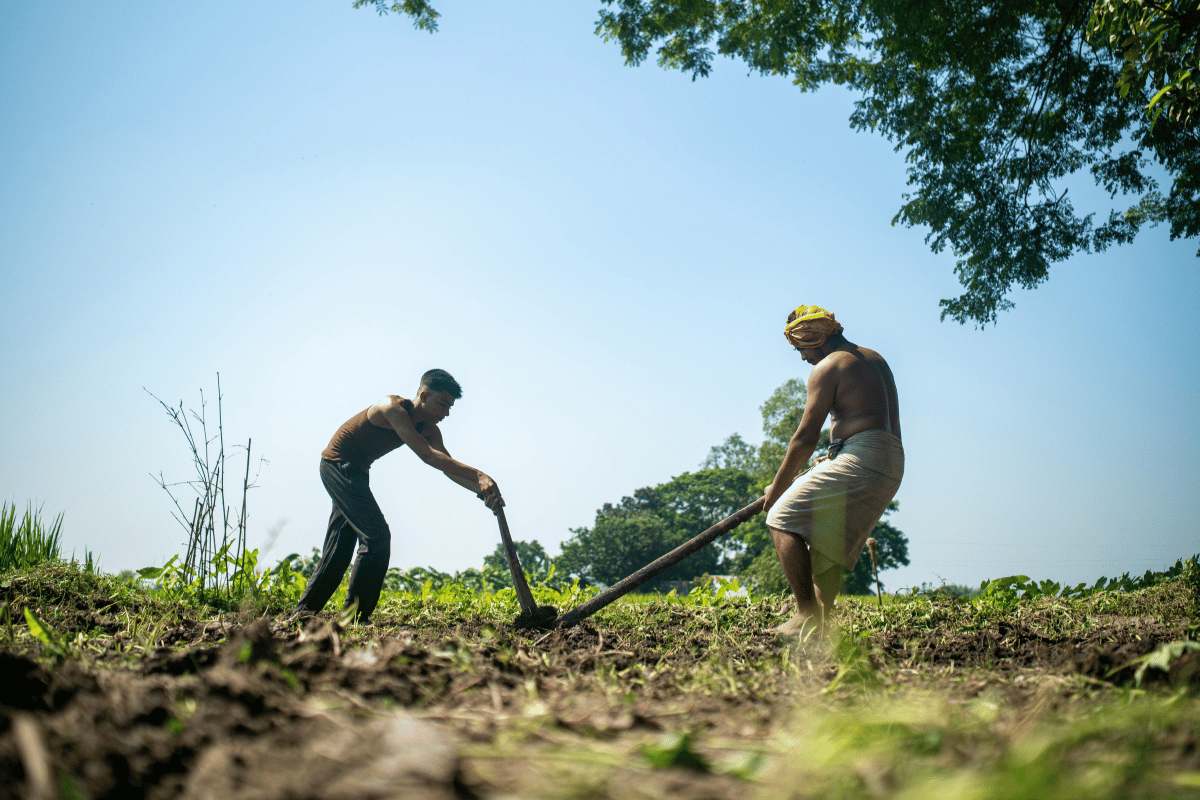
Food safety usually gets framed as a knowledge problem. Train farm workers properly, the thinking goes, and hygiene will follow. The conditions in which workers actually have to apply that knowledge are often left out of the conversation. A recent qualitative study at Eupepsia Place Limited, a hydroponic and soilless farm in Awowo, Ogun State, Nigeria, looked at exactly that gap and found that fatigue, time pressure, and resource limitations shape what farm workers can do in practice. Even workers with strong awareness of hygiene rules end up taking shortcuts when the workload is heavy. This article walks through the study, what its 35 interviews revealed, and what it means for managers who want food safety to actually hold up at the farm level.
Why food safety at the farm matters
Food safety is one of the most pressing public health issues in modern food systems. Unsafe food is no longer treated as something that goes wrong in shops or kitchens alone. It is increasingly understood as the cumulative outcome of failures across production, handling, storage, distribution, and preparation. The World Health Organization estimates that unsafe food contributes to around 600 million illnesses and 420,000 deaths each year, and that biological and chemical contaminants are linked to more than 200 different diseases.
Nigeria reflects this global picture clearly. Estimates suggest that more than 200,000 people die each year from foodborne diseases in the country, with associated economic losses of around USD 3.6 billion (Ezirigwe, 2018). This makes food safety a systemic health issue with social, economic, and occupational dimensions, beyond a purely technical concern for regulators.
Most existing research has focused on downstream actors such as food handlers in restaurants, market vendors, and consumers. Farmers, who are at the very start of the chain and arguably shape food safety outcomes most strongly, have received less attention. The work described here was designed to address that gap.
What the study did
The research used a qualitative phenomenological design, which is a way of asking people to describe their own lived experience in their own words. The setting was Eupepsia Place Limited (also known as Soilless Farm Lab) in Awowo, Ogun State, a structured hydroponic production site with a mix of greenhouse, agro-processing, and field activities.
Thirty-five workers were interviewed in depth, including farm managers, farm helps, agro-food processors, a greenhouse manager, an assistant agronomist, a data analyst, and a nursery manager. Inclusion was open to anyone actively involved in planting, harvesting, irrigation, produce handling, and related operations. Interviews were audio-recorded, transcribed word for word, and analysed thematically with the help of ATLAS.ti software. The study had ethics approval from the Babcock University Health Research Ethics Committee, and all participants gave informed consent. Participation was voluntary and all responses were anonymised.
The first table below summarises who took part.
| Variable | Category | Frequency (n) | Percentage (%) |
|---|---|---|---|
| Role on the farm | Farm Manager | 13 | 37.1 |
| Farm Help | 8 | 22.9 | |
| Agro Food-Processor | 4 | 11.4 | |
| Farmer | 3 | 8.6 | |
| Greenhouse Manager | 2 | 5.7 | |
| Assistant Agronomist | 1 | 2.9 | |
| Data Analyst | 1 | 2.9 | |
| Agro Food-Processor Supervisor | 1 | 2.9 | |
| Farm Manager / Agronomist | 1 | 2.9 | |
| Nursery Manager | 1 | 2.9 | |
| Gender | Female | 23 | 65.7 |
| Male | 12 | 34.3 | |
| Age range | 18 to 25 years | 9 | 25.7 |
| 25 to 30 years | 15 | 42.9 | |
| 30 to 35 years | 3 | 8.6 | |
| 35 to 40 years | 3 | 8.6 | |
| 40 to 45 years | 4 | 11.4 | |
| 50 to 55 years | 1 | 2.9 | |
| Religion | Christianity | 30 | 85.7 |
| Islam | 5 | 14.3 | |
| Farming experience | Less than 1 year | 10 | 28.6 |
| 1 to 2 years | 7 | 20.0 | |
| 2 to 3 years | 16 | 45.7 | |
| Above 3 years | 2 | 5.7 | |
| Education level | Primary or no formal education | 2 | 5.7 |
| Secondary education | 12 | 34.3 | |
| OND or NCE | 3 | 8.6 | |
| HND or Bachelor's degree | 17 | 48.6 | |
| Postgraduate | 1 | 2.9 |
How farmers think about food safety
Workers consistently described food safety as proper handling of produce and contamination prevention right across the chain. One participant put it simply, saying food safety means "the proper handling of the produce on-farm to the final consumers." Awareness of hygiene risks was clearly present across the sample, but the way people described those risks was practical and experience-based, framed in the language of daily work more than the language of HACCP or formal standards. Workers knew what should be done, but they expressed that knowledge in their own terms.
What the data reveals most clearly is a gap between knowing and doing. Workers consistently described hygiene rules they understood and tried to follow, but the conditions on the ground often blocked consistent practice. Three themes capture that gap.
What helped and what got in the way
Workers described a range of resources that supported hygiene compliance, from wash-hand basins and foot dips to designated, cleaned crates for handling produce. One worker explained, "we have wash-hand basins, foot dips, people handle food with gloves, and our houses are inspected." Another described how "designated crates, cleaned thoroughly and sorted properly," help prevent contamination during handling. Training was also widely valued. As one worker put it, "we've had classes on food safety, and again and again we are reminded." Another said training was "helpful in our personal hygiene too, not just on the farm."
Training and infrastructure alone did not guarantee compliance, however. The most common practical barrier was distance and access. Materials such as gloves, soap, or sanitiser were not always close to where work was happening. As one participant explained, "sometimes maybe you just want to rush. Where to go and pick up these things is maybe kind of distance, you now want to do shortcut." PPE discomfort, occasional soap shortages, and time pressure all pulled in the same direction. The result was a recurring tension between ideal hygiene standards and practical work reality. One worker captured it well, saying "the rules are realistic, but they are not easy to follow."
Where the stress comes from
Workers described farm work at Eupepsia Place as physically demanding, time-pressured, and at times psychologically straining. Workload was the most cited source of stress. "The workload and the work pressure is what is contributing to the stress," one worker said. Others linked stress to deadlines and urgency. "Sometimes the work has to be done immediately, and that puts pressure on you," one explained. Physical demands such as prolonged standing, bending, lifting, and repetitive tasks were also prominent. "We stand for long hours, we bend, we carry things. It is stressful on the body," said one respondent. Heat exposure intensified this further, with one worker noting that "the sun is too much, and it makes the work more stressful." Labour shortages added to the burden. "If we don't have enough hands, the work becomes too much for the people available," one worker explained.
How stress changed hygiene behaviour
This is where the study's most important finding sits. Workers reported that work stress directly undermined their ability to maintain consistent hygiene practices. Under fatigue, urgency, and physical strain, hygiene behaviours were delayed, modified, or skipped entirely.
One worker recounted a situation where damaged PPE was not replaced because the workload would not allow it. "There was this day, the gloves tore. I didn't stand up, I just finished it like that with the torn gloves," the worker said. Another admitted that when work was rushed, "you just want to do it fast. You may not follow everything the way you are supposed to."
Fatigue also reduced concentration and thoroughness, contributing to incomplete hygiene practices. "When you are stressed, your mind is not fully there, so you may miss some things," one worker said. Another put it even more starkly, "When the stress is too much, your brain is not even there again. You can just be doing things like a machine. At that point, you might not even notice that you are not following the proper procedure." Many workers acknowledged that hygiene became secondary when the pressure was high, captured well in the line, "you focus on finishing the work first."
The table below summarises the three themes that emerged from the analysis, with sample codes and illustrative quotes from the interviews.
| Theme | What workers described | Illustrative quote |
|---|---|---|
| Conditions that supported or constrained hygiene compliance | PPE availability, training, handwashing access, PPE discomfort, soap shortages, distance to materials | "Sometimes maybe you just want to rush. Where to go and pick up these things is maybe kind of distance, you now want to do shortcut." |
| Sources and experience of work stress | Workload pressure, long hours, heat stress, trellising stress, termination stress, physically demanding work | "The workload and the work pressure is what is contributing to the stress." |
| How work stress shaped hygiene behaviour | Skipped hygiene steps, torn gloves, incomplete PPE use, leaving debris, delayed sanitation, rushing work | "There was this day, the gloves tore. I didn't stand up, I just finished it like that with the torn gloves." |
What this means for farm management
The relationship between stress and hygiene compliance is consistent with the Job Demands Resources (JD-R) framework, which holds that when job demands such as workload and time pressure exceed available resources like time, energy, and physical capacity, performance suffers. In this study, work stress affected hygiene compliance through four interconnected behavioural pathways.
First, stress led to behavioural shortcuts and omissions. Workers openly acknowledged bypassing hygiene practices when under pressure. As one said, "you just want to do it fast, you may not follow everything the way you are supposed to." In more extreme cases, compliance was visibly compromised, illustrated by the worker who continued harvesting in torn gloves instead of stopping to replace them.
Second, fatigue and mental depletion emerged as key mechanisms. "When you are stressed, your mind is not fully there," as one worker put it. Stress did not only affect willingness to comply, it also undermined the capacity to perform hygiene practices effectively and consistently.
Third, a pattern of task prioritisation appeared, in which hygiene practices were deprioritised relative to immediate production demands. Under high workload, workers focused on completing core tasks, even when this resulted in delayed or incomplete hygiene practices. This is a rational adaptation to work pressure, but it introduces clear food safety risk.
Fourth, hygiene compliance was situational, not fixed. It varied with stress levels, workload intensity, and environmental conditions. As one worker noted, "it depends on the situation, sometimes you follow everything, sometimes you don't." Compliance is therefore dynamic and context-dependent, shaped by more than knowledge or intention alone.
Taken together, these findings position work stress as a central determinant that sits between knowledge and practice. It is the mechanism through which good training fails to translate into consistent compliance.
Limitations to keep in mind
This was a single farm setting, so the findings do not automatically apply to other agricultural contexts in Nigeria or elsewhere. The study relied on self-reported experiences, which can be affected by recall bias and social desirability. Direct observation of hygiene practices was not included, which would have added another layer of validation. These limitations do not undermine the central finding, that work stress shapes hygiene practice, but they do shape how broadly it should be generalised.
What farms can do about it
The clearest practical conclusion is that more training, on its own, will not close the gap between hygiene knowledge and hygiene practice. Farm management needs to address the conditions under which workers act on what they know.
Three areas deserve particular attention. Workload management matters because chronic time pressure is the most consistent driver of hygiene shortcuts. Realistic task allocation and adequate staffing during peak periods reduce the pressure to rush. Adequate rest periods also matter, since fatigue degrades both willingness and capacity to follow procedures. And resource optimisation, including placing PPE, soap, and hand-washing points close to where work actually happens, removes one of the most frequently cited practical barriers.
In short, food safety at the farm level is not a knowledge problem. It is a conditions problem. Training will only deliver its full value when the workplace is designed to make compliance the easier path. Treating hygiene as something workers do under pressure, instead of something they apply in calm conditions, is the shift that managers need to make if they want food safety to hold up consistently across a working day.
Acknowledgment
The author acknowledges Dr Folorunso AKO E.O, Public Health Department, Babcock University, Ogun State, Nigeria, for his guidance and supervision of the research on which this article is based.
References
Ezirigwe, J. (2018). Much ado about food safety regulation in Nigeria. Journal of Sustainable Development Law and Policy, 9(1), 109–132.