


Why bees need water for hive cooling
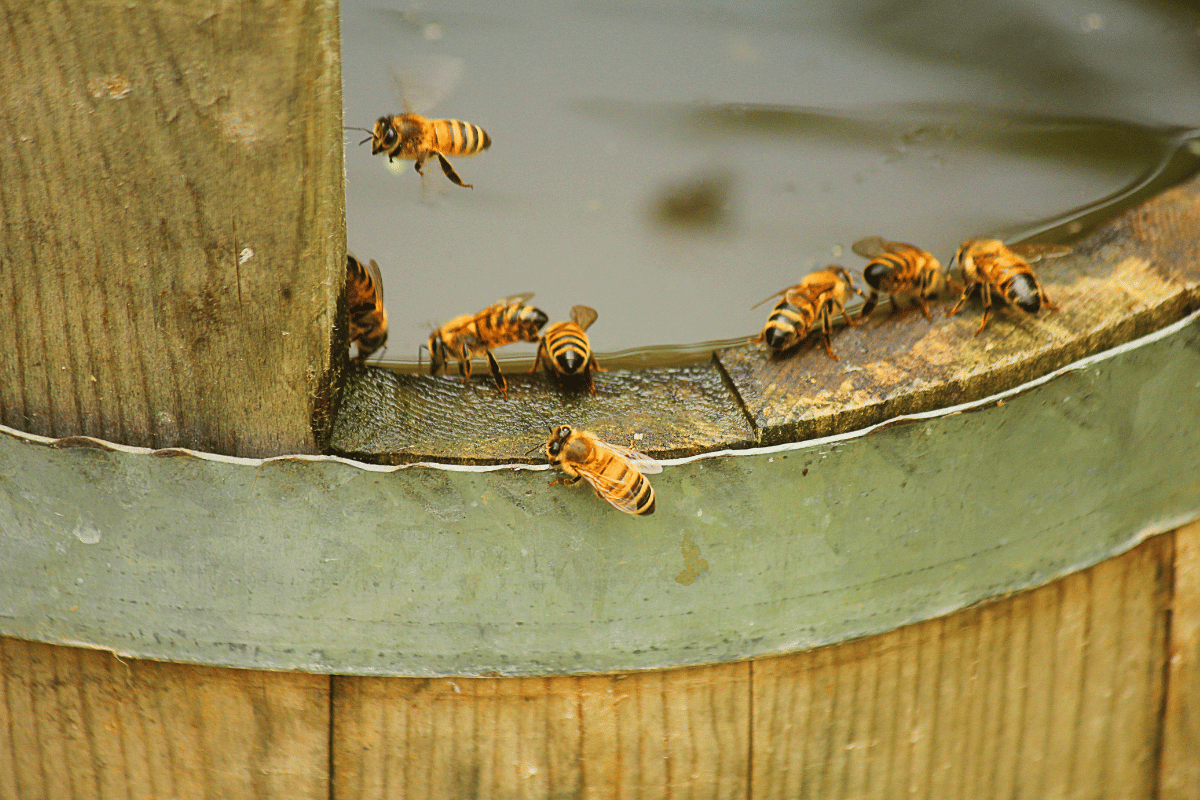
Bees need water as much as nectar and pollen. They use it to cool the hive, raise brood, digest food, and keep the colony healthy. In summer conditions, water becomes a daily “must have” because colonies rely on it to regulate hive temperature, especially during heatwaves.
Yet, hydration is often overlooked in beekeeping and agriculture.
In many places, bees struggle to find safe and steady water sources. Puddles dry up, containers are too deep, and runoff can contain chemicals. As seasons get hotter and weather becomes less predictable (with temperatures in Mediterranean regions reaching 40-46°C during extreme heat events), providing bees with a reliable place to drink is more important than ever. During such extreme heat, pollination disruption becomes a serious concern as bees alter their foraging behavior to prioritize hive cooling.
This article explains common problems bees face when searching for water and shares practical ideas for creating safer hydration options. It also includes insights from my own work developing the Bee Oasis.
The problem with most water sources
Bees will use whatever water they can find, but not all water sources are good for them. Some of the most common issues include:
1. Risk of drowning
Smooth edges, deep bowls, and slippery surfaces pose challenges for bees trying to land. With nowhere stable to stand, many tragically drown while attempting to drink. This is particularly problematic in commercial settings where bees may be drawn to irrigation systems or animal water troughs. In agricultural operations, beekeepers report that bees often crowd at irrigation lines when alternative water sources aren't available.
2. Contaminated water
Runoff from yards, farms, and roads can carry chemicals or bacteria. Bees, unaware of the risk, may inadvertently bring this water back to the hive, causing harm. However, research indicates that bees are naturally attracted to water containing organic residues with high concentrations of mineral salts. They often prefer slightly "dirty" water over perfectly clean water because they can detect it by smell and because it may provide essential micronutrients they need. This preference evolved over millions of years when chlorinated pools and sterile water sources didn't exist.
3. Water that comes and goes
Shallow water evaporates rapidly in summer, especially during heatwaves when temperatures exceed 40°C across Mediterranean agricultural regions. Puddles vanish before long. Yet, hives require daily water, and nature does not always provide it. During extreme heat events, water demands increase exponentially as bees prioritize evaporative cooling over foraging. Colonies experiencing high water demands activate water-collectors rapidly, who may even perform waggle dances to recruit additional bees to water sources.
4. Competition from other animals
Birds, pets, livestock, and even ants can disturb bees or use up available water. In greenhouse environments, this problem is compounded as bumblebee hives used for pollination require continuous access to sugar water, and proper placement away from wet areas or water leakage is essential to prevent hive disturbance.
Together, these problems make clear why creating a safe, steady water source isn't just helpful but essential. Taking steps now can directly improve the lives of pollinators and strengthen our environment, particularly in agricultural settings where crop pollination depends on healthy, well-hydrated bee colonies.
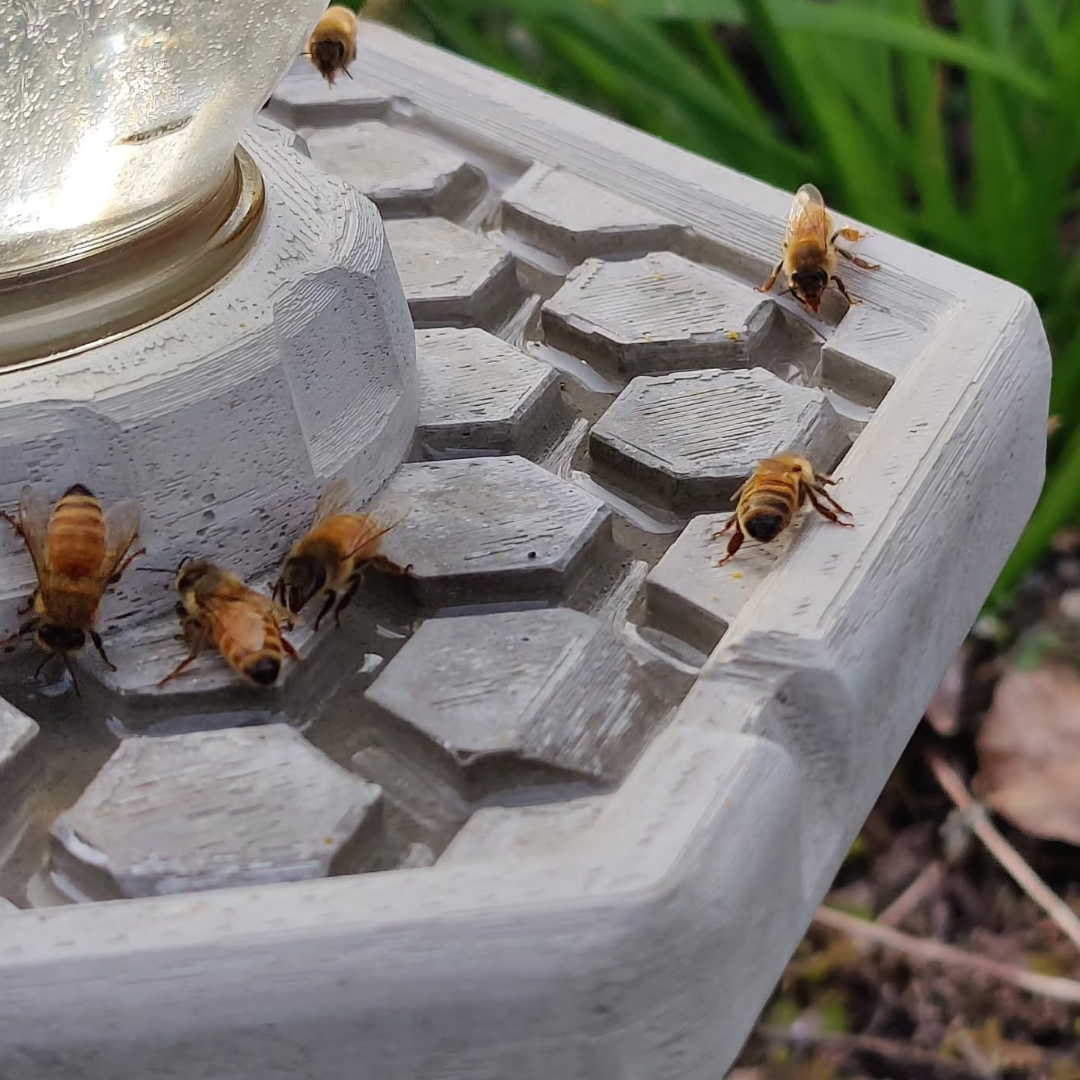
photo from Dylan Larsen
What bees need from a good water source
Through hands-on experience and many small field tests, I've found that bees respond best to simple features:
Shallow water
Just a thin layer is enough. Bees shouldn't need to risk falling in. During summer management, beekeepers emphasize keeping water tanks full as bees use water to regulate hive temperature, especially during heatwaves. The water is spread in a thin film atop sealed brood or on the rims of cells containing larvae and eggs, where in-hive workers fan vigorously to create evaporative cooling.
Good landing spots
Textured or angled surfaces help bees secure their footing while drinking. Providing a variety of landing options ensures safer access. Practical solutions include floating straw, sticks, marbles, rocks, or floating clay pebbles that don't sink after getting waterlogged. Some beekeepers have found success using damp rockwool alongside containers with water, roots, and branches.
Consistent flow
A reliable trickle prevents water from stagnating or overflowing. Drip irrigation systems can serve as excellent water sources for both honeybees and native bees. During hot weather in commercial apiaries managing honeybee colonies (Apis mellifera jemenitica), continuous access to clean water is essential for thermoregulation and metabolic processes during extreme heat stress.
Clean access
Raising the water source off the ground keeps out dirt, debris, and splash from soil. However, placement considerations are important: water stations should be positioned away from areas where water leakage occurs or where the environment around becomes excessively wet. Beekeepers working in partnership with farmers should ensure water sources are close enough to hives so bees don't crowd at irrigation lines or animal troughs.
Low maintenance
Beekeepers appreciate setups that require little refilling or cleaning. A low-maintenance approach benefits both bees and their caretakers. In commercial pollination operations, such as the Water for Bees initiative in almond orchards, over 800 watering stations were distributed to support healthy bees during bloom periods.
None of these ideas requires special equipment—just a willingness to observe, care, and act on behalf of these vital pollinators. Anyone can play a part by implementing these simple changes to help ensure bees stay safe.
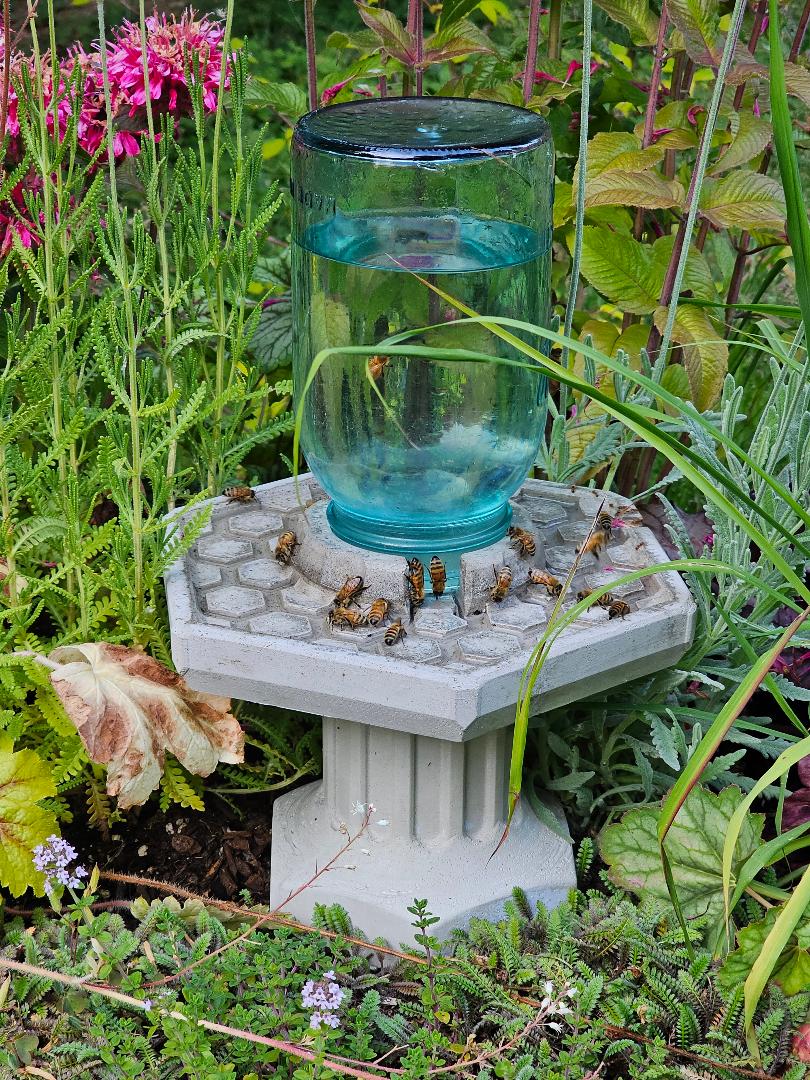
photo from Dylan Larsen
How the Bee Oasis developed
The Bee Oasis started as a simple idea: create a water source where bees wouldn't drown. Over time, watching how bees interacted with different shapes and textures taught me what they preferred.
Some changes came quickly, such as adjusting the water depth or adding better footing. Others took time, such as figuring out how to keep water flowing without soaking the landing surfaces.
Eventually, I raised the water source so bees could see it better and so less dirt would get inside. Each improvement came from direct observation—seeing what worked, what didn't, and adjusting from there.
While the Bee Oasis is now a complete product, the lessons behind it can be used by anyone trying to help bees in their backyard, orchard, or farm. The key is understanding that bees have evolved specific preferences. Some beekeepers add a little salt or other minerals to water, as bees need these micronutrients, and there's evidence that it helps attract them to preferred water sources.
Where does better hydration help the most
In my experience and from feedback from beekeepers and growers, improved water access helps in many places:
Backyard hives, where bees need a safe alternative to birdbaths. Backyard beekeepers can create simple watering stations using items they already have on hand. A bucket, wide bowl, or any vessel that holds water, combined with floating materials like straw, sticks, or marbles, to provide safe landing spots.
Commercial apiaries, especially in hot weather. During the summer dearth season, when temperatures become extreme, water provision becomes critical for honeybee thermoregulation. Placement of water sources should consider factors like shade availability and protection from direct sunlight on hive exit-flight holes.
Crop pollination sites, where colonies work hard and need steady water. In almond orchards, which require 6-7 beehives per hectare for adequate pollination and achieve 90-100% nut set when sufficient pollinators are present, water access has a direct impact on pollination efficiency. Similarly, in commercial tomato greenhouses where bumblebee colonies are placed at densities of 7-15 colonies per hectare, proper water management supports optimal pollination activity.
Greenhouses, where natural water doesn't exist. Bumblebee hives used for pollinating greenhouse crops like tomatoes require continuous access to sugar water since tomato plants don't produce nectar. Optimal conditions for natural pollination include maintaining temperatures between 23-28°C and relative humidity between 60-75%. When temperatures exceed 30°C, bees spend more time on temperature regulation instead of foraging, making water availability even more critical.
Dry or drought-prone climates, where evaporation happens fast. In Mediterranean agricultural regions experiencing extreme heat events with temperatures reaching 46°C, irrigation demands increase dramatically as crops require more frequent watering to maintain adequate soil moisture. In such conditions, providing dedicated water sources for pollinators becomes essential as natural water sources disappear rapidly.
Bees that know a safe water source return to it again and again. This habit reduces drowning, keeps hives cooler, and supports productivity across the colony. When water-collecting bees find a reliable source, they can communicate its location to nestmates through waggle dances, just as they do with nectar sources.
Why this matters for agriculture and the environment
Healthy bees pollinate better. When bees have enough water, they can:
- cool the hive during heat waves (a key summer survival task)
- raise brood more consistently by keeping hive conditions stable
- spend less time searching for water and more time working on flowers, which is exactly why farm biodiversity guidance emphasizes nearby water sources
- avoid risky “backup” water points like irrigation lines or troughs when a clean source is available near the apiary
For farmers, that can translate into stronger pollination and more reliable fruit set. Supporting water access also helps wild pollinators, not only managed honeybees, because the same shallow, safe stations serve multiple beneficial insects.
For ecosystems, it supports both managed honeybees and wild pollinators that benefit from the same safe water sources. Studies consistently show that farms with diverse pollinator communities (combining managed honeybees with native species) experience higher fruit and seed set rates, more uniform crop size and quality, and better pollination resilience during challenging weather conditions.
Looking ahead
With ongoing shifts in weather patterns, providing pollinators with clean, steady water is becoming more urgent. Beekeeping planning resources already treat summer water as a recurring task, not a one-time setup. “Keep water tanks full” is simple advice, but it reflects a real biological need: colonies use water for thermoregulation, and this demand rises during periods of high heat.
Though there is still much to learn and improvements continue in my designs, the underlying principle remains straightforward:
If we give bees a safe place to drink, they will use it, and they will be healthier for it.
Anyone can help pollinators by providing a reliable water source, whether homemade or designed specifically for bees.
Conclusion
Pollinator hydration is simple but vital. Prioritizing smart, accessible water solutions can ensure bees stay safe and productive, directly benefiting our food systems and ecosystems alike.
By focusing on features like shallow water, sturdy landing spots, and clean access, everyone can take meaningful action to support pollinators in their community. Together, we can help secure the future of bees and the plants that depend on them.