


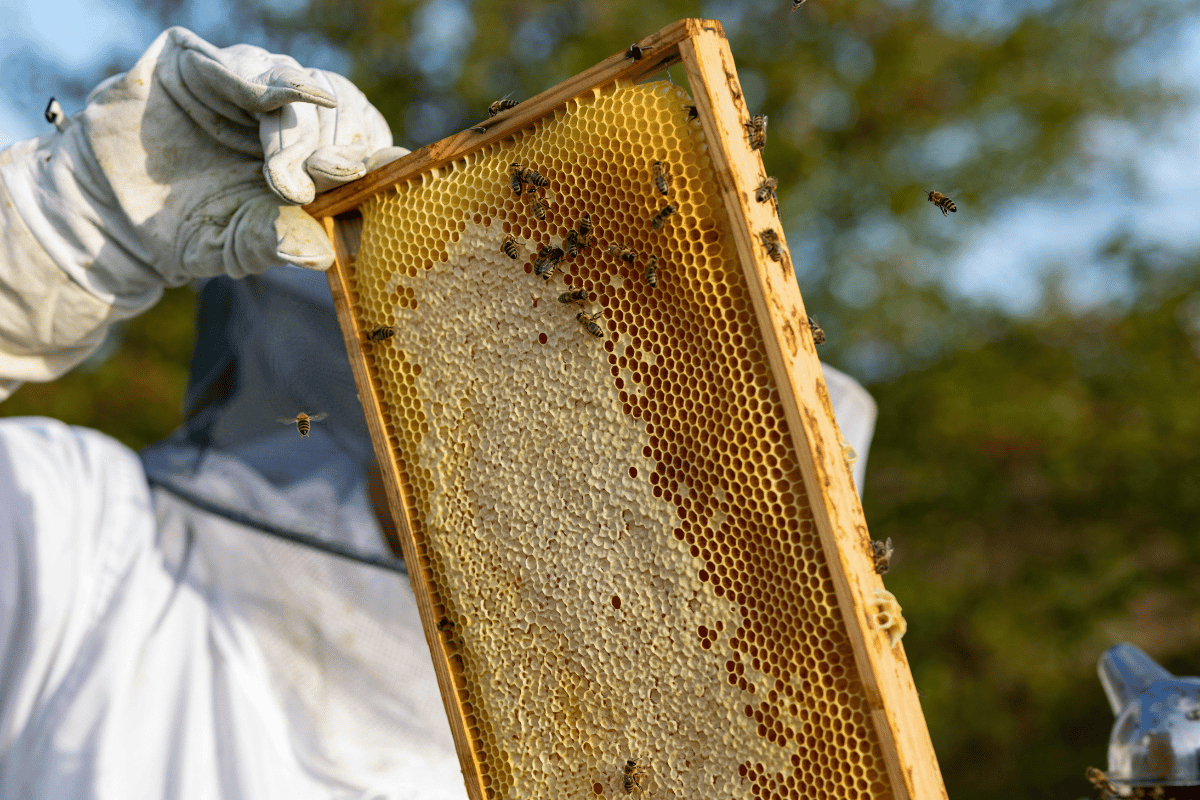
Native floral resources supporting UAE beekeeping
Despite its arid landscape, the United Arab Emirates possesses a remarkable diversity of native floral species that serve as critical nectar and pollen sources for honeybees throughout distinct seasons. The primary forage species supporting beekeeping in the UAE include:
- Ghaf tree (Prosopis cineraria): Blooms intermittently throughout the year with extended flowering periods, producing highly valued light amber honey with distinctive caramel-butterscotch flavor
- Samar tree (Acacia tortilis): Flowers during March to May with golden blooms, providing abundant spring nectar
- Sidr tree (Ziziphus spina-christi): Produces small white-yellow-green flowers during October and November, yielding premium-quality honey
- Mangrove tree (Avicennia marina): Contributes to coastal forage availability
The periodic and sometimes overlapping blooming cycles of these species form the foundation for sustainable beekeeping in the UAE, providing bees with relatively continuous foraging opportunities across much of the year.
The adapted local subspecies
Apis mellifera jemenitica, commonly known as the Arabian or Nubian honeybee, is the predominant subspecies maintained in UAE apiaries. This subspecies exhibits exceptional adaptation to the region's extreme environmental conditions, characterized by:
- Compact colony size: Colonies typically remain smaller than European subspecies, reducing resource demands during resource-scarce periods
- Heat tolerance: Superior ability to withstand temperatures exceeding 40°C, with relatively calm behavior facilitating hive management
- Resource efficiency: Adaptation to arid environments and variable forage availability through behavioral and physiological mechanisms
Commercial colonies are frequently imported from Egypt and Oman during late autumn (October-November) in preparation for the winter productive season. ADAFSA research demonstrates that proper colony establishment and strategic queen selection during this importation phase significantly influence overall beekeeping cycle success. Current ADAFSA initiatives have successfully developed the tenth generation of Emirati queen bees, with research demonstrating improvement in adaptation, heat tolerance, and varroa mite resistance compared to imported stock.
Winter season: The resource-rich productive period
The winter season in the UAE, which extends from December to March or April, represents the most productive and resource-abundant period for honeybee colonies. During these months, colonies experience robust brood development and maximum honey production, primarily sustained by the abundant Sidr and Samar blooms.
Optimal winter management practices
ADAFSA's field research conducted at experimental apiaries in Al Ain and Al Dhafra has identified critical management factors for maximizing winter productivity:
- Adequate super space: Providing sufficient honey storage capacity prevents colony congestion and maintains natural brood patterns
- Regular queen performance assessment: Monthly inspections confirm healthy egg-laying patterns and colony expansion
- Proper ventilation management: Maintaining adequate airflow prevents moisture accumulation and condensation in hives
- Brood frame monitoring: Ensuring adequate brood coverage supports workforce development for spring activities
Research indicates that colonies demonstrating optimal winter management protocols yield significantly higher honey volumes and emerge into spring with superior population strength compared to colonies receiving minimal management attention. The Sidr and Samar honeys produced during these months command premium market prices domestically and internationally, attributed to their complex flavor profiles and documented medicinal properties.
Transition to the summer dearth period
As late May approaches, the UAE's floral resource landscape undergoes dramatic transformation. Rising ambient temperatures (often exceeding 48°C), plummeting humidity levels, and intensified dust storm activity combine to create environmental conditions profoundly detrimental to forage production. The resulting nectar and pollen dearth, typically lasting from June through August, presents a critical survival challenge for colonies.
Without systematic management intervention, weak colonies invariably collapse during this period due to nutritional deficiency, increased pest and disease pressure, and thermal stress. ADAFSA's long-term research emphasizes that successful dearth period management requires integration of multiple strategic interventions rather than reliance on single management practices.
Critical management practices during the summer
Varroa mite control and timing
The Varroa destructor mite remains the most serious parasitic threat to honeybee colonies globally and across the Arabian Peninsula. This mite parasitizes brood cells, weakening developing pupae and transmitting viral diseases that compound colony decline.
Optimal timing for oxalic acid treatment
ADAFSA's apiary research trials recommend initiating varroa treatment before or coinciding with the onset of the dearth period (late May to early June). Oxalic acid remains the most effective and economically accessible treatment option when applied strategically:
- Oxalic acid strips: Applied directly into the brood chamber, providing extended-release treatment over 3-4 weeks
- Drip formulations: A mixture of 300 ml water, 300 g sugar, and 30 g oxalic acid applied via veterinary syringe between brood frames
- Sublimation (vaporization): Using specialized heating devices to sublimate oxalic acid crystals directly into the hive, achieving mite mortality rates of 81-97% depending on dosage
Treatment efficacy and safety
Research demonstrates treatment efficacy varies substantially with application method. Vaporization/sublimation achieves mite mortality rates of approximately 82-98%, while drip and spray methods achieve 21-26% mortality at standard dosages. Critically, oxalic acid should be applied during periods when brood presence is minimal or absent (broodless periods or early dearth), as oxalic acid cannot penetrate sealed brood cells where mites hide. For UAE apiaries, late May through early June represents the optimal treatment window, though some beekeepers employ repeated applications (3-4 treatments spaced 5-7 days apart) during light brood periods to capture emerging mites.
Supplementary feeding programs
With natural forage essentially absent during summer months, strategic supplemental feeding sustains colony metabolism, supports limited brood rearing for winter bee development, and maintains productive workforce populations through the dearth.
Protein supplementation
Pollen shortages during dearth significantly impact colony health. ADAFSA's laboratory trials demonstrate that protein patties enriched with vitamins, minerals, and balanced amino acid profiles substantially enhance colony strength during summer stress:
- Recommended frequency: Apply pollen patties every two weeks beginning in late May
- Optimal composition: Patties should contain 23-30% crude protein and all ten essential amino acids (threonine, valine, methionine, leucine, isoleucine, phenylalanine, lysine, histidine, arginine, and tryptophan)
- Documented results: Colonies receiving protein supplementation during spring and autumn typically develop two additional frames of brood compared to unsupplemented control colonies
Sugar syrup feeding
Sugar syrup feeding maintains colony energy reserves and enables limited brood production. Specific feeding ratios should align with seasonal conditions:
- 1:1 ratio (equal sugar to water): Applied during early dearth (June-July) to stimulate brood production
- 2:1 ratio (two parts sugar to one part water): Employed during mid to late dearth (August) to build stored energy reserves when brood production becomes uneconomical
Practical implementation
Feeding methodology affects robbing behavior and subsequent colony disruption. Internal feeders (frame feeders or top feeders placed directly on the hive) minimize robbing pressure compared to external feeders. Feeding should commence before natural forage completely disappears (late May) to maintain continuous nutritional supply and prevent colony abandonment responses.
Regular hive inspections and integrated pest management
Summer conditions create predatory insect problems extending beyond varroa mites. Frequent hive inspections facilitate early pest detection and implementation of preventive measures before population explosions occur.
Primary summer pest threats
Ant infestations: Multiple ant species opportunistically colonize apiaries during summer months, infiltrating hives to harvest honey and honeydew secretions. Ant presence creates stress that disrupts brood patterns and reduces foraging efficiency.
Wax moths (Galleria mellonella and Achroia grisella): These moths deposit eggs in hive crevices, with larvae tunneling through combs to construct pupation chambers. While healthy colonies typically suppress wax moth populations through grooming behavior, stressed or weakened colonies suffer devastating comb damage.
Death's head hawk moths (Acherontia atropos): These large moths possess remarkable ability to mimic honeybee pheromones, allowing infiltration of hive defenses. Once inside, the moths utilize an elongated proboscis to feed on honey stores while occasionally preying on larval brood. When detected, bees form defensive clusters around the moth, generating lethal heat through wing vibration.
Defensive strategies and preventive measures
ADAFSA's research underscores that maintaining strong, populous colonies represents the most effective natural defense against pest infestations. Additional protective measures include:
- Ant guards and moats: Install elevated hive stands with moated legs filled with water or greased surfaces to prevent ant access from the ground
- Clean combs: Regular removal and replacement of damaged or soiled combs eliminates harboring sites for wax moth eggs
- Reduced entrances: Restricting hive entrance size to 12-15 mm during summer facilitates guard bee defense and reduces robbing pressure
- Adequate spacing: Maintaining a minimum of 0.5-1.0 metersof spacing between hives prevents pest spread and cross-contamination
Environmental management and thermal stress prevention
High ambient temperatures and low humidity represent direct threats to colony survival during summer months, requiring active environmental management to maintain hive microclimate within viable parameters.
Shading and ventilation
ADAFSA's experimental findings demonstrate the exceptional efficacy of proper apiary environmental design:
- Survival rates: Colonies maintained under partial shade (such as trees or artificial canopies) with adequate ventilation achieved 95% survival rates through summer months, compared to less than 20% for colonies in unshaded open desert settings
- Canopy specifications: Shade should provide 50-70% light interception, preventing excessive temperature elevation while maintaining air circulation
- Artificial canopies: Shade cloth structures installed 1-1.5 meters above hives provide superior temperature regulation compared to direct tree shade, which may harbor predators
Water provision
Continuous access to clean water is essential for honeybee thermoregulation and metabolic processes during extreme heat stress:
- Placement: Position water sources within 50-100 meters of apiaries for convenient bee access
- Design: Utilize shallow basins with floating cork pieces or screening to prevent bee drowning
- Water quality: Use fresh, chlorine-free water, replacing daily to prevent pathogenic organism proliferation
Protection from migratory bird predators
Certain periods during the summer months coincide with migration patterns of predatory bird species that actively hunt honeybees, creating significant colony losses in exposed apiaries.
European Bee-eater threat
Merops apiaster (European bee-eater) poses a significant predatory threat during the spring and late summer migration periods (typically April to May and August to September). These colorful migratory birds feed almost exclusively on flying insects, particularly honeybees, with individual birds capable of capturing 200-300 bees daily during peak foraging periods.
Mitigation strategies
ADAFSA's extension bulletins and field observations identify strategic management options:
- Apiary relocation: Temporarily relocating colonies to less exposed, enclosed locations during peak migration periods provides the most reliable protection
- Netting barriers: Installing fine mesh netting (2-3 mm aperture) above or around apiary sites physically prevents bird access, though labor intensity limits practical application
- Vegetation management: Positioning apiaries near dense shrubby vegetation provides concealment and escape cover for foraging bees, reducing predation success rates
Research indicates that approximately 10-15% of annual colony losses in open desert apiaries correlate directly with seasonal bird predation, with this figure rising to 25-30% during years of unusually high bee-eater populations.
ADAFSA's strategic contributions
ADAFSA's initiatives extend beyond reactive management recommendations to proactive capacity building and genetic improvement programs:
- Queen bee breeding programs: Development of Emirati queen bee lines now in their tenth generation demonstrates improved heat tolerance, enhanced varroa mite resistance, and superior foraging efficiency under high-temperature conditions
- Technical training and extension services: Regular workshops and field demonstrations transfer evidence-based best practices to commercial and hobbyist beekeepers
- Laboratory diagnostics: The high-technology laboratory at the Al Kuwaitat Research Station in Al Ain provides pathogen identification and treatment recommendations, with research demonstrating capacity to increase year-round colony survival from 10% (pre-2015) to 96% (recent years)
- Collaborative governance: Joint initiatives with the Department of Municipalities and Transport provide regulated apiary access to government-managed woodlands, supporting expansion while maintaining environmental protection
Conclusion
Effective management of Apis mellifera jemenitica colonies in the UAE requires sophisticated adaptation to the nation's extreme climatic seasonality, characterized by resource abundance during winter months and profound scarcity during summer. The winter productive season, sustained by blooms of Sidr and Samar trees, establishes the foundation for annual honey production. Meanwhile, successful dearth period management through integrated varroa control, strategic supplementary feeding, environmental optimization, and predator management determines colony survival and year-round productivity.
Guided by ADAFSA's research-based recommendations and best practices refined through years of applied field research, UAE beekeepers can establish resilient, productive colonies that contribute substantially to the nation's growing apiculture sector while supporting critical pollination services for regional agriculture and wild plant communities. Continued partnership between research institutions, government agencies, and practicing beekeepers will be essential for achieving long-term sustainability of this vital agricultural sector amid climatic uncertainty and environmental change.
References
Abu Dhabi Agriculture and Food Safety Authority. (2020). ADAFSA continues efforts to develop Emirati bee species. WAM News Agency.
Alsharhi, M., et al. (2025). Genetic diversity and novel haplotypes of Apis mellifera jemenitica. Frontiers in Genetics, 15, 1532988.
Hoover, S. E., et al. (2022). Consumption of supplemental spring protein feeds by honey bees (Apis mellifera L.). Journal of Apicultural Research, 61(2), 234-246.