


A practical guide to better harvests and biodiversity
Why I keep bees
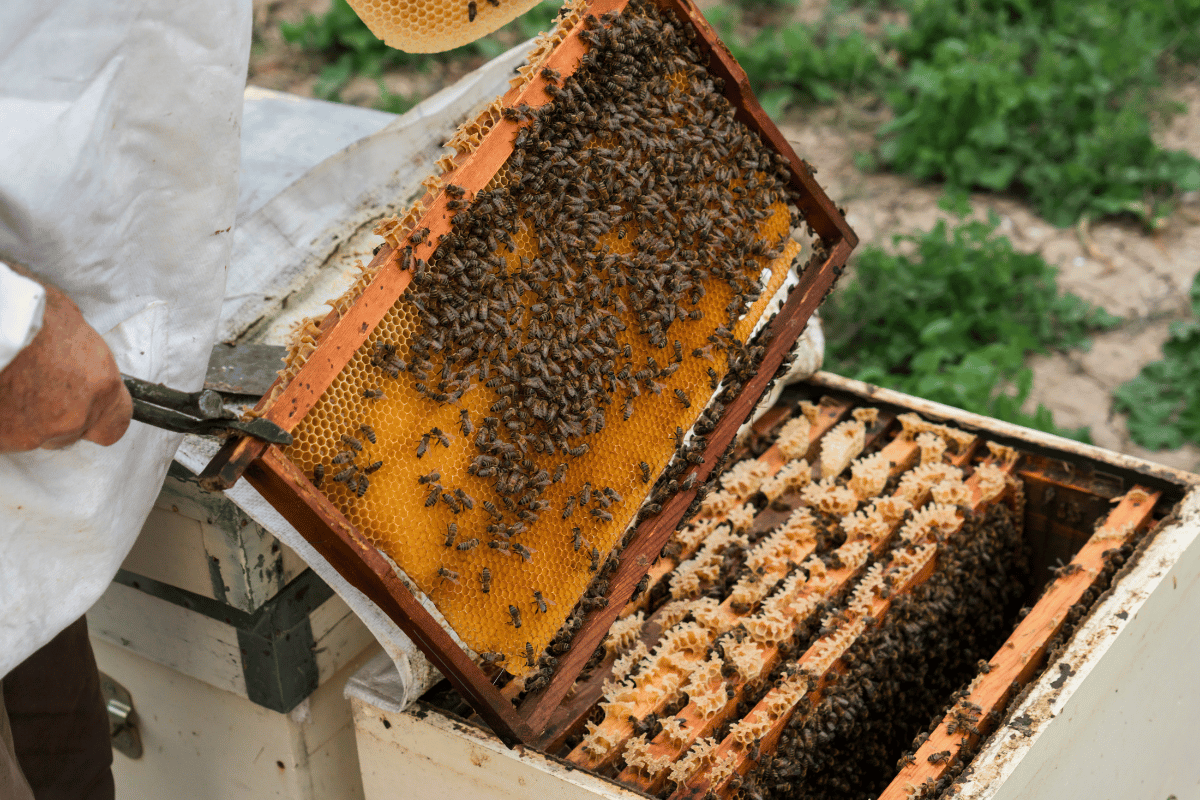
As a practising honeybee farmer, I have seen firsthand how keeping bees can transform both livelihoods and the environment. Beekeeping is a practical way to improve pollination, increase crop yields, and restore biodiversity on farms. Over the years, I have learned that healthy bees mean healthy farms, and in this article, I share practical insights and scientifically backed facts to help other farmers achieve the same success.
A single well-maintained hive can generate up to $140 in annual income while simultaneously improving crop yields through enhanced pollination services. This dual benefit makes beekeeping one of the most cost-effective agricultural investments for smallholder farmers.
Understanding the honeybee and its colony
The true honeybees
The western honeybee (Apis mellifera), belonging to the family Apidae, is the most commonly managed species worldwide. Scientists recognise seven to eight extant species within the Apis genus, each adapted to different climates and environments. Among them, A. mellifera has proven remarkably resilient, making it the preferred choice for farmers and beekeepers across Africa and beyond.
There are multiple types of honeybees suitable for different regions, including Russian, African, and European varieties. Each type has adapted to specific environmental conditions, with African bees showing greater heat tolerance while European bees demonstrate better cold-climate survival. Understanding your local conditions helps you select the right bee type for your apiary.
How a bee colony works
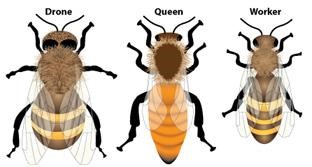
Image 1: The three castes of bees: queen, drone, worker
A honeybee colony functions as a tightly organised community.
- The queen is the only fertile female and lays all the eggs.
- Drones are males that hatch from unfertilised eggs and exist mainly to mate with a new queen.
- Worker bees are females that hatch from fertilised eggs. They handle every task required for colony survival, from foraging and guarding to brood care and comb building.
Honeybees reproduce through a system known as haplodiploidy: fertilised eggs produce females, while unfertilised eggs produce males (Marwaha, 2023). Whether a female becomes a queen or worker depends on her larval diet (Forbanka et al., 2025). This knowledge is useful for farmers interested in queen rearing or hive multiplication.
Why bees matter for farmers
Honeybees are the most effective pollinators of many food and cash crops (Devi et al., 2025; Bareke et al., 2025). They help transfer pollen grains from the anther to the stigma, facilitating the formation of fruit and seeds. According to the Food and Agriculture Organisation (FAO), pollinators contribute approximately 35% of global crop production by volume, enhancing yields of 87 of the 115 major food crops worldwide (FAO, 2019).
Do you know? Nearly 75% of the world's crop-producing fruits and seeds for human consumption depend, at least in part, on pollinators for sustained production, yield, and quality (FAO, 2025).
Real-world pollination benefits
In my experience, having bee colonies near my vegetable plots and fruit trees has increased both yield and quality. Research from Burkina Faso shows that bee pollination significantly enhances both the quantity and quality of cash crops, such as shea, cotton and sesame, on smallholder farms (Stout, 2021). In Nigeria, honeybees actively pollinate peanuts, beans, okra, watermelon, and cereals like maize and sorghum (Ajao et al., 2018). Establishing native trees such as Parkia biglobosa, neem, and moringa ensures year-round bee nutrition and pollination services. For smallholder farmers, this beekeeping-agriculture integration creates a sustainable pathway to enhanced income and food security.
Case Studies:
- Blueberry Production: Farms maintaining native bee habitat alongside honeybee hives consistently report better blueberry yields. Specialist bees visiting blueberry flowers result in increased fruit set and larger, more uniform fruit due to enhanced pollination.
- Almond Orchards: Commercial almond production depends almost entirely on bee pollination, with 90-100% nut set achieved when sufficient pollinators are present. It is recommended 6-7 beehives per hectare for optimal almond pollination, with hives introduced early in the blooming season.
- Nigerian Agriculture: In Nigeria, honeybees actively pollinate peanuts, beans, okra, watermelon, and cereals like maize and sorghum (Ajao et al., 2018). Although these crops can produce some yield through wind or self-pollination, bee activity significantly increases both quantity and quality.
Supporting Native Flora: Establishing native trees such as Parkia biglobosa, neem (Azadirachta indica), and moringa (Moringa oleifera) ensures year-round bee nutrition and pollination services. According to Wikifarmer research, moringa flowers attract multiple bee species, with carpenter bees showing particular effectiveness in pollination. Farmers report 8-11 pods per inflorescence with low bee activity, increasing to 11-15 pods with higher bee presence.
Major threats to honeybees and how to manage them
Pests and diseases
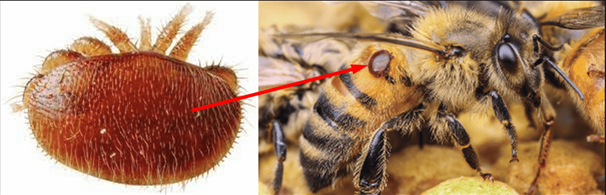
Image 2: Close-up photograph of Varroa mite on adult bee, Source: Apitoxin.se
The most serious honeybee pest is the Varroa destructor mite. Research confirms that Varroa mites are one of the predominant causes of global honeybee decline (Warner et al., 2024). These parasitic mites feed primarily on bee fat body tissue rather than hemolymph, weakening the bees' immune systems, reducing their lifespans, and transmitting pathogenic viruses to colonies (Ramsey et al., 2019). Without proper management, honey bee colonies typically collapse within 2 to 3 years in temperate climates (Traynor et al., 2020).
My varroa management strategy
I inspect hives regularly, checking brood frames and using sugar rolls or sticky boards to detect mites. Early detection allows for prompt management using natural or approved control methods. The U.S. Environmental Protection Agency recognises several registered treatments for Varroa control, including oxalic acid, formic acid, amitraz, and thymol-based products (USEPA, 2023).
Monitoring Thresholds: According to monitoring best practices, beekeepers should collect approximately 300 bees (about ½ cup by volume) and perform an alcohol wash or powdered sugar roll. If the infestation exceeds 2 mites per 100 bees, immediate intervention is required. I monitor at least once per month during warm seasons, early spring after temperatures allow hive opening, before adding honey supers, when removing supers (mid to late summer), and before winter preparation.
Agrochemicals and habitat loss
Pesticides, herbicides, and land clearing reduce floral resources, exposing bees to harmful chemicals. Field-realistic studies have demonstrated that neonicotinoid insecticides, now the most widely used class of insecticides globally, negatively affect pollinator health under agricultural conditions. Colonies near treated crops experience increased worker mortality, declines in social immunity, and increased queenlessness (Tsvetkov et al., 2017). Research across multiple European countries found that neonicotinoid exposure reduces overwintering success and colony reproduction in both honeybees and wild bees (Woodcock et al., 2017).
To protect pollinators and preserve ecological balance, I prioritized sustainable practices on my farm by limiting chemical applications, exploring safer alternatives, and adopting more targeted and less harmful methods.
Competition and disease spillover
Research shows that overcrowding apiaries or keeping too many hives in one place can stress the environment and spread diseases among colonies (Asensio et al., 2016). I limit the number of hives per location and rotate my apiaries to prevent over-foraging. This also protects native pollinators that share the same resources.
How I manage my apiary – Practical steps for success
1. Choose the Right Site
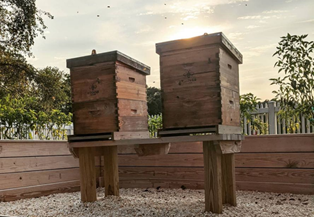
Image 3: Langstroth beehives installed in a cool, protective environment
Locate hives where they receive morning sun, are sheltered from wind, and have good drainage. Avoid low-lying areas prone to flooding. Provide a clean water source close to the hives so bees don't crowd at irrigation lines or animal troughs.
2. Maintain hive spacing
Do not cluster hives too closely. Adequate spacing reduces fighting between colonies and the spread of diseases. It also allows bees to forage more efficiently.
3. Inspect regularly
I inspect each hive weekly during the active season. This helps me detect queen loss, brood problems, or pests early. Keep a notebook or logbook of every inspection, it saves time and helps track colony performance.
4. Feed only when necessary
Supplemental feeding with sugar syrup or pollen substitutes should be done only during dearth periods when flowers are scarce. Avoid feeding during nectar flow seasons to prevent robbing and honey contamination.
5. Prevent pesticide poisoning
Always communicate with neighbours and spray operators. Encourage them to spray early morning or late evening when bees are less active. Buffer zones of flowering shrubs or trees can help reduce exposure.
6. Provide continuous forage
Diversify your landscape. I plant native flowering plants, legumes, and herbs that bloom at different times of the year. This supports both managed and wild pollinators, maintaining ecological balance.
7. Harvest responsibly
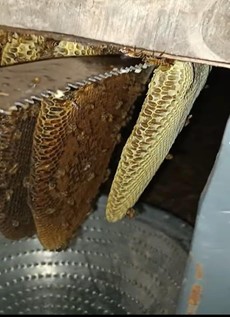
Image 5: Photo of honey harvesting technique showing honeycombs and gentle handling on my farm
Harvest only surplus honey. Bees need enough stores for dry or rainy seasons when nectar is scarce. During harvest, handle frames gently and avoid crushing bees to keep the colony calm and productive.
Balancing beekeeping and biodiversity
Responsible beekeeping benefits both people and nature. Apiaries promote pollination, support natural vegetation, and improve yields, but poor management, such as overstocking or neglecting disease control, can harm local ecosystems. Every beekeeper should aim to raise strong, healthy colonies without displacing wild pollinators. By planting nectar-rich trees, conserving forests, and practising integrated pest management, we can sustain both managed bees and wild biodiversity.
A Blessing worth protecting
For me, beekeeping has been both a rewarding livelihood and a contribution to environmental restoration. Honey and wax provide a steady income, but the real benefit is in how bees replenish and enrich the environment. Healthy bees mean productive farms, diverse ecosystems, and secure livelihoods. With the right knowledge, care, and cooperation among farmers, beekeeping remains a true blessing, one that must be protected for future generations.
References
- Ajao, A. M., Oladimeji, Y. U., & Aderolu, I. (2018). Survey of crop-plants and honey bee pollination: A stimulus to food security in Kwara State Nigeria. Journal of Agriculture and Environment, 14(1), 123-134.
- Asensio, I., Vicente-Rubiano, M., Muñoz, M. J., Fernandez-Carrion, E., Sánchez-Vizcaíno, J. M., & Carballo, M. (2016). Importance of ecological factors and colony handling for optimizing health status of apiaries in Mediterranean ecosystems. PLoS One, 11(10), e0164205.
- Bareke, T., Alemu, T., Addi, A., Yimer, O., & Mengesha, D. (2025). Effects of honeybee pollination and other insect pollinators on increasing the seed yield and germination capacity of carrot (Daucus Carota L.) in the central highlands of Ethiopia. BMC Plant Biology, 25(1), 1051.
- Devi, M. S., Anand, Y. R., Bandyopadhyay, S., & Yonzone, R. (2025). Role of Bees in Enhancing Food Production. World Food Day 2025, 105.
- Food and Agriculture Organisation (FAO). (2018). Why Bees Matter: The Importance of Bees and Other Pollinators for Food and Agriculture. Rome: FAO.
- Food and Agriculture Organisation (FAO). (2019). Global Action on Pollination Services for Sustainable Agriculture. Retrieved from https://www.fao.org/pollination/en
- Forbanka, D. N., Heshula, L. U. N. P., Taruvinga, A., Kotey, D. A., Niba, A. S., & Dzemo, W. D. (2025). Distribution, biology and ecology of honeybees, Apis mellifera (Hymenoptera; Apidae) in the Eastern Cape Province, South Africa: a review. International Journal of Tropical Insect Science, 1-14.
- Marwaha, L. (2023). The Drone Honey Bee. Bentham Science Publishers.
- Ramsey, S. D., Ochoa, R., Bauchan, G., Gulbronson, C., Mowery, J. D., Cohen, A., Lim, D., Joklik, J., Cicero, J. M., Ellis, J. D., Hawthorne, D., & van Engelsdorp, D. (2019). Varroa destructor feeds primarily on honey bee fat body tissue and not hemolymph. Proceedings of the National Academy of Sciences, 116(5), 1792-1801.
- Stein, K., Coulibaly, D., Stenchly, K., Goetze, D., Porembski, S., Lindner, A., ... & Linsenmair, E. K. (2017). Bee pollination increases yield quantity and quality of cash crops in Burkina Faso, West Africa. Scientific Reports, 7(1), 17691.
- Stout, J. (2021). Insect pollination improves yield of Shea (Vitellaria paradoxa subsp. paradoxa) in the agroforestry parklands of West Africa. Journal of Pollination Ecology.
- Traynor, K. S., Mondet, F., de Miranda, J. R., Techer, M., Kowallik, V., Oddie, M. A. Y., Chantawannakul, P., & McAfee, A. (2020). Varroa destructor: A complex parasite, crippling honey bees worldwide. Trends in Parasitology, 36(7), 592-606.
- Tsvetkov, N., Samson-Robert, O., Sood, K., Patel, H. S., Malena, D. A., Gajiwala, P. H., Maciukiewicz, P., Fournier, V., & Zayed, A. (2017). Chronic exposure to neonicotinoids reduces honey bee health near corn crops. Science, 356(6345), 1395-1397.
- U.S. Environmental Protection Agency. (2023, January). Advisory on the applicability of FIFRA and FFDCA for substances used to control varroa mites in beehives.
- Warner, S., Pokhrel, L. R., Akula, S. M., Ubah, C. S., Richards, S. L., Jensen, H., & Kearney, G. D. (2024). A scoping review on the effects of Varroa mite (Varroa destructor) on global honey bee decline. Science of the Total Environment, 906, 167492.
- Woodcock, B. A., Bullock, J. M., Shore, R. F., Heard, M. S., Pereira, M. G., Redhead, J., Ridding, L., Dean, H., Sleep, D., Henrys, P., Peyton, J., Hulmes, S., Hulmes, L., Sárospataki, M., Saure, C., Edwards, M., Genersch, E., Knäbe, S., & Pywell, R. F. (2017). Country-specific effects of neonicotinoid pesticides on honey bees and wild bees. Science, 356(6345), 1393-1395.