
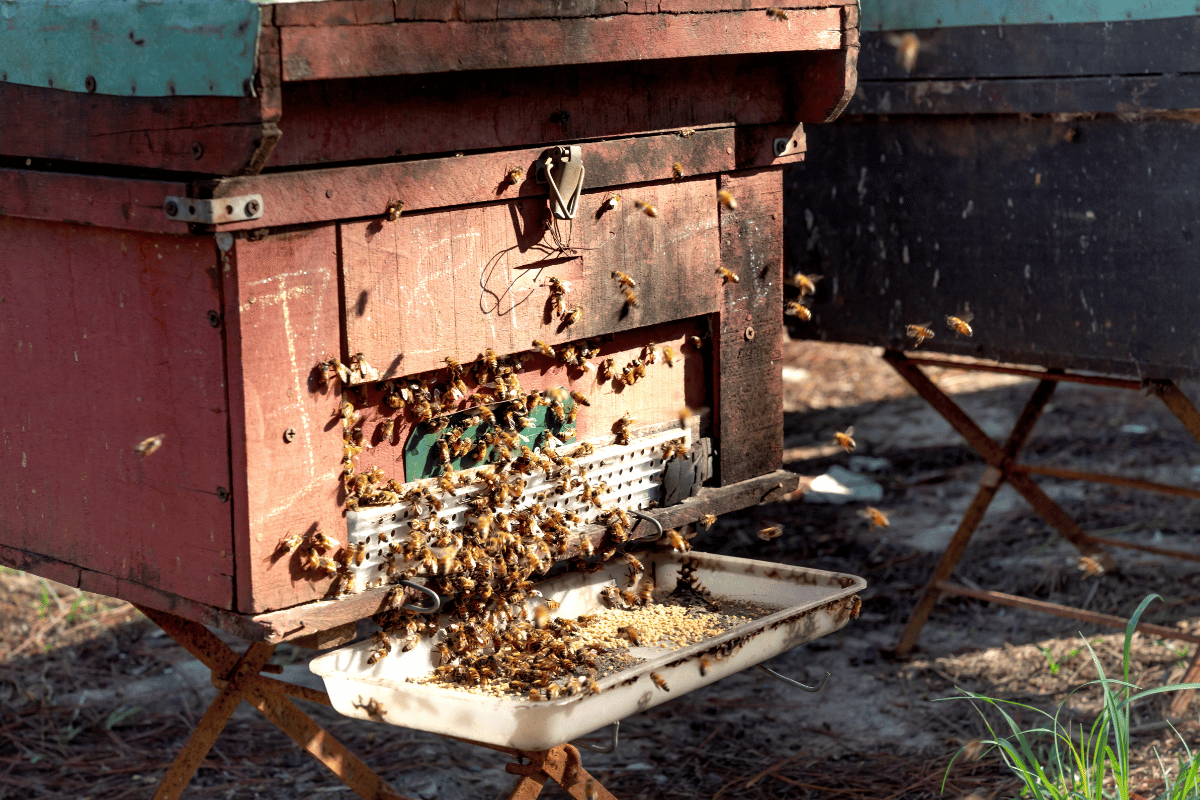
Introduction: Why beehive management matters
Beehives play a vital role in the lives of bees. A well-maintained and organized hive is not merely a wooden structure but a thriving, healthy community of bees (Underwood et al., 2019). The productivity of a bee colony depends greatly on the condition and health of its hive (Sperandio et al., 2019). As human-made structures, beehives are designed to house and support large colonies of bees. When properly managed, a hive provides an ideal environment for breeding and honey production — with a single hive generating up to $140 in income (Versino, 2025). To care for bees effectively, it is also important to understand their unique characteristics. These sentient creatures exhibit behaviors that often mirror those of humans. They are modest, highly intelligent, and live in an organized society with roles and responsibilities similar to our own (Menzel, 2021).
Just as humans value living in a clean and healthy environment, free from pests and diseases or pesticide contamination, bees respond and behave similarly (Ibrohimov & Rasulov, 2023). Therefore, the health and conditions of the hives must be effectively managed for practical beekeeping and honey production. This article will focus on bee types, beekeeping tools, reasons for beehive management, and methods or strategies for effectively managing the bee hives.
Types and Roles of Bees in a Colony
Common Bee Types: Russian, African, European (Abrol, 2013)
Bee Roles Within the Hive:
- Queen Bee – The leader and egg layer
- Worker Bees – Feed the brood, clean the hive, and forage
- Drone Bees – Mate with the queen
Essential beekeeping tools and hive components
The following are the components of beehives and how they should be maintained.
1. Bottom Board
It acts as the base of the beehive. It supports the entire structure and has small holes to allow for the entry of drones and workers (the holes are so small that the queen can't get out of the hive).
Maintenance Tips
The board should be cleaned regularly to remove debris, pests, and dead bees. It should also have proper ventilation to allow free circulation of air in and out of the hive. This will prevent the stifling and suffocation of bees, which might result in their death or absconding. The board should also be checked regularly, including repairing or replacing damaged parts.
2. Brood Box
Without the queen, a beehive cannot function effectively. The brood box serves as the primary living space for both the queen and the worker bees that care for the brood. It should be inspected regularly for signs of pests, disease, or mold, and cleaned frequently to maintain hygiene. The structure must also be checked for cracks or other damage to ensure a safe and stable environment for the colony.
3. Frames and foundations
The frame plays a fundamental role in honey production. It is a structure made of wires that holds the comb where bees store honey, pollen, and brood. For effective honey production, frames should be maintained properly by removing any broken or damaged frames and replacing them with good ones. They should also be inspected regularly for pests and diseases, as some pest spiders and Geckos like attaching themselves to frames.
4. Queen excluders
The queen bee is the mother, leader, and unifying force of the hive. Her presence is essential to the colony’s stability and productivity. As an African proverb wisely states, “A hive without a queen is like a kingdom without a crown.” To ensure she remains within the hive, a queen excluder is used. This device prevents the queen from accessing the honey supers or escaping, while still allowing worker bees to pass freely. The excluder should be inspected regularly for damage and to ensure the openings are not large enough for the queen to pass through. It should also be cleaned frequently to remove pests, debris, or propolis buildup.
5. Honey super
They are either medium or shallow boxes where the bees store their honey for harvesting. The frames should often be inspected before and after honey harvesting to ensure there is no damage, brokerage, or pests and diseases.
Out cover (Telescoping Cover)
It is also called a Telescoping cover. It seals the entire hive, thus protecting it from extreme weather events such as rain, sun, or wind. The cover should be effectively maintained to ensure that there is no water leakage and that it can be swept easily by strong winds.
Note: A beehive should be kept in an apiary to protect it from adverse weather conditions
Effective beehive management practices
Regular hive inspection
You should analyse the status of the bee hives, examining the presence or absence of queens and their laying patterns, signs of pests and diseases, including spiders and Geckos, and finally, the bees' natural behaviour.
Pest and disease control
Most hives are prone to pests such as spiders, wax moths, termites, and Geckos. These can be contained by using approved treatment or simply removing them using a broom. Smoke can also be used as an alternative in combating this. The farmer is also encouraged to clean the tools and equipment to prevent propolis buildup regularly.
Seasonal feeding
Beehives can only be maintained when they are active. Sugar syrups should be used to feed the bee colonies during the dry seasons when nectar and water aren't available. One way of maintaining the health and good conditions of the beehives is by ensuring that the bees are available in them. In most cases, pests and diseases such as Spiders and Geckos intrude into the hives without the bees.
Keep the hives smoke-free
Bees can easily be absconded by smoke (that is why smoke guns are often used during honey harvesting and bee feeding) by causing stifling and suffocation, which can lead to the death of bees, including the queen. The beehive should therefore be kept far away from smoke areas, especially the kitchens, and any emissions or pollution.
Record keeping
Proper records should be kept on the health of the hive, honey production, and treatments. A 123 survey can be used for this purpose (a software tool).
Conclusion: Thriving colonies begin with well-managed hives
In beekeeping, a solid understanding of hive management, hive components, effective tools, and the queen bee's vital role is essential for maintaining a healthy and productive colony. A beehive thrives only when every part, no matter how small, is cared for with diligence and care. Through proper hive management, we harvest honey and gain valuable lessons in teamwork, patience, and harmony with the natural world.
References
- Abrol, D. (2013). Beekeeping: A compressive guide to bees and beekeeping. Scientific publishers.
- Boes, K. (2010). Honeybee colony drone production and maintenance in accordance with environmental factors: An interplay of queen and worker decisions. Insectes Sociaux, 57, 1–9.
- Floris, I., Pusceddu, M., Niolu, P., & Satta, A. (2021). Where is the honey bee queen flying? The original case of a foraging queen. Insects, 12(11), 1035.
- Ibrohimov, A., & Rasulov, I. (2023). BEES ARE THE MAINSTAY OF HUMAN HEALTH AND GREEN SPACE ACTIVITIES. Science and Innovation, 2(D10), 114–118.
- Menzel, R. (2021). A short history of studies on intelligence and brain in honeybees. Apidologie, 52(1), 23–34.
- Sperandio, G., Simonetto, A., Carnesecchi, E., Costa, C., Hatjina, F., Tosi, S., & Gilioli, G. (2019). Beekeeping and honey bee colony health: A review and conceptualization of beekeeping management practices implemented in Europe. Science of the Total Environment, 696, 133795.
- Underwood, R. M., Traver, B. E., & López-Uribe, M. M. (2019). Beekeeping management practices are associated with operation size and beekeepers’ philosophy towards in-hive chemicals. Insects, 10(1), 10.
- Versino, M. (2025). Buzz-into-Beekeeping: A Step-by-Step Guide to Starting and Succeeding with Your First Hive. Youcanprint.