


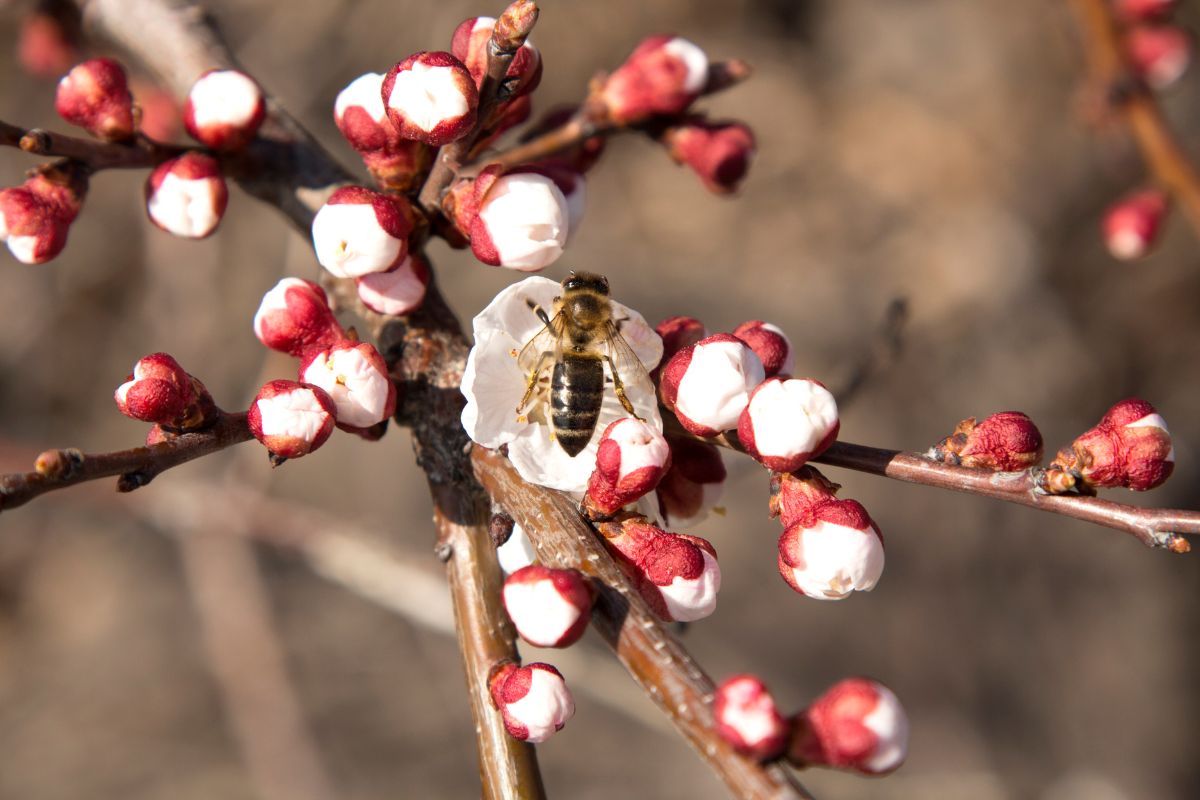
Introduction to Fruit Tree Pollination
What is Pollination?
Pollination is the process of transferring pollen grains from the male part (anther) of a flower to the female part (stigma). In nature this occurs naturally in the plant’s native environment. Most fruit trees can produce up to a million flowers, but often less than 0.1% of those become fruit—only a few hundred in total. This abundant flowering serves as a natural attraction for pollinators.
In modern commercial agriculture, introducing or encouraging pollinators in orchards is essential to maximize fruit production. Pollination remains a vital process for plant reproduction. It increases fruit set, improves fruit size and yield, and ultimately provides economic benefits for farmers.
Types of Pollination
Pollination can be categorized based on the source of pollen and the role of external factors in the process. The two main types are:
1. Self-Pollination (Autogamy)
This process typically occurs when pollen is transferred from the anthers to the stigma of the same plant species, especially within the same fruit tree. Self-pollination could be accomplished by wind or gravity and may be encouraged by a pollinator visit.
2. Cross-Pollination (Allogamy)
This process occurs when the pollen is transferred from the anther to the stigma of flowers from different individual trees or varieties. It is deeply dependent on the effect of an external agent on the transfer of pollen (by insects, wind, gravity, human beings, and water).
These categories can also be defined by how the pollen is transferred:
1. Self-Pollination
- Autogamy: Pollen is transferred within the same flower.
- Geitonogamy: Pollen is transferred from one flower to another on the same plant.
2. Cross-Pollination
- Wind Pollination: Pollen is carried by the wind.
- Animal Pollination: Pollen is transferred by animals, including insects and birds.
- Insect Pollination: Animal pollination is carried out specifically by insects like bees.
- Water Pollination: Pollen is dispersed by water.
The Importance of Effective Pollination
Both self- and cross-pollination are essential for fertilizing fruit tree flowers. Most fruit trees depend on pollination for optimal fruit production. Each method affects the quantity and size of the fruit differently. For many subtropical and tropical crops, pollination is critical to achieving marketable yields.
However, not all fruit crops have been thoroughly studied for their pollination needs. This has led to confusion about the specific requirements of different cultivars. In general, wind and self-pollination alone are insufficient for commercial fruit farming. Cross-pollination—especially insect pollination—is often much more effective.
For example, a 1999 study by the Australian Macadamia Society found that flowers visited more frequently by bees had higher nut set rates. The study also concluded that bees are significantly more effective pollinators than wind.
 placed for fruit tree pollination. .png)
Fig 1: Apiary (beehives) placed for fruit tree pollination.
Case Study: Avocado Pollination
Avocado varieties are categorized into two technically and complementary groups according to their flowering behavior, A and B:
- Group A: Flowers open in the female stage in the morning and reopen in the male stage the next afternoon.
- Group B: Flowers open in the female stage in the afternoon and reopen in the male stage the next morning.
This alternating behavior prevents self-pollination and encourages cross-pollination between the two groups. The reciprocity of this flowering patterns highly contribute to enable cross pollination which is crucial in avocado orchards.
Principles of Cross-Pollination
Although the importance of cross-pollination is widely acknowledged, it is not always effectively implemented in practice. Fruit production often focuses more on visible factors like nutrition, but understanding and applying proper pollination strategies can significantly boost productivity.
Key Principles for Successful Cross-Pollination:
- Design orchard blocks so that two compatible varieties are planted together, allowing bees to move between them.
- If want to farm only one variety, ensure enough and good distribution of pollen-donor tree that should be placed close-by farmed cultivar.
- Place beehives throughout the farm—ideally fewer than 20 per area—and protect them with surrounding vegetation.
- Attract bees to specific areas by planting nectar-rich flowers at the end of rows.
- Use only healthy, active bee colonies, and place them strategically in fields.
- Avoid pesticide poisoning by checking spray product labels and spraying in the late evening when bees are less active.
- Maintain proper spacing between trees and hives to minimize bee swarming during pollination periods.
Conclusion
Effective pollination is fundamental for fruit tree productivity, enabling fertilization and fruit development. While some fruit trees are self-pollinating, many require cross-pollination with another compatible variety to achieve optimal yields. Insect pollinators, especially bees, play a crucial role in this process, often making the difference between a light and a heavy crop. By understanding the pollination needs of each fruit tree and supporting healthy pollinator populations, growers can significantly boost both the quantity and quality of their harvests.