If hydroponics is where most people first meet smart farming, then greenhouses are where the real test begins. The moment you cover a crop, you take control of its world— temperature, humidity, light, airflow. And that’s exactly where AI and IoT can either save you hours of stress or leave you drowning in alarms you don’t know how to fix.
I’ve walked into enough polyhouses to know the scene: vents that don’t open on time, humidity creeping up like a silent killer, or nutrient lines that clog without warning. One mistake and your “protected” crop aren’t so protected anymore. That’s why tech here isn’t just about convenience but survival.
IoT in greenhouses: Your climate on a dashboard
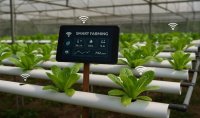
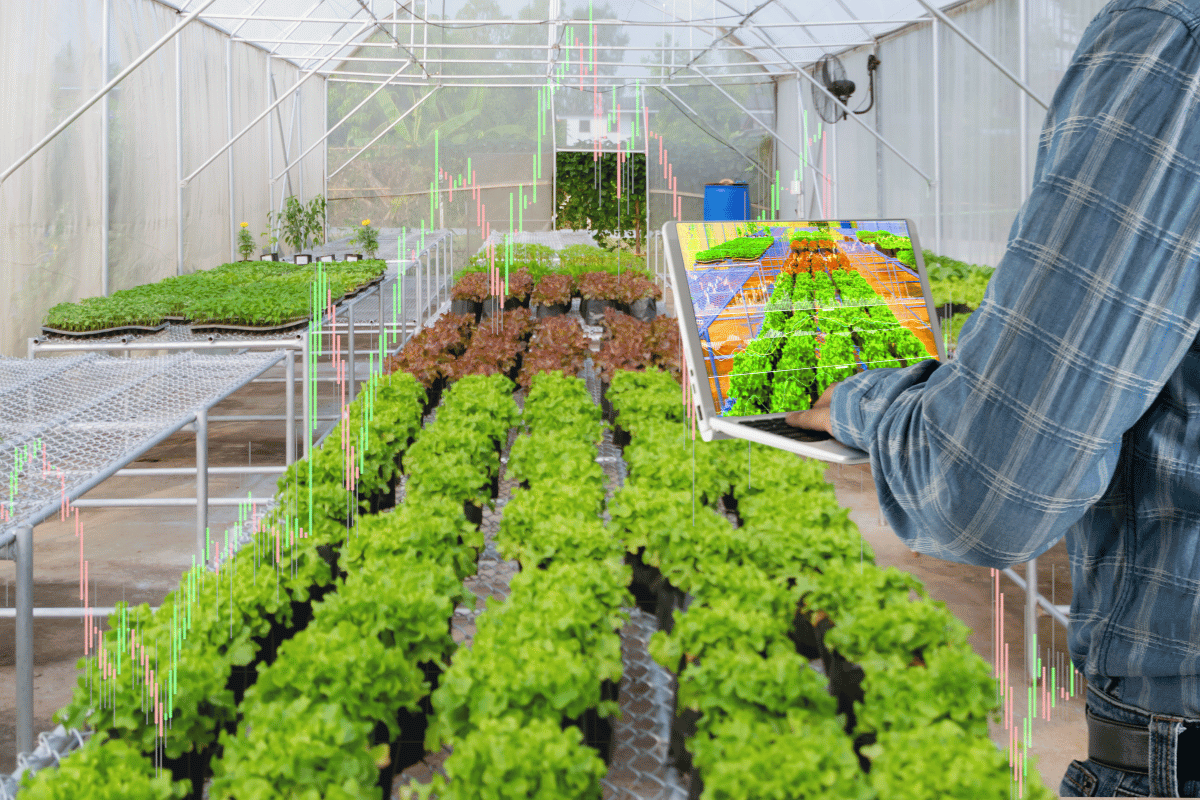
IoT in a greenhouse is simple in theory: sensors everywhere, streaming data 24/7. In practice, the magic is in what they prevent.
- A humidity sensor that tells you the perfect time to run the fans so you avoid fungal outbreaks.
- A CO₂ monitor that nudges you to keep enrichment balanced—too little, plants starve; too much, you waste money.
- Soil or substrate probes that keep fertigation on track, saving you from costly nutrient imbalances.
And the best part? You don’t need to stand there staring at gauges. It’s all on your phone.
AI in greenhouses: The brain behind the house
Where IoT measures, AI manages. It takes the chaos of temperature swings, moisture fluctuations, and plant responses—and turns them into action.
- AI that learns your crop’s behaviour over seasons and fine-tunes climate set points.
- Algorithms that predict disease outbreaks before you spot a single spot on a leaf.
- Systems that runs fertigation recipes automatically, adjusting on the fly when weather shifts outside.
The win here isn’t that AI replaces the grower. It’s that it frees the grower from babysitting the system.
From stories to results
At a capsicum farm I visited near Pune, the grower had IoT sensors linked to an AI fertigation system. Before, his staff would manually mix nutrients daily. Now, the system adjusts in real time based on EC and pH. His words: “I don’t just save labour. I sleep better.”
Another case is in a cucumber greenhouse in Gujarat, where predictive AI for humidity control
reduced downy mildew outbreaks by half. For the grower, that wasn't just healthier crops— it was the difference between breaking even and turning a profit.
The friction nobody talks about
Still, let's be honest:
- One power cut at the wrong time, and the “smart” system shuts down.
- Imported sensors break, and replacements take weeks.
- The dashboard is in English, but your farm staff reads only Gujarati or Marathi.
- And of course, the cost—you're not just buying sensors, you're buying trust that they won't fail mid-season.
Final thought: AI and IoT as enablers of precision farming
Greenhouses are sold as controlled environments. But anyone who runs one knows how quickly that control slips. AI and IoT don't make farming easier—they make it possible to hold onto that control at scale.
The farmer's job hasn't changed: grow a healthy crop, get it to market. What's changing is how many of the small, invisible decisions are now handled by systems that don't blink, don’t forget, and don't need Sundays off.
That's not hype. That’s precision, finally made practical.