Across this series, I have written about what buyers actually check, how to specify produce so disputes never start, and how a single fragile crop behaves from field to shelf. This piece is about a skill that sits underneath all of them, and that almost nobody writes about honestly. Knowing when to turn down an order.
Saying no is the hardest discipline in export. Every instinct pushes the other way. But the wrong order costs far more than the order you lose, and learning to see the difference is what separates an exporter who lasts from one who chases volume until a bad shipment catches up with them.
Why saying no is so hard
An exporter is rarely free to decide order by order. Whether he is a grower-exporter or a merchant-exporter, he has his own source of supply, and that supply has to be committed to farmers well before the season, long before the orders are firm. Commit too little and the volume simply will not be there when the buyer wants it. So the exporter starts the season already needing to move a certain quantity, which makes turning business away feel like a luxury.
On top of that sits every ordinary pressure of the trade: cash flow, the fear of losing a buyer to a competitor, and the pull of volume for its own sake. Unless you are experienced and have a deep network, with buyers waiting in line for your produce, saying no goes against everything the season has set up. That is exactly why it has to be a deliberate discipline rather than a feeling.
Why does the wrong order cost more than the lost one
The reason a bad order is so expensive is that its damage does not stop at that order. Over-commitment ripples outward, to the farmers you sourced from, to the other buyers whose fruit you now cannot supply, and to your own cash tied up in a shipment that is not performing.
And some risks sit entirely outside your control. Consider the recent disruptions to shipping. There have been cases of 70 to 100-day delays for containers arriving in the Middle East from India. When that happens, you do not merely lose the value of one container. You lose the fruit, the customer's confidence, the working capital locked in transit, and the other business you could have served with that same supply. A margin that looked attractive on paper is wiped out many times over. The order that looked best on the day it was signed becomes the most expensive one of the season.
The red flags
Some warning signs are visible before you ever commit, if you look. More data is available than exporters generally use, since there are portals and systems that show who is importing and exporting what. Three signals recur.
- A buyer who constantly changes suppliers: if an importer is forever switching exporters, ask why. Loyalty is earned by fair dealing, and its absence often leads to disputes, squeezed terms, or claims as part of how they operate.
- Off-season or off-market requests: a buyer asking for a product outside its natural season, or for specifications the origin cannot realistically meet, is describing an order set up to fail before it ships.
- Payment terms that shift all the risk to you: this is the clearest signal of all, and it deserves its own section.
Reading the payment terms
Payment terms are not universal, and this is worth understanding properly, because the right structure depends on the product and the market, not only on the buyer. In Europe, for instance, letters of credit are far less common than advances and post-shipment payments. Produce also trades under several different pricing structures, and each carries a different risk.
- Minimum guaranteed price: the buyer guarantees a floor price, with any upside shared. Some protection for the exporter.
- Fixed price: an agreed price regardless of how the market moves, which protects whichever side the market later works against.
- Open price: the fruit is sold at whatever the market gives on arrival. The highest risk for the exporter is that the price is unknown when the fruit ships.
- Commission-based sales: the importer sells on your behalf for a commission, meaning you carry the market risk until the fruit is sold.
None of these is wrong in itself. The red flag is a buyer who wants the structure that places all the risk on you and refuses any advance or prepayment to balance it. When someone will not put a rupee down before shipment and wants the fruit sold at open price on their word, the order is telling you something.
An order that should have been refused
The clearest lesson often comes from the no you failed to say. A European company once ordered coconuts on the condition that the inner flesh be free of black spots. Those spots have no impact on the product. No effect on the quality inside, no health impact, no residues. It is purely cosmetic. But to meet cosmetically perfect skin, the supplied fruit was immature and dried for 25 to 36 days to achieve the appearance the buyer wanted. That over-handling caused serious mould problems on arrival in the UK. The order cost real money and a great deal of judgment, chasing a demand that never made sense. The fruit was fine. The specification was vanity, and accepting it was the mistake.
An order that was right to decline
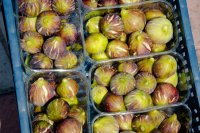
The counter-example ties back to fresh figs. After an early attempt to send Indian figs to the European market, an experience I wrote about in the figs piece, I understood clearly that Indian fresh figs are not the right fruit for that particular market on a fresh basis. So when a similar order came again, I declined it. Not because the fruit was poor, but because I already knew how the story ended. Saying no, there was no lost business. It avoided a loss and protected both the buyer and my operation from repeating a known mistake.
Turning a borderline no into a workable yes
Not every risky order should be refused outright. The question is whether the upside genuinely outweighs the risk, meaning a real profit, a valuable new relationship, or a system worth building for the future. When it does, the answer can be yes, but only with safeguards that rebalance the risk: an advance or prepayment, a smaller trial volume before a full commitment, third-party quality control on arrival, and clear written tolerances. A borderline order becomes acceptable not because the risk disappears, but because you have structured it so a bad outcome cannot sink you.
Saying no to a good buyer
There is also a right way to decline. With a strong, long-term buyer, a well-explained no does not damage the relationship. It protects it. When an order genuinely cannot be fulfilled well, or the conditions around it create real problems, a good buyer understands. Explaining honestly why you are stepping back builds more trust than accepting an order you know will disappoint them. The relationship is the asset. A single order never is.
The one thing to remember
If you take one thing from this, take this. Before accepting an order you are unsure about, ask not what it earns if it goes well, but what it costs if it goes wrong, and whether your supply, your cash, and your farmers can absorb that cost. The best exporters are not the ones who say yes to everything. They are the ones who know exactly which orders to let go.