


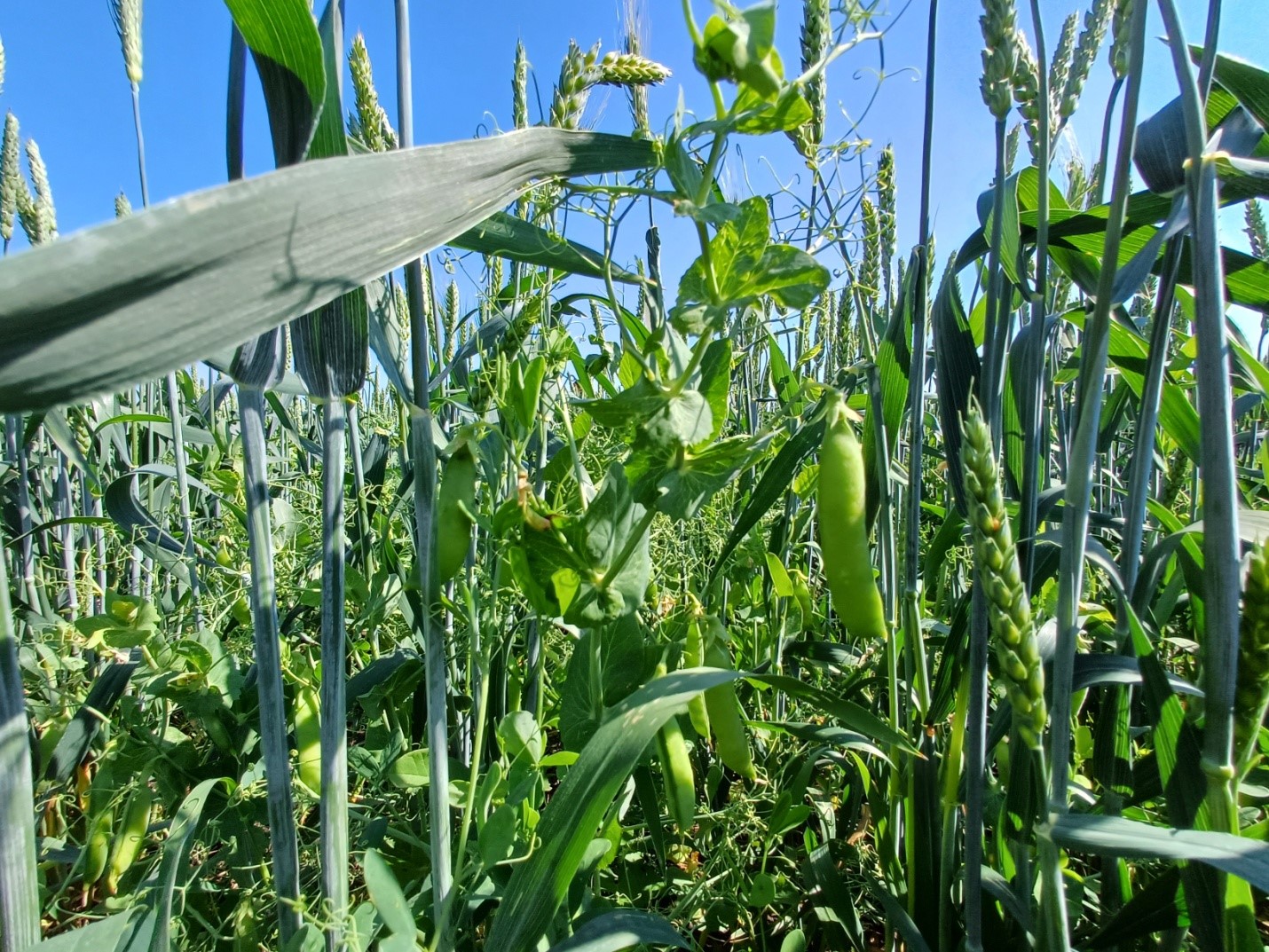
Photo: Wheat-pea intercropping at Rimski Šančevi, Serbia (photo by Rada Šućur, 2025)
Wheat-Pea Intercropping: Boosting Sustainability, Yield, and Soil Health in Modern Agriculture
One of the most common intercropping systems is the production of mixtures of certain annual legumes with cereals, which are used extensively for forage production. This kind of cultivation shows an improved use of resources such as light, water, and mineral nutrients due to the fact that they do not compete for the same resources. As it was previously said, a mixture of 2 crops is still more effective when used for fodder than for grain production. In recent years, among researchers and farmers, interest in intercropping cultivation for human food using certain mixtures has been increasing (Pankou et al., 2022).
Benefits of Wheat-Pea Intercropping for Sustainable Agriculture
Intercropping supports sustainable agriculture because of multiple benefits coming from it:
- reduced energy consumption and greenhouse gas emissions,
- increased total yield and land-use efficiency,
- enhanced yield stability of cropping systems,
- improved light, water, and nutrient utilization,
- better control of weeds, insects, and diseases
- improving soil conservation
- the improvement of physical, chemical, and biological soil fertility,
- rotation
It is well known that nitrogen is a key contributor to wheat yield, and without fertilizer inputs, production of this crop is almost impossible. On the other hand, some plants naturally can transform inaccessible forms of nitrogen. The most common species are from the Fabaceae family, in other words, legumes. Depending on pea varieties, nitrogen content in the soil can increase due to the fixation of atmospheric nitrogen that is not available for plants to use.
Nitrogen Fixation: The Key to Higher Wheat Yields
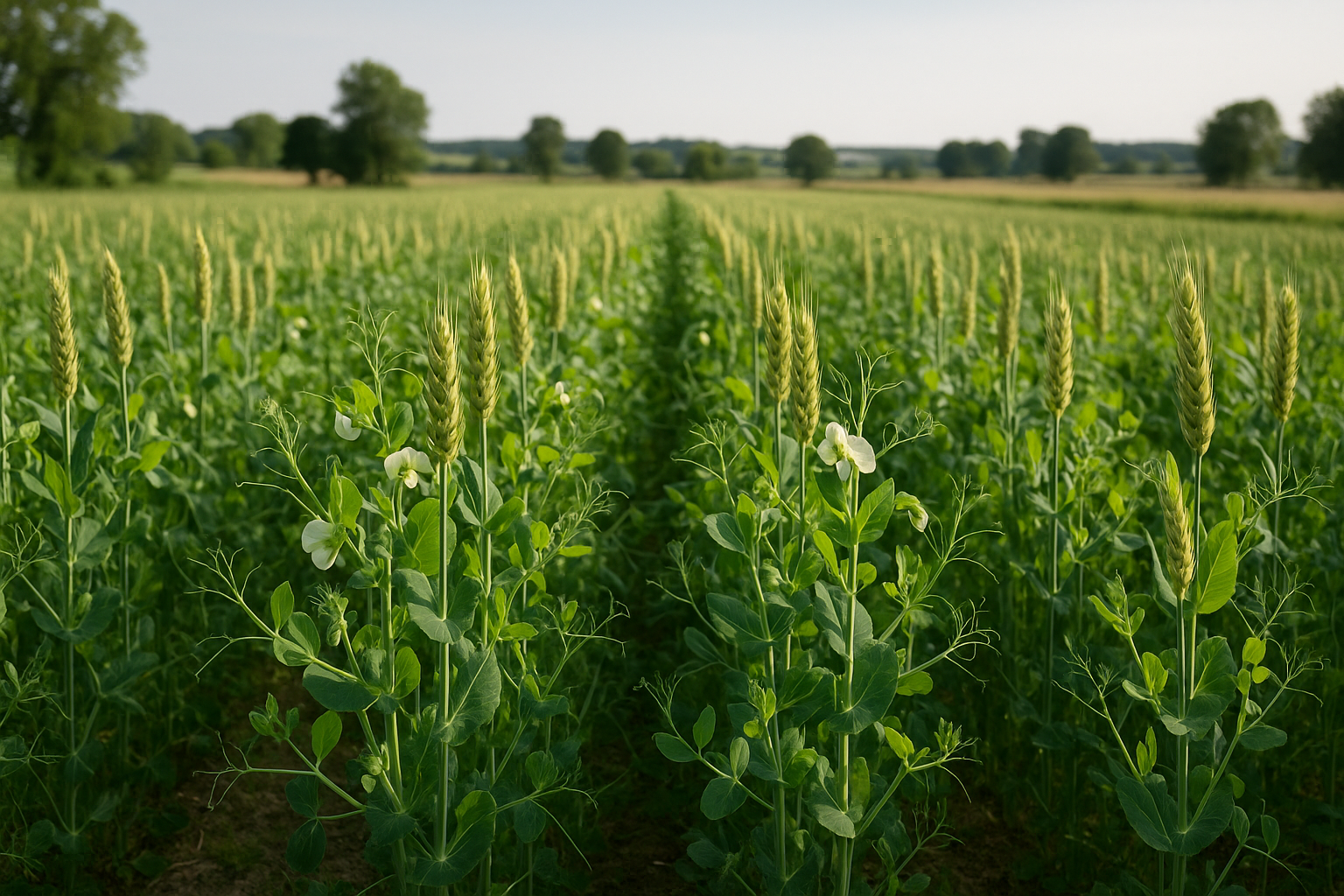
How is it even possible for plants to use the inaccessible form of nitrogen? In fact, in the legume root system, a symbiotic relationship occurs between the plant and bacteria housed in its nodes, and that’s how the plant has the ability to fix atmospheric nitrogen. Cereals are characterized by a high level of competitiveness in terms of adoption of this element, which means growing wheat-pea intercropping can be valuable for wheat in terms of natural nitrogen supply by pea roots. It is not only the wheat that has benefited from this mutual cultivation. Considering that the pea is characterized by a prostrated stem, wheat, in this case, can serve as a support and carrier for the pea. This way, the pea tendrils wrap around the wheat stem and hold the plant upright.
The competitiveness of wheat in terms of N absorption allows them to exploit residual mineral N from previous crops, whereas the fixation of atmospheric nitrogen by peas provides an additional resource for wheat needs while helping to meet the nutrient requirements of its crop partner. Growing 2 species together can help complement the soil's mineral reserves and, thus, maintain its natural fertility. This is why soil used for intercropping is proportionally richer in nitrogen than monocropping. Between wheat and pea, inter-specific competition for the soil nitrogen can occur, but it’s lower than the intra-specific competition between wheat plants in the sole crop. Due to the optimized use of N in wheat-pea mixture, yields tend to be higher in such systems compared to sole crops with the same level of inputs, especially when the level of N fertilization is low.
Yield and Quality Improvements in Intercropping Systems
Wheat, in mixture with pea, can stimulate its partner to fix more atmospheric N by symbiosis to meet its needs, which disrupts the development of weeds due to the lack of nitrogen resources. Allelopathy is also an important factor that can explain the lowering of weeds in intercropping, which can be explained by the direct or indirect biochemical interaction performed by joint plants to prevent weeds or pathogens.
In some systems, such as organic farming, wheat with a higher protein rate is more valuable on the market and can make more profit for producers. However, nitrogen is the main and most limiting input if a high protein grain content is wanted. The better quality of grain produced in a joint cropping system can also benefit farmers by increasing the protein content (Mamine and Farès, 2020).
Challenges and Considerations in Wheat-Pea Intercropping
In addition to the advantages provided by this production system, there are also certain disadvantages of wheat-pea cultivation. The first obstacle encountered is the lack of varieties selected for intercropping, so genotypes created for monocropping are often used. This leads to a large variation in the yield of both species. Additionally, the performance of a cultivar grown as a sole crop does not always represent its performance in the intercropping system due to local selection pressures caused by inter-specific neighbor interactions in mixtures.
Also, it is important to find suitable combinations of cultivars that can have a higher yield, but also to determine traits that are important for intercropping (Annicchiarico et al., 2019). Although intercropping, which combines legumes with cereals, can increase the quality of forage, extra work is still required to prepare and plant the seeds. In terms of plant protection, mixed crops' lack of tolerance to herbicides represents an additional obstacle during production.
References
1. Mamine, F., & Farès, M. H. (2020). Barriers and levers to developing wheat–pea intercropping in Europe: A review. Sustainability, 12(17), 6962.
2. Pankou, C., Lithourgidis, A., Menexes, G., & Dordas, C. (2022). The importance of selecting cultivars in wheat–pea intercropping systems for high productivity. Agronomy, 12(10), 2367.
3. Annicchiarico, P., Collins, R. P., De Ron, A. M., Firmat, C., Litrico, I., & Hauggaard-Nielsen, H. (2019). Do we need specific breeding for legume-based mixtures? Advances in Agronomy, 157, 141-215.
Further reading
Intercropping for better soil and water management
Agroforestry: Intercropping with trees on farms and pastures - with a focus on the subhumid tropics
What is intercropping and why is it better than monoculture?
The Powerful Strategy of Intercropping Maize and Watermelon
Maximizing Sugarcane Yields and Sustainability with Intercropping
Double Yields and Income with Maize-Vegetable Intercropping
Syntropic Agroforestry Orchard with Red Fruit as a Cash Crop in Mediterranean
The tradition of ancient wheat varieties as ground cover in Los Vélez, Almería
AI-Powered Wheat Growth Prediction Using the BBCH Scale for Better Crop Management