The concept of Circular Bioeconomy is gaining increasing significance in the agricultural sector as a sustainable and resilient alternative to traditional linear models. Unlike the dominant "take-make-dispose" approach in industrial agriculture, circular bioeconomy focuses on regenerating natural systems, minimizing waste, and reintegrating all outputs into the production cycle.
As a sustainability consultant working across Europe, I recently had the opportunity to visit a large-scale agri-food processing facility in Italy. This facility specializes in grape processing and wine production. What I witnessed was inspiring: a fully functioning circular bioeconomy model in
which every waste stream (including grape pomace, wastewater, and carbon dioxide) is transformed into valuable by-products. In this article, I share a tangible example of how circular thinking can be applied in agriculture.
What Is Circular Bioeconomy?
Circular bioeconomy combines the principles of the circular economy with the sustainable use of biological resources. It is based on using renewable biological sources, such as plants, animals, and microorganisms, to produce food, materials, and energy while keeping those resources in a closed-loop system. In agriculture, this approach includes practices like composting crop residues, producing biogas from animal waste, and reclaiming irrigation water. The goal is not merely to manage waste but to manage resources holistically.
A Real-World Example: Zero-Waste Wine Production
At the facility I visited, wine production involves fermentation and bottling and a series of integrated processes that reflect the logic of a circular bioeconomy. Key practices include:
1. Energy from Organic Waste
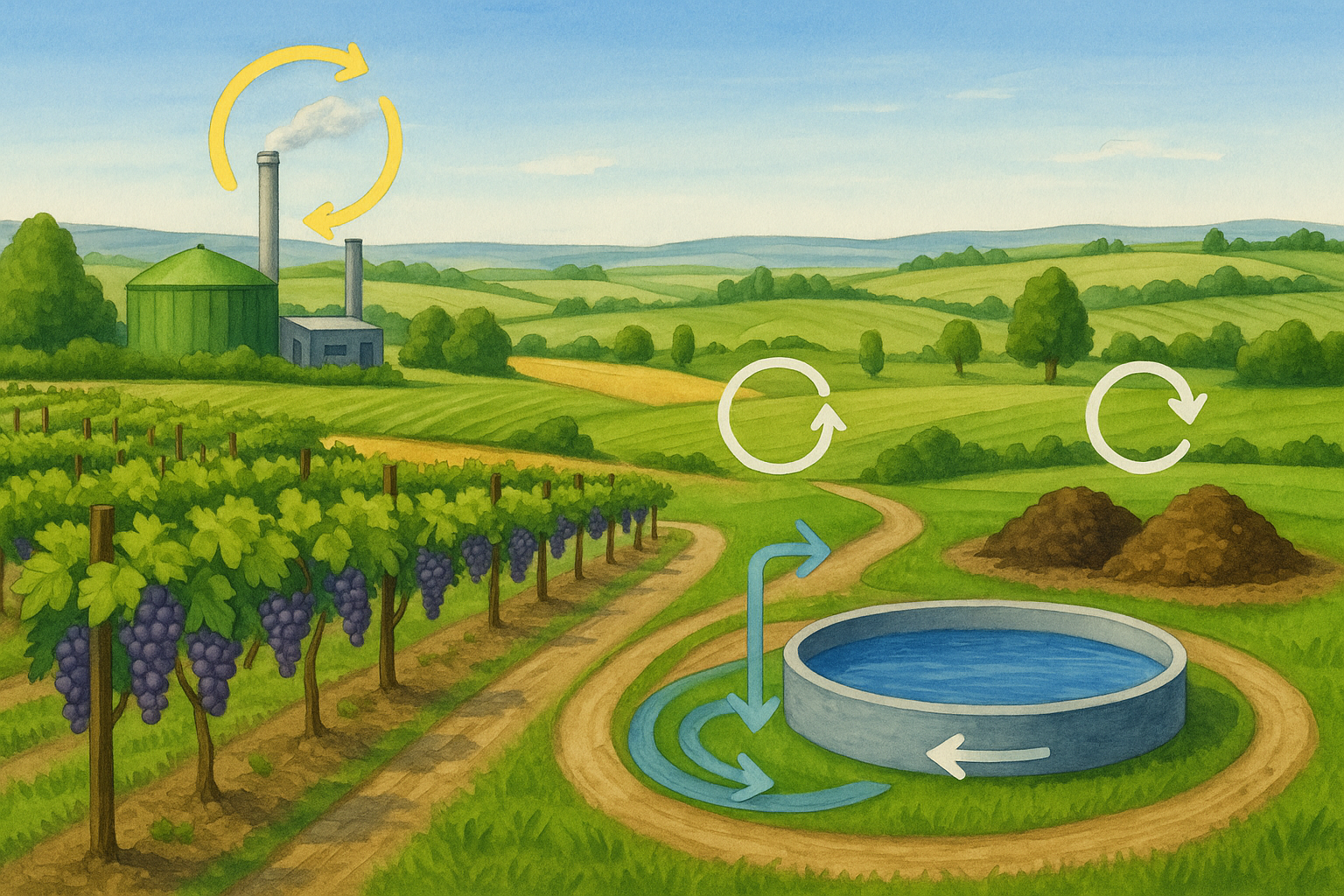
Grape pomace (skins, stems, and seeds) is not discarded. Instead, it is either dried and used as biomass for energy or anaerobically digested to produce biogas. The energy generated powers part of the facility.
2. Circular Water Use
Used water is filtered and treated before being either reused within the plant or employed in irrigating nearby vineyards.
3. Valorization of By-Products
By-products such as tartaric acid and alcohol, naturally generated during wine production, are sold to pharmaceutical and cosmetic industries—creating new revenue streams.
4. CO₂ Recovery
CO₂ released during fermentation is captured through dedicated systems and reused in the food industry.
5. Compost and Soil Nutrients
Unusable solid residues are composted and returned to the fields, completing the nutrient cycle.
All these processes are monitored using digital systems; inputs, outputs, and efficiency are tracked in real time. This is not only sustainability in action but also smart, data-driven circular design.
Why Does It Matter?
This example clearly demonstrates why circular bioeconomy practices are vital for modern agriculture:
- Environmental Responsibility: Circular systems reduce greenhouse gas emissions, preserve biodiversity, and minimize the ecological footprint.
- Economic Resilience: Converting waste into value cuts disposal costs and opens new income opportunities.
- Regulatory Compliance: EU regulations increasingly demand environmental transparency; circular models facilitate compliance.
- Market Trust: Consumers expect environmental responsibility—circular practices strengthen brand reputation.
Opportunities for Farmers and SMEs
This model isn't limited to large facilities. Small farmers and agricultural SMEs can also benefit from circular practices. Here are a few feasible steps:
- Composting: Harvest residues or food scraps can be composted and returned to the soil.
- Biogas Production: Small-scale biogas systems can generate both energy and organic fertilizer.
- Water Recovery: Simple greywater systems can be used for irrigation.
- Value Chain Collaboration: Side streams can be shared with other sectors (e.g., fruit peels used as animal feed).
Technology plays a vital role in this transformation. Smart sensors, monitoring software, and tracking systems optimize resource use and make sustainability efforts measurable. Education and collaboration are also key. Agricultural cooperatives, universities, and public institutions should support pilot projects and promote knowledge sharing.
Conclusion: The Future Belongs to the Regenerative
Transitioning to a circular bioeconomy is not only an environmental imperative but also an economic and strategic opportunity. The agriculture sector, with its close relationship to nature, can lead this transformation. As I observed in the wine production facility I visited, systems that fully utilize waste are not just theoretical; they're already being implemented successfully in practice. With knowledge,
planning and investment, such systems can become the norm.
Let this article invite you: "What am I wasting right now, and how can I turn it into a resource?" Because when waste becomes valuable, agriculture grows stronger, society thrives, and sustainability becomes a reality, not just an aspiration.
Further reading
Factors Influencing Wine Characteristics
Which are the most famous wine varieties?
Vineyard Management Using Advanced Precision Viticulture Techniques
How to Grow Grapes for Profit - Commercial Grape Grower’s Essential Guide
What is circular bioeconomy/agriculture?
From Waste to Resource: Exploring Circular Solutions for Cocoa Pod Husk