A Silent Revolution for Traditional Wine Producers: Can Waste Become Profit?
From grape pomace to energy, from wastewater to irrigation, from CO₂ to revenue… Circular systems are not a cost but a new business model.
The Revolution Arrives Quietly
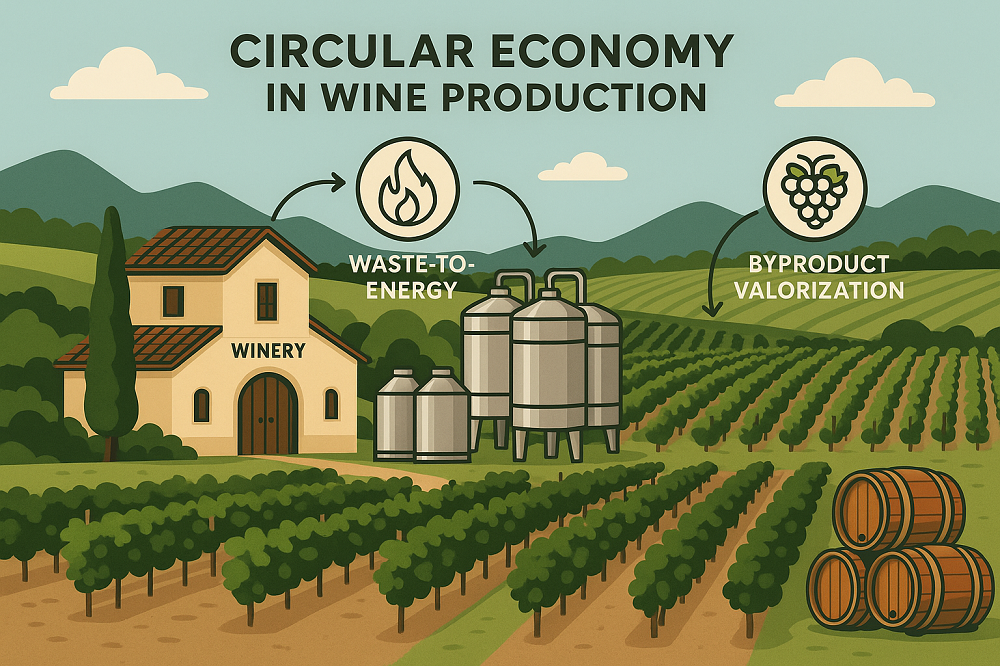
When we think of traditional wine production, we picture vineyards, fermentation tanks, oak barrels, and aged wines. However, this traditional process naturally generates large volumes of waste: grape pomace, carbon dioxide gas, wastewater, lees… Until now, these byproducts have mostly been seen as burdens to dispose of.
Yet, new-generation production models are turning this waste into valuable resources. The surprising part? This transformation makes financial sense even for conventional producers who are more focused on profit than environmental concerns.
Grape Pomace: Waste or Raw Material?
After grape juice is extracted, the remaining skins, seeds, and stems makeup about 25-30% of the total grape volume. This pomace is an ideal organic feedstock for biogas production. With a small-scale anaerobic digestion unit, processing 500 tons of pomace annually can generate around 100,000 kWh of energy, covering up to 40% of a facility's electricity needs. Alternatively, the pomace can be dried and transformed into natural fertilizer or used as animal feed additive. In both cases, the cost of disposal (around €60 per ton) is eliminated and replaced with a revenue-generating byproduct. Furthermore, this process can be carried out in collaboration with local agricultural cooperatives.
Generating Revenue from Fermentation CO₂
During fermentation, carbon dioxide (CO₂) is naturally released and typically vented into the atmosphere. However, modern CO₂ capture systems can collect and sell this gas to the beverage industry, carbonated drink producers, or greenhouse operations. A facility producing 100,000 liters annually can generate around 8–10 tons of CO₂, with up to 80% of it recoverable. In the European market, food-grade CO₂ sells for approximately €150–200 per ton. Installation of such systems typically costs around €20,000 and pays for itself within 3 years.
Water: A Second Chance at Use
Wine production requires intensive water use during cleaning, fermentation, and bottling. This water can be filtered through basic systems and reused for vineyard irrigation. Installing such systems costs between €15,000–25,000 and pays off within 3–4 years. Moreover, local governments often provide incentives for water conservation and environmental compliance. In drought-prone regions, water reuse is not just a cost-saving strategy; it’s a safeguard for long-term production.
Tartaric Acid, Alcohol, and Other Chemical Byproducts
During wine production, natural tartaric acid is released, a valuable raw material for the food and cosmetics industries. Additionally, residual ethanol from winemaking can be used in cleaning products or blended biofuels.
Low-capacity extraction units can be installed to purify these byproducts. In a winery producing 100,000 bottles per year, this system can generate €10,000–15,000 annually. These systems are modular and can be scaled based on production size.
Compost: Returning to the Soil
The remaining solid waste (pomace, lees, stems) can be composted into rich soil nutrients. This reduces the need to purchase external fertilizers and increases the soil's water retention capacity.
Composting systems require a low initial investment—just a few thousand euros—and the resulting compost can be used in vineyards or sold to nearby farmers. Thus, waste is returned to the land, creating ecological and economic value.
Cost and Payback of the System
So, how much does it cost to implement all these systems?
Depending on facility size, the total investment for circular systems ranges from €75,000 to €150,000 for a medium-sized winery. However, savings and additional income allow the system to pay for itself in 3 to 5 years.
Example of annual revenue potential:
- Energy savings: €12,000
- CO₂ sales: €6,000
- Byproduct sales (tartaric acid, ethanol): €10,000
- Compost and fertilizer: €3,000
- Waste disposal cost savings: €5,000
Total potential annual gain: ≈ €36,000
This means unlocking value from existing resources in your current process, creating a second income stream beyond winemaking.
(These figures were scaled from our graduate thesis research.)
Competitive Advantage:
You're Selling More Than Just Wine 70% of consumers prefer environmentally conscious brands. In Europe especially, wines with organic and sustainable production certifications sell at higher prices. These systems can also help wineries obtain ecolabels (such as the EU Ecolabel), opening up new export opportunities. Distributors no longer look only at quality; they assess how a product is made. Major retail chains and importers increasingly favor producers with a low carbon footprint, effective waste management, and strong social responsibility practices.
Start Small, Scale Smart
You don't need a massive transformation to begin. Here's how you can start gradually:
- Small-scale composting system
- Basic water reuse filtration
- Drying grape pomace into fertilizer
- CO₂ sharing partnerships with local businesses
- Preparing for sustainability certifications
Because these initial investments are relatively low-risk, you can test systems before scaling.
You Don't Have to Be Idealistic, Just Smart
Circular bioeconomy practices don't just benefit the planet; they open up new income opportunities for traditional producers. Winemaking is no longer just about turning grapes into wine; it's about producing energy, raw materials, fertilizer, and brand value. This transformation is not just an environmental ideal; it’s a practical and strategic path forward.
You don't need to ignore nature to turn a profit; in fact, working with nature is how you stay profitable in the long run. The future belongs to those who think circular, not linear.
Further reading
Turning Waste into Value: A Real-Life Example of Circular Bioeconomy in Agriculture
Factors Influencing Wine Characteristics
Which are the most famous wine varieties?
Vineyard Management Using Advanced Precision Viticulture Techniques
How to Grow Grapes for Profit - Commercial Grape Grower’s Essential Guide
What is circular bioeconomy/agriculture?
From Waste to Resource: Exploring Circular Solutions for Cocoa Pod Husk