


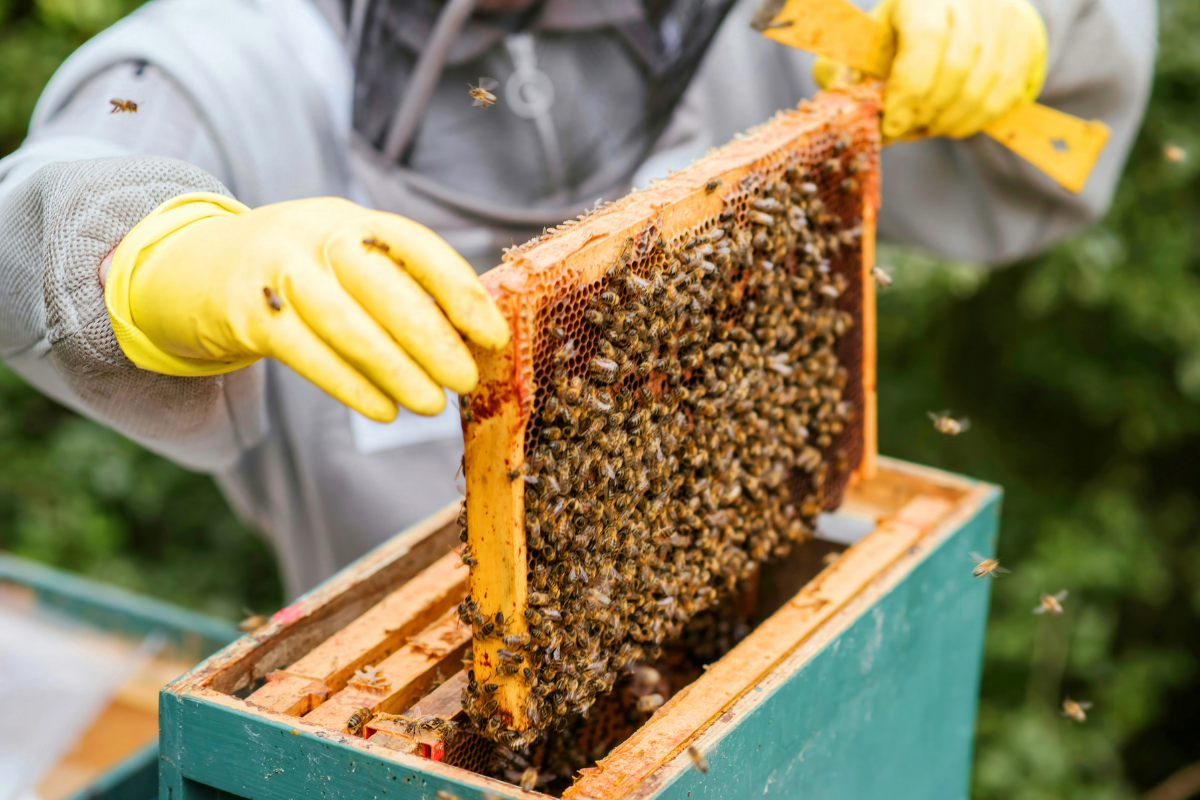
Why sustainable beekeeping matters
Sustainable apiculture, often known as ethical beekeeping, focuses on practices that enhance the long-term health of bee populations and their ecosystems. Beekeeping is both a professional pursuit and a pillar of food security. The high demand for beekeeping products stems from their nutritional value, and apiculture itself sits at the intersection of high-stakes agriculture and sensitive environmental conservation.
Historically, beekeeping was mainly a means to collect honey, wax, and propolis for human use. But the practice has evolved to recognize the broader ecological role of bees as pollinators and the environmental consequences of different management approaches. Bees potentially contribute to 15 of the 17 UN Sustainable Development Goals, from food security to biodiversity conservation. For anyone new to the field, understanding beekeeping basics and honeybee biology is an essential first step.
Today, the honey bee is recognized as a critical bio-input, an integral part of the agricultural system that supports food security through its pollination services. From small-scale farmers in developing areas using hives to generate income to large commercial orchards in Western countries, bees remain indispensable for the nutritional variety of our diets. The shift towards sustainable apiculture has moved beyond a niche preference of organic supporters. It has become a survival strategy for the industry. By emphasizing the health of pollinators over immediate harvest yields, sustainable beekeeping aims to establish a cycle that supports biodiversity while strengthening rural economies.
The shift from production to preservation
The core of sustainable beekeeping lies in a philosophical change: focusing on colony health rather than maximizing honey production. This means refraining from over-harvesting, ensuring bees have sufficient honey reserves for survival, and taking measures to prevent swarming and disease. In traditional, high-intensity systems, there is constant pressure to extract every last drop of honey and substitute it with inexpensive sugar syrup or high-fructose corn syrup to sustain the bees through winter. Many beekeepers still rely on these emergency feeding methods, and understanding how to feed bees properly is critical for anyone managing hives.
Field studies are increasingly showing that this approach undermines bees' immune systems. Honey contains complex micronutrients, enzymes, and antimicrobial compounds that sugar water simply cannot replicate. Understanding how honey is made by bees helps explain why it is irreplaceable as a food source. A sustainable method involves conservative harvesting, which ensures that the colony retains its natural reserves, especially during the overwintering period. This approach minimizes the need for emergency feeding and leads to stronger populations in the spring.
Habitat management and the forage crisis
One of the most significant hurdles in modern beekeeping is the nutritional desert created by monoculture farming. When a thousand acres are planted with a single crop, bees may have an abundance of food for two weeks during the bloom, followed by months of starvation. This boom-and-bust cycle creates massive nutritional stress, making colonies more susceptible to diseases and pesticide exposure.
In the field, sustainable beekeeping works to address this by managing the landscape as much as the hive. Key strategies include:
- Strategic apiary placement. Avoiding areas of intense chemical use and high hive density to prevent overgrazing of local flora. Choosing the right beehive location and placement is one of the most impactful decisions a beekeeper can make.
- Floral diversity initiatives. Working with local landowners to plant hedgerows, cover crops, and pollinator strips that provide a succession of blooms from early spring to late autumn.
- Carrying capacity awareness. Recognizing that a landscape can only support a certain number of pollinators. Overcrowding an area with managed honey bees can inadvertently harm wild, native bee populations through competition.
Genetics and the power of the local bee
For decades, the trend in apiculture was to ship high-performance queens across continents, prized for their gentleness or record-breaking honey production. These traveling genetics, however, often struggle when faced with local pathogens or harsh winter climates they were not bred for.
Sustainability in breeding now focuses on local adaptation. By selecting for queens that thrive in specific regional microclimates and show natural hygienic behavior (the ability to detect and remove diseased larvae), beekeepers can reduce their reliance on medications. Understanding bee society structure and organization helps clarify why the queen's genetics are so central to colony resilience. This approach, known as survivor stock, cultivates a genetic pool of resilience, ensuring that colonies can endure shifting weather patterns without constant human intervention.
Traceability, record keeping, and pest control
As consumers become more conscious of food origins, traceability has become the bridge between ethical field practices and market viability. A beekeeper must be able to prove where honey came from and how the bees were treated.
Modern record-keeping has evolved into digital tracking systems that log hive movements, treatment dates, and harvest batches. This transparency serves two purposes. First, it acts as a risk management tool: if a batch is contaminated, it can be isolated immediately. Second, it builds a story of origin that allows sustainable producers to command a premium price, offsetting the costs associated with lower-intensity management.
Meticulous record keeping of hive inspections also helps beekeepers monitor colony health, identify problems early, and adapt management strategies. Pest control is a significant concern, particularly the Varroa destructor mite. Traditional Varroa management relied on potent synthetic chemical strips for immediate elimination. While effective in the short term, these treatments can leave residues in the wax and lead to treatment-resistant pests.
Contemporary sustainable approaches are moving towards Integrated Pest Management (IPM). This method combines mechanical techniques, such as drone brood removal, with organic materials like essential oils or organic acids (such as oxalic acid) that occur naturally in the environment and break down without leaving harmful residues in hive products. A comprehensive guide to honeybee diseases and colony health management covers these strategies in greater detail. These practices demand regular inspections and diligent record keeping.
The challenges of the field
Despite the evident advantages, achieving full sustainability comes with real obstacles. The most pressing is the economic-ecological conflict. A beekeeper who allows more honey to remain in the hive for the bees is, in effect, forfeiting a considerable share of their yearly income. For many small-scale producers, the immediate financial pressure to over-harvest is substantial.
Environmental factors can also be disruptive. Even the most responsible beekeeper faces challenges such as:
- Pesticide drift. A neighbor's poorly timed spraying can destroy an entire season's worth of progress in one afternoon.
- Climate variability. Unforeseen frosts can eliminate early-season forage, while excessive heat can stress the brood.
- The resource gap. Achieving high-level traceability and effective biological pest management demands specialized training and time, both of which are often scarce for rural beekeepers.
Common mistakes and the path forward
Many beekeeping errors, especially among beginners, can undermine sustainability and harm colonies. A common mistake is starting without sufficient understanding of bee biology, colony management, and local environmental conditions. Failing to document observations during hive inspections may result in overlooked issues, ineffective treatments, and a poor grasp of colony dynamics. Placing a hive in an inappropriate location can subject bees to severe weather, predators, or insufficient forage, stressing the colony further.
Adopting sustainable practices requires a collaborative effort. Before starting, dedicate time to studying beekeeping from multiple sources, including local beekeeping organizations and experienced mentors. Always prioritize the health of the bees and maintain thorough records, documenting observations on queen presence, brood patterns, honey reserves, and any signs of pests or diseases. Perform regular, but not excessively frequent, hive inspections to oversee colony progress and address issues proactively. Exploring nature-based beekeeping approaches can offer valuable low-intervention models.
This effort also requires scientists to deliver data-driven solutions, policymakers to safeguard pollinator habitats from urban expansion and chemical runoff, and consumers to support beekeepers who prioritize bee health over profit. Bridging the gap between economic needs and ecological health is the only way bees will continue to be a vital part of our ecosystem for generations ahead.
References
- Verma, L. R. & Partap, U. (2023). Apiculture for Sustainable Development. ResearchGate.
- B-QUAL Australia. (2025). Sustainable Beekeeping Practices: A Guide for Ethical Apiculture. B-QUAL.
- Patel, V., Pauli, N., Biggs, E., Barbour, L. & Woodcock, B. (2020). Why bees are critical for achieving sustainable development. Ambio, 50, 49-59.
- Kuliçi, S. et al. (2025). From Hive to Policy: The Sustainable Beekeeping Practices Index (SBPI) as a Decision-Making Tool. ResearchGate.
- FAO & Apimondia. (2021). Good beekeeping practices for sustainable apiculture. Rome.