


According to estimates from the World Economic Forum, more than half of the world's GDP depends moderately or highly on nature. Yet United Nations data indicates that for every 1 dollar invested in protecting nature, 30 dollars are invested in activities that destroy it. This creates physical risks (drought, soil degradation), transition risks, and direct financial risks for banks, insurers, and investors.
Sustainability and ESG have therefore ceased to be topics relevant only to philanthropists and environmentalists. They are now at the top of the priority list for CEOs and CFOs across an increasing number of companies. The results are clear: more than 90% of global GDP is now generated by companies with public net-zero commitments. The green bond market continues to grow (currently representing a USD 3 trillion market), as does the carbon market, which shows an upward trend that appears inevitable given that the volume of carbon credits traded still covers only about one-fifth of global greenhouse gas emissions.
According to a report published by the Intergovernmental Science-Policy Platform on Biodiversity and Ecosystem Services (IPBES), the global biodiversity financing gap amounts to USD 700 billion per year. This represents an opportunity that has driven investments in regenerative agriculture, sustainable forests, watershed restoration, and ocean-based solutions, with more companies showing interest in investing in sequestration carbon credits, placing biochar among the most promising approaches.
In parallel, this decade has seen a historic response from environmental regulators. China has integrated nature into its green bond taxonomy. In Brazil, initiatives such as the Tropical Forests Forever Facility (COP30) and commitments to halt deforestation by 2030 have emerged. In Europe, increasingly stringent environmental rules have been introduced for farmers, including restrictions on pesticide use, limits on fertilizer application, and obligations to protect soils and biodiversity.
Within this context, agriculture is emerging as one of the key economic activities of this century, not only because it is essential for human survival, but also because it is fundamentally transforming its business model, shifting from being part of the problem to becoming a part of the solution.
The new agricultural business model
The agricultural sector has long been one of the economic activities with the greatest climate impact worldwide, including methane emissions from livestock, CO₂ emissions from forest burning for agricultural expansion, and ecosystem degradation caused by pesticide use. At the same time, the pace of global population growth indicates that in the next 40 years we will need to produce an amount of food equivalent to what we have produced in the last 8,000 years. Under these conditions, how can we secure food production? The answer lies in sustainable food production.
New regulatory requirements tend to impose a heavier cost structure on agricultural activity, related to certifications, increased labor needs, monitoring, and other factors. The current agricultural model therefore faces growing pressure: to produce more, with less environmental impact, with increasingly reduced margins, and in a context of rising climate risks partly caused by the sector itself. Although changing the operating model is unavoidable, it is clear that imposing rules alone is not enough. The agricultural economic model itself must be transformed on both the revenue side and the cost side. This requires a sustainability strategy that includes new instruments now available, such as the carbon market and green financial markets, as well as new technologies from Industry 4.0, including robotics, IoT, and artificial intelligence.
New revenue streams from carbon removal
On the revenue side, the European Union has opened a new opportunity with the creation of the carbon removals certification system. In 2024, with the approval of the CRCF Regulation, the EU established the first legal framework to ensure that any carbon removal, whether technological or land-based, is real, measurable, and verifiable. But it was only in 2026, with the adoption of the first certification methodologies, that the system became operational. From this moment onward, regenerative agricultural practices such as cover crops, agroforestry, or the application of biochar became eligible to generate certified carbon credits. This means that farmers are no longer only emitters. They can also become producers of removed carbon, creating a new source of income via the carbon market in a sector traditionally vulnerable to price fluctuations and adverse climate conditions.
In this new agricultural ecosystem, companies around the world are helping farmers transform residues into high-value resources. Firms such as Natac, Indena, and Symrise extract bioactive compounds from agro-industrial by-products, supplying natural ingredients to the cosmetics, nutraceutical, and pharmaceutical sectors. Biochar innovators like Carbo Culture, Pyreg, and Carbofex convert remaining biomass into carbon-rich materials that improve soil health and enable permanent CO₂ removal. Companies like Agrophenols integrate both approaches, demonstrating how biotechnology and carbon-negative processes can coexist within a truly circular agricultural model.
Cost reduction through technology
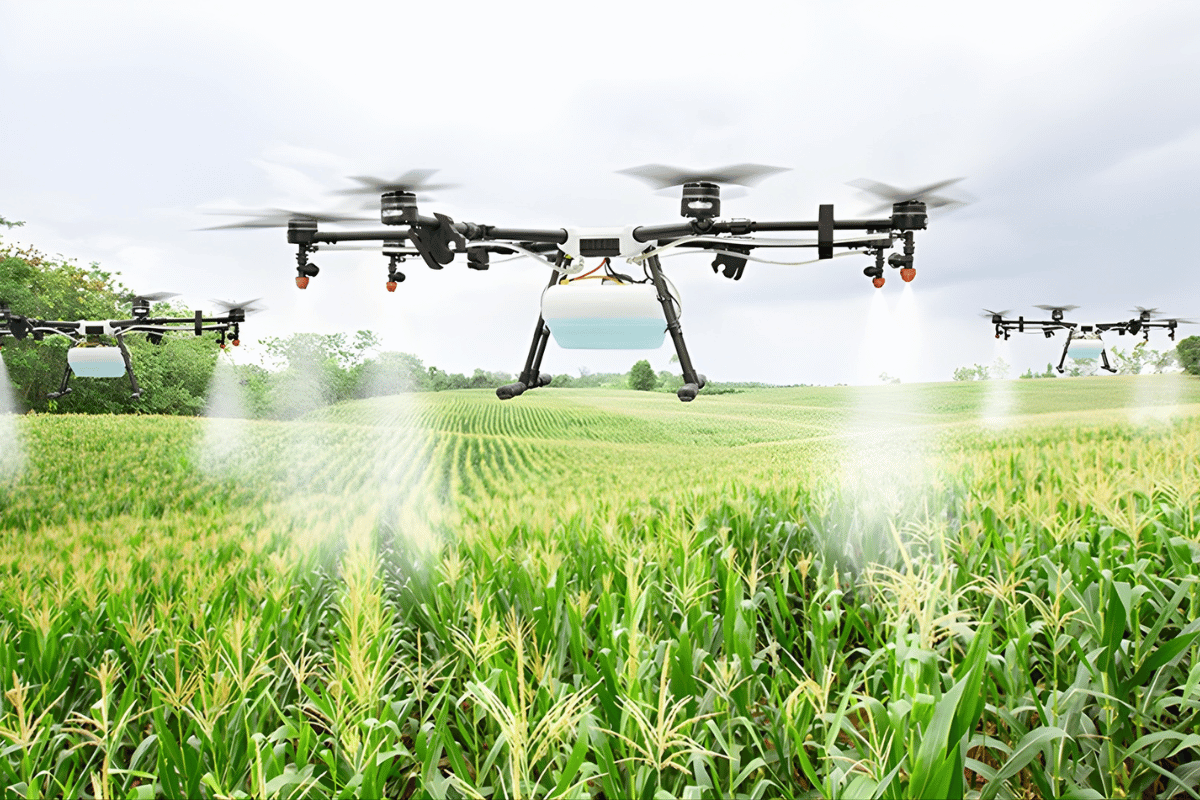
Transforming the agricultural model cannot rely solely on new revenue streams. Reducing costs is equally essential, and this is where 4.0 technologies come into play. Intelligent soil-monitoring systems, autonomous robots capable of performing field operations with millimetric precision, artificial intelligence platforms that optimize irrigation, fertilization, and pest control, and sensors that allow inputs to be applied only where they are truly needed all drastically reduce waste, lower energy and water consumption, and replace intensive practices with more efficient and sustainable operations. These technologies enable farms to produce more with fewer resources, reducing operational costs and increasing economic resilience in a context of increasingly tight margins.
A sector ready to reinvent itself
Today we live in the era of the 4th industrial revolution, which also brings with it an agricultural revolution. Between new revenue sources such as carbon credits and significant cost reductions through digitalization and automation, agriculture now has the opportunity to reshape its economic model. The sector can move beyond its reputation as one of the most polluting industries and become recognized as one of the pillars of the climate transition, combining productivity, sustainability, and new forms of value creation in a truly regenerative model.
"Sustainability is going to be the biggest thing since the Apollo mission." Mihir Gor, IBM