The challenge of efficient fertilization in open fields
Efficient fertilization in open-field leafy vegetable farming presents significant challenges. Uniform nutrient applications often result in waste, reduced profitability, and environmental losses through nutrient runoff and leaching. Additionally, frequent field monitoring requires substantial time and expertise that many farmers struggle to access.
Farmers need smarter, data-driven tools to optimize fertilizer use and maintain high yields while minimizing environmental impact.
AI-powered robotic solution for precision fertilization
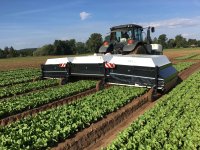
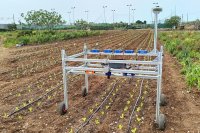
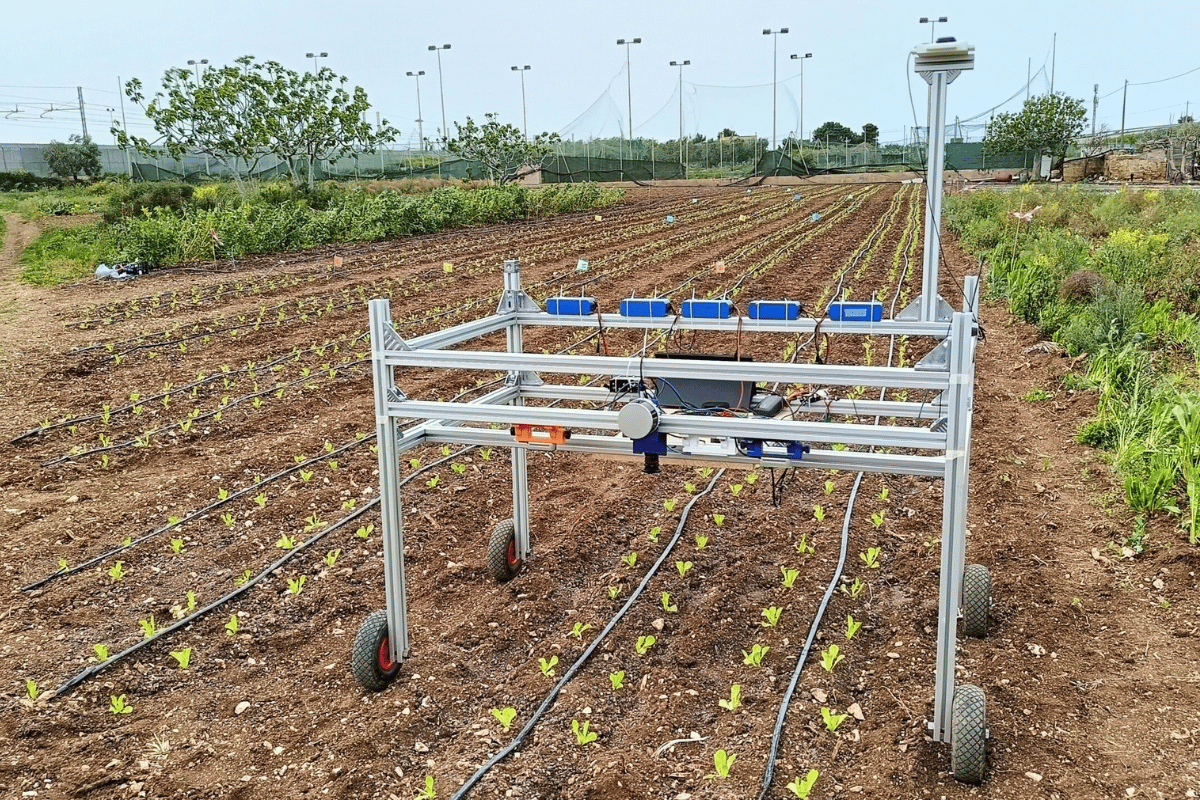
Pilot Case 3 of the AgRibot project is testing a robotic and AI-based system for precision fertilization in leafy vegetable crops, primarily lettuce. This system integrates mobile robots equipped with advanced sensors including RGB-D cameras, multispectral cameras, LiDAR, GPS, and IMU sensors.
The platform enables variable-rate fertilizer applications that respond to the specific nutrient needs of each crop area, moving beyond traditional uniform application methods. This represents a significant advance in agricultural robotics applications for crop nutrition management.
Key technology components:
- Advanced sensor suite for crop assessment
- AI algorithms for predicting nutrient demands
- Variable-rate application systems
- ROS-based robot adaptation for field navigation
- Real-time crop biomass estimation
Field trials and validation
Ongoing field trials in Italy are demonstrating that robotic sensing combined with AI modeling can optimize fertilizer application, improving nutrient use efficiency and reducing inputs without compromising yield.
The four-year pilot follows this progression:
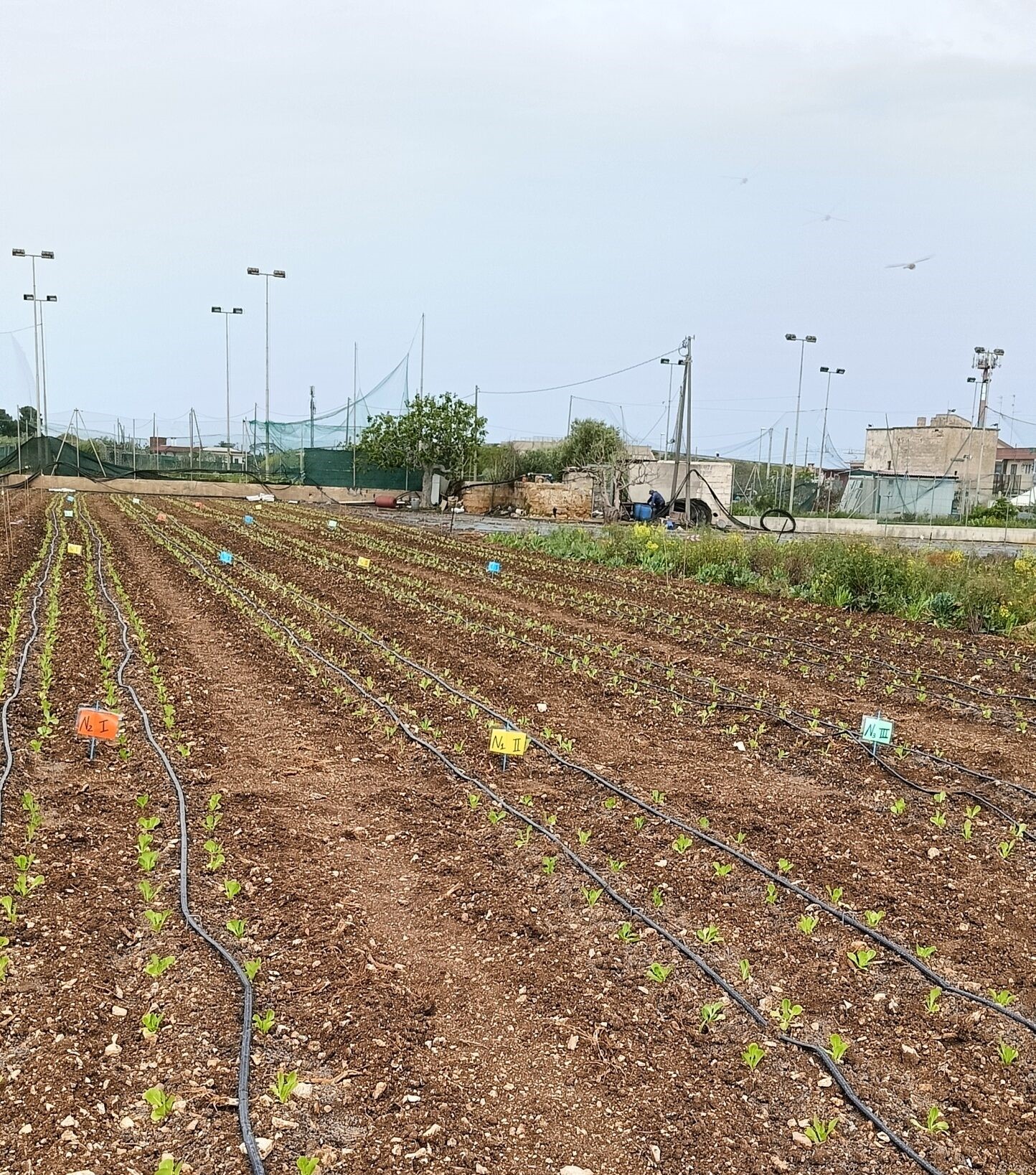
- Testbed setups and agronomic data collection
- ROS-based robot adaptation and AI algorithm development
- Field trials across multiple lettuce growth cycles
- Validation through lab-to-field performance comparison
Performance validation measures:
- Plant segmentation accuracy
- Yield comparisons with conventional methods
- Nutrient uptake efficiency
- Soil health impact assessment
- Rapid survey capability (targeting sub-1 hour per hectare)
Strong farmer collaboration ensures that solutions remain practical and adaptable to existing farm routines. The emphasis on precision agriculture principles guides all development efforts.
Expected benefits for farmers
The robotic fertilization system delivers multiple advantages:
- Cost savings: Reduced fertilizer use through precise application based on actual crop needs
- Environmental compliance: Easier adherence to regulations on nutrient management and water quality protection
- Enhanced yield consistency: Optimized nutrition across the field improves uniformity and quality
- Time efficiency: Field monitoring and decision-making become less time-consuming
- Sustainability: Reduced environmental impact from nutrient runoff and leaching
- Scalability: The approach can be adapted to other crops and regions, supporting fully data-driven, robot-assisted sustainable European agriculture
AR-supported digital field models will guide operators in nutrient planning and provide interactive training scenarios focused on sustainable fertilization practices.
About AgRibot Pilot Case 3
Location: Experimental and commercial farms in Italy
Lead organizations: CNR, Poliba, Uniba
Focus: Lettuce and other leafy vegetables in open-field conditions
Timeline: Four-year pilot with multiple growing season trials
Key Innovation: Integration of autonomous farm machinery with AI-driven nutrient management
Learn more: AgRibot Pilot Case 3
This practice abstract was developed as part of the AgRibot project, which has received funding from the European Union.