The challenge: Weed control in modern potato farming
Weed management and volunteer potato control are becoming increasingly challenging for farmers due to rising input costs, stricter regulations, and growing pressure to reduce environmental impact. Traditional blanket spraying methods apply herbicides across entire fields, leading to unnecessary chemical use, higher costs, and potential environmental damage.
This pilot demonstrates how robotic, ultra-high precision spraying can replace conventional blanket spraying with a more efficient, cost-saving, and sustainable alternative.
How ultra-high precision spraying works
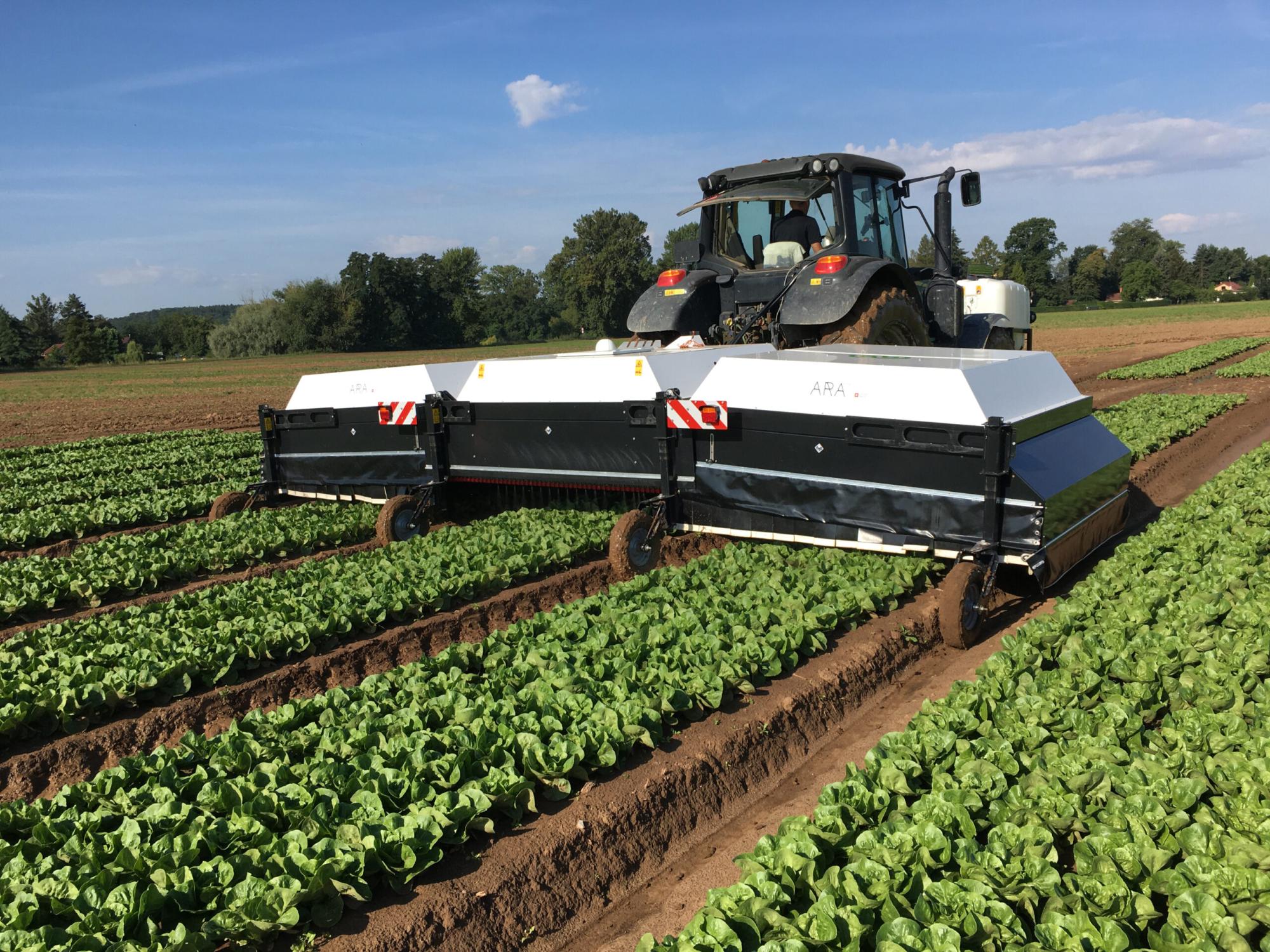
In commercial potato fields in Denmark and Switzerland, the Ecorobotix ARA and DTI precision agriculture sprayer uses artificial intelligence and advanced vision technology to identify individual plants in real time. The system accurately distinguishes potatoes, weeds, and volunteer potatoes in different crops and applies herbicides only where needed and in micro-doses.
The ARA sprayer features:
- Vision box system combining RGB and stereo cameras
- Spray bar equipped with multiple nozzles delivering micro-doses with surgical precision
- AI-powered plant identification processing imagery in real time
- Tablet-based control for easy mission setup and monitoring
This plant-by-plant approach drastically reduces chemical use compared to traditional spraying, while maintaining effective weed control. The technology represents a significant advancement in robotic crop sprayers that are transforming modern agriculture.
Drone-assisted validation and monitoring
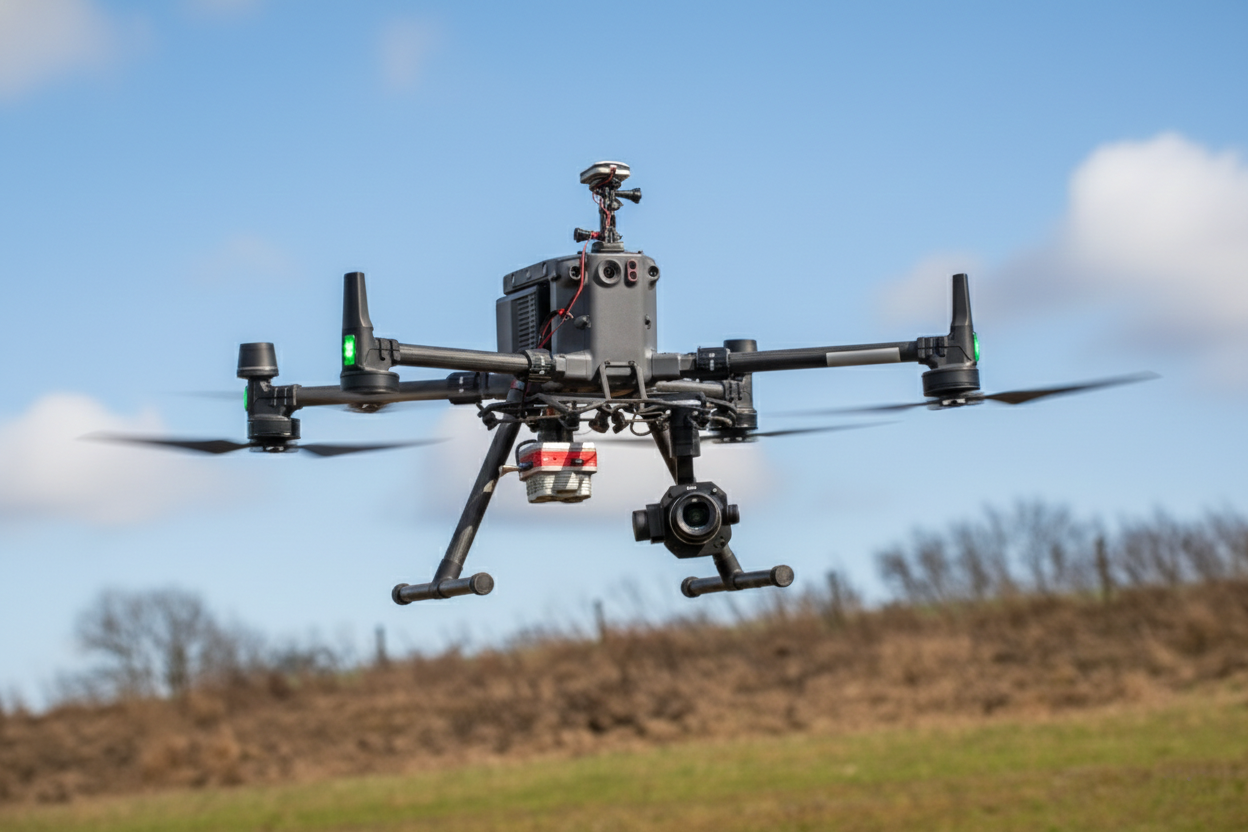
The pilot explores AI-assisted field monitoring using drones, led by the Danish Technological Institute (DTI), the pilot case partner responsible for drone-based agronomic validation. High-resolution RGB drone imagery is used to train and validate the AI models, ensuring accuracy in identifying weeds and volunteer potatoes.
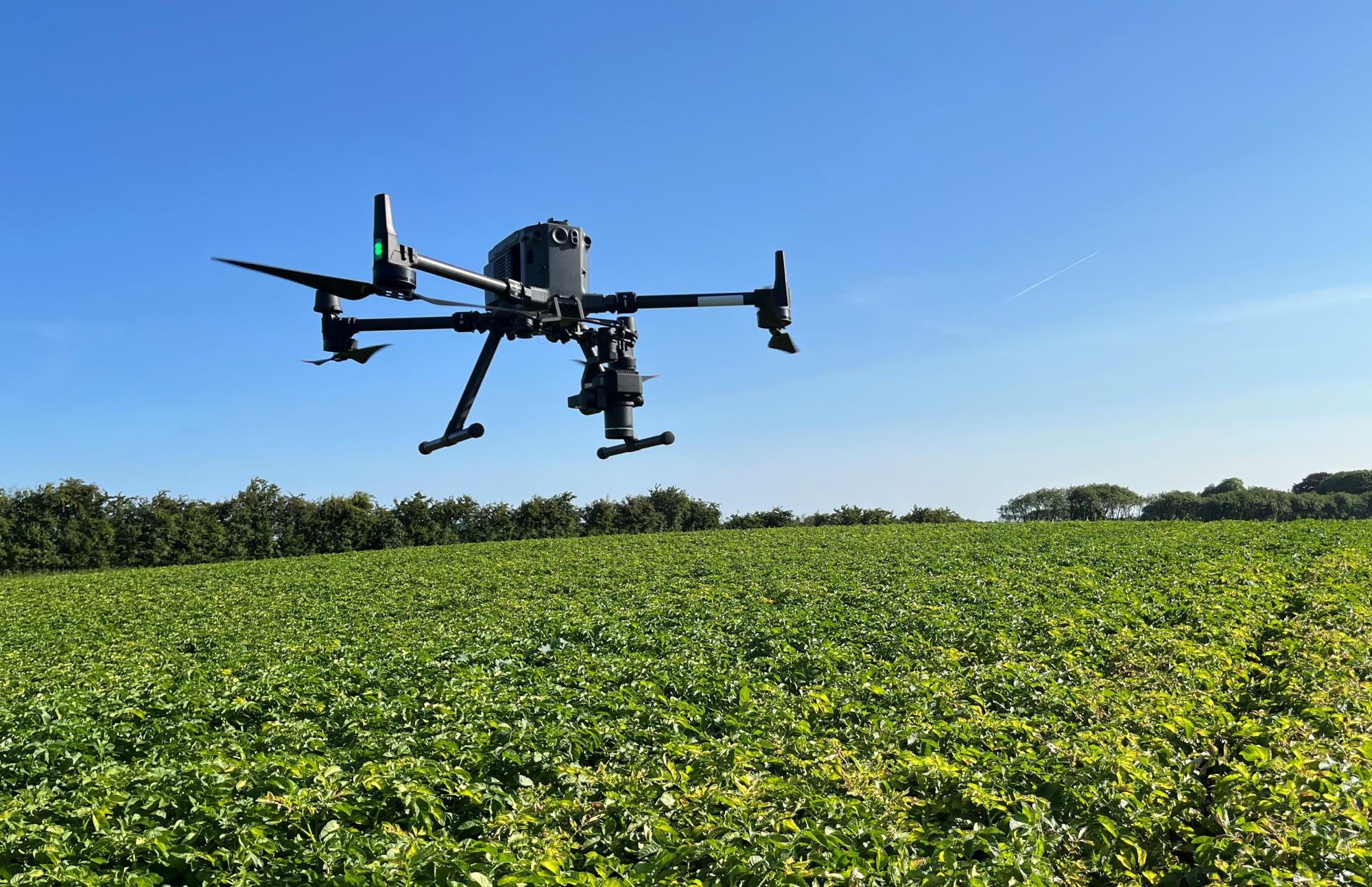
Drone data serves multiple purposes:
- Training AI models for improved plant identification
- Validating spraying performance post-treatment
- Supporting agronomic decision-making
- Providing clear overviews of weed pressure and treatment success
Performance comparison with conventional methods
To measure the impact of robotic spraying, DTI conducts performance comparisons between the ARA system and conventional spraying methods. Drones autonomously scan the fields before and after treatment, capturing detailed imagery that feeds into AI-based analysis. These digital assessments are cross-referenced with manual weed counts to evaluate weed suppression accuracy, coverage, and efficiency.
AR technology for operator support
AR tools display live application and weed distribution maps to operators. Training simulations prepare users to operate the sprayers under various crop and climate conditions, enhancing control and confidence in the field. This integration of autonomous farm machinery with augmented reality represents the future of precision agriculture.
Expected results for farmers
The ultra-high precision approach delivers multiple benefits:
- Major input savings: Reduction of plant protection products by up to 95% compared to conventional blanket spraying
- Lower labour requirements: Automated operation reduces the need for manual spraying crews
- Reduced crop damage risk: Precise targeting minimizes contact with potato plants
- Cost reduction: Dramatically lower chemical costs and reduced application time
- Environmental compliance: Easier adherence to environmental and regulatory requirements
- Resistance management: Avoiding unnecessary treatments helps prevent herbicide resistance
- Time savings: Drone imagery complements field scouting by agronomists, providing comprehensive overviews without extensive ground inspection
Practical recommendations
Farmers aiming to move towards sustainable and profitable crop protection should consider ultra-high precision sprayers, especially where herbicide costs, labour availability, or environmental constraints are limiting factors. The technology is particularly valuable for:
- Large-scale potato operations seeking to reduce input costs
- Farms in regions with strict environmental regulations
- Operations facing labour shortages for manual spraying
- Producers committed to sustainable farming practices
- Farms dealing with herbicide resistance issues
About AgRibot Pilot Case 2
Location: Commercial farms in Denmark & Switzerland
Lead Organization: Ecorobotix (precision sprayer technology)
Validation Partner: Danish Technological Institute (DTI)
Timeline: Four-year pilot starting with AI model training using drone and field sensor imagery, followed by real-world deployment on commercial farms, midpoint validation, and broader demonstrations across Europe
Technology: ARA Ultra-High Precision Field Sprayer already deployed on more than 150,000 hectares across Europe on more than 10 different crops
Learn more: AgRibot Pilot Case 2
This practice abstract was developed as part of the AgRibot project, which has received funding from the European Union.