


Pollination has been a big story in the national media, a strange place for a beekeeper to find themselves. After all, we often spend our days literally up to our elbows in bugs, who are at various times trying to sting, bite, or pull our hair out. Hardly a glamorous occupation!
The media attention is most welcome, however, as the threats to insects in general, and pollinators in particular have never been so severe. Whether it is the historic losses of agricultural pollinators like honeybees or the fight to preserve native species like the green carpenter bee, the hits from pests, diseases, habitat loss, and pesticides keep coming. Looming over this is climate change, now increasingly implicated in the worldwide 'insect apocalypse' that has seen declines of up to 80% across the globe.
This isn't another doomist article, though; this is about hope and how increasingly aware communities can drive change. One particular change is the emerging series of pollinator corridors spreading throughout urban spaces, changing not just landscapes but attitudes at the same time. These insect superhighways don't just see green spaces for their beauty, but also as a living, breathing ecosystem that makes our cities a functional part of the wider landscape.
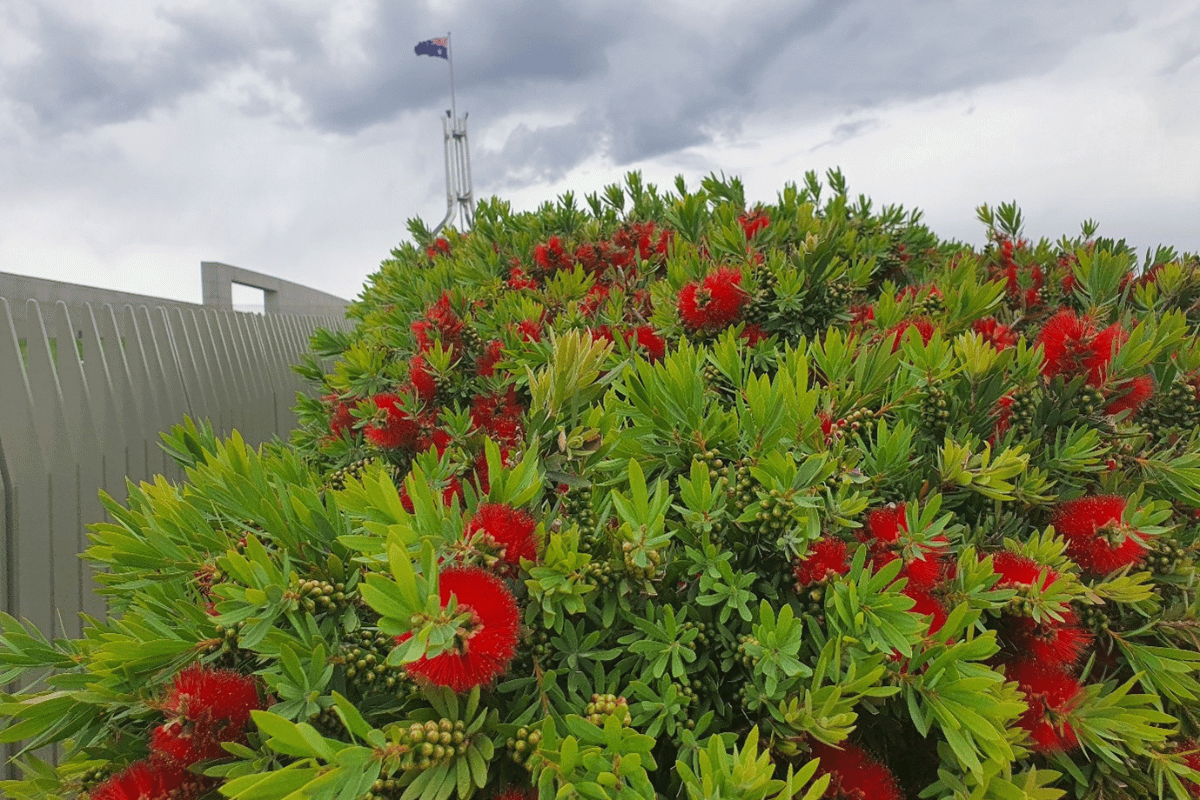
 floral displays, like this one at the Australian Parliament house..jpg)
Urban spaces still have room for spectacular (and productive) floral displays, like this one at the Australian Parliament house.
Why pollinators need our help now
Climate change and habitat loss pose existential threats to pollinators worldwide. The widespread 'insect apocalypse' has seen pollinator populations decline by up to 80% in some regions due to a combination of factors: pesticide exposure, disease pressure, habitat fragmentation, and increasingly unstable weather patterns. For those interested in beekeeping for beginners, understanding these threats provides crucial context for why urban beekeeping and pollinator-friendly plantings matter so much.
The connection between pollinators and climate is bidirectional. All aspects of our modern lives (including agriculture) contribute significantly to greenhouse gas emissions, while climate change disrupts the delicate timing between flowering plants and pollinator activity. Urban spaces, with their heat island effects and fragmented habitats, can either exacerbate these problems or become part of the solution.
Building bee superhighways through urban spaces
Our cities are changing, and this is an essential part of renewal to address very real problems. Housing in particular has become an intense issue, with younger generations increasingly locked out of ownership, and even rentals. Traditionally in Australia this has meant pushing new housing into sprawling suburbs, sometimes built over the top of cleared native habitat.
Preserving green spaces during urban development
Many other cities have taken a more cost-effective option, using urban infill to rapidly create more housing that is close to infrastructure and services. The danger is that far too often green spaces and street trees are seen as a soft option to cram more houses in, but the pandemic taught us the value of these for mental health and well-being.
There is another, even more practical reason to keep green spaces in our cities, as they help reduce the urban heat island effect. It is often underestimated how deadly heatwaves can be, but there is a beautiful, low-maintenance solution: trees! Urban trees have been shown to reduce temperatures on the street by up to ten degrees, due to their combination of shade and releasing water as they 'breathe' during photosynthesis. As a nice bonus, planting flowering street trees can create some fantastic nectar that our bees turn into unique local honey. Protection from the heat, feeding our bees and creating beautiful streetscapes, urban street trees really are the superstars of urban design!
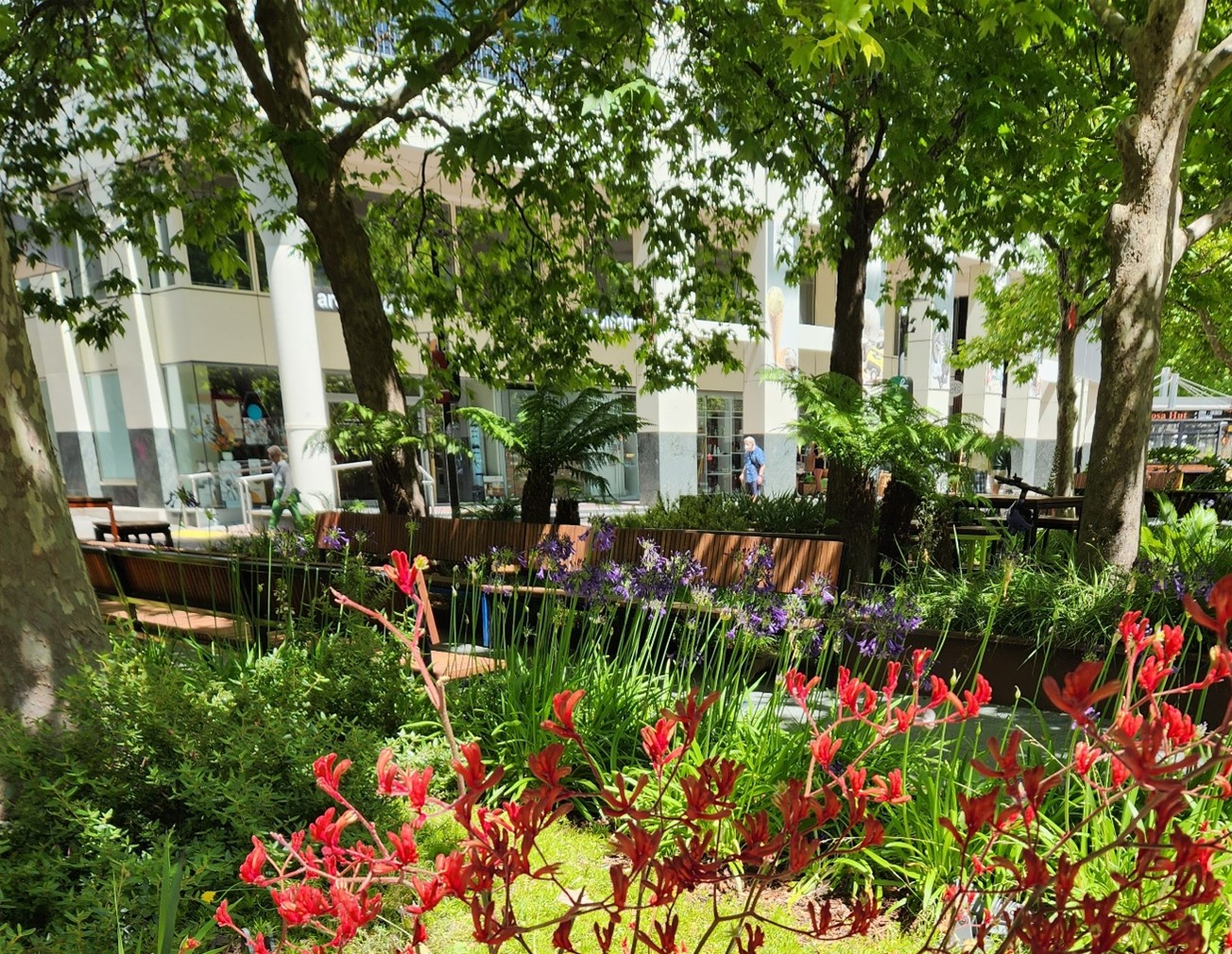
Urban plantings should always try to meet multiple objectives—in this case shade, beauty and habitat
Creating continuous pollinator corridors
Don't accept the loss of green spaces as part of urban infill. Not only have other cities preserved these, but they have also gone one step further, creating pathways of green, pollinator-friendly spaces snaking through their suburbs. From humble beginnings, these initiatives have taken hold in cities around the world. The idea started in Norway, but then spread to a host of other countries, often in response to the widespread loss of wildflower meadows to intensive agriculture.
The basic concept of bee highways is simple: create continuous corridors of pollinator-friendly habitats that encourage the flow of bees between different habitats. Over time these are expanded, linking up to create first a spiderweb, then a green river of flowers through what used to be dead areas. Conservation organizations across the globe have started to map existing patches of largely intact habitat within the landscape and then work with a network of citizen scientists and local groups to link these up.
The role of community engagement
Community is the key element here. On their own, even densely planted public spaces can only do so much. We need all the green spaces to be doing their part, including in people's yards. In my hometown of Canberra, local bee organizations were able to work with a receptive local government to create a series of complementary guides, one covering species lists for street trees planted by the government, and another guide helping keen gardeners create year-round nectar and pollen resources.
This hasn't just helped beekeepers, we have seen an influx of nectar-loving birds into the city, even endangered species like Superb Parrots. The integration of urban agriculture principles with pollinator conservation creates multiple benefits for urban communities.
The challenge of creating national planting guides that can be used across lots of regions, all with different conditions, has been taken up by the Wheen Bee Foundation. They have produced a series of pollinator-friendly planting guides that emphasize native species, flowering period, and creating multi-layered habitats. These currently cover 37 regions, with more added every year.
Choosing the right plantings for urban spaces
So we know what we want to plant, but the next question is where? One of the answers lies in the large areas of green 'dead space' throughout our suburbs, in the form of manicured lawns.
Rethinking lawns as pollinator habitat
The idea of a lawn was originally meant to display wealth, perhaps harkening back to a colonial past, but what it fundamentally represents is our dominance over the natural order. What used to be about signaling wealth and conformity is now losing ground to a new generation of gardeners who couldn't care less about controlling nature, they want bees and butterflies!
There has been an interesting debate on social media, led by young scientists like Dr. Clancy Lester here in Australia, asking some serious questions about why we spend so much on manicured, mown nature strips alongside roads when these could be flowers, rain gardens, and other useful spaces. Many councils in the United Kingdom and Europe discovered a sudden love of bees once they figured out how much they were spending on largely useless mowing!
The effectiveness of habitat islands
Ok, so that is nice, but does it do any good? Some clever recent research has also highlighted how these small 'islands' of habitat that we find in diverse backyards and street plantings can also work at a wider city scale. Plantings in urban nature strips and other small spaces proved highly effective at creating habitat for native pollinators, even when they were not maintained. This demonstrates how biodiversity can thrive even in small urban pockets when the right plants are chosen.
Balancing native bees and honeybees in cities
One of the most wonderful features of the current awareness around the impacts on bees is the overwhelming goodwill that has accompanied it. When I am talking to people at events and tours, there is a genuine concern and a desire to help. The next question, though, is what exactly are we saving?
Honeybees are essential for both crop pollination and for our home veggie patches, but are exotic to Australia and there is a very real problem of escaped swarms establishing feral colonies throughout our native bushland. At the same time, native bees clearly deserve to exist, but either produce no honey, or only a fraction of the volume that honeybees create. Can we have both in our cities? Absolutely yes, and recent research has shown that honeybees are among the best ambassadors for wider bee and pollinator conservation.
The challenges facing pollinators (and invertebrates in general) across both urban and regional landscapes are multifaceted, requiring all aspects of our society to be working together. Urban beekeepers like myself are in a unique position here to educate the wider community on the importance of pollinator health, as well as showcase sustainable agriculture practices.
Engaging communities through urban beekeeping
Every year I help organize World Bee Day events that feature native bees, honeybees, and the importance of both for our survival. Honey is always the best way to create a positive reference, driving two really important psychological associations.
Firstly, the familiarity effect makes us more inclined to be positive towards something that we have seen before, especially in a positive light (like a gourmet honey tasting). The 'halo effect' is something that you see every day through celebrity endorsements, and even in restaurants that source their food locally. In this case the celebrity is the honeybee, but the halo can be easily extended to include other pollinators, and absolutely should. Understanding the broader context of pollination services helps communities appreciate why protecting all pollinators matters.
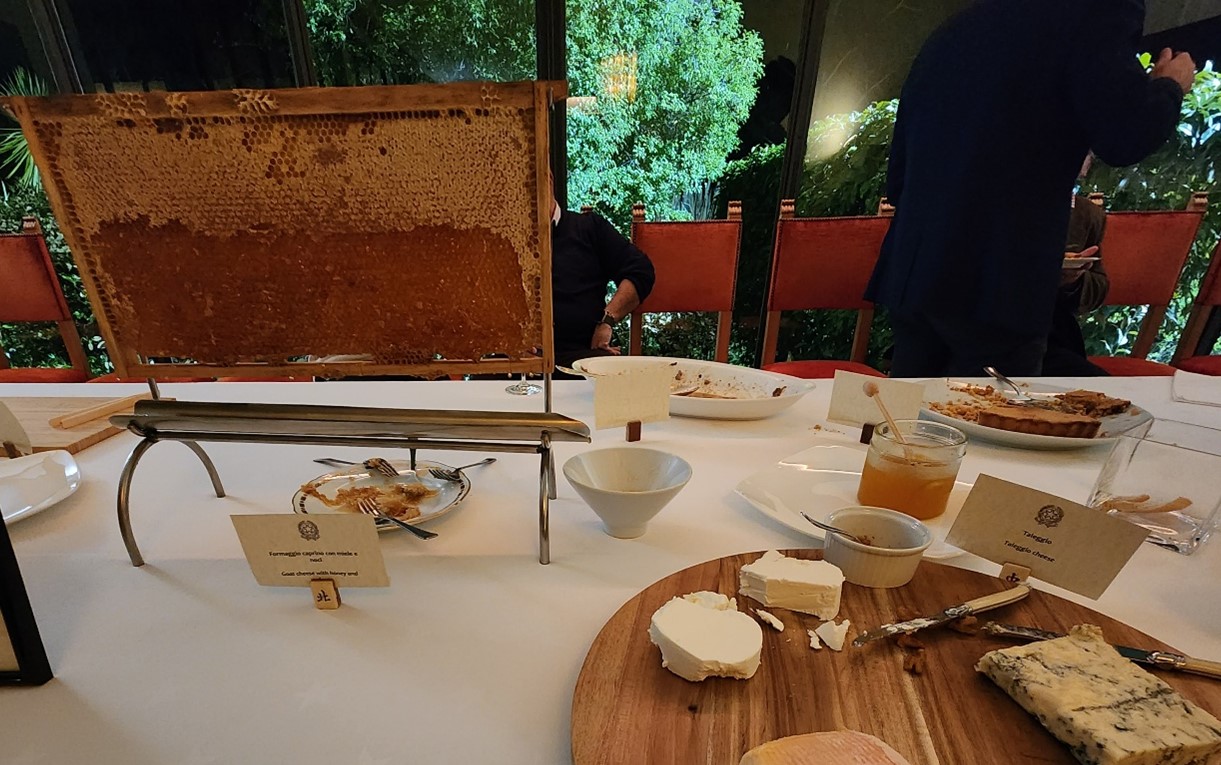
The perfect way to serve honey—straight from the honeycomb, and with spectacular local cheese
Urban producers should not just go for flavor; we should also strive for visual impact, creating that 'wow' factor that makes people realize what they have been missing out on! My favorite type of event is where raw honey, often presented straight from the honeycomb, lets people experience the unique flavors of their local flowers. The flavors are often completely different, even from two beehives side-by-side, and open up so many questions about food, pollution, climate change, and pollinator health.
It is the best kind of feedback effect: the community experiences real food, understands the importance of pollinators to their food supply, and also gains empathy for the wider network of nature that sustains us. They can then turn that into plantings in their suburb, garden, or office that sustain even greater diversity.
Measuring success with urban ecosystem accounts
Building a system of pollinator highways informed by science also challenges us to track progress. It is nice to take positive actions, but what is the effect across the landscape as a whole? Last year, something quietly dropped that has big implications for how we develop government policy, Australia's first urban ecosystem accounts.
These accounts calculate the economic value of environmental services, and the urban accounts focus on green and blue spaces within our cities. More than just the value of the land, these accounts showed that the benefits to health, social wellbeing and flood management delivered $16 billion in value. These accounts are based on an established international standard, the United Nations System of Environmental Accounting, so comparisons between countries should be possible in the future.
A world of communities trying new ways of living, but also able to compare their successes against a common system of measurement, creates the ultimate way to think globally but act (and measure) locally.
Conclusion
The emerging urban farming sector is in a unique position to drive positive change in how we design, manage, and live in our cities. The growing appetite for locally sourced food is the perfect segue into showcasing not just the quality, but also the variety of honey that can be sourced from within our cities.
At the same time, the positive image surrounding our beloved honeybees can be harnessed to drive conservation of all pollinators. In this way, superhighways for bees can become a connection that extends into our gardens, our kitchens, and even our souls.
Sources
Powerful Pollinators Planting Guides
Bee hunter saving native species, one 'hotel' at a time
The feral flying under the radar: why we need to rethink European honeybees
Mapping student understanding of bees: Implications for pollinator conservation
The halo effect created for restaurants that source food locally