Safeguarding Tropical Livestock: Climate Change Impacts and Adaptation Strategies for a Resilient Future
Co-author: Ishaya Gadzama
Introduction: Climate Change and Tropical Livestock Farming
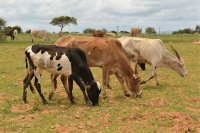
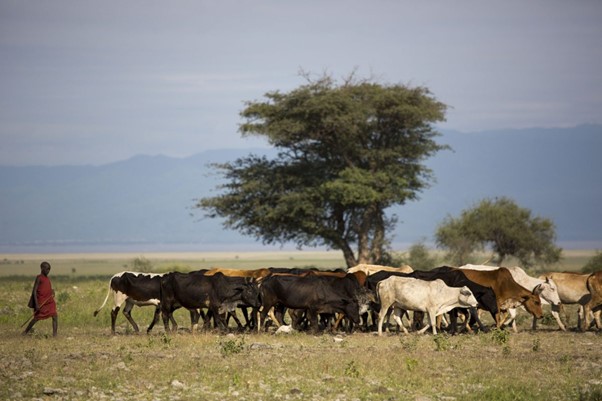
Climate change presents one of the most significant challenges to global food security and rural economies, particularly in tropical regions where livestock farming is a vital lifeline for millions of smallholder farmers. Rising temperatures, shifting rainfall patterns, and increasing frequency of extreme weather events fundamentally alter the environment in which livestock are raised. Understanding these impacts and developing effective responses is crucial for the animals' welfare and the livelihoods and nutritional security of entire communities.
Source: Its Time to Celebrate the Climate Benefits of Livestock Health
Impact of Heat Stress
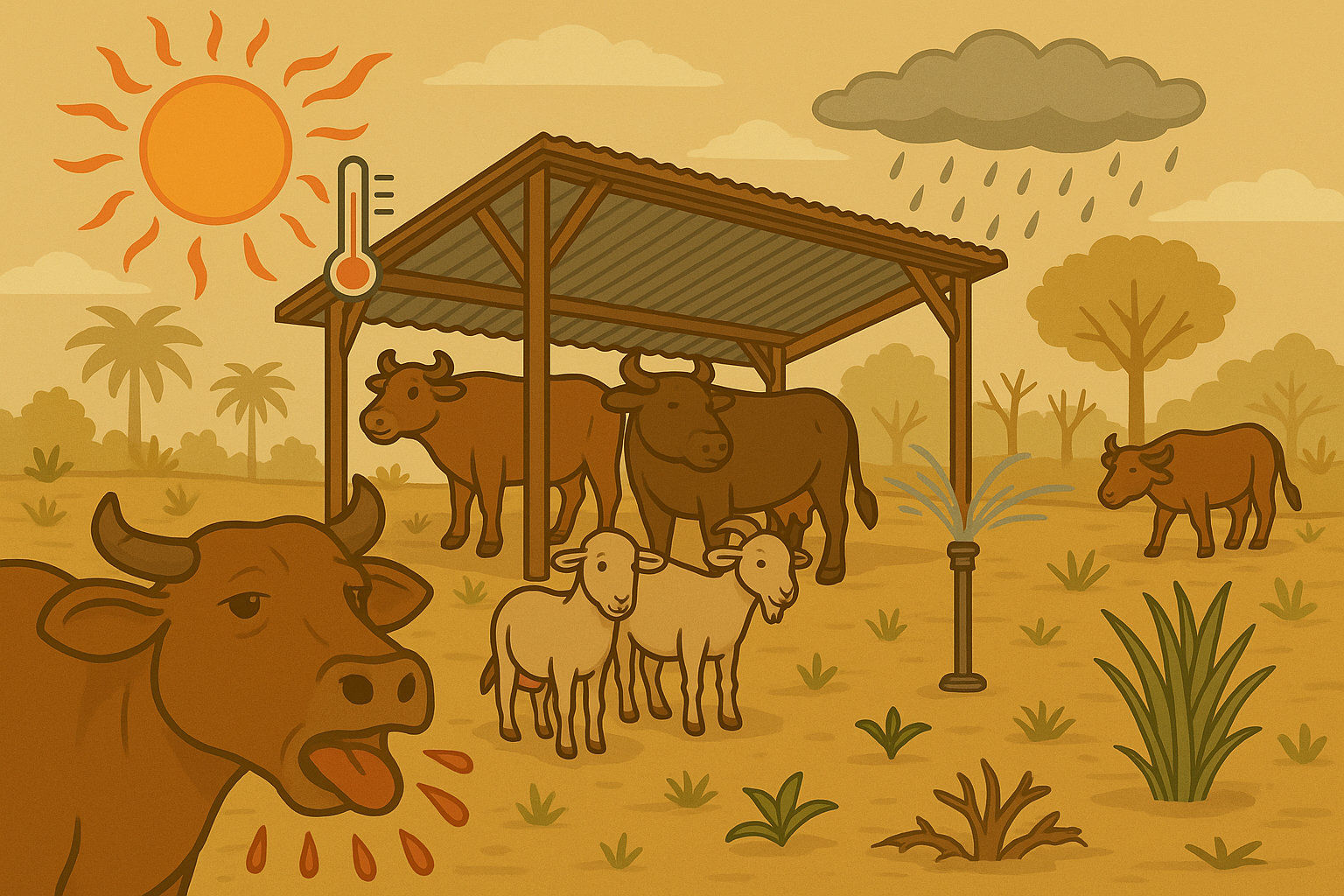
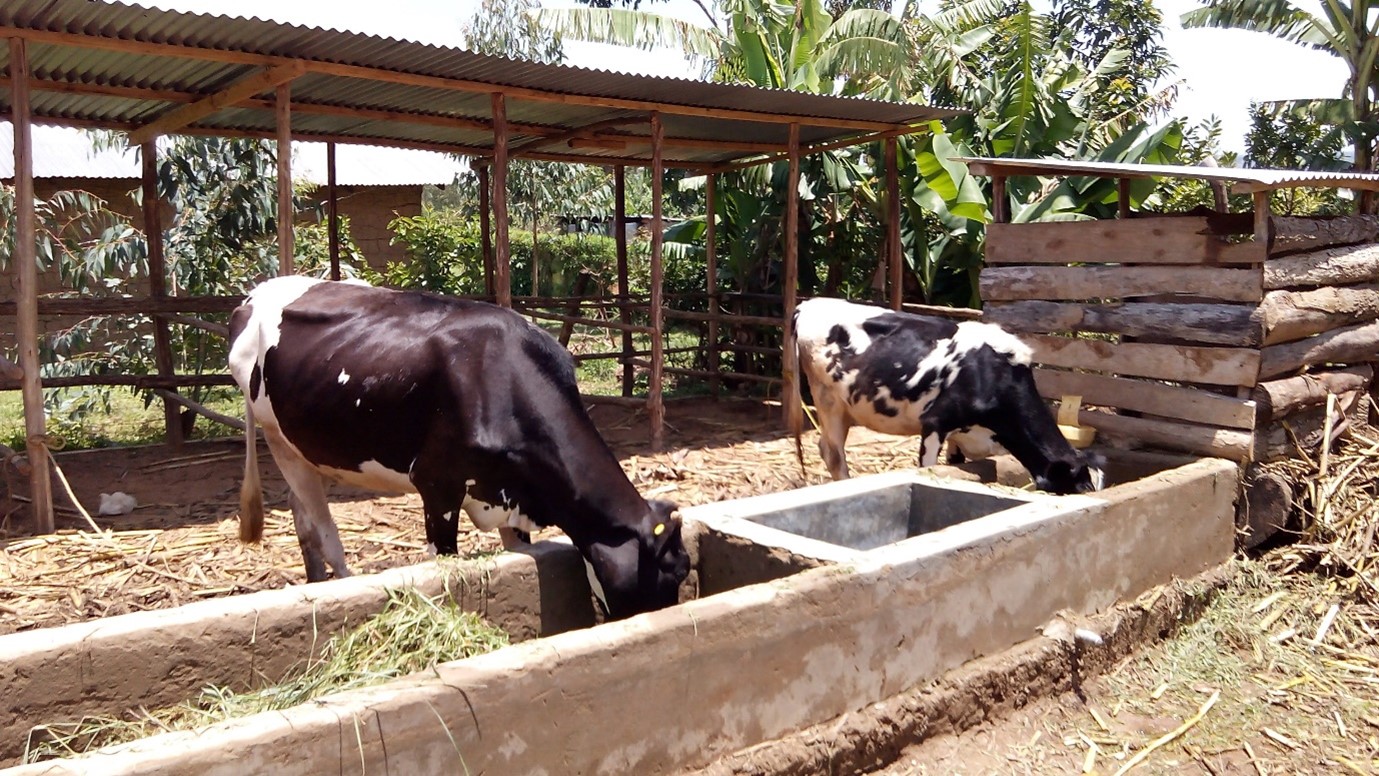
Heat stress is the most direct and immediate impact of climate change on tropical livestock. Sejian et al. (2022) found that elevated temperatures significantly reduce animal feed intake, leading to substantial drops in productivity. Extreme heat can slash milk yields in dairy cattle by nearly half, severely impair meat production and overall health. Furthermore, Sedai et al. (2025) reported that heat stress compromises reproductive efficiency by disrupting hormonal balance and embryonic development, leading to infertility and poor conception rates. This physiological strain also weakens the immune system, as Bagath et al. (2019) demonstrated, making animals more susceptible to diseases.
Changes in Feed Availability and Quality
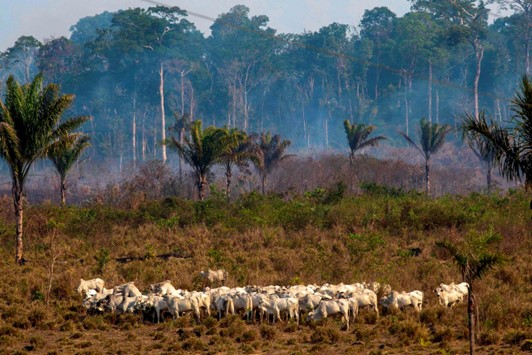
Compounding these direct effects are significant changes in feed availability and quality. Van Den Bossche and Coetzer (2008) and Escarcha et al. (2018) observed that droughts, floods, and erratic rainfall severely disrupt forage production and water access. Simultaneously, higher temperatures directly affect the plants that livestock eat. Tamboli et al. (2023) and Mehta et al. (2023) documented that forage crops become tougher and less digestible due to increased lignification under heat stress, which reduces their nutritional value (Gadzama et al., 2016). This nutritional stress creates micronutrient imbalances, further impacting health and productivity (Sujatha et al., 2018). Adding another layer of risk, Labanca et al. (2019) pointed out that warmer, more humid conditions increase mycotoxin contamination in feed, which could pose significant health threats.
Source: www.livestockkenya.com
Economic Consequences
The consequences extend beyond the animals to the broader ecosystem and economy. Reduced forage quality, as reported by Gadzama et al. (2016) and Lee et al. (2017), can paradoxically increase methane emissions from livestock digestion, thus creating a harmful feedback loop. Economically, Sejian et al. (2022) and Sujatha et al. (2018) emphasized that the combined impacts of reduced productivity, increased disease burden, and higher input costs threaten the viability of livestock farming, which is a cornerstone of rural economies in the tropics. Changes in disease dynamics, including the spread of vector-borne diseases and drug-resistant parasites, further exacerbate these challenges (Van Den Bossche & Coetzer, 2008; Knapp-Lawitzke, 2017).
Pathways for Adaptation and Resilience
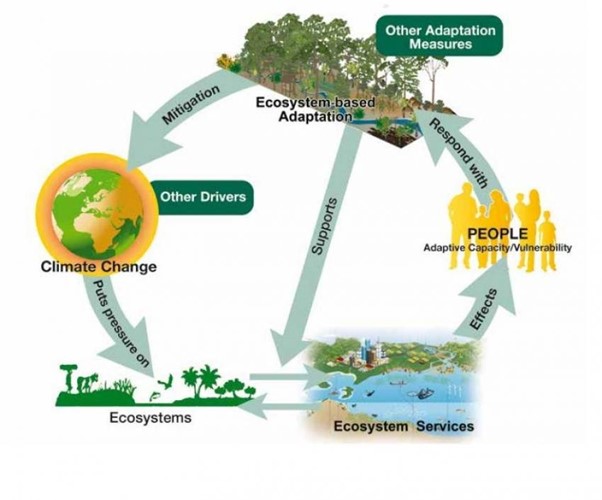
Fortunately, research points to viable pathways for adaptation and resilience. Genetic improvements are a cornerstone strategy. Barendse (2017) and Porto-Neto et al. (2014) demonstrated the potential of identifying and breeding for heat tolerance and disease resistance using genomic tools. Sharma et al. (2024) suggested that crossbreeding programs can enhance resilience in cattle, while Danmaigoro et al. (2024) and Joy et al. (2020) stressed the inherent adaptability and potential for targeted breeding in small ruminants like goats and sheep.
Source: Ecosystem Based Adaptation
Transforming Feeding Strategies
Transforming feeding strategies is equally critical. Fushai et al. (2025) advocated for utilizing climate-smart feed resources like drought-tolerant cereals (sorghum, millet), native legumes (cowpea), and browse trees (Vachellia). Sujatha et al. (2018), Tamboli et al. (2023), and Rathod et al. (2025) recommended cultivating resilient forages and incorporating feed additives (antioxidants, probiotics) to boost thermal resilience and gut health. Thermo-functionally enhanced diets incorporating antioxidants, phytogenics, biotic agents (prebiotics, probiotics, synbiotics, postbiotics), and electrolytes can improve thermal resilience and overall animal health (Fushai et al., 2025).
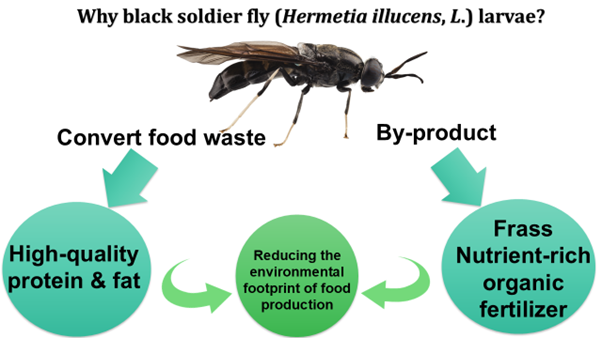
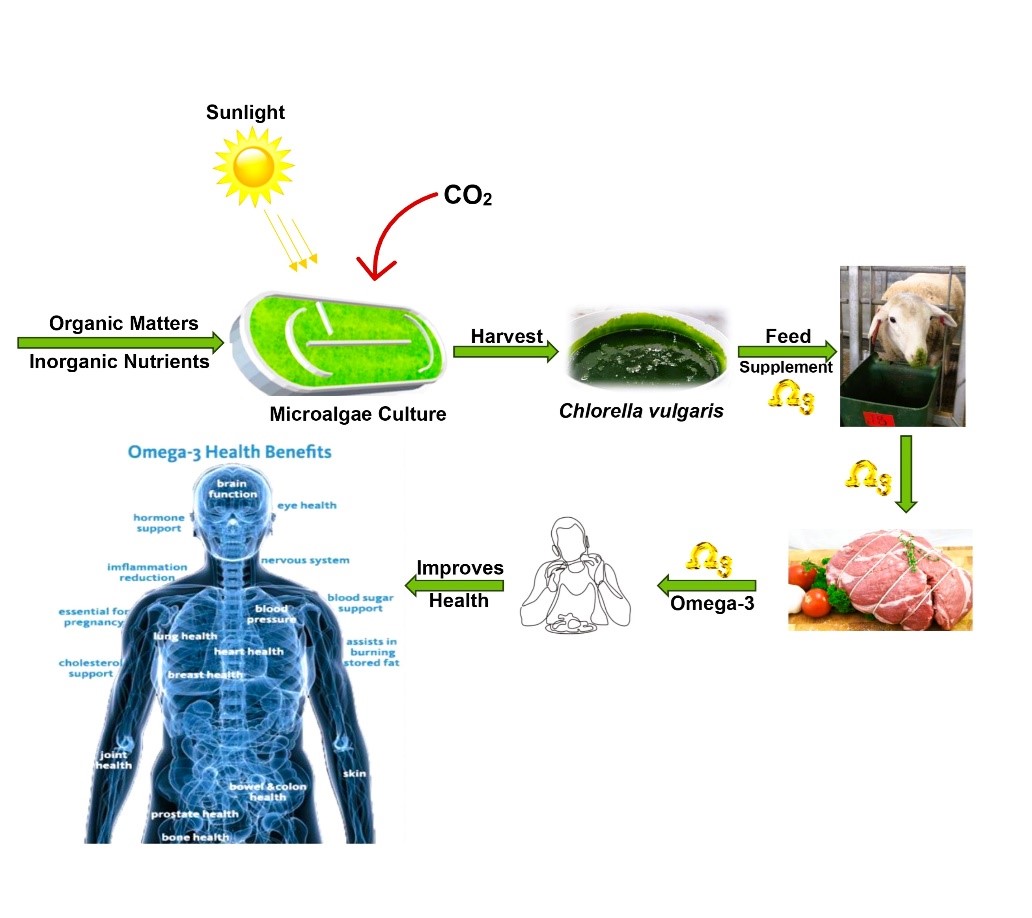
Circular approaches are also promising; Fushai et al. (2025) described using agricultural by-products and insect protein. Insect protein, particularly from black soldier fly larvae, and microbial protein derived from algae (Spirulina, Chlorella) and yeasts (Saccharomyces cerevisiae) could further contribute to sustainable livestock diets (Gadzama, 2025; Fushai et al., 2025; Gadzama et al., 2025). Integrating livestock with crops and trees offers systemic benefits; Ramana (2022) and Enciso et al. (2022) highlighted how mixed crop-livestock and silvopastoral systems improve resource efficiency, provide shade, enhance biodiversity, and can even reduce methane emissions (Furtado et al., 2023).
Successful implementation of these strategies requires capacity building, policy support, and ongoing research. Educating livestock producers on climate adaptation is essential for effective adoption (Ramana, 2022). Governments should incentivize climate-smart practices through supportive policies (Fushai et al., 2025; Ramana, 2022), while continued research is needed to develop resilient forage species and innovative feeding solutions (Neto et al., 2024). Tropical livestock systems can become more sustainable and resilient by adopting these approaches, ensuring food security for a growing population in a changing climate.
Adapted from Gadzama et al. (2025)
Improved Management Practices
Improved management is essential. Blanco-Penedo et al. (2020) and Singh et al. (2022) stressed the importance of modified housing designs to provide shelter from extreme heat and weather. Danmaigoro et al. (2024) and Sejian et al. (2015) emphasized robust health management, including disease surveillance and vaccination, alongside early warning systems for extreme weather events.
Supportive Policies and Farmer Empowerment
Ultimately, building resilience requires concerted effort beyond the farm gate. Danmaigoro et al. (2024) and Ramana (2022) argued that supportive policies, such as subsidies for climate-smart inputs, insurance schemes, and incentives for sustainable practices, are vital. Capacity building, as highlighted above, such as educating farmers on implementing these adaptations and continued research into resilient breeds and innovative feeding solutions, are fundamental for long-term sustainability (Ramana, 2022; Neto et al., 2024).
Conclusion
In conclusion, climate change poses a multi-faceted threat to tropical livestock production, which impacts animal health, feed security, and farmer livelihoods through interconnected physiological, nutritional, and disease pathways. However, the combination of genetic innovation, sustainable feeding systems, improved management practices, supportive policies, and farmer empowerment offers a roadmap for adaptation. Implementing these integrated strategies is not merely an option but an urgent necessity to safeguard this critical sector to ensure food security and economic stability for vulnerable tropical communities in an increasingly uncertain climate future.
References
- Bagath, M., Krishnan, G., Devaraj, C., Rashamol, V. P., Pragna, P., Lees, A. M., & Sejian, V. (2019). The impact of heat stress on the immune system in dairy cattle: A review. Research in Veterinary Science, 126, 94-102. The impact of heat stress on the immune system in dairy cattle: A review — Research in Veterinary Science
- Barendse, W. (2017). Climate adaptation of tropical cattle. Annual Review of Animal Biosciences, 5, 133-150. Climate Adaptation of Tropical Cattle — Annual Review of Animal Biosciences
- Blanco-Penedo, I., Cantalapiedra, J., & Llonch, P. (2020). Climate change impacts on animal welfare in livestock systems [Impacto del cambio climático sobre el bienestar animal en los sistemas ganaderos]. ITEA, 116(5), 424-443. Impacto del cambio climático sobre el bienestar animal en los sistemas ganaderos — Informacion Tecnica Economica Agraria
- Danmaigoro, A., Muhammad, M. A., Abubakar, K., Magiri, R. B., Bakare, A. G., & Iji, P. A. (2024). Morphological and physiological features in small ruminants: An adaptation strategy for survival under changing climatic conditions. International Journal of Biometeorology, 68(8), 1497-1505. Morphological and physiological features in small ruminants: an adaptation strategy for survival under changing climatic conditions — International Journal of Biometeorology
- Enciso, K., Triana, N., Díaz, M., & Burkart, S. (2022). On (dis)connections and transformations: The role of the agricultural innovation system in the adoption of improved forages in Colombia. Frontiers in Sustainable Food Systems, 5, art. no. 741057. On (Dis)Connections and Transformations: The Role of the Agricultural Innovation System in the Adoption of Improved Forages in Colombia — Frontiers in Sustainable Food Systems
- Escarcha, J. F., Lassa, J. A., Palacpac, E. P., & Zander, K. K. (2018). Understanding climate change impacts on water buffalo production through farmers’ perceptions. Climate Risk Management, 20, 50-63. Understanding climate change impacts on water buffalo production through farmers’ perceptions — Climate Risk Management
- Fushai, F., Chitura, T., & Oke, O. E. (2025). Climate-smart livestock nutrition in semi-arid Southern African agricultural systems. Frontiers in Veterinary Science, 12, art. no. 1507152. Climate-smart livestock nutrition in semi-arid Southern African agricultural systems — Frontiers in Veterinary Science
- Furtado, A. J., Abdalla Filho, A. L., Bruno, J. F., Neto, R. P., Lobo, A. A. G., da Silva, G. V., Junior, F. P., Alves, T. C., Berndt, A., de Faria Pedroso, A., de Medeiros, S. R., Oliveira, P. P. A., & Rodrigues, P. H. M. (2023). Pigeon pea intercropped with tropical pasture as a mitigation strategy for enteric methane emissions of Nellore steers. Animals, 13(8), art. no. 1323. Pigeon Pea Intercropped with Tropical Pasture as a Mitigation Strategy for Enteric Methane Emissions of Nellore Steers — Animals
- Gadzama, I. U., Mohammed, I. D., Yashim, S. M., Abdu, S. B., & Ereke, S. O. (2016). Quality assessment of Dusa-rice bran multi-nutrient block (DRMB) in a semi-arid environment of north east Nigeria. Journal of Animal Production Research, 28(1), 33-48.
- Gadzama, I. U. (2025). Black soldier fly larvae as animal feed. Bulgarian Journal of Animal Husbandry, 62(1), 48-64. Black soldier fly larvae as animal feed — Bulgarian Journal of Animal Husbandry
- Gadzama, I. U., Ray, S., Méité, R., Mugweru, I. M., Gondo, T., Rahman, M. A., Redoy, M. R. A., Rohani, M. F., Kholif, A. E., Salahuddin, M., & Brito, A. F. (2025). Chlorella vulgaris as a Livestock Supplement and Animal Feed: A Comprehensive Review. Animals, 15(6), 879. Chlorella vulgaris as a Livestock Supplement and Animal Feed: A Comprehensive Review — Animals
- Joy, A., Dunshea, F. R., Leury, B. J., Clarke, I. J., Digiacomo, K., & Chauhan, S. S. (2020). Resilience of small ruminants to climate change and increased environmental temperature: A review. Animals, 10(5), art. no. 867. Resilience of Small Ruminants to Climate Change and Increased Environmental Temperature: A Review — Animals
- Knapp-Lawitzke, F. (2017). Does climate change increase problems with drug-resistant gastrointestinal cattle parasites in Germany? [Bringt der Klimawandel auch größere Probleme durch resistente Weideparasiten für deutsche Rinderhalter mit sich?]. Tierärztliche Umschau, 72(4), 109-113. Retrieved from Inward: Record Uri
- Labanca, F., Raimondi, A., Fontanelli, M., Pisuttu, C., Rallo, G., Galli, F., & Pellegrini, E. (2019). The effects of climate change on livestock production systems: The cases of mycotoxins in animal feed and animal heat stress. Agrochimica, 2019, 99-106.
- Lee, M. A., Davis, A. P., Chagunda, M. G., & Manning, P. (2017). Forage quality declines with rising temperatures, with implications for livestock production and methane emissions. Biogeosciences, 14(6), 1403-1417.
- Mehta, B. K., Meena, S. K., Dikshit, N., Shashikumara, P., Kumar, A., Kumar, P., Singh, M., Gupta, G., & Ahmed, S. (2023). Forage genetic resources and scope for allele mining of abiotic stress tolerance. In Molecular Interventions for Developing Climate-Smart Crops: A Forage Perspective (pp. 35-56). Forage Genetic Resources and Scope for Allele Mining of Abiotic Stress Tolerance — Molecular Interventions for Developing Climate-Smart Crops: A Forage Perspective
- Neto, R. P., Furtado, A. J., da Silva, G. V., Lobo, A. A. G., Abdalla Filho, A. L., Brunetti, H. B., ... & Rodrigues, P. H. M. (2024). Forage accumulation and nutritive value in extensive, intensive, and integrated pasture-based beef cattle production systems. Crop and Pasture Science, 75(5).
- Porto-Neto, L. R., Reverter, A., Prayaga, K. C., Chan, E. K. F., Johnston, D. J., Hawken, R. J., Fordyce, G., Garcia, J. F., Sonstegard, T. S., Bolormaa, S., Goddard, M. E., Burrow, H. M., Henshall, J. M., Lehnert, S. A., & Barendse, W. (2014). The genetic architecture of climatic adaptation of tropical cattle. PLOS ONE, 9(11), art. no. e113284. The Genetic Architecture of Climatic Adaptation of Tropical Cattle — PLoS ONE
- Ramana, D. B. V. (2022). Livestock based production systems for climate adaptation in dryland areas. In Climate Change Adaptations in Dryland Agriculture in Semi-Arid Areas (pp. 127-141). Livestock Based Production Systems for Climate Adaptation in Dryland Areas — Climate Change Adaptations in Dryland Agriculture in Semi-Arid Areas
- Rathod, A. K., Somagond, Y. M., Lokesha, E., Kumar, A., Kanaka, K. K., Nikhil, K. C., Jadhav, S. E., & Aderao, G. N. (2025). Role of micronutrients in production and reproduction of farm animals under climate change scenario. Tropical Animal Health and Production, 57(2), art. no. 31. Role of micronutrients in production and reproduction of farm animals under climate change scenario — Tropical Animal Health and Production
- Sedai, D. R., Gyawali, S., Dangal, M. R., Yuangyai, C., Lim, N. H. H., Techato, K., & Yuangyai, N. (2025). Impact of climate change on livestock production and its adaptation in Nepal. In Engineering Design and Technical Applications of Physical Science: An Integrated Approach for Sustainable Development (pp. 173-209). Retrieved from Inward: Record Uri
- Sejian, V., Samal, L., Haque, N., Bagath, M., Hyder, I., Maurya, V. P., Bhatta, R., Ravindra, J. P., Prasad, C. S., & Lal, R. (2015). Overview on adaptation, mitigation and amelioration strategies to improve livestock production under the changing climatic scenario. In Climate Change and Livestock Production: Recent Advances and Future Perspectives (pp. 359-397). Overview on Adaptation, Mitigation and Amelioration Strategies to Improve Livestock Production Under the Changing Climatic Scenario — Climate Change Impact on Livestock: Adaptation and Mitigation
- Sejian, V., Silpa, M. V., Devaraj, C., Trivedi, S., Vadhana, P. E., Ruban, W., Suganthi, R. U., Manimaran, A., Maurya, V. P., & Bhatta, R. (2022). Impact of climate change on animal production and welfare. In Climate Change and Livestock Production: Recent Advances and Future Perspectives (pp. 3-14). Impact of Climate Change on Animal Production and Welfare — Climate Change and Livestock Production: Recent Advances and Future Perspectives
- Sharma, M., Malik, A., & Thumar, M. (2024). Different types of heat tolerance indices used in dairy production. Indian Veterinary Association Journal, 101(3), 48-52. Different Types of Heat Tolerance Indices Used in Dairy Production — The Indian Veterinary Journal
- Singh, G., Samad, H. A., Karthiga, K., Priyanka, K., Sarma, L., Chouhan, V. S., & Maurya, V. P. (2022). Comparative assessment of thermo-tolerance of crossbred and indigenous cattle breeds. In Climate Change and Livestock Production: Recent Advances and Future Perspectives (pp. 73-81). Comparative Assessment of Thermo-Tolerance of Crossbred and Indigenous Cattle Breeds — Climate Change and Livestock Production: Recent Advances and Future Perspectives
- Sujatha, T., Kannan, A., Jeyakumar, S., Kundu, A., Velmurugan, A., Sunder, J., Swarnam, T. P., & De, A. K. (2018). Livestock and people - the intimate relation under threat. In Biodiversity and Climate Change Adaptation in Tropical Islands (pp. 433-457). Livestock and People – The Intimate Relation Under Threat — Biodiversity and Climate Change Adaptation in Tropical Islands
- Tamboli, P., Chaurasiya, A. K., Upadhyay, D., & Kumar, A. (2023). Climate change impact on forage characteristics: An appraisal for livestock production. In Molecular Interventions for Developing Climate-Smart Crops: A Forage Perspective (pp. 183-196). Climate Change Impact on Forage Characteristics: An Appraisal for Livestock Production — Molecular Interventions for Developing Climate-Smart Crops: A Forage Perspective
- Van Den Bossche, P., & Coetzer, J. A. W. (2008). Climate change and animal health in Africa. OIE Revue Scientifique et Technique, 27(2), 551-562. Cambio climático y sanidad animal en África — Revue Scientifique et Technique de l'OIE