By Oluwatomiwa Abolaji Adedeji and Ishaya Gadzama
Introduction: Methane emissions from livestock and the role of 3-NOP
Livestock farming feeds the world, but methane belched by ruminants like cows, sheep, and goats significantly contributes to climate change (Gadzama, 2025). Enteric methane, produced by microbes in the rumen (cow's stomach), accounts for ~30% of global agricultural emissions (Hristov et al., 2015) and represents a loss of up to 12% of the energy contained in animal feed (Johnson & Johnson, 1995). Reducing these emissions is critical for both environmental sustainability and farm efficiency (Gadzama, 2025). The compound 3-nitrooxypropanol (3-NOP) offers a highly specific solution.
It works by targeting the very engine of methane production: the enzyme methyl-coenzyme M reductase (MCR) within methane-producing microbes (methanogens) (Duin et al., 2016). 3-NOP binds tightly to MCR's active site and acts like a powerful double strike – it directly oxidizes a critical nickel ion in the enzyme, and the resulting nitrite produced further inactivates MCR (Figure 1; Duin et al., 2016). 3-NOP selectively inhibits methanogens at micromolar concentrations without harming other essential rumen microbes (Figure 1).
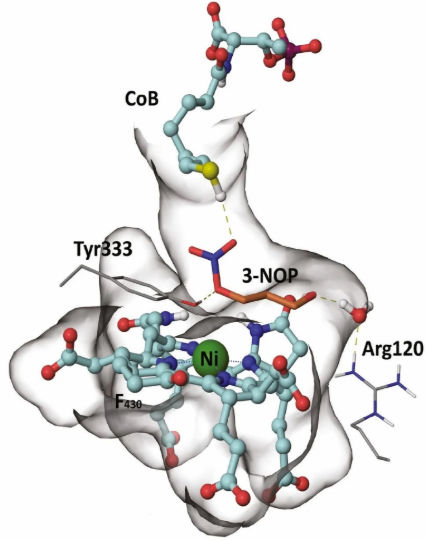
Figure 1. Active site of 3-NOP-bound methyl-coenzyme M reductase. Adapted from Duin et al. (2016)
When added to cattle feed, 3-NOP consistently cuts methane by 22–40% in dairy cows (Melgar et al., 2020) and up to 33% in beef cattle (Romero-Pérez et al., 2014), without reducing milk yield or weight gain (Hristov et al., 2015; van Gastelen et al., 2024). This targeted action also improves feed efficiency (meaning cows convert more feed into milk or meat), and alters rumen fermentation to boost beneficial fatty acids like propionate (Alemu et al., 2023; Xuan et al., 2024). Farmers benefit from these gains, though costs may require carbon credit support (Pupo et al., 2025). While combining 3-NOP with oils (e.g., canola) enhances methane reduction, it may disrupt the broader rumen microbial community (Zhang et al., 2021; O’Hara et al., 2025), highlighting the need for strategic use.
Despite its promise, early-life supplementation (that is, administering 3-NOP to young calves), remains understudied (Alemu et al., 2023; Araújo et al., 2023). This approach could leverage developmental windows to sustainably reduce lifetime emissions. This mini review investigates how 3-NOP supplementation affects methane output, rumen health, and growth in cattle. Success could provide farmers a practical, scalable tool to lower environmental impact, capture lost feed energy, and maintain productivity.
how 3-NOP inhibits methanogenesis in the rumen
3-NOP acts by specifically inhibiting methyl-coenzyme M reductase (MCR), the enzyme catalyzing the final step of methanogenesis in rumen archaea (Romero-Pérez et al., 2014; Marco-Contelles, 2022). By disrupting this pathway, 3-NOP reduces methane emissions by 22–88%, depending on dosage, animal breed, and diet (Table 1). For instance, Holstein cows show 22–40% reductions (Lopes et al., 2016; Melgar et al., 2020), while Angus steers achieve up to 87.6% suppression at higher doses (Almeida et al., 2023). This variability stresses the importance of tailored dosing strategies.
Table 1. Efficacy of 3-NOP Across Ruminant Species
|
Animal/Breed |
Dosage |
Methane Reduction |
Reference |
|
Holstein Friesian cows |
1.6 g/cow/day |
23-28% |
Van Wesemael et al. (2019) |
|
Holstein cows |
60 mg/kg feed DM |
31% |
Lopes et al. (2016) |
|
Holstein cows |
40–200 mg/kg DM |
22–40% |
Melgar et al. (2020) |
|
Holstein cows |
60 mg/kg feed DM |
26-29% |
Melgar et al. (2021) |
|
Holstein cows |
40-80 mg/kg feed DM |
30% |
Hristov et al. (2015) |
|
Angus heifers |
0.75–4.50 mg/kg BW |
33% |
Romero-Perez et al. (2014) |
|
Angus steers |
50–125 mg/kg DM |
65.5–87.6% |
Almeida et al. (2023) |
|
Dairy cattle (meta-analysis) |
0–280 mg/kg DMI |
Up to 80% |
Jayanegara et al. (2018) |
Beyond methane: Rumen dynamics and animal performance
3-NOP’s benefits extend beyond emission control:
- Rumen Fermentation Shift: 3-NOP increases propionate and butyrate production while reducing acetate, lowering the acetate-to-propionate ratio (Figure 2; Duin et al., 2016; Xuan et al., 2024). This redirects hydrogen ([H₂]) away from methanogenesis toward energy-efficient volatile fatty acid (VFA) synthesis (Romero-Pérez et al., 2015).
- Microbial Selectivity: It specifically suppresses methanogens (e.g., Methanobrevibacter) without disrupting total bacteria or protozoa populations (Hristov et al., 2015; Pitta et al., 2022). Genera like Butyrivibrio increase, supporting fiber digestion, while Ruminococcus may decline (Jayanegara et al., 2018).
- Productivity Preservation: Unlike some inhibitors, 3-NOP maintains, or even enhances, animal performance. Dairy studies report stable milk yield with increased milk fat concentration (Hristov et al., 2015; van Gastelen et al., 2024), and beef cattle show improved feed efficiency and body weight gain (Alemu et al., 2023; Orzuna-Orzuna et al., 2024). Dry matter intake (DMI) and nutrient digestibility remain unaffected (Zhang et al., 2021; Gadzama, 2024a,b).
.PNG)
Figure 2. Methane production in the rumen of dairy cows and its suppression by 3-nitrooxypropanol (3-NOP). Source: Mode of action uncovered for the specific reduction of methane emissions from ruminants by the small molecule 3-nitrooxypropanol — Proceedings of the National Academy of Sciences
Synergies and economic realities
Combining 3-NOP with additives like vitamin B₁₂ or canola oil can amplify methane reduction and propionate yield (Zhang et al., 2021; Liu et al., 2023). However, lipid supplements may disrupt microbial communities, necessitating careful formulation (O’Hara et al., 2025). Economically, while 3-NOP reduces emissions, it may marginally increase operational costs due to feed additive expenses. Carbon credit systems or policy incentives could offset this, ensuring farmer adoption aligns with climate goals (Pupo et al., 2025).
Challenges and future directions
Despite 3-NOP promise, hurdles remain:
- Dosage Optimization: Efficacy is dose-dependent, but optimal rates vary by diet, breed, and production system (Melgar et al., 2020).
- Long-Term Microbial Impacts: Extended use may alter rumen ecology; monitoring is essential (Zhou et al., 2011).
- Regulatory Pathways: Residue management and safety certification require further study (Thiel et al., 2019).
Conclusion
Livestock production is a cornerstone of global food security but contributes significantly to anthropogenic methane (CH₄) emissions. Among emerging solutions, 3-Nitrooxypropanol (3-NOP) stands out as a targeted inhibitor offering consistent methane reductions without compromising productivity, a critical balance for farmers and the environment. By directly targeting methanogenesis while preserving ruminant productivity, it offers a practical solution for farmers to reduce agriculture’s carbon footprint. As research refines dosing protocols and evaluates long-term effects, 3-NOP—potentially combined with carbon markets—could accelerate the transition to climate-resilient livestock production.
References
- Alemu, A. W., Gruninger, R. J., Zhang, X. M., O'Hara, E., Kindermann, M., & Beauchemin, K. A. (2023). 3-Nitrooxypropanol supplementation of a forage diet decreased enteric methane emissions from beef cattle without affecting feed intake and apparent total-tract digestibility. Journal of Animal Science, 101, Article skad001.
- Almeida, A. K., Cowley, F., McMeniman, J. P., Karagiannis, A., Walker, N., Tamassia, L. F. M., McGrath, J. J., & Hegarty, R. S. (2023). Effect of 3-nitrooxypropanol on enteric methane emissions of feedlot cattle fed with a tempered barley-based diet with canola oil. Journal of Animal Science, 101, Article skad237.
- Araújo, T. L. R., Rabelo, C. H. S., Cardoso, A. S., Carvalho, V. V., Acedo, T. S., Tamassia, L. F. M., Vasconcelos, G. S. F. M., Duval, S. M., Kindermann, M., Gouvea, V. N., Fernandes, M. H. M. R., & Reis, R. A. (2023). Feeding 3-nitrooxypropanol reduces methane emissions by feedlot cattle on tropical conditions. Journal of Animal Science, 101, Article skad225.
- Duin, E.C., Wagner, T., Shima, S., Prakash, D., Cronin, B., Yáñez-Ruiz, D.R., Duval, S., Rümbeli, R., Stemmler, R.T., Thauer, R.K. and Kindermann, M. (2016). Mode of action uncovered for the specific reduction of methane emissions from ruminants by the small molecule 3-nitrooxypropanol. Proceedings of the National Academy of Sciences, 113(22), 6172-6177.
- Gadzama, I.U. (2025). Asparagopsis Seaweed as a Feed Supplement for Dairy Cows. Nigerian Journal of Animal Science and Technology (NJAST), 7(4), 63-84. Retrieved from
- Gadzama, I. U. (2024a). 3-NOP Feed Additive: Mitigating Climate Change by Reducing Cattle Methane Emissions. Wikifarmer. Retrieved from https://www.researchgate.net/publication/384809499
- Gadzama, I. U. (2024b). The Role of Bovaer® (3-NOP) in Mitigating Methane Emissions from Dairy and Beef Cattle. Wikifarmer. Available online https://www.researchgate.net/publication/384936620
- Hristov, A. N., Oh, J., Giallongo, F., Frederick, T. W., Harper, M. T., Weeks, H. L., Branco, A. F., Moate, P. J., Deighton, M. H., Williams, S. R. O., Kindermann, M., & Duval, S. (2015). An inhibitor persistently decreased enteric methane emission from dairy cows with no negative effect on milk production. Proceedings of the National Academy of Sciences of the United States of America, 112(34), 10663–10668.
- Jayanegara, A., Sarwono, K. A., Kondo, M., Matsui, H., Ridla, M., Laconi, E. B., & Nahrowi. (2018). Use of 3-nitrooxypropanol as feed additive for mitigating enteric methane emissions from ruminants: A meta-analysis. Italian Journal of Animal Science, 17(3), 650–656.
- Johnson, K. A., & Johnson, D. E. (1995). Methane emissions from cattle. Journal of Animal Science, 73(8), 2483-2492.
- Liu, Z., Wang, K., Nan, X., Yang, L., Wang, Y., Zhang, F., Cai, M., Zhao, Y., & Xiong, B. (2023). Effects of combined addition of 3-nitrooxypropanol and vitamin B12 on methane and propionate production in dairy cows by in vitro-simulated fermentation. Journal of Dairy Science, 106(1), 219-232.
- Lopes, J. C., de Matos, L. F., Harper, M. T., Giallongo, F., Oh, J., Gruen, D., Ono, S., Kindermann, M., Duval, S., & Hristov, A. N. (2016). Effect of 3-nitrooxypropanol on methane and hydrogen emissions, methane isotopic signature, and ruminal fermentation in dairy cows. Journal of Dairy Science, 99(7), 5335-5344.
- Marco-Contelles, J. (2022). The synthesis of 3-nitrooxypropanol, a methane mitigant for sustainable farming with environmental impact: A review. Synthesis (Germany), 55(14), 2109-2117.
- Melgar, A., Welter, K. C., Nedelkov, K., Martins, C. M. M. R., Harper, M. T., Oh, J., Räisänen, S. E., Chen, X., Cueva, S. F., Duval, S., & Hristov, A. N. (2020). Dose-response effect of 3-nitrooxypropanol on enteric methane emissions in dairy cows. Journal of Dairy Science, 103(7), 6145–6156.
- Melgar, A., Lage, C. F. A., Nedelkov, K., Räisänen, S. E., Stefenoni, H., Fetter, M. E., Chen, X., Oh, J., Duval, S., Kindermann, M., Walker, N. D., & Hristov, A. N. (2021). Enteric methane emission, milk production, and composition of dairy cows fed 3-nitrooxypropanol. Journal of Dairy Science, 104(1), 357-366.
- O’Hara, E., Chomistek, N., Terry, S. A., Beauchemin, K. A., & Gruninger, R. J. (2025). Assessing the impact of the methane inhibitors 3-nitrooxypropanol (3-NOP) and canola oil on the rumen anaerobic fungi. Animals, 15(9), Article 1230.
- Orzuna-Orzuna, J. F., Godina-Rodríguez, J. E., Garay-Martínez, J. R., Granados-Rivera, L. D., Maldonado-Jáquez, J. A., & Lara-Bueno, A. (2024). A meta-analysis of 3-nitrooxypropanol dietary supplementation on growth performance, ruminal fermentation, and enteric methane emissions of beef cattle. Fermentation, 10(6), Article 273.
- Pitta, D. W., Indugu, N., Melgar, A., Hristov, A., Challa, K., Vecchiarelli, B., Hennessy, M., Narayan, K., Duval, S., Kindermann, M., & Walker, N. (2022). The effect of 3-nitrooxypropanol, a potent methane inhibitor, on ruminal microbial gene expression profiles in dairy cows. Microbiome, 10(1), Article 146.
- Pupo, M. R., Ferraretto, L. F., & Nicholson, C. F. (2025). Effects of feeding 3-nitrooxypropanol for methane emissions reduction on income over feed costs in the United States. Journal of Dairy Science, 108(5), 5061-5075. Effects of feeding 3-nitrooxypropanol for methane emissions reduction on income over feed costs in the United States — Journal of Dairy Science
- Romero-Perez, A., Okine, E. K., McGinn, S. M., Guan, L. L., Oba, M., Duval, S. M., Kindermann, M., & Beauchemin, K. A. (2014). The potential of 3-nitrooxypropanol to lower enteric methane emissions from beef cattle. Journal of Animal Science, 92(10), 4682-4693. The potential of 3-nitrooxypropanol to lower enteric methane emissions from beef cattle1 — Journal of Animal Science
- Romero-Pérez, A., Okine, E. K., Guan, L. L., Duval, S. M., Kindermann, M., & Beauchemin, K. A. (2015). Effects of 3-nitrooxypropanol on methane production using the rumen simulation technique (Rusitec). Animal Feed Science and Technology, 209, 98-109.
- Thiel, A., Rümbeli, R., Mair, P., Yeman, H., & Beilstein, P. (2019). 3-NOP: ADME studies in rats and ruminating animals. Food and Chemical Toxicology, 125, 528-539.
- van Gastelen, S., Burgers, E. E. A., Dijkstra, J., de Mol, R., Muizelaar, W., Walker, N., & Bannink, A. (2024). Long-term effects of 3-nitrooxypropanol on methane emission and milk production characteristics in Holstein-Friesian dairy cows. Journal of Dairy Science, 107(8), 5556-5573.
- Van Wesemael, D., Vandaele, L., Ampe, B., Cattrysse, H., Duval, S., Kindermann, M., Fievez, V., De Campeneere, S., & Peiren, N. (2019). Reducing enteric methane emissions from dairy cattle: Two ways to supplement 3-nitrooxypropanol. Journal of Dairy Science, 102(2), 1780-1787.
- Xuan, T., Zheng, T., Li, T., Wu, B., Li, T., Bao, W., & Qin, W. (2024). The effects of different doses of 3-NOP on ruminal fermentation parameters, methane production, and the microbiota of lambs in vitro. Fermentation, 10(9), Article 440.
- Zhang, X. M., Smith, M. L., Gruninger, R. J., Kung, L., Vyas, D., McGinn, S. M., Kindermann, M., Wang, M., Tan, Z. L., & Beauchemin, K. A. (2021). Combined effects of 3-nitrooxypropanol and canola oil supplementation on methane emissions, rumen fermentation and biohydrogenation, and total tract digestibility in beef cattle. Journal of Animal Science, 99(4), Article skab081.
- Zhou, Z., Meng, Q., & Yu, Z. (2011). Effects of methanogenic inhibitors on methane production and abundances of methanogens and cellulolytic bacteria in in vitro ruminal cultures. Applied and Environmental Microbiology, 77(8), 2634-2639.