

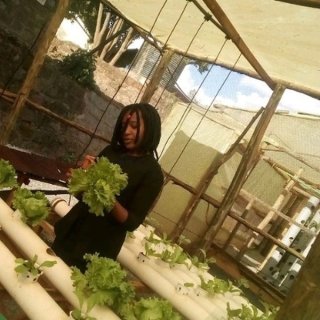
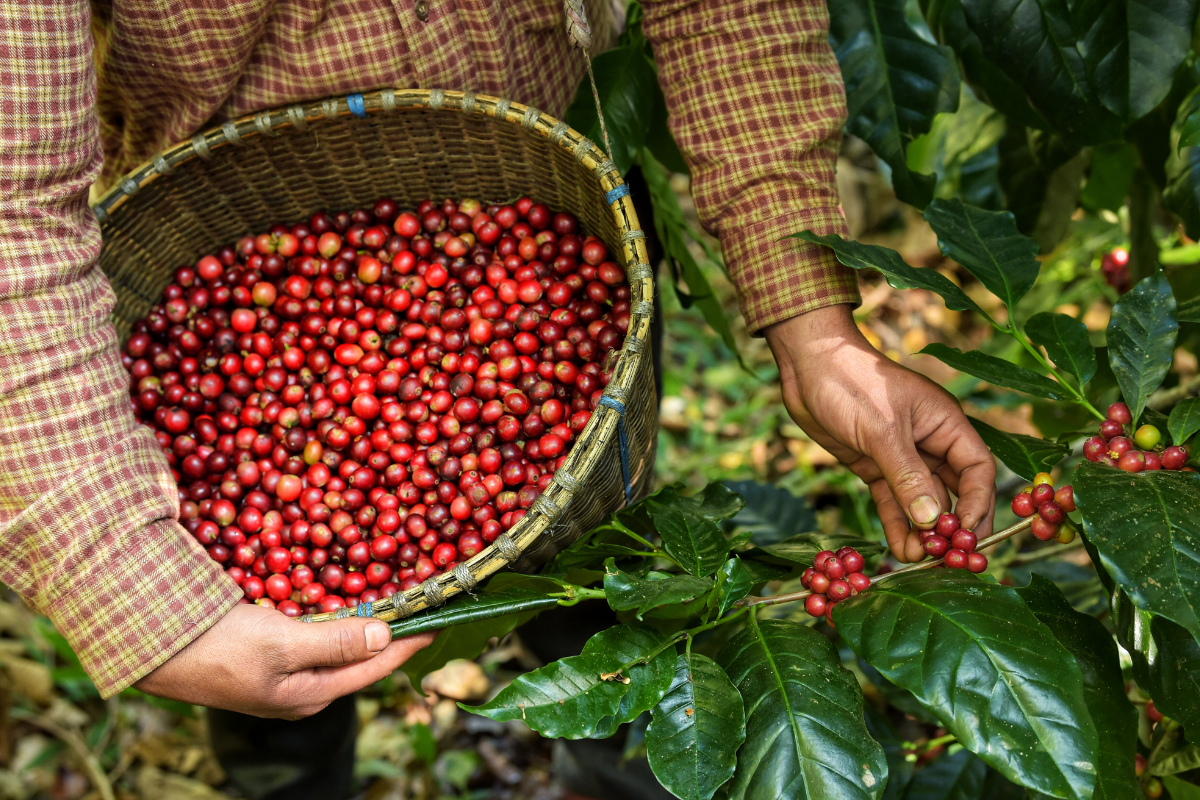
Growing up in Kenya's coffee-growing heartland, I never saw coffee through a lens of romance, prestige or economic opportunity. To my younger self, coffee meant back-breaking labour on the shamba, the family farm plot. I remember hating every moment of it: the hours spent weeding under a scorching sun, hauling heavy buckets of manure to feed the soil, applying fertiliser bush by bush. Then came the harvest, with fingers stained dark purple, branches snapping back against my arms, and hours spent picking red cherries one at a time. Coffee felt like a sentence rather than a livelihood, and I swore I would never build a career around it.
That began to change when I went to university to study for a Bachelor of Science in Agricultural Economics. The degree gave me a view of agriculture from above: food systems, market structures, global value chains and farm management. I started to see farming not as a cycle of chores but as an industry shaped by markets, trade policy and economic strategy.
After graduating I worked across several parts of agriculture, trying to apply my economics to practical farm problems. I spent time in different crop enterprises and in agribusiness advisory work, and learned where smallholder farmers struggle and where potential goes unused. Yet my path kept leading me back to the glossy green leaves of the coffee tree.
When I finally moved into the coffee sector as an agronomist, it was not love at first sight. It was a gradual awakening. Moving from the physical burden of farm labour to the science, agronomy and business behind the crop changed everything. Coffee was no longer a demanding crop in the backyard. It was a high-value export commodity that rewarded careful management and planning.
I understood why coffee is called Kenya's black gold. Following the value chain from smallholder shambas to the auction floor and on to coffee shops around the world showed me how many livelihoods depend on it. I also saw that realising its full value means moving away from habit and guesswork towards measurement and deliberate management.
The chores were agronomy all along
What I once saw as tedious chores turned out to be the practices that decide cup quality, yield and farm profit. Three of them matter most.
Feeding the soil by measurement
Traditional coffee farming often relies on guesswork, which leads either to underfed trees or to wasted fertiliser. Good coffee agronomy starts with soil and leaf analysis. Testing the soil for pH, organic matter and nutrient deficiencies lets a farmer apply what that block actually needs rather than a blanket recommendation.
Targeted application: placing manure and micronutrients where the roots can take them up supports root growth, flowering and cherry development.
Lower costs: testing before applying prevents overuse of synthetic inputs, which protects soil life and saves the farmer money.
In my work I have found that most coffee farmers do not see the real value of soil sampling and analysis, and I spend a lot of time explaining why it matters. On one cooperative farm I advised, the farmer was applying heavy doses of nitrogen fertiliser every season, yet yields stayed below 2 kg per tree. A soil test showed a severely acidic pH of 4.2, with phosphorus locked up in the soil. Instead of buying more fertiliser, the farmer applied agricultural lime at 250 grams per bush together with well-decomposed manure. Within two seasons the soil pH had stabilised above 5.5, the trees were taking up nutrients much better and yields had more than doubled to over 4.5 kg per tree, while spending on synthetic fertiliser went down.
Pruning and pest management
Pruning is one of the most effective ways to manage the microclimate inside a coffee tree. A well-shaped tree lets in light and air.
Disease prevention: better airflow lowers humidity inside the canopy, which helps limit fungal diseases such as coffee berry disease and coffee leaf rust.
Spraying only when needed: rather than spraying on a calendar, integrated pest management relies on regular scouting. Chemicals are applied only when pests reach the economic injury threshold, which protects local biodiversity and keeps the crop within international residue limits.
I once worked with a farmer whose block of older SL28 trees had never been pruned. The canopy was so dense that coffee leaf rust and coffee berry disease broke out every rainy season, the trees shed their leaves and the farmer was losing nearly 60% of the crop. We opened up the canopy, carried out a change of cycle and pruned out unproductive, overcrowded branches. With more air and sunlight reaching inside the trees, humidity in the canopy dropped sharply. Without relying on heavy spraying, the block recovered, the trees kept far more of their leaves, and the next harvest brought more berries, larger and cleaner than before.
Picking and processing for quality
In a high-value crop, quality sets the price, and selective picking, taking only fully ripe, bright red cherries, is the most important quality decision made on the farm.
Uniform ripeness: specialty buyers pay for uniform maturity, high sugar content and cherries free of defects.
Careful processing: quality carries on at the washing station, where controlled fermentation times, pH checks and slow drying on raised beds preserve the bright acidity, body and fruit notes that Kenyan arabica is known for.
At most of the coffee factories in my area, the wet mills where farmers deliver their cherry, deliveries that mix green, underripe or overripe cherries go straight into lower grades such as Mbuni, which fetch low prices. After attending training on coffee processing and markets, I started training farmer groups in strict selective picking and sorting on the farm. Over 80% of their deliveries then made primary grade at the factory, and the payout rose from around KSh 120 a kilo for mixed cherry to over KSh 150 a kilo for top-grade cherry, from exactly the same trees.
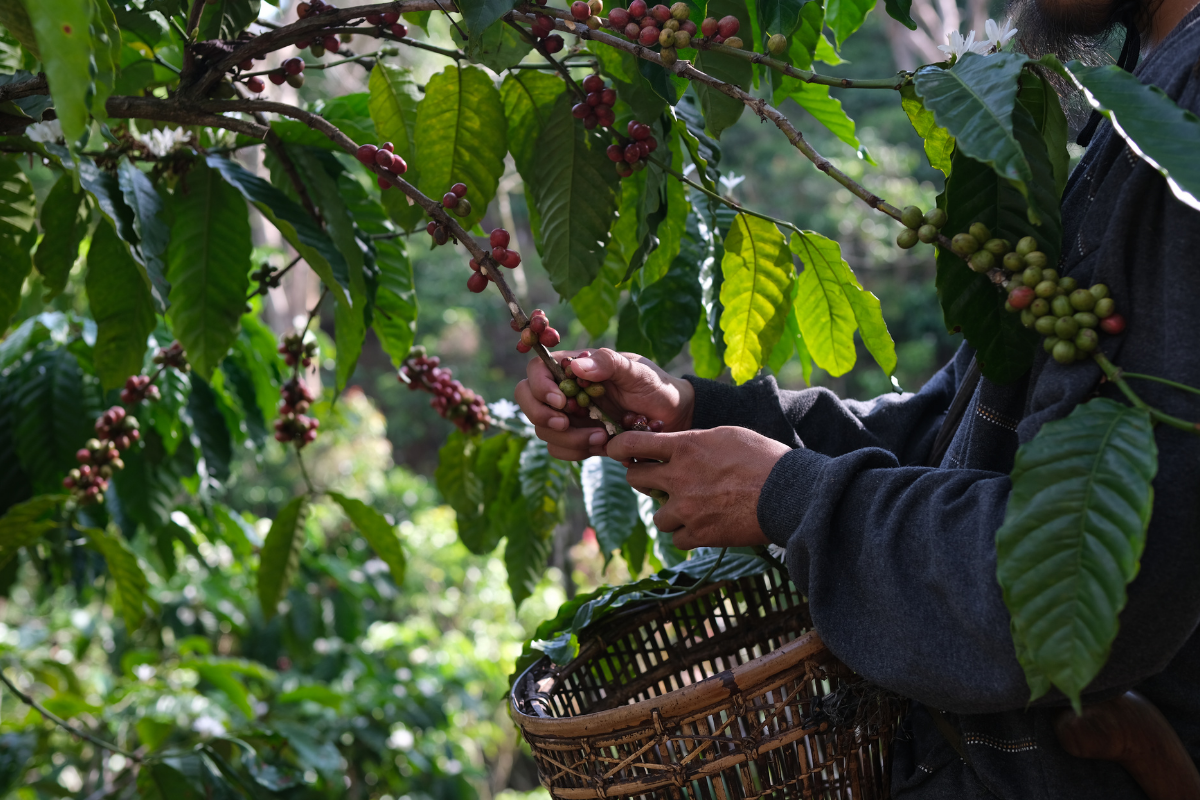
Selective picking, taking only fully ripe red cherries, is the most important quality decision made on the farm.
Running the farm as a business
Agronomy alone does not sustain a farm. It has to be paired with business sense, and one of the biggest hurdles smallholders face is seeing the farm as a family plot rather than an enterprise.
Record-keeping is where that change starts. Mapping farm boundaries, keeping yield histories and tracking what inputs go on each block shows a farmer which parts of the farm perform and which do not, makes it possible to forecast the season's harvest, and helps plan the movement of cherries from farm gate to factory. Digital tools make this easier, but the habit of recording matters more than the tool.
Why I stayed
Today, standing in the field with smallholder farmers, I find that my childhood dislike of the crop has given way to a sense of purpose. Combining agricultural economics, field agronomy and good farm data lets me argue for the farmer's bottom line. My work is to help farmers stop seeing coffee as endless manual labour and start managing it as a profitable business, through soil testing, careful pest management, good records and financial planning, so that coffee is worth farming for this generation and the next.
Coffee connects a small plot on the slopes of Kenya to cups all over the world. It pays school fees, supports rural economies and holds communities together. Coming back to it, not out of obligation but by choice and with a profession in hand, reminds me every day that the field I once tried to escape turned out to be where I belong.