Lessons from experience
I grew up in the farming region of Meru, in Kenya. My parents were farmers, and that is how they managed to raise my two siblings and me. They did not introduce us to farming because, as it were, we were sent to school to get a formal job. Therefore, we never go into the details of how they run their farming business.
Fast forward to 2018, when I started engaging in active farming, and suddenly, I started seeing the many areas they could improve for better yields. Among the areas for improvement I identified was the need to have a continuous and accurate record-keeping system.
Most small-scale farmers, like my parents, have no continuous record-keeping system of when they planted, applied fertiliser, labour costs, when they bought their cows, or the cost of production versus profits. If they did, they could reap huge benefits in productivity and profits, and transform their farms as discussed in this article.
Record-keeping builds awareness and discipline
Among the very basic benefits of a record-keeping system is its ability to enhance awareness and instill discipline. When a record-keeping system is in place, farmers are compelled to observe their crops and livestock closely to update their records. In turn, this close observation helps in the early detection of problems such as the presence of pests, diseases, or nutritional deficiencies.
A study conducted by Enoch Kwame and his colleagues in Ghana showed that farmers did not keep complete records because they did not think that the records were beneficial to them. Adoption of a recording-keeping system, however simple, greatly impacts a farmer's discipline regarding expenditures and earnings. Caroline Muthoni, a small-scale vegetable grower in Kenya, confessed to increased discipline when she used the Farmis Kenya platform to keep track of her farm records.
Farm Management Information Systems (FMIS)
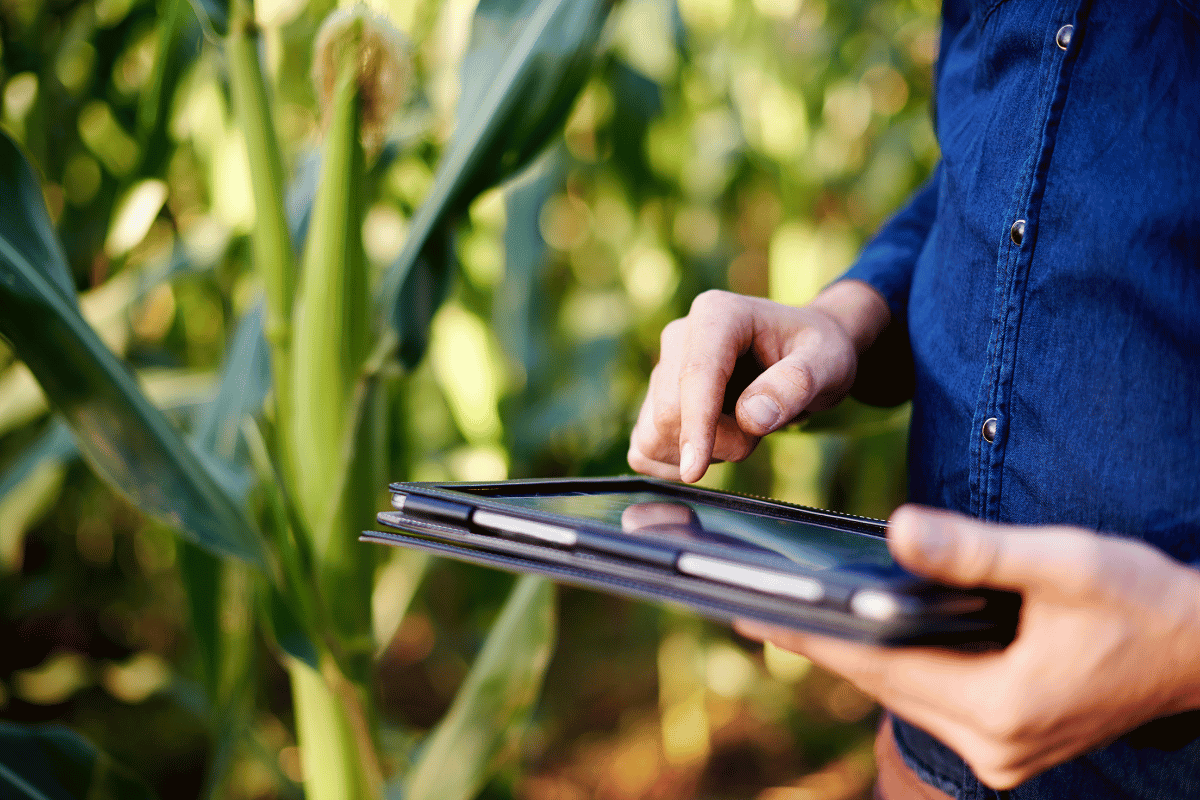
Modern farmers can benefit from Farm Management Information Systems that are specifically designed to assist in recording activities. According to Wikifarmer, typical functions of FMISs include: the ability to locate one's farm, define plots and boundaries, set crop cycles and rotations, record operations (tillage, planting, nutrition, irrigation, defense, and harvesting), monitor machinery fleet through telemetry, operating parameters and consumption, scheduled maintenance and fault detection through alerts. Additionally, these systems manage the economic and administrative side of the business, collect data from sensors, and receive useful advice to guide choices provided by integrated Decision Support Systems (DSS).
Continuous learning and improvement through farm records
Records provide evidence of what worked and what failed. This enables a farmer to improve their processes in the next phase. A record-keeping system helps in making data-based decisions for continuous improvement. For example, long-term records have a rich source of historical data and patterns that can provide lessons on soil fertility cycles, pest seasons, and weather impacts. From this rich data, farmers can plan planting schedules, fertiliser application, and harvesting times better.
The presence of a record-keeping system encourages experimentation and innovation. For example, from their records, a farmer can compare outcomes of different techniques such as fertiliser types, planting densities, seasons, among other parameters. A study conducted in Trans Nzoia County, Kenya, showed that early sowing of maize yielded the highest average per hectare. Farmers who keep accurate records would be better placed to understand the planting seasons and fertiliser applications that give optimal yields over time than those with no records.
Enhances productivity and profitability
Without proper and accurate record-keeping, many small-scale farmers underestimate costs such as labour, feeds, transport, and other inputs. I have grown up hearing my parents talk about the lump sum amounts they sold their produce for, or the monthly payouts they get from selling milk, and rarely about the costs they incurred to earn the lump sum. What this does is that many farmers get an illusion that they are making money from their farming, whereas it is possible they could be making very small margins or even no profits at all.
Good record-keeping exposes hidden losses and help arrive at accurate profit margins per crop, planting cycle, or even per animal. A study of dairy farmers in Kenya by Wahome found that “the type of records kept, the frequency of record keeping, and method of record keeping had a positive and statistically significant effect on dairy farming business performance.”
A Pathway to growth and scalability
Any ambitious small-scale farmer would wish to expand their farming business. The most likely ways towards this expansion would be through loans, grants, and partnerships. When farmers have accurate historical farm data, they are more likely to be lent to them than if they just had word of mouth. An organised farmer would be viewed as a low-risk borrower by lenders such as banks, microfinances, and NGOs. Similarly, the availability of farm records can convince and attract potential buyers who want consistency.
Another form of growth and scalability that does not involve funding is certification. When a small-scale farmer is certified for either organic farming or product safety, this comes with increased demand for their products by consumers. Certification bodies demand traceability of inputs and farming activities, and this can only be achieved if a farmer has a reliable record-keeping system in place. Detailed records enable and simplify the audit process for certification. For example, the Participatory Ecological Land Use Management (PELUM) Association requires documented management systems and procedures to certify producers on their product quality and organic process.
Luckily, organisations are stepping in to help small-scale farmers to leverage technology to grow their farming ventures. In Kenya, there are digital tools such as DigiFarm that help smallholder farmers not only to implement proper record-keeping systems but also to access other vital agricultural services. These other services include access to farming loans, insurance, weather information, farming practices (soil testing, mechanisation, and irrigation), and markets.
Simplifying training, delegation, and farm succession
When there are records to follow, it becomes easy for a different person to run the farm. For example, the new person would know when the planting season begins and the inputs required, hence increasing their chances of success. With records, it also becomes easier and effective for the farmer to delegate some of the tasks to farm assistants. Records reduce the dependence on a person’s memory, and this ensures profitable continuity in their absence. Even when the farmer is around, their farm assistants will keep changing over time. The presence of farm records makes it easy to train new employees. These records should be complete for them to be useful.
A study conducted in Nigeria by Victor Alex found that, whereas 87.9% of the farmers interviewed were aware of record keeping, only 64.3% adopted farm record keeping. Out of these 64.3%, only 21.4% frequently kept their farm records, which meant that the majority of farmers are likely to have incomplete records. Such incomplete records deny them the full benefits of an accurate and continuous record-keeping system.
While other factors impact farm succession, such as family dynamics, government policies, professional guidance, and expertise, farm culture norms, such as record keeping, also play a key role in effective farm succession. Record-keeping can also enhance the socialisation process, which not only orients younger family members to farm activities but also aids in the farm succession plan.
Record-keeping as a pathway to transformation
Record-keeping is not just paperwork. It is a worthy investment that enhances productivity, profitability, supports better decisions, financial access, and sustainable practices. Record-keeping does not require costly investments. A simple notebook or phone app can turn observation into a timeless opportunity. It is my desire that smallholder farmers and upcoming farmers will be intentional about reaping the benefits of a recording-keeping system for their farming businesses.
Sources
- Assessing Farm Record Keeping Behaviour among Small-Scale Poultry Farmers in the Ga East Municipality
- Assessment of Maize Yield Response to Agricultural Management Strategies Using the DSSAT–CERES-Maize Model in Trans Nzoia County in Kenya
- Effect of record keeping practices on dairy farming business performance in Kiambu County: a case of Kiambaa Constituency.
- Certification requirements for organic farming
- Understanding Farmers’ Readiness to Develop a Succession Plan: Barriers, Motivators, and Preliminary Recommendations