



Collins Lawrence Omogiade¹ and Ishaya Usman Gadzama²
¹Department of Animal Science and Technology, School of Agriculture and Agricultural Technology, Federal University of Technology, Owerri, Imo State, Nigeria
²School of Agriculture and Food Sustainability, University of Queensland, QLD 4343, Australia
Introduction
Domesticated ruminants, such as cattle, sheep, and goats, play a vital role in global agriculture, providing meat, milk, and draft power for over 3.5 billion people worldwide (Gadzama et al., 2016; Yashim et al., 2016a; Gadzama et al., 2017; FAO, 2023). Their unique digestive system, characterized by a four-compartment stomach, enables the breakdown of fibrous plant material, with the rumen serving as the primary fermentation chamber (Yashim et al., 2016b). The rumen hosts a complex microbial ecosystem (bacteria, protozoa, fungi, and archaea) that converts cellulose into volatile fatty acids (VFAs), which are the primary energy source for the animal (Matthews et al., 2019; Gadzama, 2024).
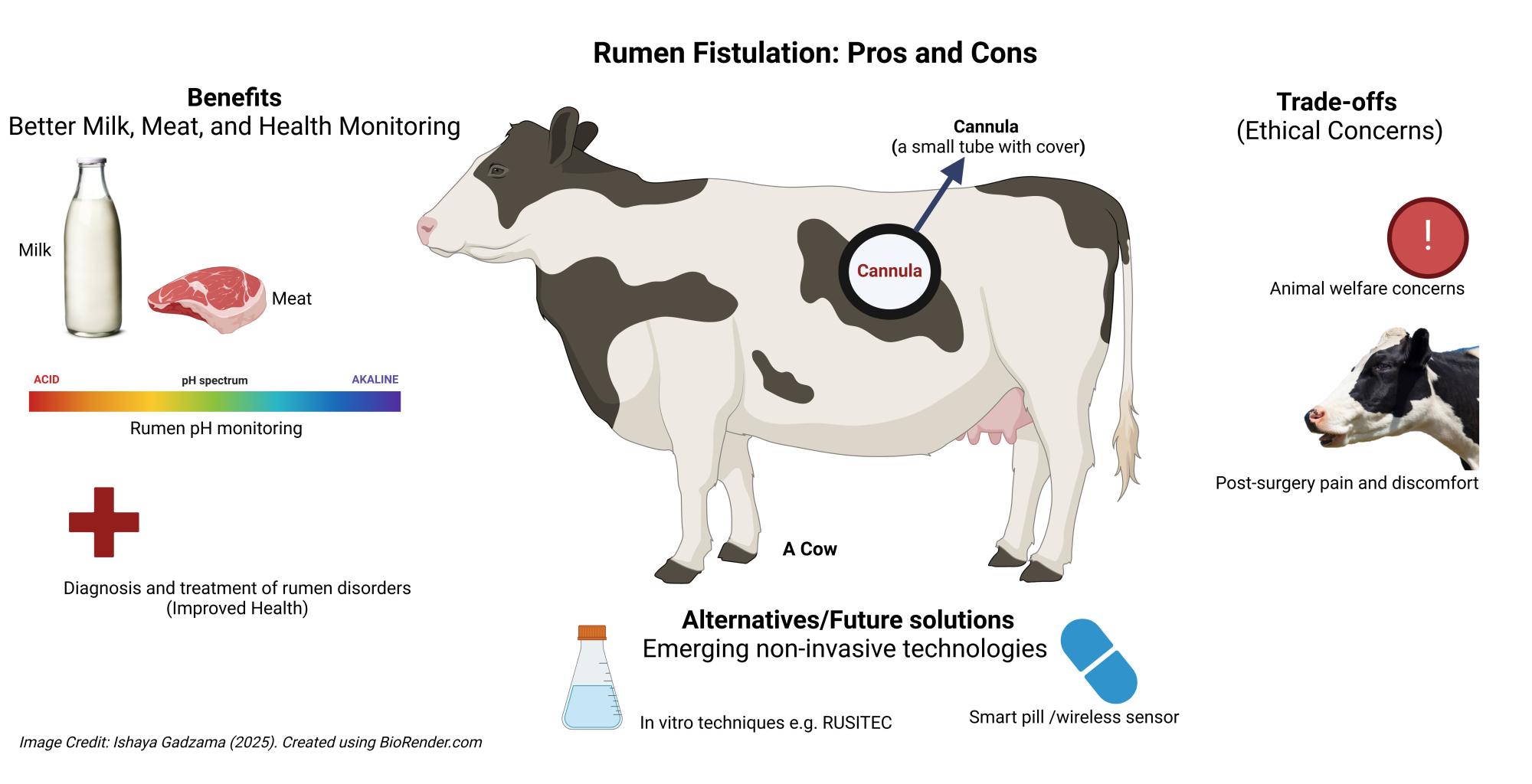
To study this intricate system, researchers employ fistulation, a surgical technique involving the insertion of a cannula to create permanent rumen access. This method has advanced our understanding of microbial dynamics, nutrient metabolism, and metabolic disorders, directly improving ruminant nutrition and productivity (Castillo & Hernández, 2021). Despite ethical concerns, fistulation remains critical for research and clinical applications.
What is Rumen Fistulation?
Rumen fistulation is a surgical procedure commonly used in ruminant research, involving the creation of a permanent opening (fistula) into the rumen of an animal, typically through the installation of a cannula (Castillo & Hernández, 2021). This technique allows researchers direct access to the ruminal environment, enabling the collection of rumen contents, monitoring microbial activity, and evaluating digestive processes in real-time (Moate et al., 2018; Cao et al., 2021).
The procedure involves breaching the abdominal cavity and rumen wall, which temporarily disrupts the anaerobic conditions essential for optimal microbial function. This disruption can lead to initial changes in the rumen microbial community, such as a decrease in obligate anaerobes like Bacteroides and Prevotella, and an increase in aerobic and facultative anaerobic microorganisms (Cao et al., 2021). Despite these transient microbial shifts, the rumen environment typically stabilizes within 14 days post-surgery, with microbial diversity often recovering or even surpassing pre-surgery levels (Cao et al., 2021).
Rumen fistulation is particularly valuable for studying rumen physiology, nutrient metabolism, and metabolic disorders, as it provides a window into the rumen that would otherwise be inaccessible in live animals (Castillo & Hernández, 2021). However, the procedure is invasive, costly, and raises ethical concerns regarding animal welfare, prompting the development of less invasive alternatives such as oro-ruminal sampling devices (Miccoli et al., 2024).
Impacts of Rumen Fistulation on Microbial Diversity and Function
Rumen fistulation, a common technique in ruminant research, significantly impacts the rumen environment (Cao et al., 2021). The surgical procedure breaches the abdominal cavity and rumen, disrupting the crucial anaerobic conditions necessary for optimal microbial function. This oxygen exposure leads to an initial decrease in the relative abundance of obligate anaerobes like Bacteroides and Prevotella (Cao et al., 2021). Conversely, the abundance of aerobic and facultative anaerobic microorganisms, such as Proteobacteria and Succinivibrio, increases immediately after surgery. While microbial diversity is initially reduced, it recovers and even surpasses pre-surgery levels by day 14. Despite these pronounced microbial shifts, the apparent digestibility of dry matter and total volatile fatty acid (TVFA) concentrations do not significantly differ between the period before surgery and 14 days post-surgery (Cao et al., 2021).
However, the transient changes in microbial composition and function raise concerns about whether rumen fluid from fistulated animals truly represents the rumen environment of intact animals (Cao et al., 2021). These findings suggest that while fistulation allows for direct rumen sampling, the altered microbial ecosystem may not accurately reflect conditions in non-fistulated animals, particularly in the immediate post-operative period. This warrants careful consideration in microbiota-focused research (Cao et al., 2021).
Purpose and Benefits of Fistulation
1. Monitoring Rumen Microbiota and Microbial Dynamics
Fistulation enables real-time analysis of the rumen microbiome, which is dominated by fiber-degrading bacteria like Fibrobacter succinogenes and Ruminococcus albus (Chen et al., 2022). These microbes convert indigestible plant biomass into energy (Matthews et al., 2019). Researchers use fistulation to evaluate dietary impacts in cattle, sheep, and goats to advance our understanding of digestive physiology and development, nutrient degradability, and rumen microbial populations (Castillo & Hernández, 2021). Such insights have led to targeted interventions, including Megasphaera elsdenii probiotics that could reduce lactic acid accumulation in cattle (Gadzama, 2025).
2. Diagnosis and Management of Rumen Disorders
Fistulation facilitates rapid diagnosis and treatment of conditions like acidosis, bloat, and dysbiosis. In acute frothy bloat, cannula access allows immediate rumen decompression, preventing mortality (Duffield et al., 2004). Direct rumen fluid analysis also aids in detecting subacute ruminal acidosis (SARA), affecting high-producing dairy herds globally (Plaizier et al., 2022).
3. pH Regulation and Buffering Strategies
Maintaining rumen pH (6.0–7.0) is critical for microbial efficiency (Matthews et al., 2019; Gadzama, 2025). Real-time pH monitoring via fistulation could reduce SARA incidence in dairy herds. Innovations like encapsulated sodium bicarbonate, administered through cannulas, extended pH stability by 50% compared to conventional buffers (Lee et al., 2023). Similarly, optimized yeast culture (Saccharomyces cerevisiae) dosing improved fiber digestion by 18% (Desnoyers et al., 2009).
4. Transfaunation and Microbial Restoration
Transfaunation (transferring rumen fluid from healthy to sick animals), restores microbial balance, with studies reporting 85% recovery rates in dysbiotic ruminants (DePeters & George, 2015).
Effects on Rumen Gas Composition and Methane Emissions
Rumen fistulation also alters the gaseous environment within the rumen. The presence of a rumen cannula facilitates the ingress of atmospheric air, leading to elevated concentrations of nitrogen (N₂) and oxygen (O₂) compared to non-fistulated animals (Moate et al., 2018). This explains why monitoring methane and carbon dioxide production in ruminal cannulated animals may be challenging, especially since they are unsuitable for the GreenFeed System of greenhouse gas measurement due to potential gas loss and altered eructation patterns, which can compromise data accuracy (Martin et al., 2020). Conversely, the concentrations of fermentation gases such as carbon dioxide (CO₂), methane (CH₄), and hydrogen (H₂) are lower in fistulated cows. This introduction of air, an aerobic process, can influence methanogenesis. Indeed, fistulated cows exhibit a small but statistically significant reduction in methane yield and intensity compared to their non-fistulated counterparts (Moate et al., 2018).
Despite these alterations in rumen gas composition and methane output, rumen fistulation does not significantly affect dry matter intake, milk production, or milk composition (Moate et al., 2018). Consequently, fistulated cows remain a valid model for investigating the effects of dietary treatments on milk production and methane emissions. However, the potential influence of the fistula on methane emissions should be acknowledged in research settings (Moate et al., 2018).
Limitations of Fistulation
Ethical Considerations and Animal Welfare
Rumen fistulation, while a valuable technique for studying rumen function and microbial ecology, necessitates careful attention to animal well-being (Research Ethics and Integrity, 2022). Fistulation poses risks of infection (15–20% incidence), hemorrhage, and chronic pain (Johnson et al., 2023). Ethical debates persist regarding animal welfare, prompting calls for stricter protocols, including mandatory pain management and behavioral monitoring (European Food Safety Authority [EFSA], 2018).
The Standard Operating Procedure (SOP) for rumen sampling via a fistula emphasizes that routine sampling and maintenance, when performed correctly, should not result in notable negative impacts on the animal beyond routine handling stress. However, the SOP outlines critical precautions to minimize potential adverse effects. Investigators must exercise gentleness during sampling to avoid bruising delicate internal organs such as the liver and kidneys (Research Ethics and Integrity, 2022).
Post-surgical pain management is also a critical consideration. Research indicates that the initial phase of rumen fistulation surgery induces physiological signs of pain, including elevated heart rate, rectal temperature, and serum haptoglobin concentrations, an indicator of inflammation (Newby et al., 2014). Behavioral changes, such as reduced time spent lying on the surgical side and increased tail flicking, further suggest post-operative discomfort. The administration of analgesics like ketoprofen can offer some relief from this pain and potentially improve milk production and the propensity to lie on the surgical side (Newby et al., 2014).
Long-Term Management Challenges
Fistulated animals require lifelong care and monitoring for complications like fistulous tract stenosis (Siegmund et al., 2016). In tropical regions, high humidity increased cannula site infections by 30% (Gupta et al., 2022).
Emerging Alternatives to Rumen Fistulation
Given the ethical and practical challenges associated with rumen fistulation, researchers are exploring less invasive alternatives. Non-invasive technologies like the Rumen Simulation Technique (RUSITEC) replicate rumen conditions in vitro (Wetzels et al., 2018). Wireless telemetric capsules or "smart pills" can transmit real-time rumen pH and temperature data and may offer non-invasive monitoring of the rumen (Thwaites et al., 2024; Hoffmann et al., 2024).
One promising alternative is the "Rumen Sampler MG," an intra-esophageal tube device that increases the recovery of solid fractions from rumen content compared to other oro-ruminal methods (Miccoli et al., 2024). Samples collected using this method yielded 35% to 40% wet solids volume and were found to be suitable for rumen microbiome analysis, showing consistency in the main bacterial phyla relative abundances with samples from rumen fistulas. Importantly, the sampling procedure did not negatively impact animal performance, as indicated by the continued increase in dry matter intake and milk yield of the cows (Miccoli et al., 2024).
Conclusion
Rumen fistulation is a method used by scientists to study the inside of a cow’s stomach directly. While it’s very useful for understanding how cows digest food and how their stomachs work, it does have some downsides, like affecting the tiny organisms living in the stomach and the cow’s overall health. Because of these concerns, researchers are looking for other ways to study cows that are less invasive. New technologies like genetic tools, precise sensors, and in vitro lab models could eventually replace surgical fistulation, aligning research with modern animal welfare standards. Until then, combining fistulation with these emerging technologies can help improve cow health and farming practices.
References
- Cao, Y., Zhu, B., Li, F., Zhang, D., Guo, T., Li, F., & Yang, G. (2021). The Destruction of the Anaerobic Environment Caused by Rumen Fistula Surgery Leads to Differences in the Rumen Microbial Diversity and Function of Sheep. Frontiers in Veterinary Science, 8, 754195. The Destruction of the Anaerobic Environment Caused by Rumen Fistula Surgery Leads to Differences in the Rumen Microbial Diversity and Function of Sheep — Frontiers in Veterinary Science
- Castillo, C., & Hernández, J. (2021). Ruminal Fistulation and Cannulation: A Necessary Procedure for the Advancement of Biotechnological Research in Ruminants. Animals: an open access journal from MDPI, 11(7), 1870. https://doi.org/10.3390/ani11071870
- Chaucheyras-Durand, F., & Durand, H. (2010). Probiotics in animal nutrition and health. Beneficial microbes, 1(1), 3–9. Probiotics in animal nutrition and health — Beneficial Microbes
- Chen, X., Yan, F., Liu, T., Zhang, Y., Li, X., Wang, M., Zhang, C., Xu, X., Deng, L., Yao, J., & Wu, S. (2022). Ruminal Microbiota Determines the High-Fiber Utilization of Ruminants: Evidence from the Ruminal Microbiota Transplant. Microbiology spectrum, 10(4), e0044622.
- Desnoyers, M., Giger-Reverdin, S., Bertin, G., Duvaux-Ponter, C., & Sauvant, D. (2009). Meta-analysis of the influence of Saccharomyces cerevisiae supplementation on ruminal parameters and milk production of ruminants. Journal of dairy science, 92(4), 1620–1632. https://doi.org/10.3168/jds.2008-1414
- DePeters, E., & George, L. W. (2015). Treating dairy cow indigestion with rumen transfaunation. Progressive Dairy. Treating Dairy Cow Indigestion with Rumen Transfaunation
- Duffield, T., Plaizier, J. C., Fairfield, A., Bagg, R., Vessie, G., Dick, P., ... & McBride, B. (2004). Comparison of techniques for measurement of rumen pH in lactating dairy cows. Journal of dairy science, 87(1), 59-66.
- European Food Safety Authority. (2018). Guidance on the characterisation of microorganisms used as feed additives or as production organisms. EFSA Journal, 16(4), e05206. Guidance on the characterisation of microorganisms used as feed additives or as production organisms — EFSA Journal
- FAO (2023). Global Livestock Production Statistics. Retrieved from https://www.fao.org
- Gadzama, I. U. (2025). Megasphaera elsdenii: A probiotic solution for rumen health and feed efficiency. Wikifarmer. https://www.researchgate.net/publication/389098509_A_Probiotic_Solution_for_Rumen_Health_and_Feed_Efficiency
- Gadzama, I. U., Yashim, S. M., Abdu, S. B., Makun, H. J., Barje, P. P., & Achi, N. P. (2017). Feed intake, growth performance and nutrient digestibility in Friesian Bunaji calves fed soymilk based milk replacer. Journal of Animal Production Research, 29(2), 96-111.
- Gadzama, I. U., Mohammed, I. D., Yashim, S. M., Abdu, S. B., & Ereke, S. O. (2016). Quality assessment of Dusa-rice bran multi-nutrient block (DRMB) in a semi-arid environment of north east Nigeria. Journal of Animal Production Research, 28(1), 33-48.
- Gupta, A., Nair, R., Singh, S., Khanna, H., Bal, A., & Patrikar, S. (2022). Compare the efficacy of recommended peripheral intravascular cannula insertion practices with a standard protocol: a randomized control trial. medical journal armed forces india, 78, S111-S115.
- Hoffmann, S. V., O'Shea, J. P., Galvin, P., Jannin, V., & Griffin, B. T. (2024). State-of-the-Art and Future Perspectives in Ingestible Remotely Controlled Smart Capsules for Drug Delivery: A GENEGUT Review. European Journal of Pharmaceutical Sciences, 106911.
- Hristov, A. N., Oh, J., Firkins, J. L., Dijkstra, J., Kebreab, E., Waghorn, G., Makkar, H. P., Adesogan, A. T., Yang, W., Lee, C., Gerber, P. J., Henderson, B., & Tricarico, J. M. (2013). Special topics--Mitigation of methane and nitrous oxide emissions from animal operations: I. A review of enteric methane mitigation options. Journal of animal science, 91(11), 5045–5069. https://doi.org/10.2527/jas.2013-6583
- Johnson, E. E., O’Connor, N., Hilton, P., Pearson, F., Goh, J., & Vale, L. (2023). Interventions for treating obstetric fistula: An evidence gap map. PLOS Global Public Health, 3(1), e0001481.
- Lee, K., Kim, D., Lee, H., & Lee, E. (2023). The effect of using vapocoolant spray for pain reduction in arteriovenous fistula cannulation among patients undergoing hemodialysis: A randomized control trial. Applied Nursing Research, 71, 151674.
- Matthews, C., Crispie, F., Lewis, E., Reid, M., O'Toole, P. W., & Cotter, P. D. (2019). The rumen microbiome: a crucial consideration when optimising milk and meat production and nitrogen utilisation efficiency. Gut microbes, 10(2), 115–132. The rumen microbiome: a crucial consideration when optimising milk and meat production and nitrogen utilisation efficiency — Gut Microbes
- Martin, C., Rochette, Y., Humphries, D., & Renand, G. (2020). Greenfeed system. In S. D. Mesgaran, R. Baumont, L. Munksgaard, D. Humphries, E. Kennedy, J. Dijkstra, R. Dewhurst, H. Ferguson, M. Terré, & B. Kuhla (Eds.), Methods in cattle physiology and behaviour research – Recommendations from the SmartCow consortium (pp. 1-10). PUBLISSO. Greenfeed systems — Methods in cattle physiology and behaviour research – Recommendations from the SmartCow consortium
- Moate, P. J., Williams, S. R. O., Deighton, M. H., Hannah, M. C., Ribaux, B. E., Morris, G. L., Jacobs, J. L., Hill, J., & Wales, W. J. (2018). Effects of feeding wheat or corn and of rumen fistulation on milk production and methane emissions of dairy cows. Animal Production Science, 58(6), 1035-1048. Effects of feeding wheat or corn and of rumen fistulation on milk production and methane emissions of dairy cows — Animal Production Science
- Miccoli, F. E., Galarza, R. I., Juliano, N., Ferreyra, S., Maresca, S., López-Valiente, S., Guerrero, L. D., Palladino, R. A., & Albornoz, R. I. (2024). Oro-ruminal sampling device and technique for rapid collection of rumen content and improved recovery of solid fractions for microbiome analysis. JDS Communications, 5(3), 563–567. https://doi.org/10.3168/jdc.2023-0139
- Newby, N. C., Tucker, C. B., Pearl, D. L., LeBlanc, S. J., Leslie, K. E., von Keyserlingk, M. A. G., & Duffield, T. F. (2014). An investigation of the effects of ketoprofen following rumen fistulation surgery in lactating dairy cows. Canadian Veterinary Journal, 55(5), 442–448. https://doi.org/10.20382/cvj.2014.55.5.442
- Plaizier, J. C., Mulligan, F. J., Neville, E. W., Guan, L. L., Steele, M. A., & Penner, G. B. (2022). Invited review: Effect of subacute ruminal acidosis on gut health of dairy cows. Journal of dairy science, 105(9), 7141-7160.
- Research Ethics and Integrity (2022). RUM_020 Rumen Sampling of Cattle via a Rumen Fistula (Version 1). The University of Queensland. AEC Reviewed & Approved: 20/07/2022.
- Siegmund, B., Feakins, R. M., Bamias, G., Ludvig, J. C., Teixeira, F. V., Rogler, G., & Scharl, M. (2016). Results of the Fifth Scientific Workshop of the ECCO (II): Pathophysiology of perianal fistulizing disease. Journal of Crohn’s and Colitis, 10(4), 377–386. Results of the Fifth Scientific Workshop of the ECCO (II): Pathophysiology of Perianal Fistulizing Disease — Journal of Crohn's and Colitis
- Thwaites, P. A., Yao, C. K., Halmos, E. P., Muir, J. G., Burgell, R. E., Berean, K. J., Kalantar-Zadeh, K., & Gibson, P. R. (2024). Review article: Current status and future directions of ingestible electronic devices in gastroenterology. Alimentary pharmacology & therapeutics, 59(4), 459–474. Review article: Current status and future directions of ingestible electronic devices in gastroenterology — Alimentary Pharmacology & Therapeutics
- Yashim, S. M., Adekola, S. T., Abdu, S. B., Gadzama, I. U., & Hassan, M. R. (2016a). Feed intake, growth performance and nutrient digestibility in growing Red Sokoto bucks fed diets containing graded levels of dried sweet orange peel meal. Animal Research International, 13(1), 2328-2337.
- Yashim, S., Gadzama, U. I., & Fwangtu, P. I. (2016b). Comparative evaluation of nutritive value of cowpea (Vigna unguiculata) and groundnut (Arachis hypogaea) haulms in the diet of red Sokoto goats. Adamawa state university. Journal of Agricultural Science, 4(1), 134-144.
- Wetzels, S. U., Eger, M., Burmester, M., Kreienbrock, L., Abdulmawjood, A., Pinior, B., Wagner, M., Breves, G., & Mann, E. (2018). The application of rumen simulation technique (RUSITEC) for studying dynamics of the bacterial community and metabolome in rumen fluid and the effects of a challenge with Clostridium perfringens. PloS one, 13(2), e0192256. The application of rumen simulation technique (RUSITEC) for studying dynamics of the bacterial community and metabolome in rumen fluid and the effects of a challenge with Clostridium perfringens — PLOS ONE