
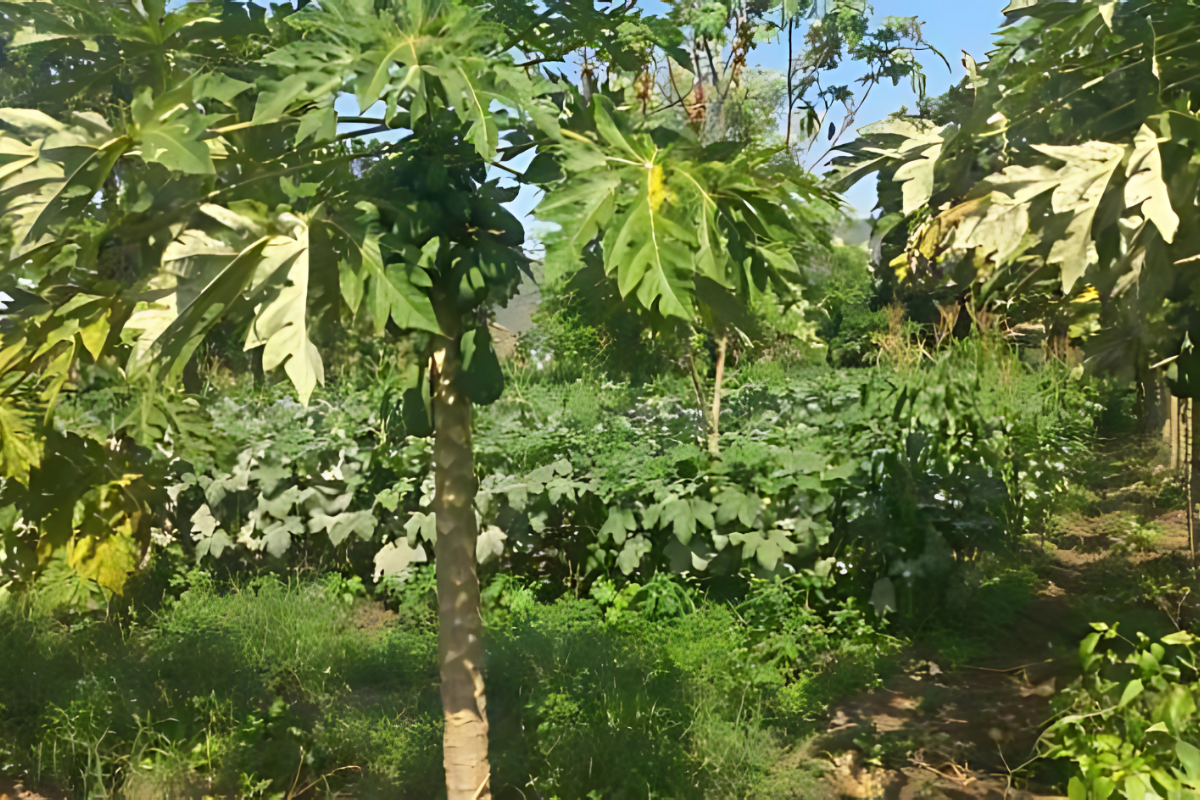
Introduction: A response to land degradation and food insecurity
Smallholder farmers in tropical and sub-tropical regions face a convergence of crises: land degradation, erratic rainfall, food insecurity, and biodiversity loss. Traditional monocropping systems, often reliant on external inputs, leave farmers vulnerable to climatic shocks and market fluctuations.
The Forest Garden model offers a time-tested, regenerative response. Developed and promoted by organizations like Trees for the Future, it is a holistic farming system that heals degraded landscapes, builds ecological resilience, and provides year-round food and income for rural families.
What is a forest garden?
A Forest Garden is an integrated system that mimics a natural forest structure but is designed and managed to produce food, fodder, fuelwood, medicine, and other useful products. Unlike conventional farms that rely on a few annual crops, Forest Gardens integrate trees, shrubs, vines, herbs, and vegetables into a synergistic system that enhances soil health, water retention, and biodiversity.
Each plant species serves a purpose—whether it’s fixing nitrogen, providing shade, producing food, repelling pests, or building organic matter. The result is a self-sustaining farm system that regenerates over time, rather than degrading.
This approach builds healthy soils, improves water retention, increases biodiversity, and sequesters carbon, making it an important strategy for both climate adaptation and mitigation.
Key components of a forest garden
1. Live fences and protective hedges
A strong, live fence is established around the farm, using species like Gliricidia sepium, Acacia polyacantha, and Leucaena leucocephala. These living barriers protect crops from animals and wind while providing additional resources such as firewood and green manure.
2. Multi-layered planting
The Forest garden consists of:
- Upper canopy: Large fruit and timber trees (e.g., mango, avocado, Grevillea).
- Understory trees and shrubs: Citrus, banana, and nitrogen-fixing trees.
- Vines and climbing plants: Passion fruit and beans.
- Ground layer: Vegetables, herbs, sweet potato and medicinal plants.
This design maximizes space, increases yields, and improves ecological functions.
3. Soil fertility and water management
Farmers use composting, mulching, and cover cropping to build rich, living soils. Tree roots stabilize the land and improve water infiltration, reducing erosion and supporting crops during dry periods.
4. Income diversification
In addition to staple and cash crops, Forest Gardens can include beekeeping, mushroom production, and small livestock, providing multiple revenue streams and improving household resilience.
Impact on communities
In Tanzania, where I have been employed in the implementation of Forest Gardens, this model has transformed degraded plots into vibrant, productive landscapes. Farmers who once struggled with monoculture (only maize or beans) with low yields now enjoy diverse harvests throughout the year. Furthermore, Forest Gardens support food security by providing a variety of nutritious foods and reducing dependence on external inputs. Communities become more self-reliant, with surplus products often sold at local markets to generate income.
Lessons learned
- Farmer training and mentorship are critical: Practical, hands-on learning builds confidence and ownership among farmers.
- Start small and expand: Gradually scaling up helps farmers adapt and integrate new techniques without feeling overwhelmed.
- Community engagement strengthens success: Involving neighbors and forming farmer groups encourages knowledge sharing and mutual support.
A vision for the future & conclusion
Forest Gardens embody the vision of farming that regenerates rather than depletes. By thoughtfully integrating trees and crops, we can heal the land, feed families, and create sustainable livelihoods. With growing interest from farmers, NGOs, and policy makers, the Forest Garden approach has the potential to reshape agriculture in Africa and worldwide, creating landscapes that are not only productive but also biodiverse, climate-resilient, and
life-sustaining.
The Forest Garden is more than a farming technique; it is a movement toward harmony with nature and a commitment to a healthier, more equitable future for all. By investing in this model today, we plant hope and resilience for generations to come.