The 20th Africa Food Systems Forum in Kigali, which drew more than 5,000 people from over 50 countries in September 2026, began for me as a conversation about agricultural innovation and ended as a reflection on something more fundamental. Africa may not have an innovation shortage, but it may have a translation problem. Across the forum, the technologies were rarely the real constraint. The question is what happens between scientific possibility and value on the farm.
A promising technology still has to pass through research, validation, regulation, investment, commercialisation, distribution, adoption and responsible use before it can make a real difference to farmers. If one link in that chain is weak, an innovation can stay technically impressive without ever becoming practically important. Five shifts in particular stayed with me, each linking one part of that chain to the next.
From developing technologies to building innovation pathways
Agricultural innovation now reaches well beyond the technologies traditionally linked to crop production. Advanced breeding and genomics are opening the way to crops better adapted to drought, heat, salinity, pests and diseases, and digital phenotyping can speed up the search for useful traits. Biological crop protection, microbial technologies and research on the plant microbiome offer new approaches to crop health, while remote sensing, drones and artificial intelligence are changing how crops are monitored and managed.
These developments complement each other more than they compete, and the more important question is whether Africa can build pathways that evaluate, combine and scale different technologies according to the problems they are meant to solve. Africa's opportunity may lie less in choosing between conventional and biological, digital and physical, or genetic and agronomic technologies, and more in building the systems that test, regulate, finance and deliver the right combination of them to farmers responsibly.
From information to intelligence
One of the most interesting discussions in Kigali concerned generative AI and digital advisory services. For decades, agriculture has struggled to move knowledge from research institutions and extension systems into the hands of millions of farmers, and digital tools can change both the speed and the cost of doing so. The next frontier goes beyond putting more information on farmers' phones, to making that information useful for decisions.
Imagine combining weather forecasts, satellite imagery, pest surveillance, crop-growth models, soil data and locally registered solutions, so that a farmer receives an early warning that conditions favour a particular pest or disease, together with practical options for that crop, place and growth stage. That is a shift from delivering information to supporting a specific decision.
As advice becomes more automated, validation, accountability and responsible use matter more. Who validates the advice an algorithm gives? Who is accountable when it is wrong? How do we make sure recommendations reflect locally registered technologies and responsible-use requirements, and stop digital platforms from spreading poor agronomic advice faster and further? Digital advisory needs digital stewardship, built on trusted data, scientific validation, appropriate regulation and clear accountability. The value of AI in agriculture will depend on whether farmers and institutions can trust the decisions it helps inform, as much as on what it can predict.
From regulating products to governing innovation
This may be one of the most consequential shifts for plant science. Many regulatory systems were built around fairly clear product categories, such as seed, crop protection products, fertilisers and machinery, and innovation is blurring those boundaries. Questions are already arising around microbial consortia, biostimulants, gene-edited crops, RNA-based technologies, novel formulations, digital labels and sophisticated diagnostics. AI adds another dimension, because it is increasingly part of crop-management recommendations rather than software operating apart from agricultural inputs.
The answer cannot be to reduce regulatory scrutiny. Regulatory science needs to evolve alongside the science it oversees, so that new technologies are assessed rigorously without unnecessary barriers to responsible innovation. That means stronger scientific capacity, proportionate approaches to risk, clearer pathways for emerging technologies, more cooperation between national regulators, and clarity about who is responsible at each stage.
It also means looking at the whole life of an innovation rather than only at market authorisation. Research, field testing, assessment, authorisation, commercialisation, stewardship, monitoring and eventual withdrawal are all part of how an innovation affects farmers and the environment. For regulators, researchers and industry, the question is shifting from how to register a particular product to how to govern a fast-changing innovation system in a way that protects farmers and the public while advancing science-based solutions for sustainable production.
From promising innovation to investable innovation
Another message from Kigali was hard to miss. Technology does not scale on technical merit alone. Africa has no shortage of promising pilots, but the harder step is often from a successful pilot to a proposition that can reach large numbers of farmers and sustain itself.
Climate-resilient varieties, biological technologies, precision irrigation, soil-health innovations, digital advisory and early-warning platforms all need different mixes of public investment, commercial finance, patient capital and risk sharing. The discussions on climate and food-system finance drew a clear line between what is technically possible and what is financially scalable.
That suggests researchers and developers should think about finance much earlier. An innovation pathway should ask who will pay, what risk the technology reduces, what value it creates, whether farmers can afford it, whether companies can commercialise it, whether investors can see a return, and what role governments should play in financing its public-good components. Not every innovation needs to become a commercial product, particularly where the benefits are mainly public, but every innovation meant to scale needs a realistic way to pay for that scale.
From individual partnerships to innovation coalitions
My final reflection concerns collaboration. Agriculture has no shortage of partnerships, and partnerships alone are not evidence of progress. A more useful model may be the problem-driven coalition, in which collaboration starts from a specific agricultural challenge rather than from a list of institutions looking for something to do together.
Consider a pest outbreak. Tackling it could require surveillance and forecasting, diagnostics, resistant genetics, crop protection and biological solutions, extension and digital advisory, regulators, finance and farmer organisations. No single institution has all of those capabilities, and the same holds for improving soil health, reducing pesticide residues, responding to climate stress or raising the productivity of high-value horticulture.
Instead of asking who to partner with, institutions can then ask what problem they are trying to solve and which capabilities must come together to solve it. Partnerships then become a means rather than an end, and collaboration is tied more closely to measurable outcomes. It also means bringing farmers in much earlier, to help define the problem, test possible solutions and judge what makes an innovation useful, affordable and practical where they farm.
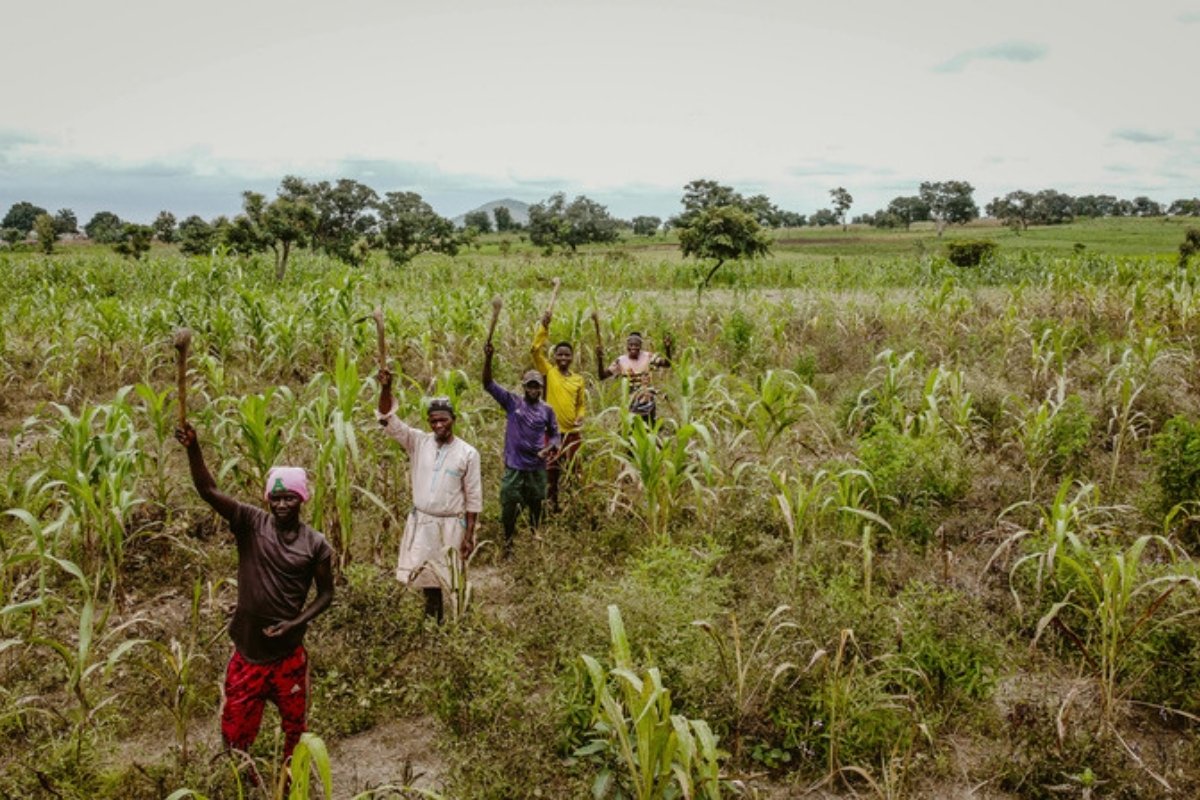
Problem-driven coalitions bring farmers in early, to help define the problem and test possible solutions.
The question I carried home
Perhaps the strongest impression I took from Kigali is that the boundaries of plant science are changing. It now sits where genetics, chemistry, microbiology, data science, engineering, AI, remote sensing, environmental science and agronomy meet, and some of the most important breakthroughs may come from several of these disciplines converging on a single agricultural problem. That affects how Africa develops scientific talent, structures investment, designs regulation and links public research with the private sector.
Africa may therefore not need another debate about whether the future of agriculture is biological or conventional, digital or physical, high-tech or agroecological. The more useful question is whether it can build an innovation system able to identify good science, test it rigorously, regulate it intelligently, finance it appropriately and get it responsibly into farmers' hands, in ways that improve productivity, sustainability and livelihoods.
That will take researchers who understand how science moves towards use, regulators who anticipate new technologies, companies willing to invest beyond established markets, investors who understand agricultural risk, governments that build enabling infrastructure, and farmers involved from the start. The real test of agricultural innovation is whether the science can make the journey from possibility to practical value on the farm, however sophisticated it appears.